14 Warm Minimalist Living Room Ideas With Natural Textures
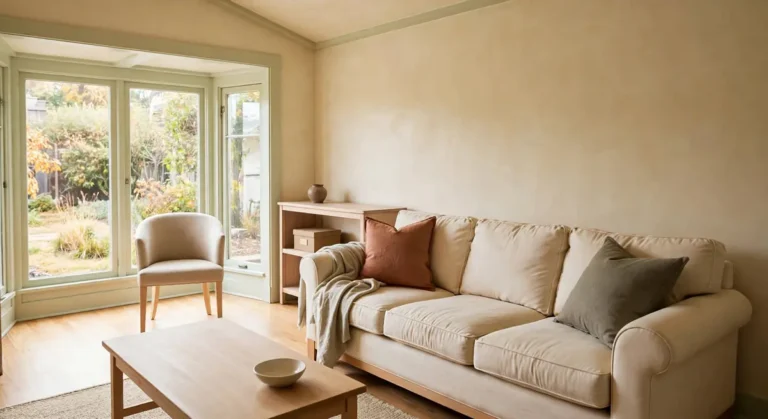
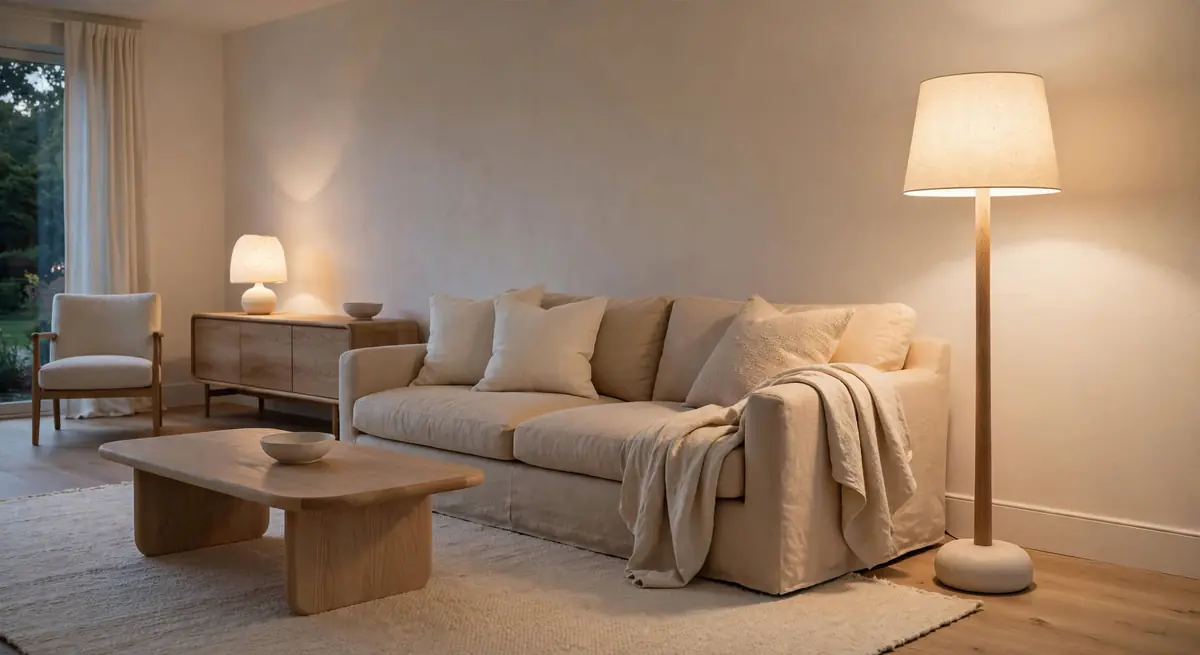
A minimalist living room doesn’t have to feel cold, empty, or overly simple. The secret to creating a warm minimalist space is choosing natural materials, soft colors, and subtle textures that make the room feel comfortable without adding unnecessary clutter.
Instead of filling the room with lots of decorative accessories, warm minimalism focuses on a few thoughtfully selected pieces. Linen, natural wood, wool, stone, jute, and handmade ceramics can introduce enough visual interest to make a simple living room feel layered and inviting.
Whether you’re starting with a completely neutral space or updating an existing living room, these warm minimalist living room ideas will help you create a relaxed, timeless look with natural textures.
14 Warm Minimalist Living Room Ideas
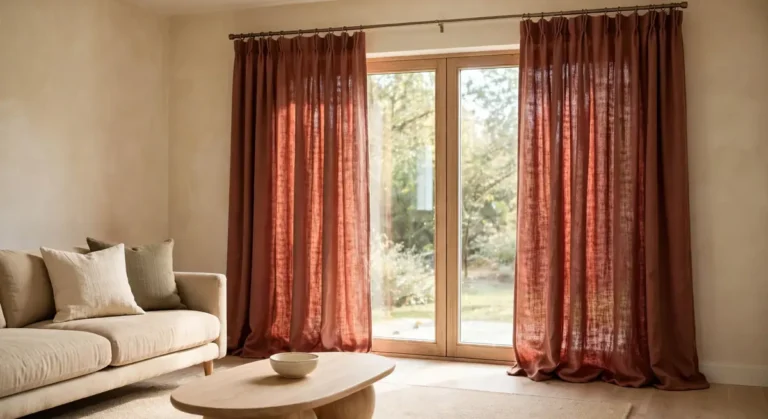
1. Add Soft Linen Curtains
Linen curtains are an easy way to make a minimalist living room feel softer without introducing busy patterns or unnecessary decoration. Their slightly uneven weave creates subtle texture, while the fabric allows natural light to filter into the room. Choose floor-length panels in warm white, oatmeal, or soft beige to create a relaxed backdrop for simple furniture. The gentle folds also add movement to otherwise clean architectural lines.
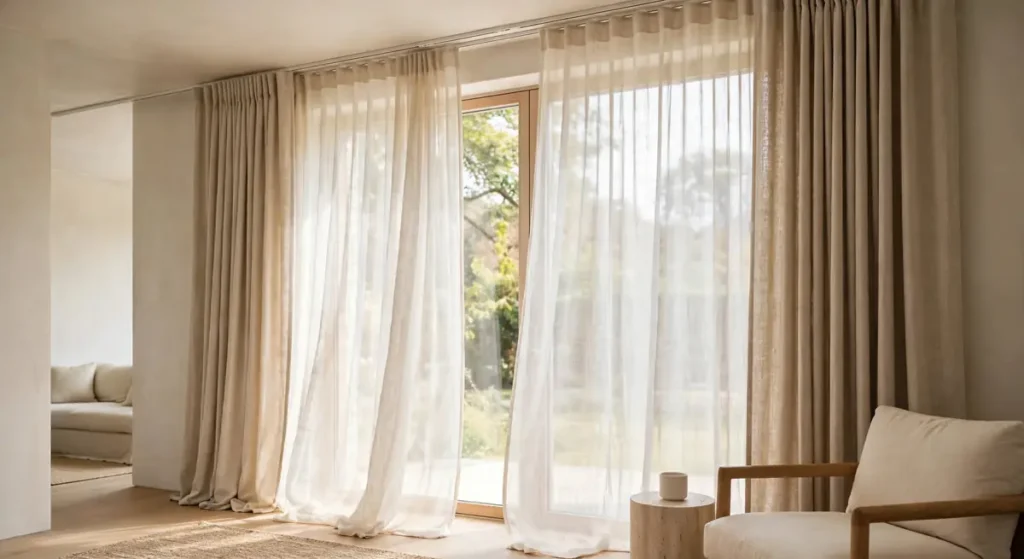
Styling Tip: Hang linen curtains close to the ceiling and let them extend slightly beyond the window frame. This makes the windows feel larger and gives the room a more finished appearance.
2. Choose a Boucle Sofa or Accent Chair
Boucle upholstery brings a soft, tactile quality to a warm minimalist living room. Its looped surface adds visual depth without relying on bold patterns or strong colors. A cream or ivory boucle accent chair can work beautifully beside a simple sofa, while a larger boucle sofa can become the main focal point in a spacious room. The key is to balance its textured surface with smoother materials such as wood, stone, or linen.
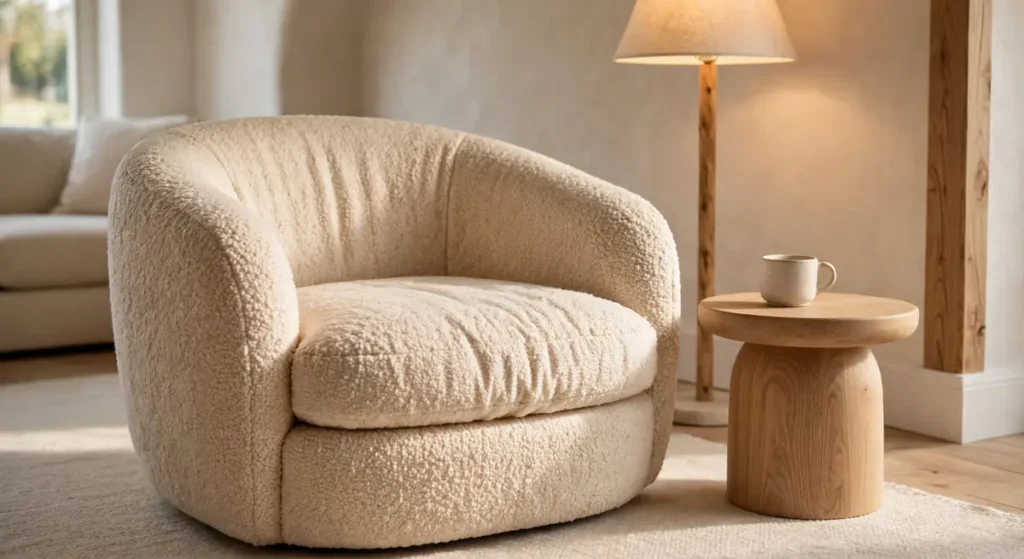
Styling Tip: Pair a boucle chair with a simple oak side table and a neutral floor lamp. Avoid using too many heavily textured furniture pieces together, as the room can quickly feel visually busy.
3. Ground the Room with a Natural Jute Rug
A jute rug introduces an earthy texture that helps warm up minimalist furniture and neutral flooring. Its natural fibers create a slightly rustic finish that works particularly well with cream sofas, wooden coffee tables, and simple upholstered chairs. A large rug can also help define the seating area, making an open living room feel more connected and intentional. If you prefer a softer surface, consider a wool-and-jute blend.
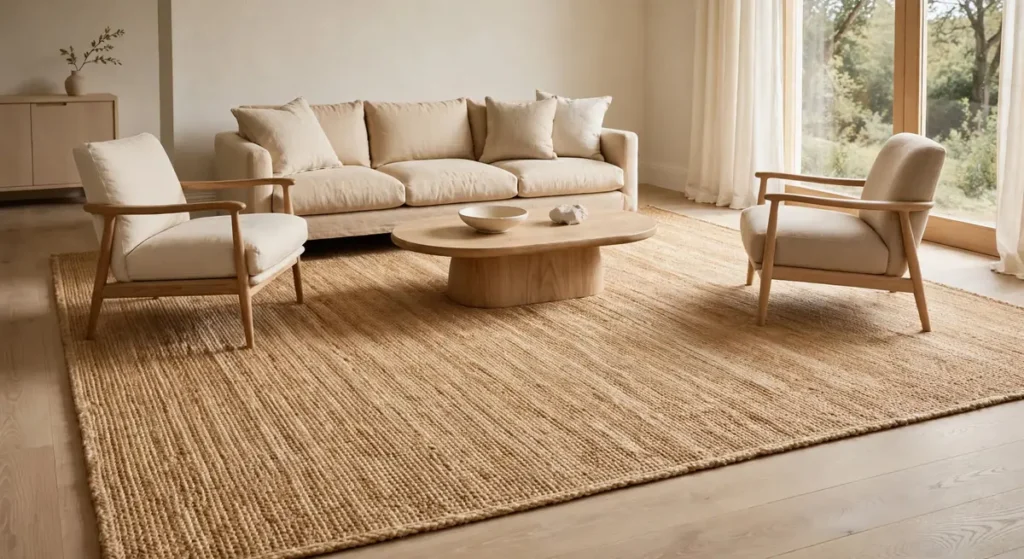
Styling Tip: Choose a rug large enough for at least the front legs of your sofa and accent chairs to sit on it. This creates a more cohesive seating arrangement instead of making the rug look like a small decorative mat.
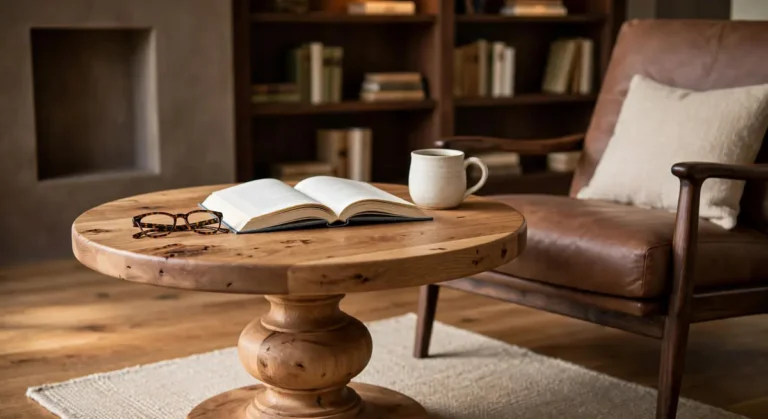
4. Add a Solid Oak Coffee Table
A solid oak coffee table brings warmth and natural character to a room dominated by soft neutral colors. The visible grain, subtle knots, and warm wood tones add detail without making the furniture feel decorative or complicated. Choose a simple rectangular, oval, or softly rounded design that complements your sofa and leaves enough space for comfortable movement. A natural wood finish also helps connect other wooden elements throughout the room.
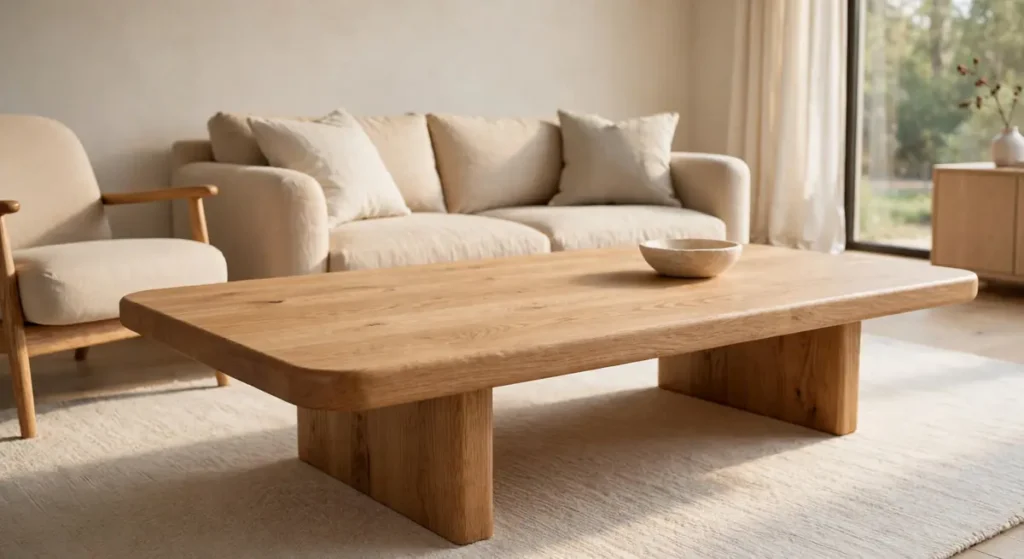
Styling Tip: Keep the coffee table styling simple with one ceramic vase, a small stack of books, or a shallow stone bowl. For more ways to create a balanced and attractive coffee table display, explore these coffee table decor ideas. Let the wood grain remain visible rather than covering the entire surface with accessories.
5. Use a Textured Plaster or Limewash Wall
A textured plaster or limewash wall can make a warm minimalist living room feel more architectural without requiring artwork or decorative wall panels. The subtle tonal variations create depth as natural light moves across the surface throughout the day. Warm white, soft sand, and pale beige finishes work especially well because they introduce character while maintaining a calm atmosphere. This treatment can be particularly effective behind a sofa or around a fireplace.
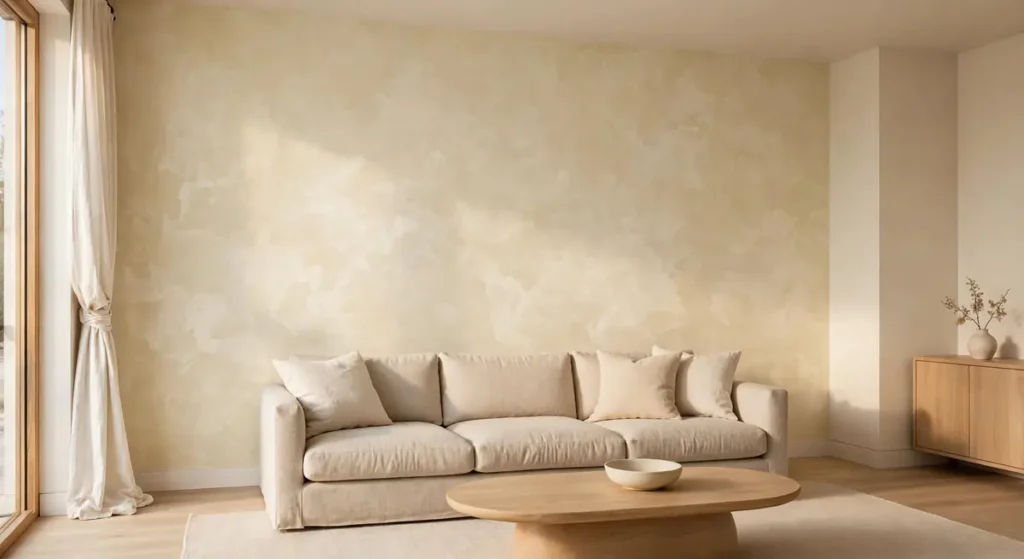
Styling Tip: Use the textured finish on one main wall rather than applying it everywhere. Keep nearby furniture and artwork understated so the wall becomes a quiet focal point.
6. Bring in a Chunky Wool Throw
A chunky wool throw adds the kind of softness that makes a minimalist living room feel comfortable and lived-in. Its woven or knitted texture creates contrast against smooth sofa upholstery and clean furniture shapes. Choose natural shades such as oatmeal, warm ivory, taupe, or muted brown to maintain a cohesive palette. It is also a practical way to introduce another layer without adding more furniture or decorative objects.
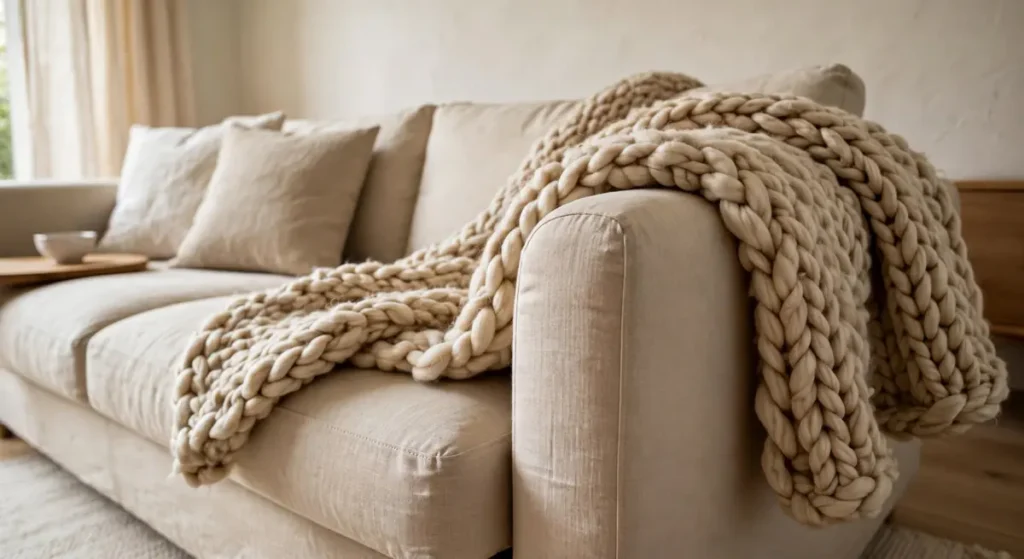
Styling Tip: Drape the throw loosely over one corner of the sofa rather than folding it into a perfectly arranged rectangle. A relaxed placement helps the room feel welcoming instead of overly staged.
7. Add Handmade Ceramic Decor
Handmade ceramic pieces add small variations in shape, color, and finish that make a neutral living room feel more personal. A slightly irregular vase, matte ceramic bowl, or sculptural vessel can introduce character without creating visual clutter. These pieces work particularly well with natural wood, linen upholstery, and textured walls. You don’t need a large collection; a few carefully chosen objects can provide enough detail.
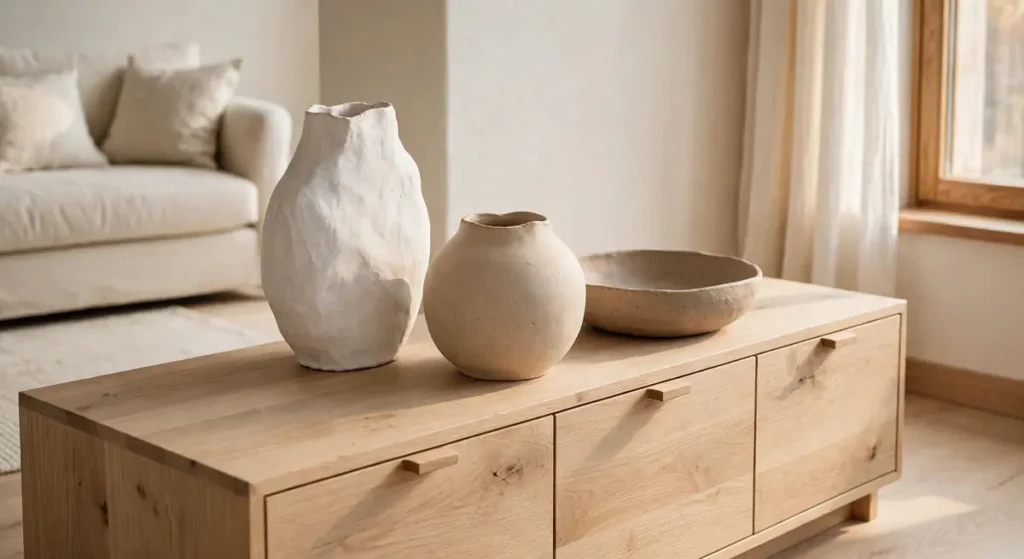
Styling Tip: Group two or three ceramic pieces with different heights but similar undertones. Cream, sand, chalk white, and muted clay finishes create a coordinated display without looking too uniform.
8. Choose a Natural Wood Media Console
A natural wood media console can soften the appearance of a television wall, which sometimes feels too modern or visually heavy in minimalist interiors. Oak, walnut, and other warm wood finishes introduce natural grain and make the entertainment area feel more connected to the rest of the room. Look for a low-profile design with simple doors and minimal hardware. Closed storage is especially useful because it hides remotes, cables, and other everyday items.
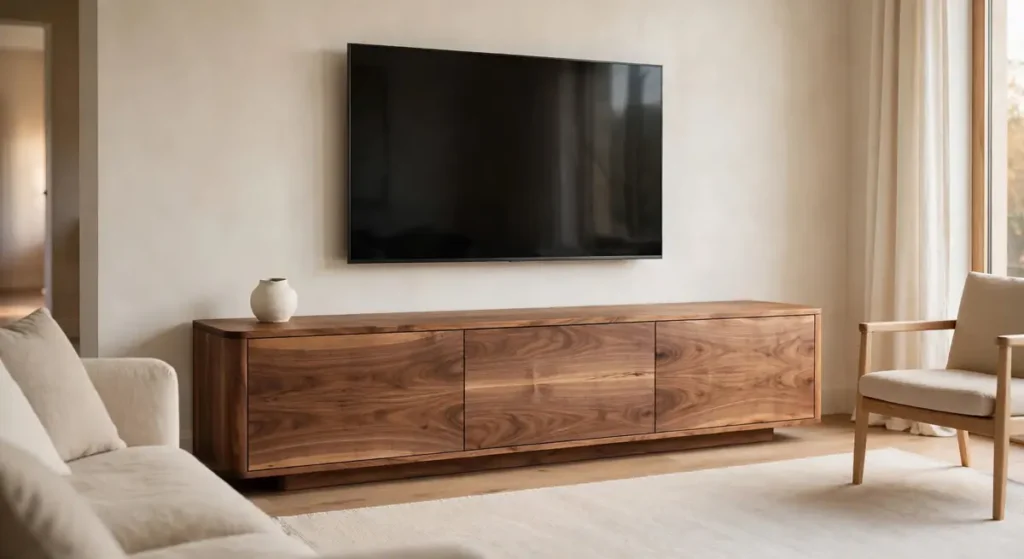
Styling Tip: Leave some empty space around the television and console. Add one small ceramic object or a simple branch arrangement rather than covering the entire surface with decor.
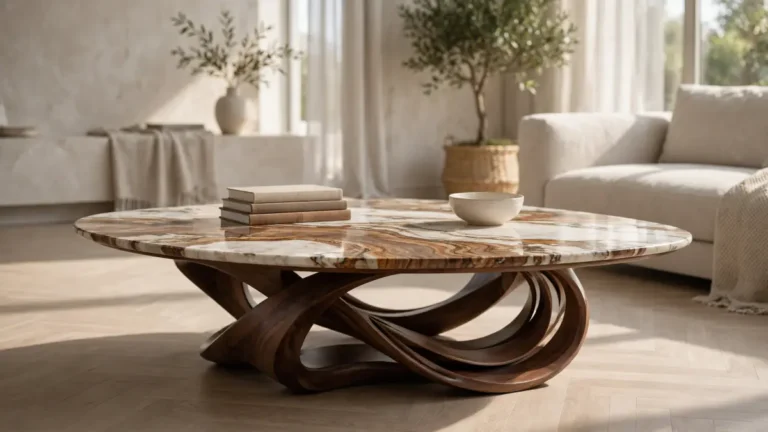
9. Add a Sculptural Stone Side Table
Stone side tables bring a different kind of natural texture into a warm minimalist living room. Travertine, limestone, and marble each have their own patterns and subtle variations, making even a simple table feel distinctive. A sculptural pedestal or rounded design can introduce an interesting shape beside a straight-lined sofa. Because stone already has visual character, it doesn’t need much additional decoration.
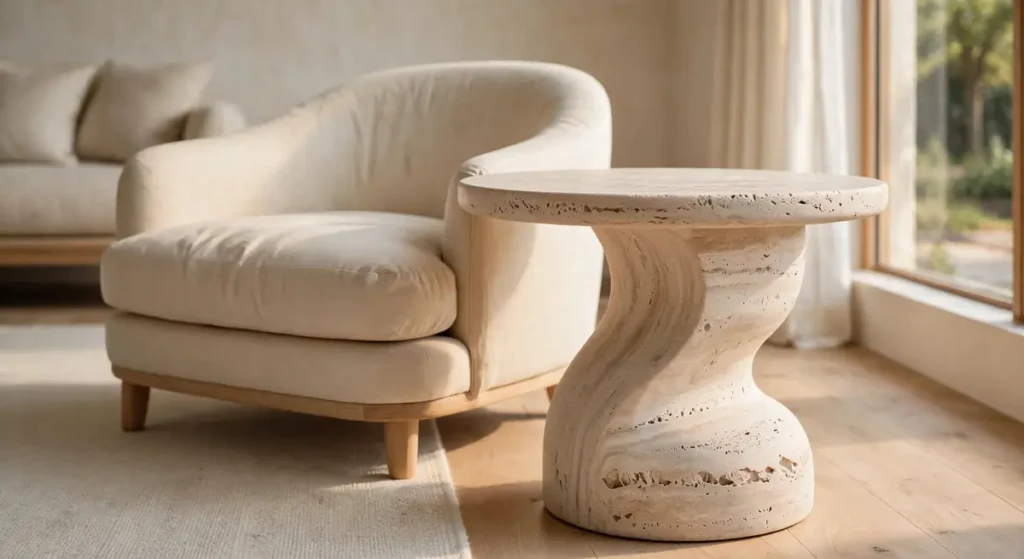
Styling Tip: Place a small stone table next to a soft upholstered chair or sofa. Choose a finish that complements your existing wood tones instead of introducing several competing natural materials.
10. Mix Neutral Cushions & Textures
A neutral color palette doesn’t have to mean using identical cushions or fabrics throughout the room. Combining linen, cotton, wool, and textured weaves creates depth while keeping the overall look calm. Try layering warm white, beige, oatmeal, and soft taupe cushions on a simple sofa. The variation in fabric surfaces makes the arrangement feel more interesting without relying on bright colors or busy prints.
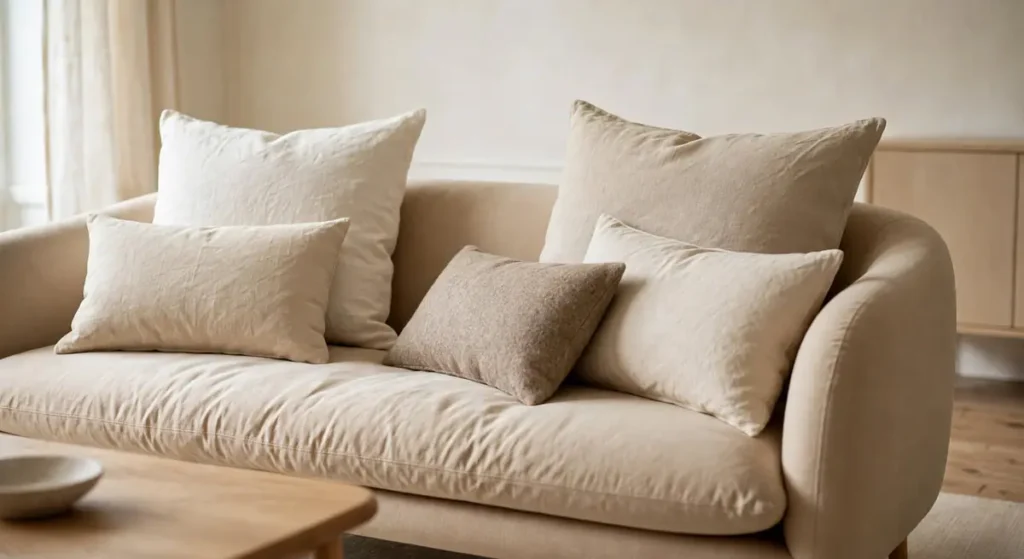
Styling Tip: Use two or three complementary fabric textures and vary the cushion sizes slightly. Keep the colors within the same warm family so the sofa looks layered rather than mismatched.
11. Add Warm Lighting with Soft Shades
Lighting plays an important role in making a minimalist living room feel inviting. A floor lamp with a linen shade, a paper pendant, or a simple table lamp can create a soft glow that complements natural materials. Warm lighting also helps cream, beige, and wood finishes appear richer in the evening. Instead of depending on one bright ceiling fixture, use a combination of lighting sources to create a more comfortable atmosphere.
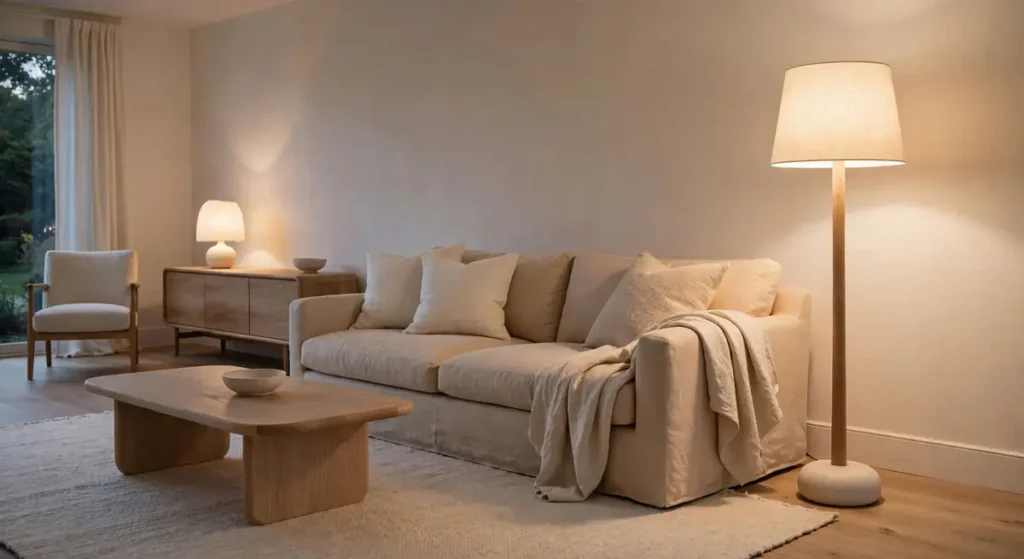
Styling Tip: Choose warm-white bulbs, generally around 2700K, for a cozy evening feel. Place a floor lamp beside the sofa and a smaller table lamp on a console to create gentle layers of light.
12. Decorate with Organic-Shaped Mirrors
An organic-shaped mirror can add visual interest to a warm minimalist living room without introducing a complicated decorative arrangement. Soft irregular edges, rounded corners, and simple wooden frames complement the natural materials commonly used in this style. Mirrors can also reflect daylight, making smaller living rooms feel brighter and more open. A large mirror above a console or beside a seating area can become a subtle focal point.
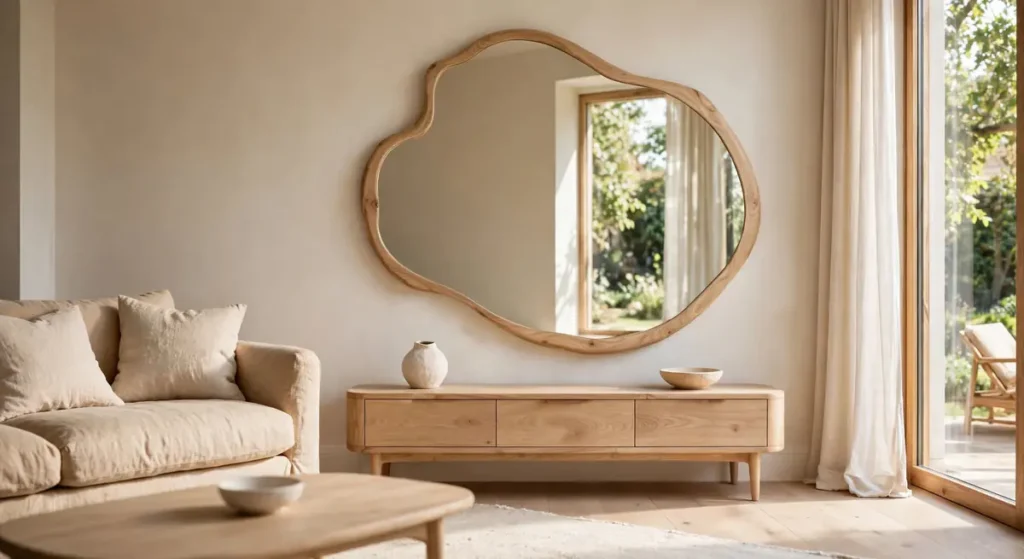
Styling Tip: Choose a mirror with a slim oak or muted brass frame. Position it where it can reflect natural light or an attractive part of the room rather than an empty wall.
13. Add Greenery Without Clutter
Plants introduce a living element that helps balance the clean lines and muted colors of a minimalist interior. A single olive tree, fiddle-leaf fig, or other appropriately sized indoor plant can bring height and natural variation to an empty corner. Smaller branches in a ceramic vase also work when you don’t have enough room for a large plant. The goal is to introduce greenery thoughtfully instead of turning every surface into a plant display.
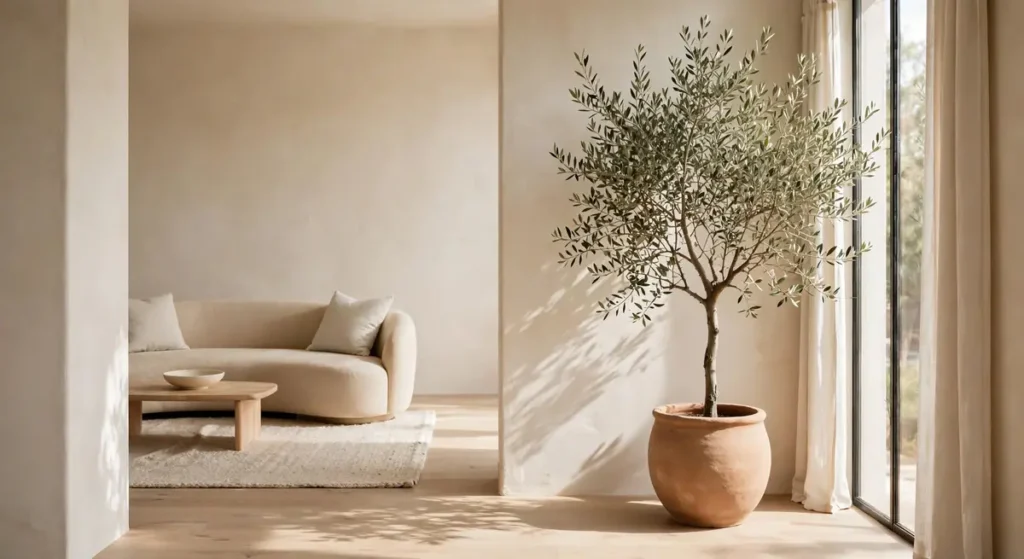
Styling Tip: Choose one larger plant as the main green accent and use a simple terracotta, stone, or woven planter. Make sure the plant receives suitable light for its specific needs.
14. Create a Natural Reading Corner
A small reading corner can make a warm minimalist living room feel more functional without requiring a complete furniture rearrangement. For more inspiration on creating a comfortable reading space, explore these cozy reading nook ideas. Start with a comfortable upholstered chair, a small wooden or stone side table, and a floor lamp with a soft shade. Add a linen cushion or wool throw to introduce texture and make the corner feel comfortable. Even an unused corner near a window can become a quiet place to read or relax.
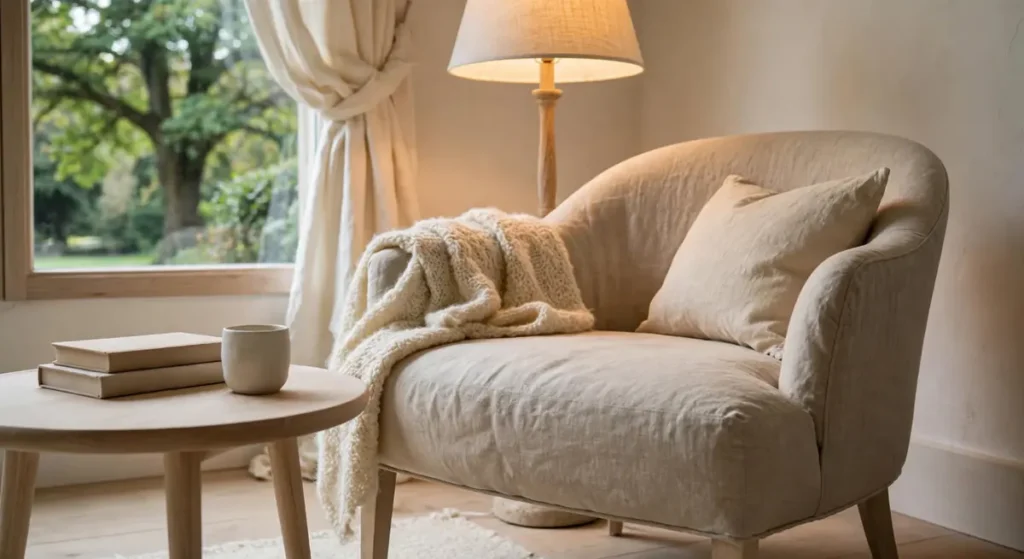
Styling Tip: Keep the arrangement limited to three or four main pieces. A small stack of books and one ceramic accessory are enough to make the space feel finished without overcrowding it.
Elements of a Warm Minimalist Living Room
Warm minimalism combines the simplicity of minimalist design with materials and colors that make a room feel comfortable. Instead of focusing on empty spaces alone, it uses carefully selected furniture, natural finishes, and subtle layers to create a balanced interior.
A few elements help establish this look:
Natural Textures for a Warm Minimalist Living Room
Choosing the right textures is just as important as selecting the color palette. Different materials bring different qualities to a room, so combining them thoughtfully helps create depth without making the space feel busy.
|
Natural texture |
What it adds |
|
Linen |
Softness and a relaxed finish |
|
Oak and walnut |
Warmth and visible grain |
|
Jute |
Earthy, woven texture |
|
Wool |
Comfort and softness |
|
Travertine |
Subtle stone patterns |
|
Rattan and cane |
Light, organic detail |
|
Handmade ceramics |
Character and irregular shapes |
You don’t need to use every material in one room. Start with two or three main textures and introduce smaller accents where the space needs more depth.
Warm Minimalist Living Room Mistakes to Avoid
Frequently Asked Questions
How do you make a minimalist living room feel warm?
Use warm neutral colors, natural wood furniture, soft textiles, and layered lighting. Materials such as linen, wool, jute, and stone add visual depth without requiring lots of decorative accessories.
What colors work best in a warm minimalist living room?
Warm white, ivory, oatmeal, beige, taupe, soft brown, and muted earthy tones work particularly well. You can also introduce subtle olive or clay accents for a little extra character.
What natural materials are best for minimalist living rooms?
Oak, walnut, linen, wool, jute, rattan, travertine, and handmade ceramics are excellent choices. Combining a few different materials creates a layered appearance while maintaining a simple overall design.
Can a warm minimalist living room feel cozy?
Yes. Minimalist rooms can feel cozy when they include comfortable seating, soft throws, textured rugs, warm lighting, and natural materials. The key is to focus on quality and thoughtful layering rather than adding lots of objects.
How do you decorate a warm minimalist living room on a budget?
Start by rearranging existing furniture and removing unnecessary clutter. Add affordable texture through linen-look curtains, neutral cushion covers, a simple woven basket, or a wooden tray. You don’t need to replace every piece of furniture to create a warmer atmosphere.
Final Thoughts
A warm minimalist living room is all about finding the right balance between simplicity and comfort. Natural materials, soft neutral colors, and thoughtfully selected furniture can make even a simple space feel layered and welcoming.
You don’t need to introduce every texture or decorative element at once. Start with a few pieces that bring warmth to your existing room, such as linen curtains, a natural wood coffee table, or a textured rug. With a little restraint and careful styling, you can create a living room that feels both relaxed and timeless.