18 Rust Accent Living Room Decor Ideas That Pull the Palette Together
Rust is one of those colors that can make a living room feel warm, rich, and inviting without overwhelming the space. Its earthy blend of reddish-brown and muted orange works beautifully with neutral furniture, natural wood, cream fabrics, and soft greens. The key is choosing the right accents and repeating the color thoughtfully throughout the room.
You do not need to replace your sofa or commit to a completely rust-colored interior to create this look. A textured pillow, a ceramic lamp, a patterned rug, or a small decorative accessory can introduce just enough color to bring the whole palette together.
These rust accent living room decor finds will help you build a coordinated, comfortable space. Whether your style is modern, traditional, organic, or slightly vintage, you can use these ideas to introduce rust in a way that feels balanced and intentional.
18 Rust Accent Living Room Decor Ideas
1. A Rust Upholstered Accent Chair
A rust accent chair is a great choice when you want the color to become a noticeable part of your living room rather than just a small decorative detail. Look for a simple silhouette with soft upholstery, such as velvet, linen, or a textured woven fabric.
Place the chair beside a neutral sofa, near a window, or in an unused corner with a small wooden side table. Cream walls and natural wood flooring help the rust upholstery stand out without making the room feel too bold. If you prefer a softer, understated interior, these warm minimalist living room ideas offer more inspiration for creating a balanced space with natural textures.
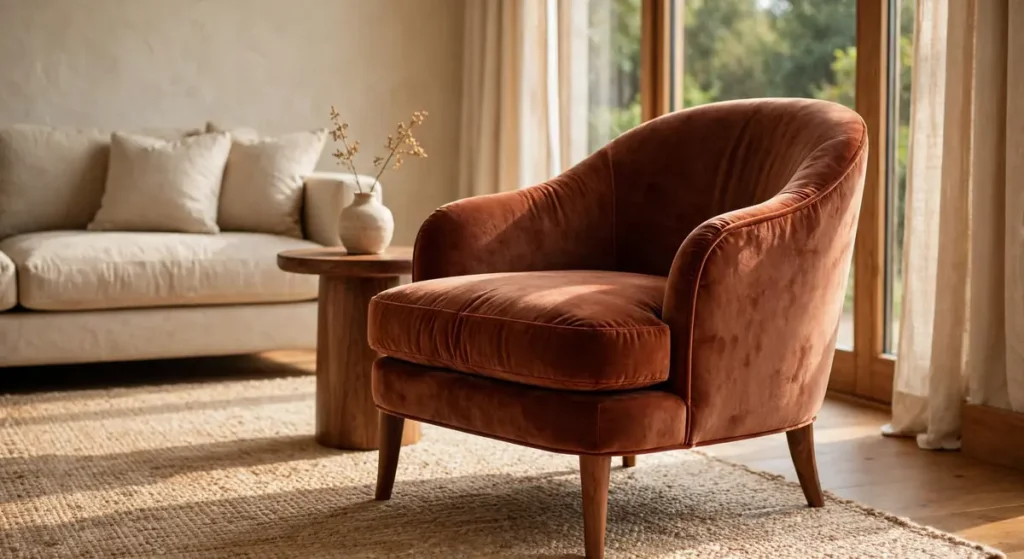
Styling tip: Choose a chair with a clean shape if your room already has patterned rugs or decorative cushions. A simple design will let the color do the work.
2. Rust Velvet Throw Pillow Covers
Velvet pillow covers are an easy way to introduce a deeper rust shade without changing your larger furniture pieces. Their soft surface catches the light differently throughout the day, adding depth to a neutral sofa.
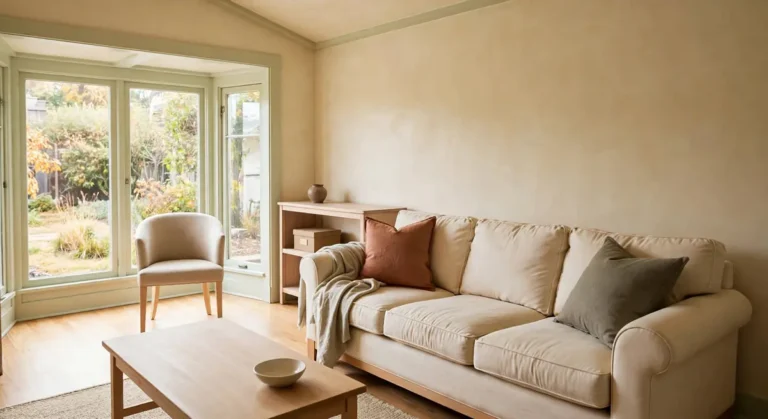
Pair one or two rust velvet pillows with cream, beige, or olive cushions. This combination creates a layered look while allowing the rust color to remain the main accent.
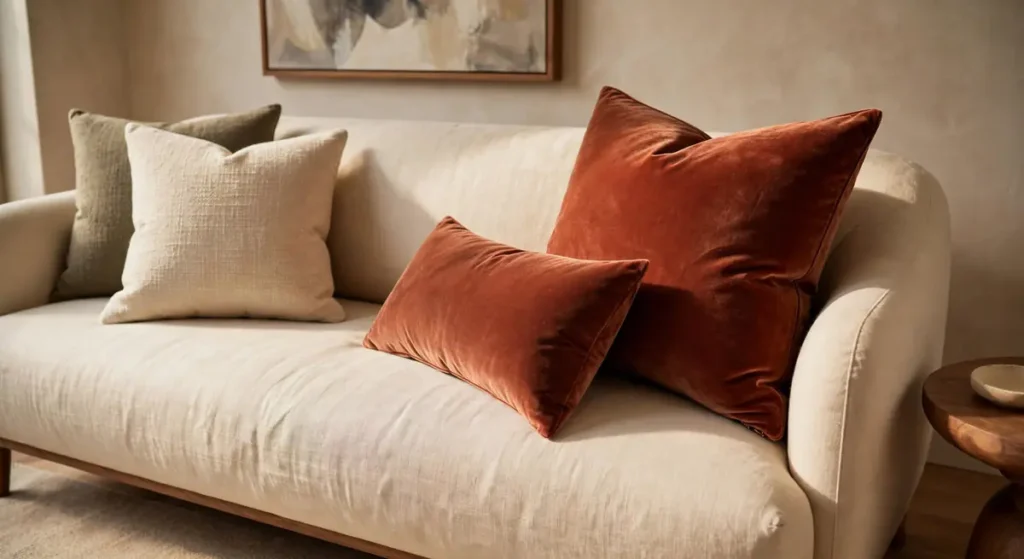
Styling tip: Use different cushion sizes rather than buying several identical pillows. A mix of square and rectangular shapes can make the arrangement feel more relaxed and thoughtfully styled.
3. A Textured Rust Throw Blanket
A rust-colored throw blanket adds both warmth and color to the living room. Look for a knitted, waffle-textured, or softly woven design that complements the sofa rather than competing with it.
Drape it over one end of a cream sofa or fold it neatly across an accent chair. This gives the room another place where the rust shade appears, helping connect the color to other accessories.
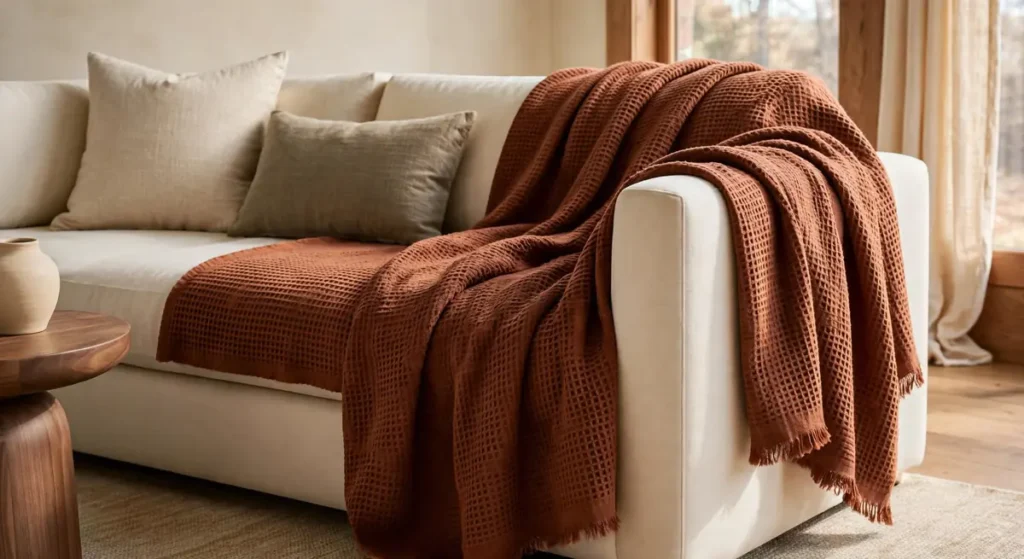
Styling tip: If your sofa has a smooth fabric, choose a throw with visible texture. If the sofa is already heavily textured, a simpler cotton or linen throw may look more balanced.
4. A Rust & Cream Patterned Area Rug
A rug that combines rust with cream or warm beige can help tie several colors together at once. Look for subtle geometric patterns, faded vintage-inspired designs, or organic shapes that include small amounts of rust.
This type of rug works especially well in a neutral living room because it introduces color across a larger area without looking like a solid block of orange-red.
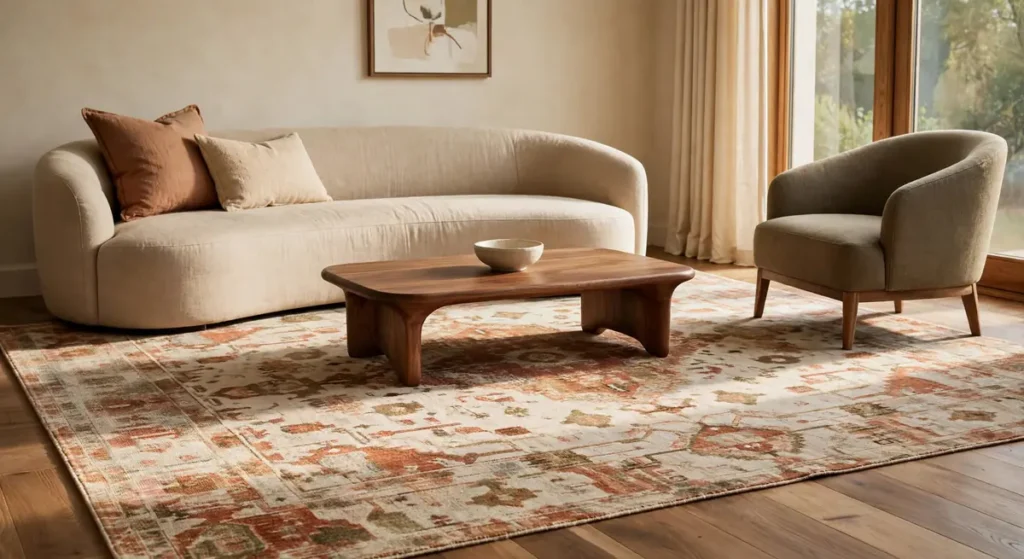
Styling tip: Pick out one secondary color from the rug, such as cream, brown, or muted olive, and repeat it in your cushions or accessories. This creates a more connected palette.
5. A Rust Upholstered Ottoman
An upholstered ottoman is a practical way to introduce rust while adding extra seating or a comfortable place to rest your feet. Choose a rounded or softly structured design in rust fabric, depending on the style of your room.
Place it in front of a neutral sofa or beside an accent chair. A compact ottoman can also work as a flexible piece in a smaller living room where a large coffee table would take up too much space.
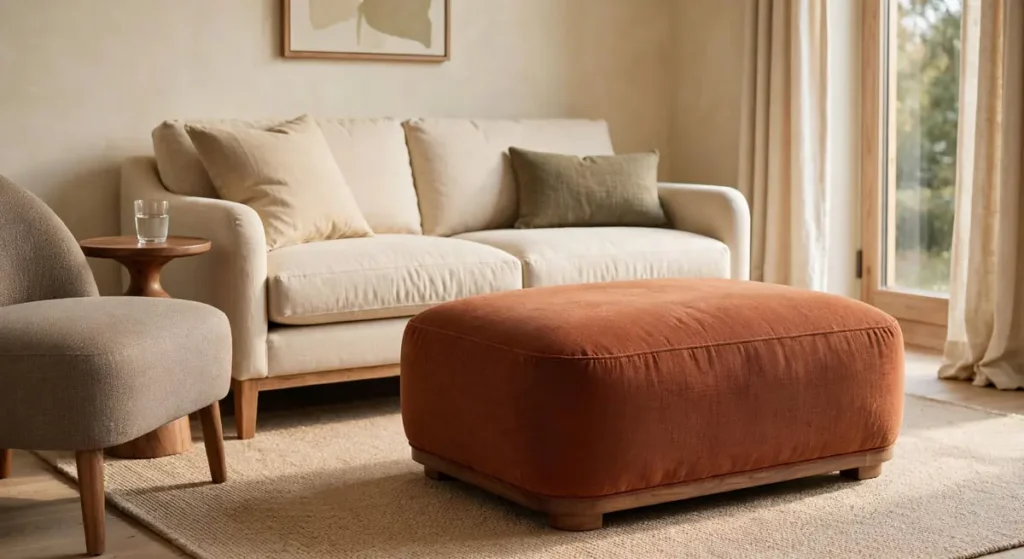
Styling tip: Choose a fabric that complements your sofa rather than matching it exactly. Slight differences in texture make the combination look more interesting.
6. A Cognac Leather Pouf
Cognac leather has warm brown and reddish undertones that work naturally with a rust color palette. A leather pouf adds a slightly rustic, relaxed feel while providing extra seating or a casual footrest.
Place it near the sofa, beside a reading chair, or in an open corner where it can be moved when needed. It pairs particularly well with cream upholstery, walnut furniture, and textured neutral rugs.
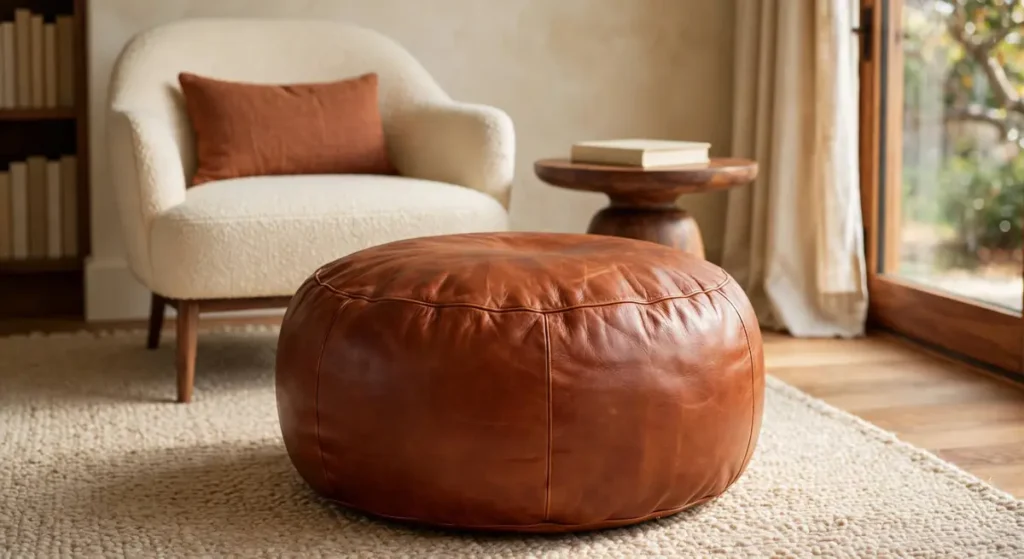
Styling tip: Treat cognac as a supporting shade rather than another main accent. A single leather pouf can complement rust cushions and throws without making the room look too brown.
7. A Clay Ceramic Table Lamp
A ceramic table lamp in a clay, terracotta, or muted rust finish can bring the palette into your lighting choices. Look for a softly rounded base, a textured ceramic finish, or a handmade appearance.
Place it on a wooden side table, console, or shelf where the warm base can connect with other rust accessories. A cream or natural linen shade will soften the overall look.
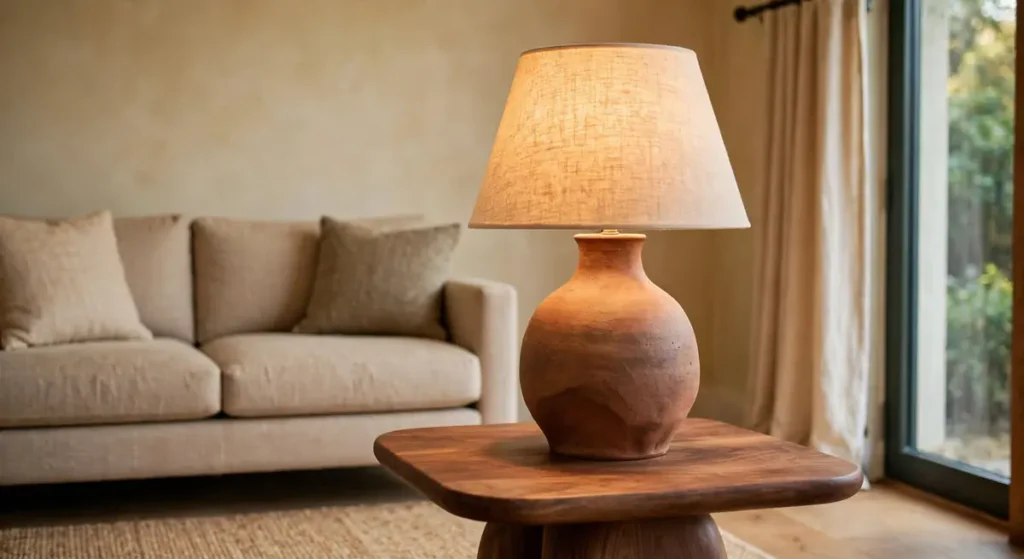
Styling tip: Choose warm-white lighting to complement the earthy ceramic finish. The lamp should provide comfortable ambient light as well as work as a decorative accent.
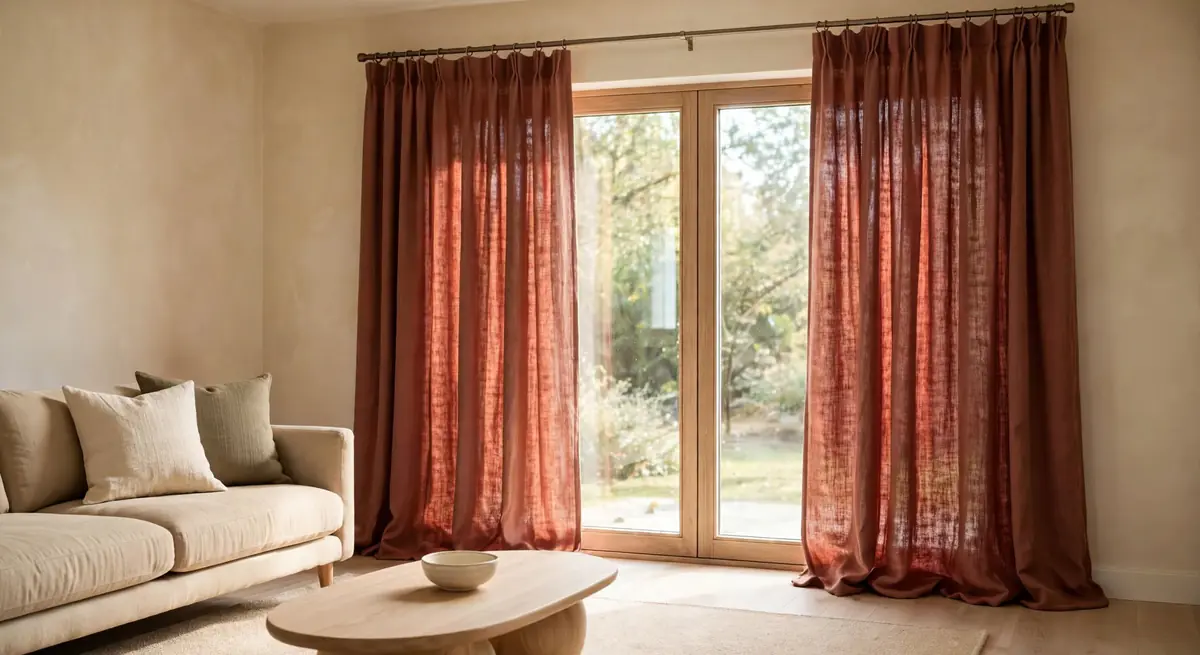
8. Rust-Colored Fabric Curtains
Curtains can introduce rust over a larger area without requiring new furniture. Muted rust or burnt terracotta panels look especially appealing with cream walls, pale wood, and neutral upholstery.
For a softer result, choose linen-look or lightly textured fabric rather than a shiny material. You can also use rust curtains on one set of windows while keeping the rest of the room neutral.
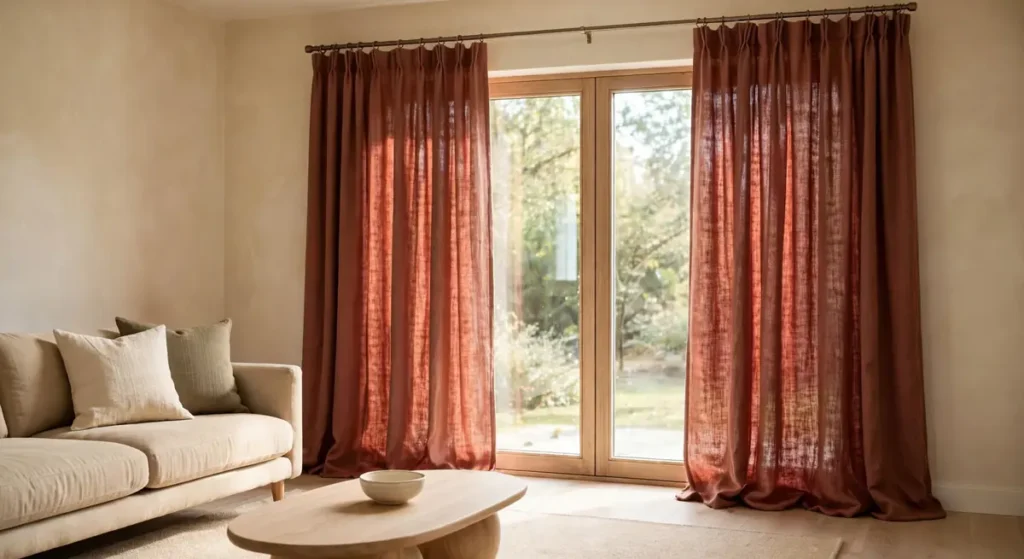
Styling tip: Consider how much natural light your room receives before selecting the fabric. A lighter weave can keep the space feeling open, while heavier curtains may create a richer, more dramatic look.
9. Add Earth-Tone Abstract Wall Art
Abstract artwork is a useful way to bring several palette colors together in one place. Look for a piece that combines rust with cream, warm brown, muted beige, or olive.
Hang it above a neutral sofa or position it over a console. The artwork can become the reference point for choosing the smaller accents throughout the room.
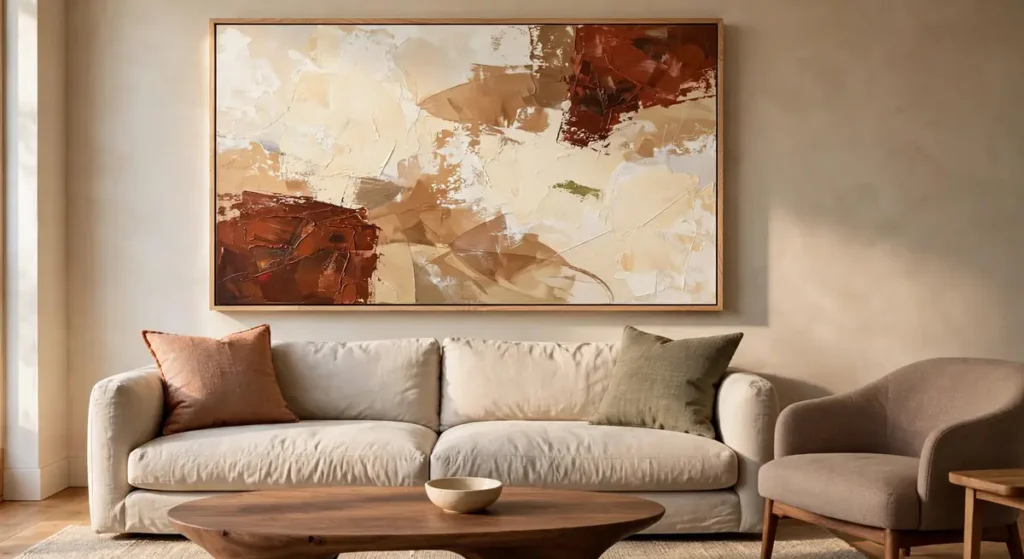
Styling tip: Instead of trying to match every accessory to the artwork, repeat just one or two of its colors. This creates coordination without making the room look overly matched.
10. Display Rust & Olive Botanical Prints
Botanical artwork can soften a rust palette and add a natural element to the room. Choose prints featuring dried leaves, branches, grasses, or abstract botanical forms with muted rust, brown, and olive tones.
A pair of smaller framed prints can work well above a sideboard, while one larger piece can fill an empty wall behind a chair.
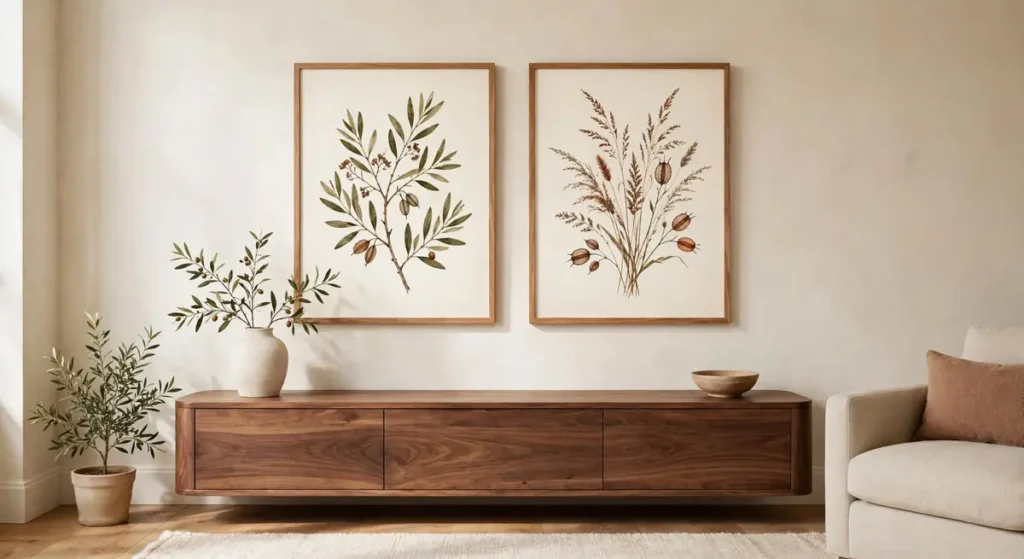
Styling tip: Use simple wood or warm metal frames so the artwork feels connected to the rest of your furnishings. Avoid combining too many different frame finishes in one small gallery arrangement.
11. A Sculptural Terracotta Vase
A sculptural vase is a simple decorative find that can introduce rust tones through its material and finish. Look for rounded shapes, handmade textures, narrow necks, or asymmetrical silhouettes.
Place it on a coffee table, bookshelf, or console with a little breathing room around it. You can leave it empty as a sculptural object or add a few dried branches for more height.
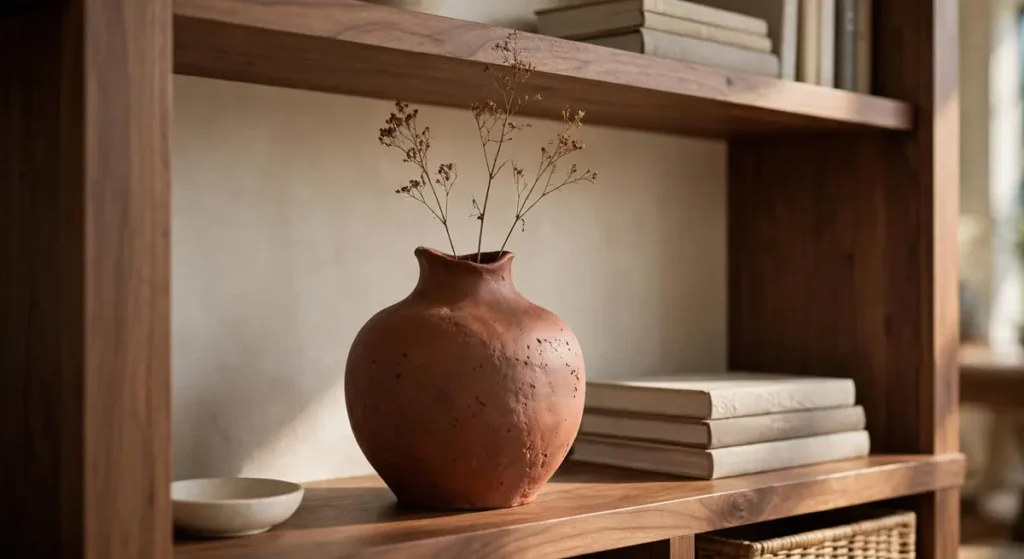
Styling tip: A matte ceramic finish often works well with natural wood and soft fabrics. Choose a shape that feels distinctive rather than adding several similar vases together.
12. A Terracotta Planter for Indoor Greenery
A terracotta planter brings two useful elements into the palette: a warm earthy color and a natural material. The reddish-brown tone looks especially good beside green foliage, creating a simple contrast that feels fresh rather than overly decorative.
Use it for a suitable indoor plant and place it near a window, on a plant stand, or beside a wooden cabinet. A larger planter can anchor an empty corner, while a smaller one can sit on a shelf.
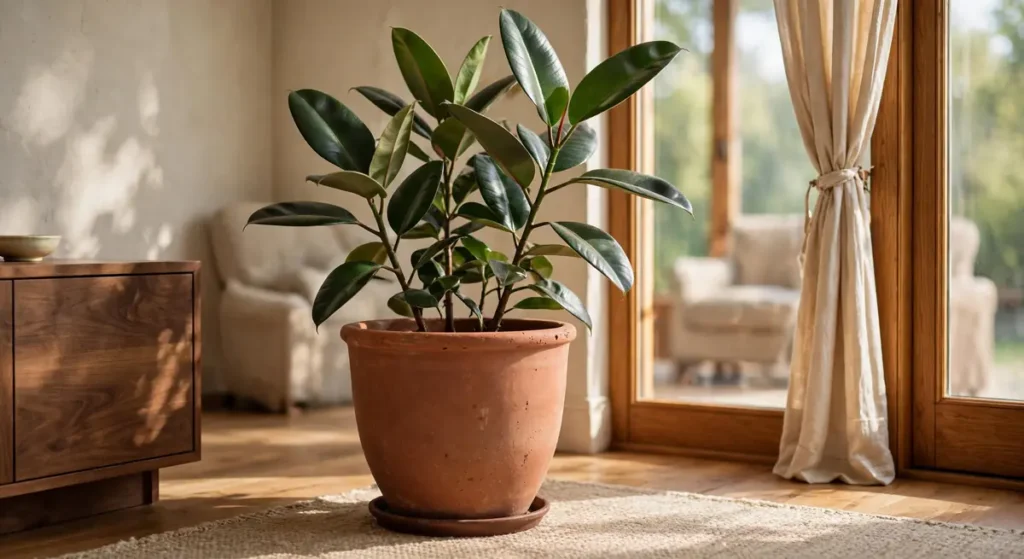
Styling tip: Keep the planter’s finish and shape relatively simple if the plant has large or detailed leaves. The combination of green foliage and warm terracotta is already visually interesting.
13. A Handmade Decorative Ceramic Bowl
A shallow ceramic bowl in rust, burnt orange, or earthy clay can bring a small but noticeable color accent to your coffee table or console. Choose an irregular handmade finish, a subtle glaze, or a softly textured surface.
Use it to hold coasters, small decorative objects, or other items you want to keep organized. For more ways to arrange decorative accessories and create a balanced tabletop display, explore these coffee table decor ideas. It can also sit empty as a simple accent when the table is already styled.
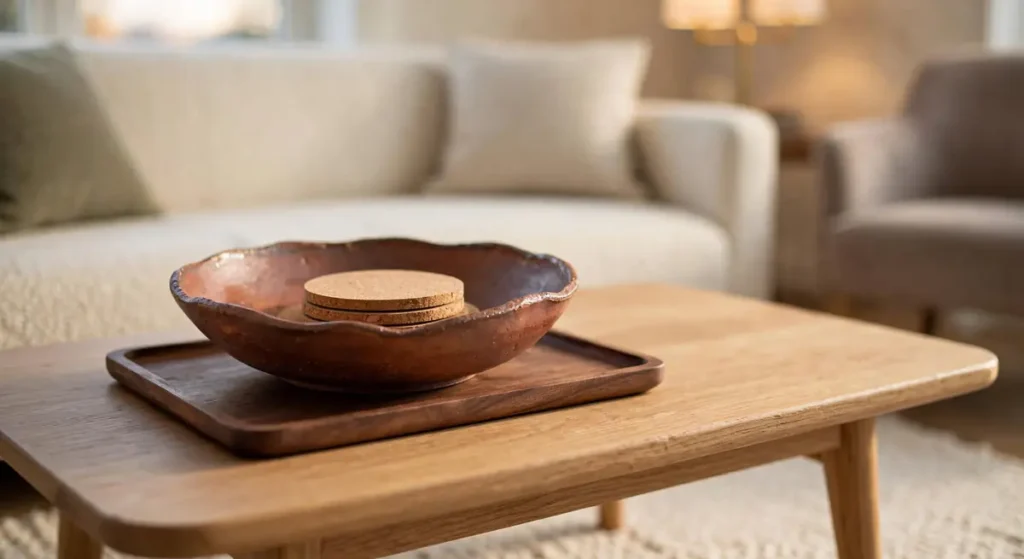
Styling tip: Place the bowl on a neutral coffee table or wooden tray so its color remains visible. Avoid filling it with too many unrelated decorative objects.
14. Rust-Toned Candleholders
Candleholders are a compact way to repeat rust across a living room. Choose ceramic, stoneware, or painted metal designs in a muted earthy finish.
Place a pair on a console, sideboard, or suitable coffee table arrangement. They can also be combined with a neutral vase and a small stack of books for a simple decorative grouping.
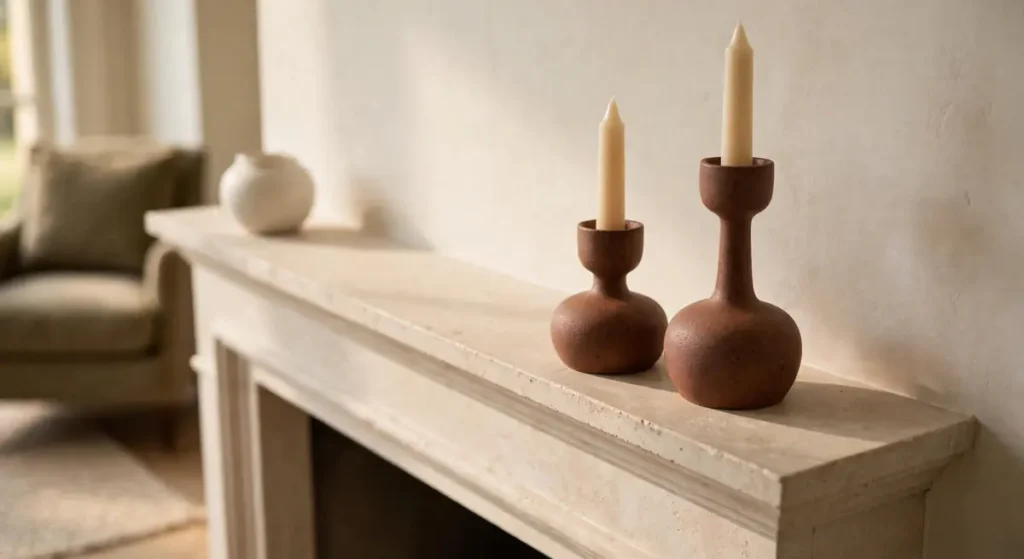
Styling tip: Vary the heights slightly but keep the finishes related. Use flameless candles where a safer alternative is preferable, and never leave burning candles unattended.
15. Add a Bronze or Antique Mirror
A mirror with a warm bronze, aged brass, or antique-style frame can complement rust accents without introducing another strong color. Its metallic finish adds a gentle contrast to earthy fabrics and ceramic pieces.
Hang it above a console or place it on a wall where it can reflect natural light. A round or softly curved frame works nicely with the rounded shapes often found in organic-style decor.
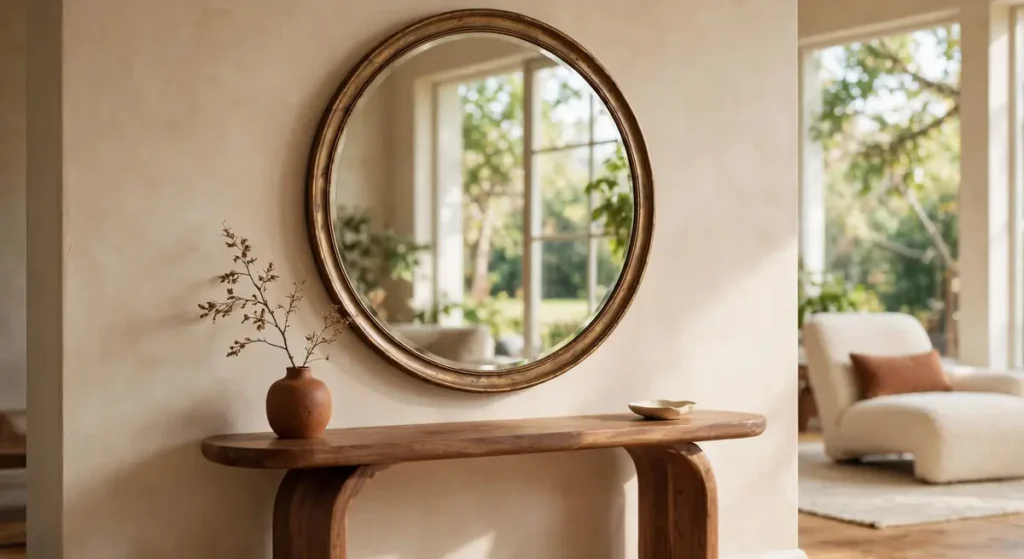
Styling tip: Use the mirror as a supporting palette element. It does not need to be rust-colored itself; the warm metal simply helps connect the rust accents with wood and other earthy finishes.
16. A Rust Upholstered Bench
A small upholstered bench can introduce a larger rust accent while serving a practical purpose. Place it beneath a window, along an empty wall, or behind a sofa if the room layout allows.
A simple bench with rust-colored fabric can complement a neutral seating arrangement. Look for a design with slim legs or a compact shape if you do not have much floor space.
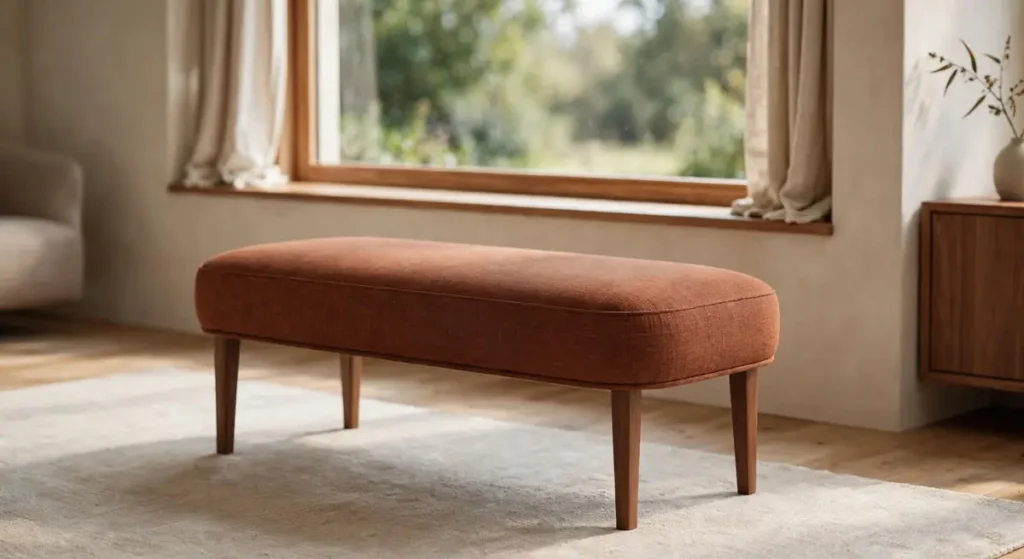
Styling tip: Keep the bench relatively simple if you already have a rust accent chair or ottoman. One larger rust furniture piece may be enough, so use smaller accents elsewhere.
17. Add a Warm Woven Basket
A woven basket is a useful way to bring natural texture into a rust palette. Choose a warm brown, honey, or reddish-brown finish that complements your other accents.
Place it beside the sofa to hold extra throws, near an armchair for magazines, or in a corner where it can help organize everyday items. Its woven texture balances smoother materials such as velvet, ceramic, and leather.
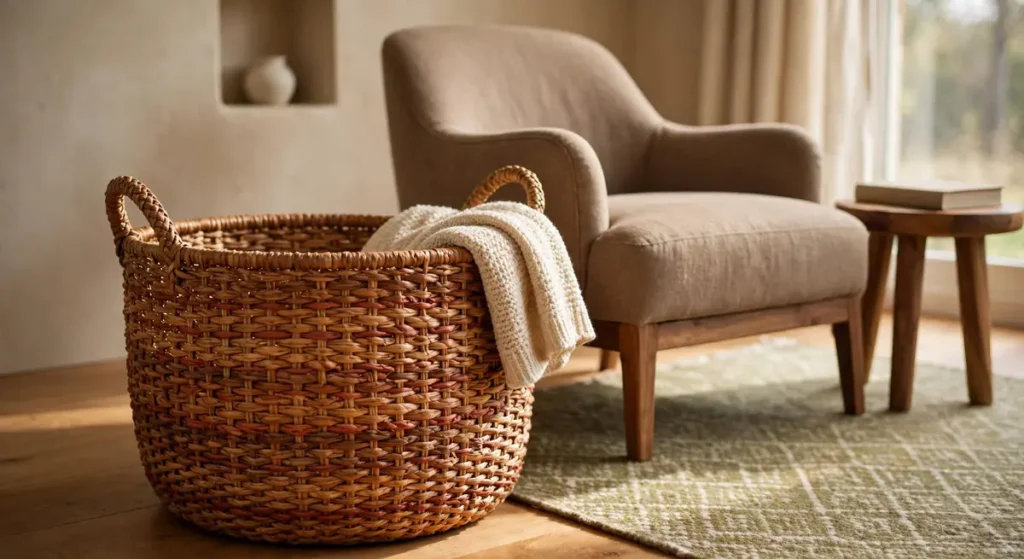
Styling tip: Choose a basket that is large enough for its intended purpose but does not block the walkway. A practical accessory often looks best when it is actually being used.
18. A Rust & Cream Textile Wall Hanging
A textile wall hanging can add color and softness to a room without introducing another piece of furniture. Look for a woven design that combines rust with cream, taupe, or muted brown.
Hang it above a small seating area, beside a bookshelf, or on a wall that feels too empty for a large framed artwork. The fabric texture adds a relaxed, layered quality to the space.
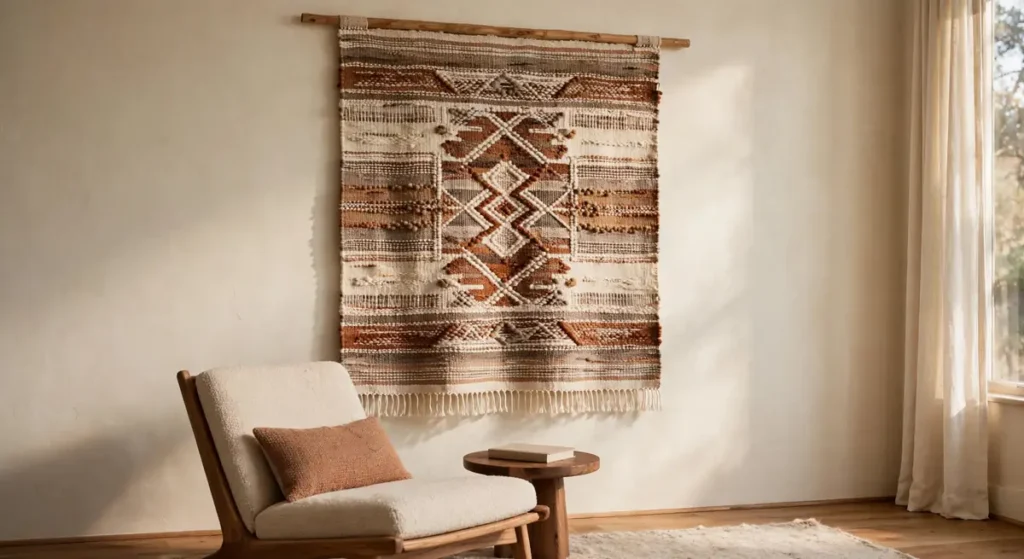
Styling tip: Let the wall hanging be the main feature on that wall. Avoid placing several competing pieces directly around it, especially if the weave already has a detailed pattern.
How to Create a Rust Living Room Color Palette
Choosing attractive rust accessories is only the first step. To make the room feel coordinated, decide which colors will support the rust and where each shade will appear.
1. Start With a Neutral Base
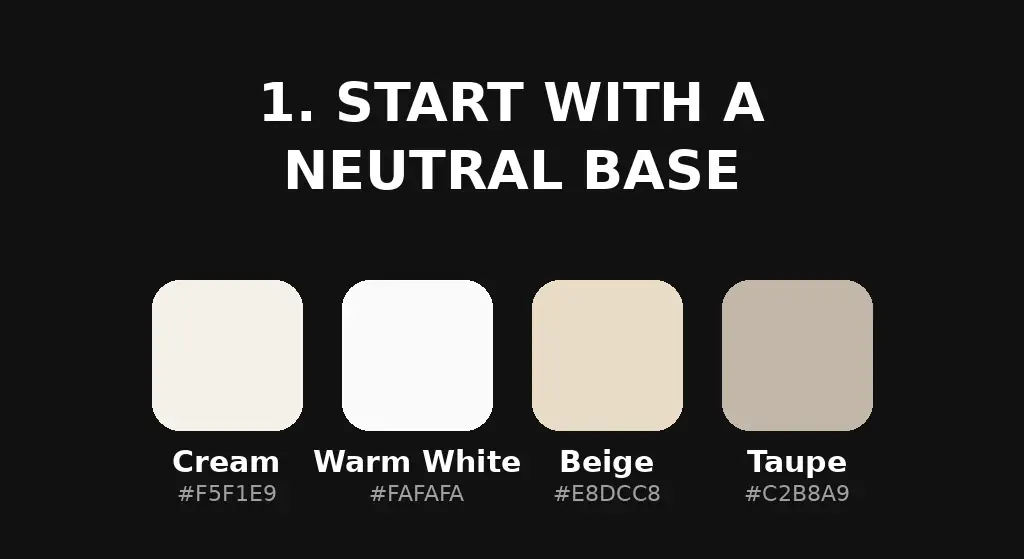
Cream, warm white, beige, and soft taupe provide a calm background for rust accents. These shades work well on larger surfaces such as walls, sofas, curtains, and rugs.
You do not need to change your existing neutral furniture. A cream sofa or beige rug can already provide the foundation for a warmer palette.
2. Add One or Two Accent Colors
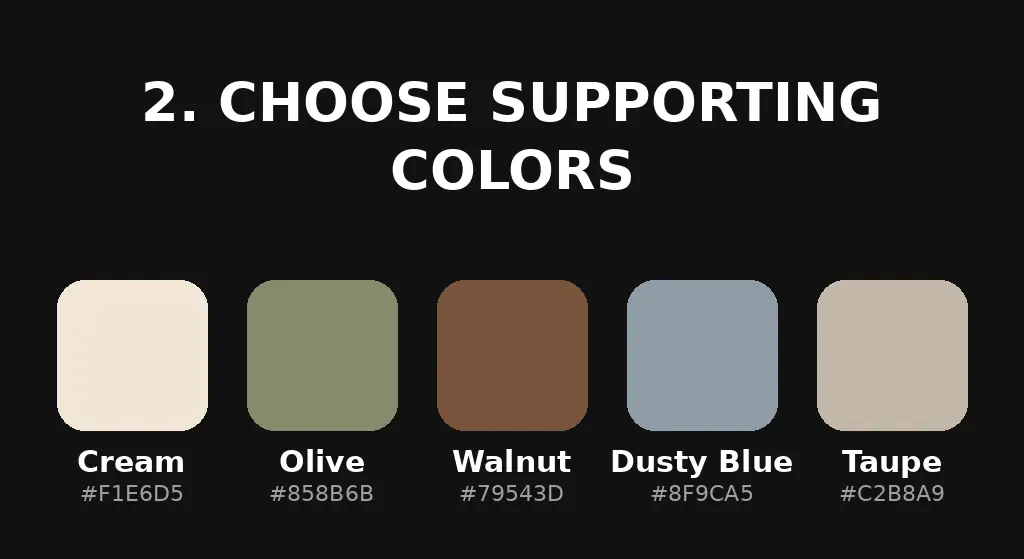
Rust pairs naturally with several earthy shades, but using all of them equally can make the room feel busy. Choose supporting colors based on the atmosphere you want.
3. Repeat Rust in Different Areas
A coordinated palette does not require every rust item to match exactly. Instead, repeat the shade in a few different places.
For example, you could use rust cushions on the sofa, a terracotta vase on the coffee table, and a small rust detail in the wall art. The repetition helps the room feel connected without making it look like everything came from one matching set.
4. Balance Color With Natural Materials
Wood, woven textures, stoneware, linen, and leather help make an earthy palette feel more layered. These materials also keep the room from becoming a collection of rust-colored accessories.
A walnut side table, woven basket, linen curtain, and ceramic lamp can support the same palette while each adding a different texture.
Budget-Friendly Ways to Add Rust Accents
You do not need to invest in a new sofa or large furniture pieces to introduce rust into your living room. Start with smaller changes and build the palette over time.
Rust Living Room Decorating Mistakes to Avoid
1. Choosing the Wrong Rust Shade
Rust can range from muted clay to deep reddish brown. A very orange shade may feel out of place in a room with cool gray finishes, while a deeper rust may look heavy in a dark space. Compare samples with your existing furniture and check them in natural and evening light.
2. Overusing Rust-Colored Accents
Repeating a color helps create balance, but using it on every cushion, vase, lamp, rug, and curtain can make the room feel one-dimensional. Mix rust with neutrals and supporting colors so it has room to stand out.
3. Ignoring Furniture Undertones
A rust accessory may look different beside a cool gray sofa than it does beside cream upholstery or warm wood. Consider the undertones of your larger furniture pieces before choosing new accents.
4. Mixing too many patterns
If your rug already has a detailed pattern, choose simpler cushions and throws. When several large patterns compete, the palette can become difficult to follow.
5. Buying Decor Without Planning Placement
A beautiful vase or accent chair may not work if it blocks a walkway or makes a small room feel crowded. Measure larger items and think about where they will go before purchasing.
Frequently Asked Questions
What colors go best with rust in a living room?
Rust works well with cream, warm white, beige, olive green, sage, walnut brown, and muted taupe. Dusty blue can also create a pleasing contrast. The best combination depends on your existing furniture, flooring, and the atmosphere you want to create.
How can I add rust accents to a neutral living room?
Start with smaller pieces such as rust pillow covers, a throw blanket, a ceramic vase, or artwork. Repeat the color in a few areas rather than adding it everywhere. This makes the neutral room feel warmer without requiring major changes.
Does rust work with gray furniture?
Yes. Rust can add warmth to gray furniture, particularly when the gray is balanced with cream, wood, or beige. In a cool gray room, test a muted rust shade first so the contrast feels intentional.
Is rust a good year-round living room color?
Yes. Although rust is often associated with autumn, it can work throughout the year when paired with suitable materials and supporting colors. Use it with light linen, cream upholstery, and natural wood for a softer look, or with deeper browns and velvet for a richer atmosphere.
How much rust should I use in a living room?
There is no fixed amount. In a mostly neutral room, a few repeated accents may be enough. A larger statement piece, such as an accent chair or rug, can also work when the rest of the palette remains relatively simple.
Can rust and green work together in a living room?
Yes. Rust and green create an earthy combination that feels connected to natural colors. Olive and sage are especially easy to pair with rust because they are generally softer than brighter greens. You can bring in green through cushions, artwork, plants, or other small accessories.
What is the difference between rust, terracotta, and burnt orange?
These shades are related but not identical. Rust usually has a reddish-brown quality, terracotta tends to look more like earthy clay, and burnt orange is often brighter and more orange-toned. You can use them together, but choosing one as the main accent helps the palette feel more controlled.
Final Thoughts
Rust accents can make a living room feel warmer and more connected without requiring a complete redesign. The easiest way to introduce the color is to start with smaller decor finds, such as cushions, throws, ceramic pieces, and artwork, then consider larger furniture or rugs if you want a stronger statement.
Keep the rest of the palette balanced with warm neutrals, natural materials, and one or two supporting colors. When rust appears in a few thoughtfully chosen places, it can pull the entire living room together while still feeling comfortable and personal.