
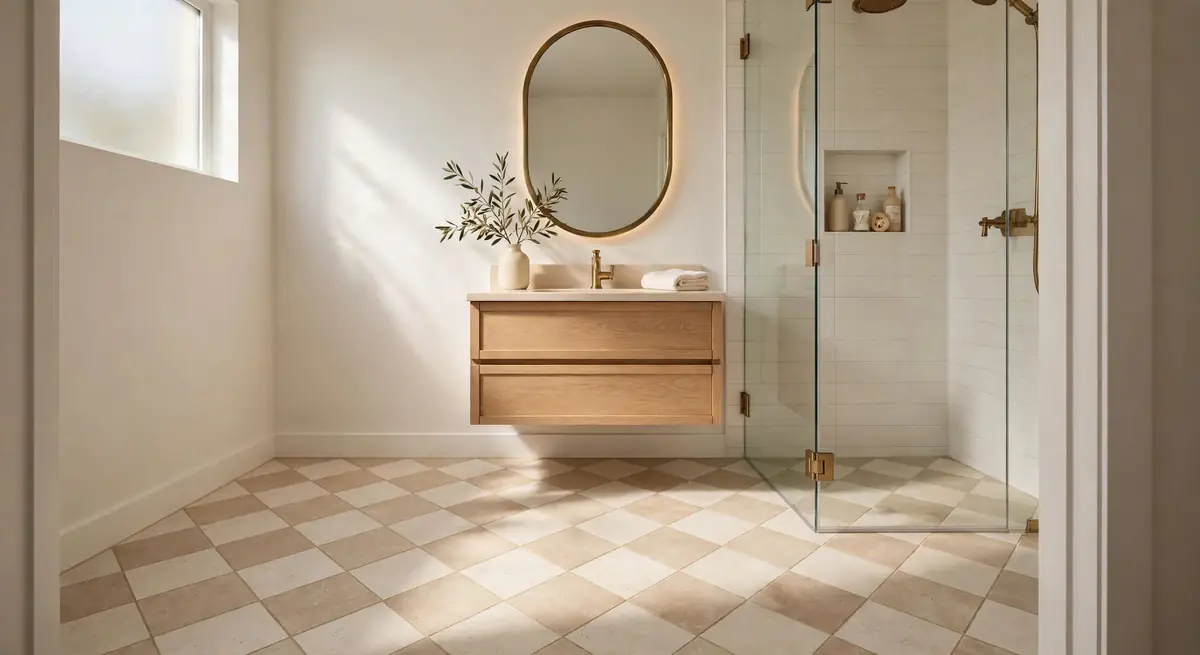
18 Small Bathroom Tile Ideas That Make a Big Difference
A small bathroom doesn’t need plain walls or boring floors to feel spacious. The right tile color, size, pattern, and layout can make a compact bathroom look brighter, taller, and more thoughtfully designed. Even a simple change, such as switching to vertical tiles or using a consistent color palette, can make the entire space feel more open.
If you’re planning a bathroom refresh or looking for inspiration before choosing new tiles, these small bathroom tile ideas offer a mix of practical layouts, subtle patterns, and stylish finishes that work beautifully in limited spaces.
18 Small Bathroom Tile Ideas
1. Choose Large Format Tiles
Large-format tiles can make a small bathroom feel more open because they create fewer grout lines across the walls or floor. Instead of breaking the surface into lots of small sections, they give the room a cleaner and more continuous appearance. Light gray, warm white, and soft beige are especially useful when you want the space to feel bright without looking completely plain.
For the best result, choose tiles with a simple finish and keep the grout close to the tile color. This helps the surface look more seamless and prevents strong grid lines from drawing attention.
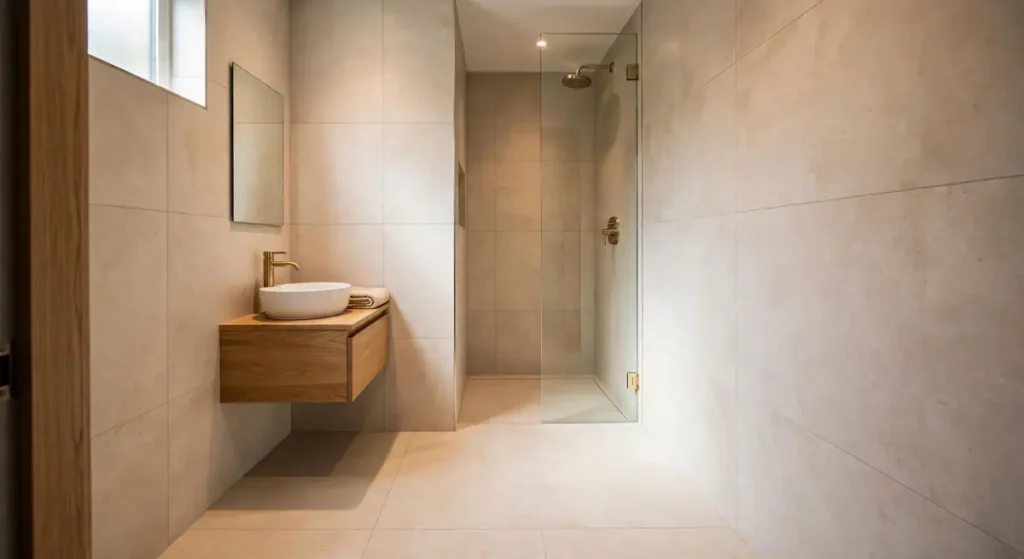
Styling Tip: Use large-format tiles on both the floor and shower walls to create a more connected look.
2. Install Vertical Subway Tiles
Traditional subway tiles are usually installed horizontally, but turning them vertically creates a different visual effect. The upward lines naturally draw the eye toward the ceiling, making a low or compact bathroom feel taller. White, ivory, and pale gray tiles work particularly well because they keep the design light while adding a little movement to the walls.
You can use this layout throughout the bathroom or reserve it for one wall behind the vanity or inside the shower. A vertical arrangement also gives a familiar tile shape a more contemporary appearance without requiring a complicated pattern.
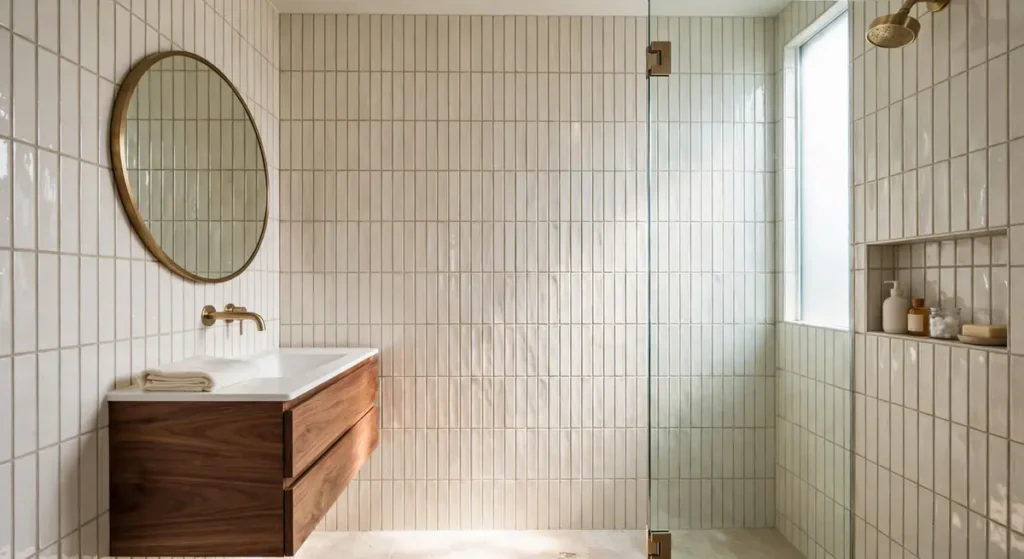
Styling Tip: Choose a narrow subway tile and use a matching grout color to keep the vertical lines looking soft and uninterrupted.
3. Use Warm White Tiles
Warm white tiles are a reliable choice when a small bathroom lacks natural light. Unlike cooler whites, which can sometimes feel stark, warm white has a softer appearance that works well with wood vanities, brass fixtures, and cream-colored accessories. It also provides a neutral background that makes the bathroom feel fresh without looking overly clinical.
You can use warm white tiles on the walls and introduce a slightly different texture on the floor to create depth. A satin or glossy wall finish can also help distribute available light around the room.
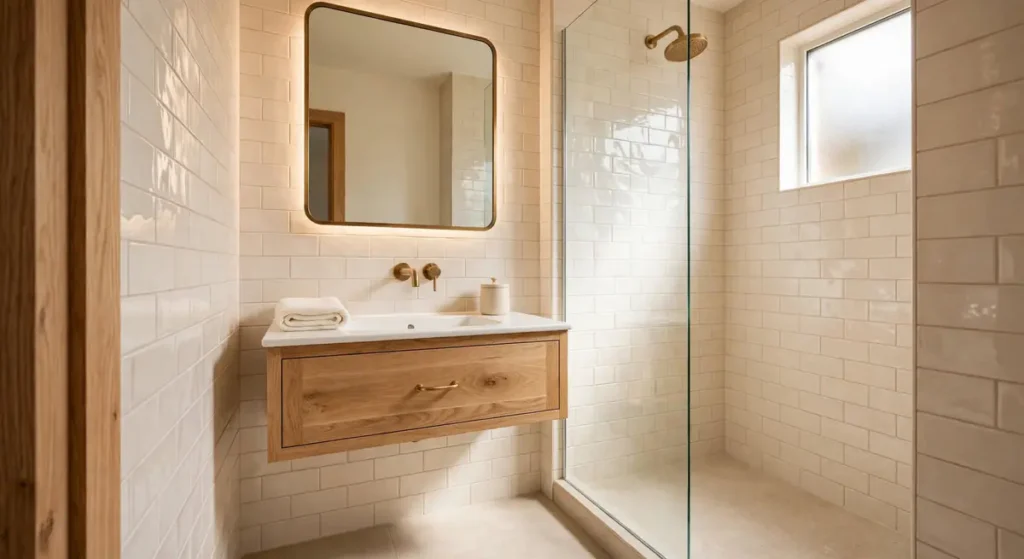
Styling Tip: Pair warm white wall tiles with light oak details and brushed brass hardware for a comfortable, balanced look.
4. Combine Beige and Cream Tiles
A beige and cream palette adds warmth to a small bathroom while keeping the overall design light. Instead of using one flat color everywhere, combine creamy wall tiles with slightly deeper beige floor tiles. The subtle difference creates definition without introducing strong contrast that can visually divide the space.
This combination works especially well with natural materials such as oak, stone, and woven accessories. It is also a good option if you want a bathroom that feels calm and timeless rather than strongly tied to a particular trend.
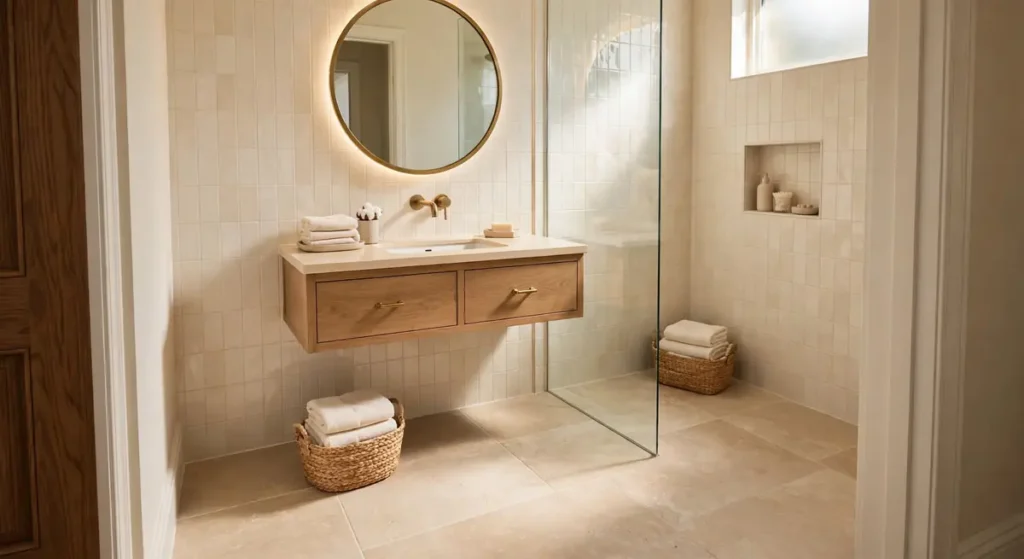
Styling Tip: Keep the wall tiles lighter than the floor tiles, and use a warm neutral grout to connect both finishes.
5. Choose Glossy Wall Tiles
Glossy tiles have a reflective surface that can help a small bathroom feel brighter, especially when there is limited daylight. They bounce light around the room and add a little shine without requiring additional decorative elements. Glossy white, pale beige, and soft sage tiles are all attractive options for compact bathrooms.
You don’t have to use a glossy finish everywhere. Applying it to the shower walls or behind the vanity can create a brighter focal area while allowing matte finishes elsewhere to balance the look.
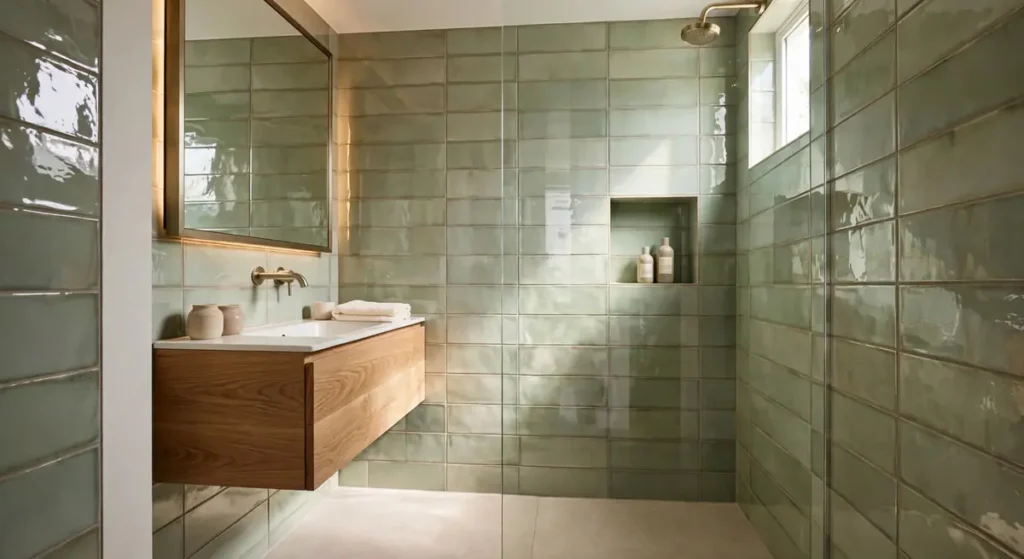
Styling Tip: Use glossy tiles on the walls and choose matte floor tiles for a practical contrast and better underfoot grip.
6. Tile Walls from Floor to Ceiling
Tiling the walls from the floor all the way to the ceiling can make a small bathroom feel more cohesive. It removes the visual break created by a painted section above the tiles and gives the room a more continuous appearance. This approach is particularly effective in shower areas, where full-height tiles also provide a practical, easy-to-clean surface.
For a compact bathroom, choose a light or softly textured tile rather than a highly contrasting pattern. You can still introduce interest through the tile shape, subtle variation, or a different finish around the vanity.
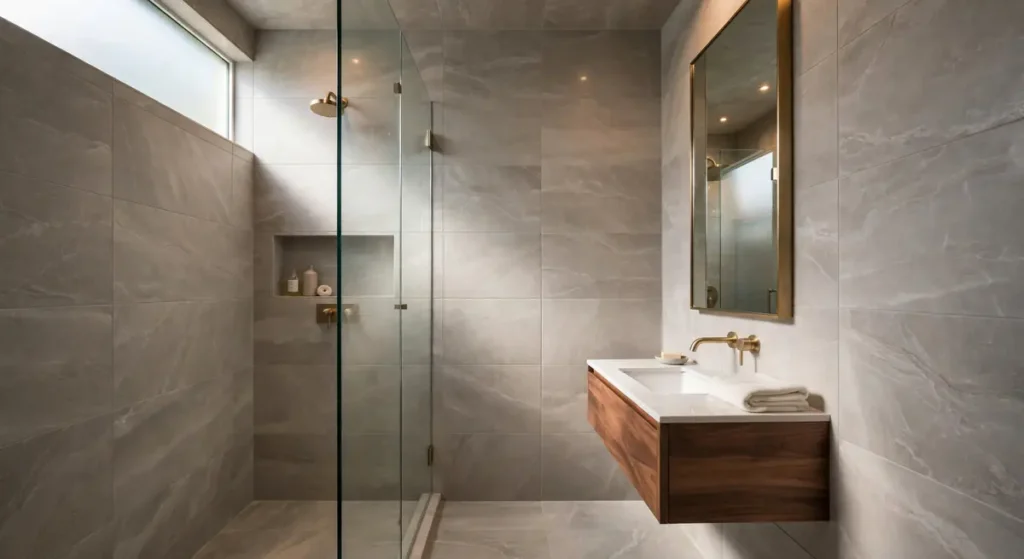
Styling Tip: Use the same wall tile throughout the bathroom and introduce contrast through the vanity, mirror, and fixtures.
7. Add a Herringbone Feature Wall
A herringbone pattern brings movement and visual interest to a small bathroom without needing multiple tile colors. The angled arrangement creates a distinctive pattern that can make a simple wall feel more decorative. White, cream, and pale gray subway tiles are popular choices because they add texture while keeping the room light.
Rather than covering every wall, use herringbone tiles behind the vanity or on one shower wall. This gives the pattern room to stand out without making the compact space feel too busy.
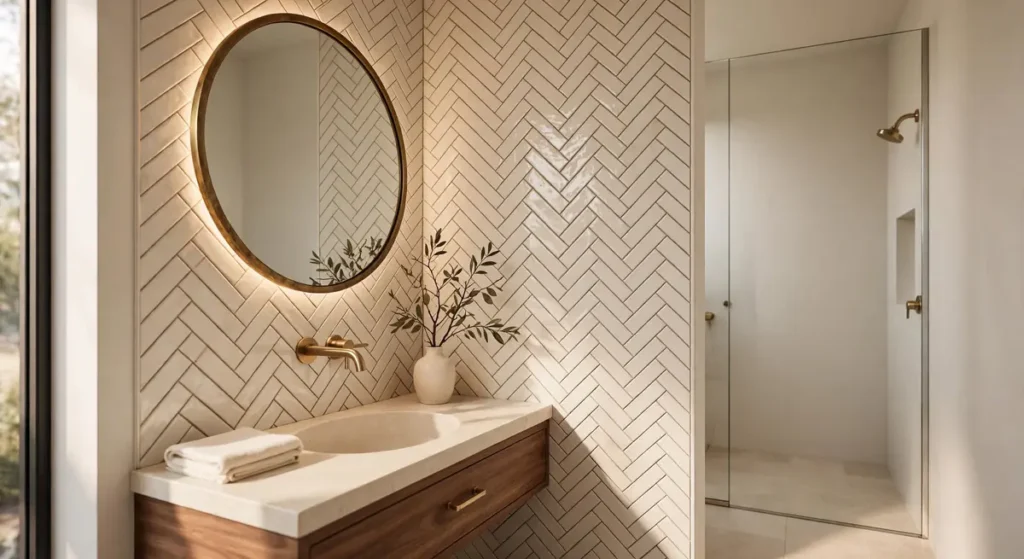
Styling Tip: Keep the surrounding walls simple and use grout that closely matches the tile to avoid creating too much visual contrast.
8. Try Light Marble-Look Tiles
Marble-look porcelain tiles can bring a polished, elegant appearance to a small bathroom without the maintenance requirements of natural marble. Soft gray or beige veining adds detail to the surface while the light background helps the room feel more open. Large-format versions are especially useful because they reduce the number of visible grout lines.
You can use marble-look tiles on the shower walls, around the vanity, or across the entire bathroom for a more coordinated design. If the veining is noticeable, balance it with simple fixtures and understated accessories.
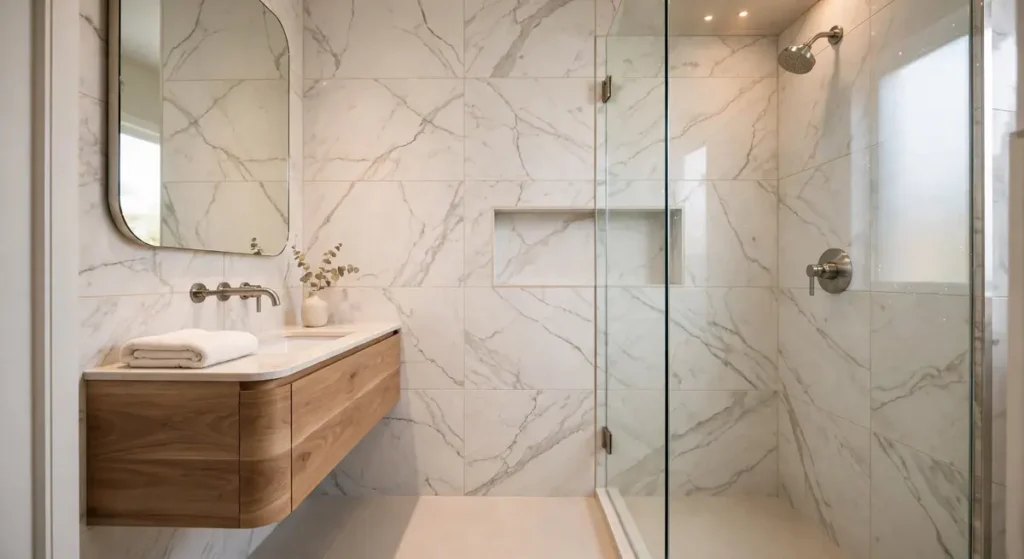
Styling Tip: Pair light marble-look tiles with a wood vanity and brushed nickel or brass fixtures for a refined but welcoming finish.
9. Use Small Hexagon Floor Tiles
Small hexagon tiles introduce pattern and texture without requiring a complicated color scheme. Their geometric shape gives the floor more character, making them a useful choice when you want the walls to remain simple. White, pale gray, and warm beige hexagon tiles can all work well in a compact bathroom.
Because smaller tiles create more grout lines, they can also provide additional grip underfoot when the correct floor-rated tile and grout are selected. However, choose a restrained color combination so the floor doesn’t become too visually dominant.
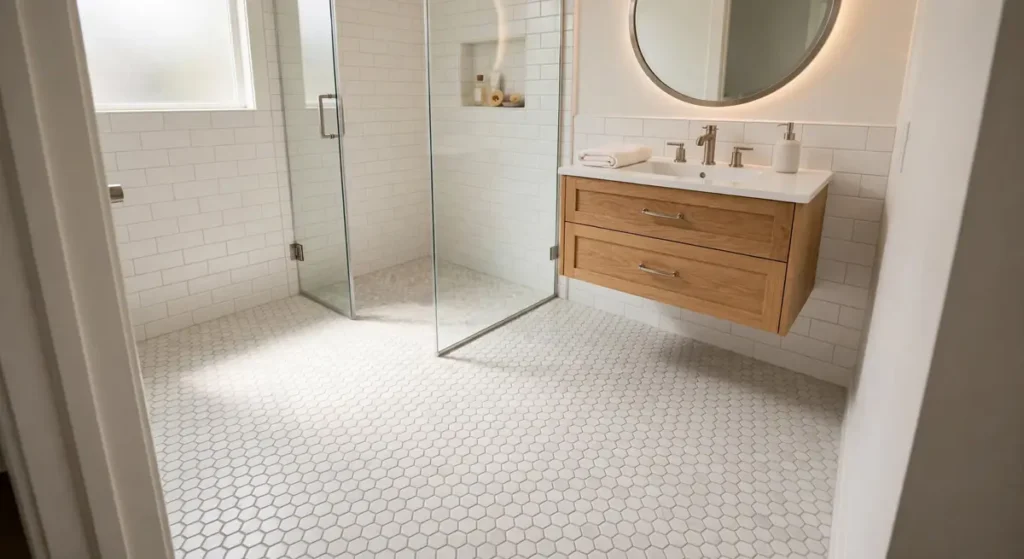
Styling Tip: Combine a small white hexagon floor with plain warm white wall tiles for a balanced, classic look.
10. Add Muted Green Tiles
Muted green tiles can bring a calm, nature-inspired feel to a small bathroom. Shades such as sage, eucalyptus, and soft olive add color without the intensity of brighter greens. They look especially attractive alongside light wood, cream surfaces, and warm metal fixtures.
You can introduce green through a full shower wall, a vanity backsplash, or a small accent area. If the bathroom is particularly dark, use a lighter green with a glossy or softly reflective finish to prevent the space from feeling enclosed.
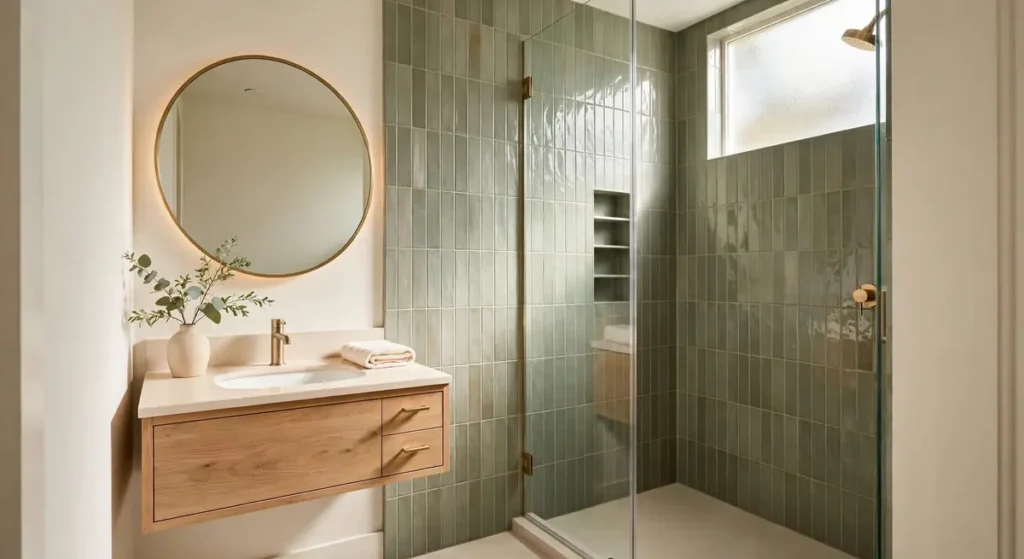
Styling Tip: Pair sage green tiles with light oak cabinetry and warm white walls for a relaxed, organic bathroom palette.
11. Create a Subtle Checkerboard Floor
A checkerboard floor adds a classic pattern that can make a small bathroom feel more designed. Instead of using traditional black and white, consider softer combinations such as cream and beige, warm white and pale gray, or muted taupe and ivory. These gentler contrasts create the same geometric effect without making the floor feel too dominant.
The scale of the pattern matters. Medium-sized squares often provide a good balance, while very small checks can create too much visual activity in a compact room. Keep the walls relatively simple so the floor remains the main feature.
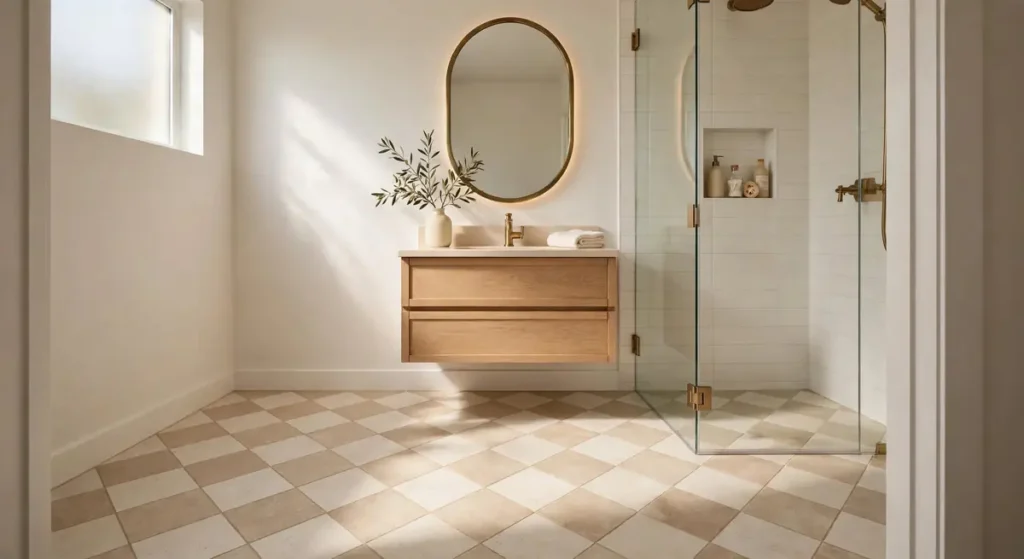
Styling Tip: Choose a low-contrast checkerboard and pair it with plain wall tiles to keep the bathroom feeling balanced.
12. Add Textured Zellige Tiles
Zellige-style tiles have slight variations in color, surface, and finish that give a bathroom a handcrafted appearance. Their imperfect texture creates depth even when you choose a single neutral shade. Soft white, warm ivory, pale beige, and muted green are particularly suitable for a small bathroom.
A vanity backsplash is a practical place to introduce this finish because it creates a focal point without covering every wall. The subtle surface variation also looks beautiful when natural or artificial light moves across it.
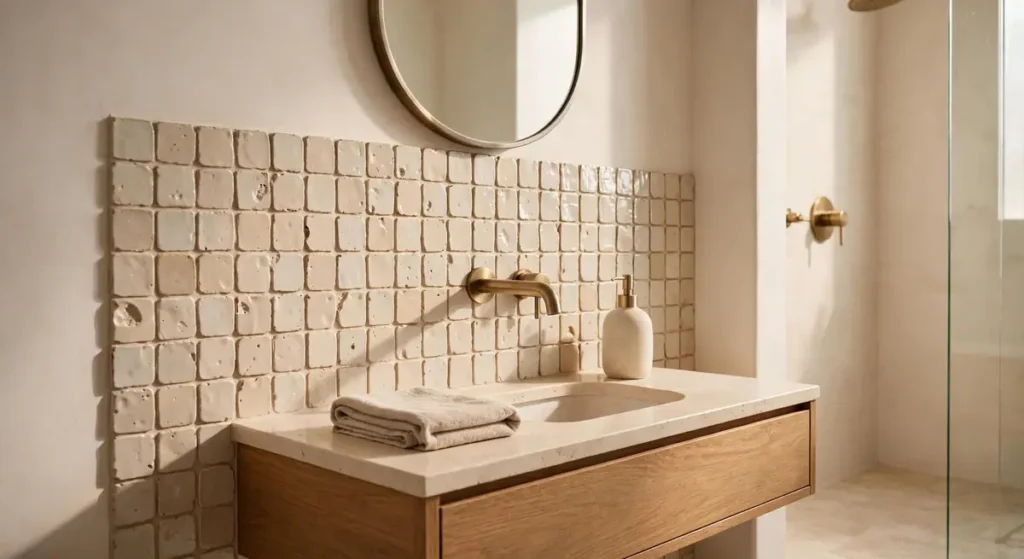
Styling Tip: Use zellige-style tiles behind a simple vanity mirror and keep the surrounding surfaces understated so their texture gets attention.
13. Match Floor and Shower Tiles
Using the same tile across the bathroom floor and shower area can create a more continuous visual flow. When the colors and finishes are coordinated, there are fewer obvious transitions to break up the room. This can be especially effective in small bathrooms with walk-in showers or glass shower screens.
You can choose one tile for both areas or use different sizes from the same tile collection. Just make sure the floor version is rated for wet areas and provides suitable slip resistance. Wall and floor tiles don’t always have the same performance requirements.
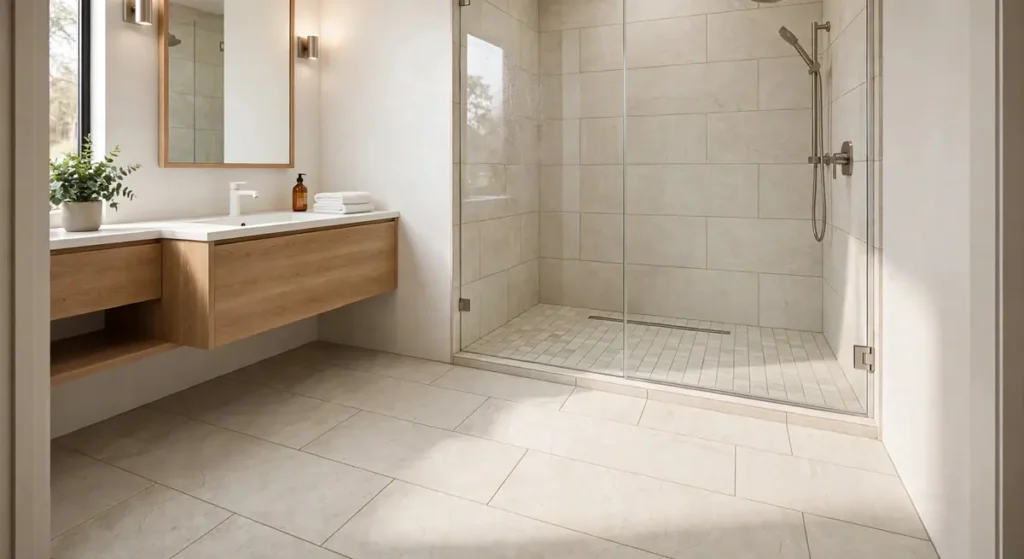
Styling Tip: Choose a light stone-look porcelain tile and use a smaller format of the same design on the shower floor where the slope requires it.
14. Install Vertical Stack Tiles
Vertical stack tiles are arranged in straight columns rather than the traditional offset subway pattern. This creates a clean, structured appearance that works well in modern bathrooms. The vertical lines can also help draw attention upward, which is useful when the room has a low ceiling.
A narrow rectangular tile in white, pale gray, or soft beige keeps the design simple. For a slightly bolder look, you can choose a muted color such as sage green or dusty blue on one wall.
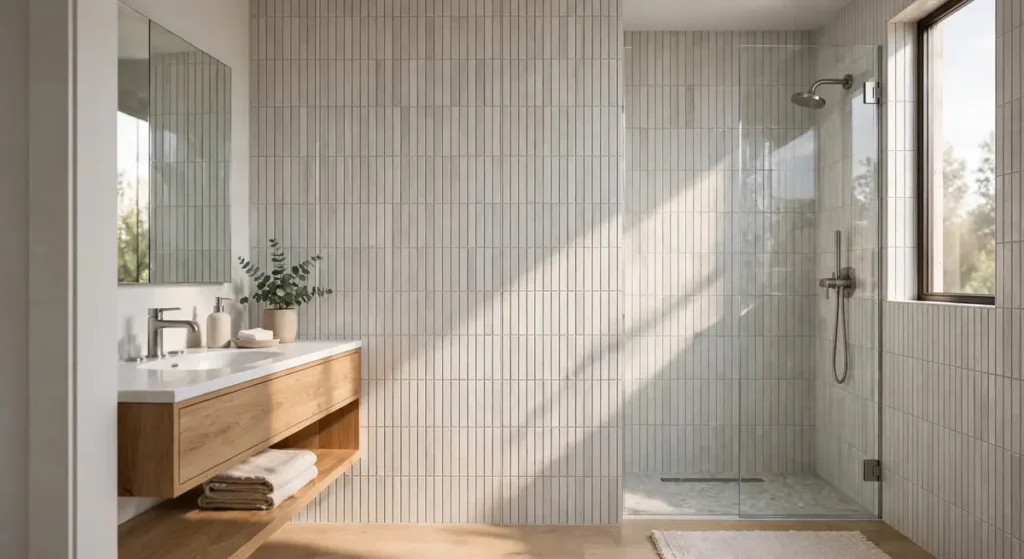
Styling Tip: Use a consistent grout color and align the tile edges carefully to maintain the clean, orderly appearance of the stacked layout.
15. Add a Terrazzo Tile Feature
Terrazzo tiles introduce small flecks of color and texture that make a bathroom feel more interesting. Their scattered pattern can add personality without relying on a strong geometric design. For small bathrooms, choose terrazzo with a light background and subtle beige, gray, or muted earthy chips.
You can use terrazzo on the floor, behind the vanity, or inside a shower niche. Keeping it to one area prevents the pattern from competing with other finishes and helps the room feel more coordinated.
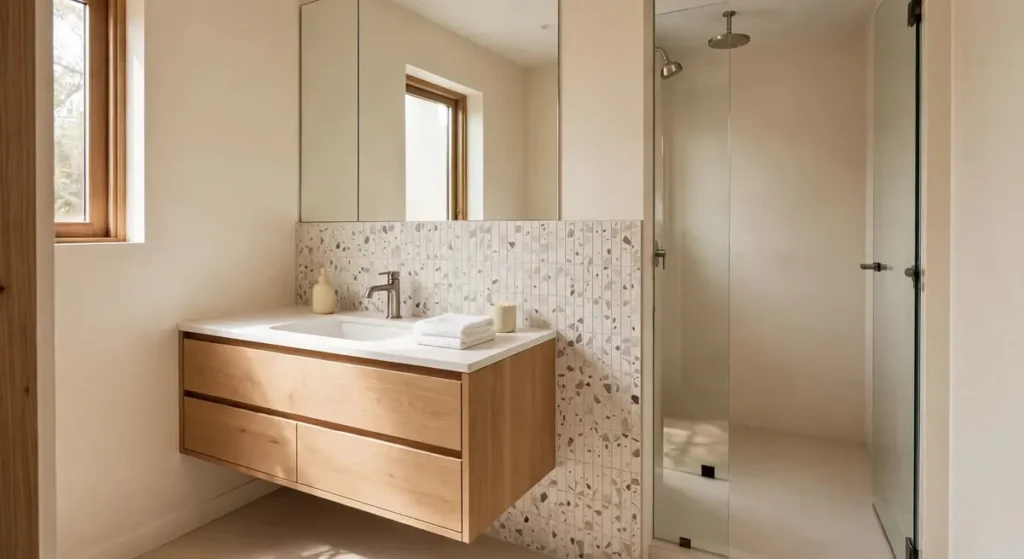
Styling Tip: Pair light terrazzo tiles with plain cream walls and simple fixtures so the speckled surface becomes a subtle focal point.
16. Choose Wood-Look Porcelain Tiles
Wood-look porcelain tiles bring the warmth of timber into a bathroom while offering a surface designed for wet environments. Their natural grain pattern can make a small bathroom feel more inviting, especially when combined with white or cream wall tiles. Light oak and pale natural wood tones are particularly effective because they add warmth without making the room feel darker.
These tiles can be installed on the floor or used as an accent wall, depending on the bathroom layout. For a more realistic finish, choose a design with natural-looking grain variation rather than an overly repetitive printed pattern.
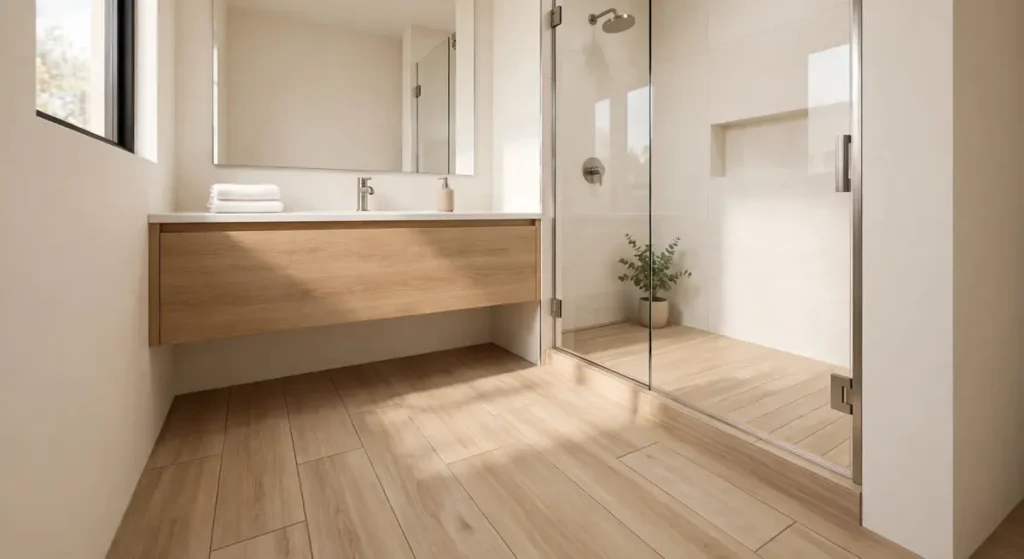
Styling Tip: Combine light wood-look floor tiles with warm white walls and a simple vanity to create a bright, spa-inspired feel.
17. Create a Contrasting Shower Niche
A shower niche is a practical storage feature, but it can also become a small decorative detail. Using a different tile inside the niche adds contrast and creates a focal point without requiring an entire accent wall. You might choose a muted green mosaic, a small marble-look tile, or a textured neutral finish.
This is a useful way to introduce a pattern or color that might feel overwhelming across a larger surface. The niche also provides a natural place to repeat a tile used elsewhere in the bathroom, helping the overall design feel connected.
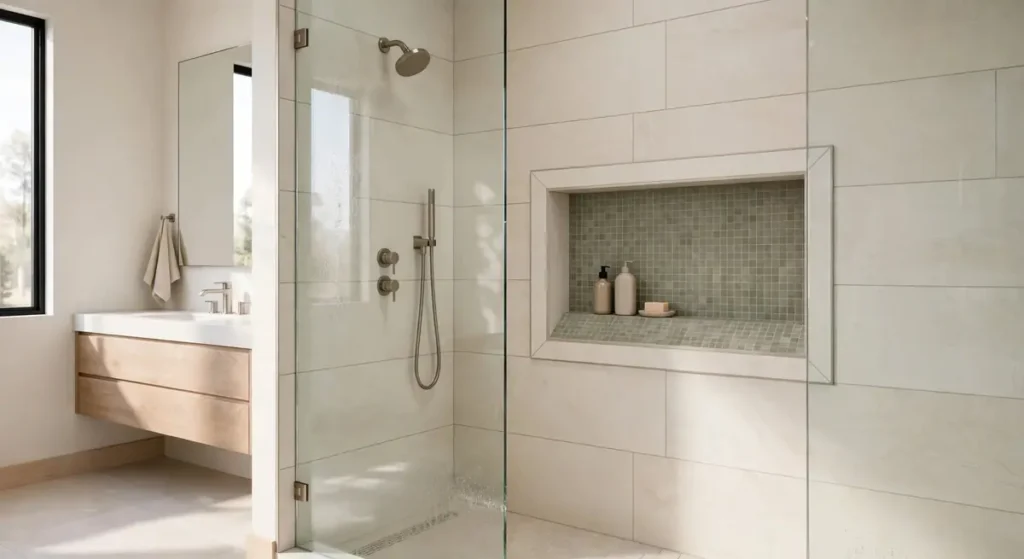
Styling Tip: Use accent tiles inside the niche that complement the main shower tile, rather than introducing an unrelated color or pattern.
18. Try Two-Tone Wall Tiles
Two-tone wall tiling creates definition by using one tile color on the lower section and another on the upper section. For example, you can install warm white tiles on the lower half and a soft beige or pale green tile above. The combination adds depth while keeping the bathroom brighter than a design built around dark, contrasting colors.
The transition can be finished with a slim tile trim or a clean, carefully planned edge. This approach works particularly well in bathrooms where you want a little more personality without covering the walls in a busy pattern.
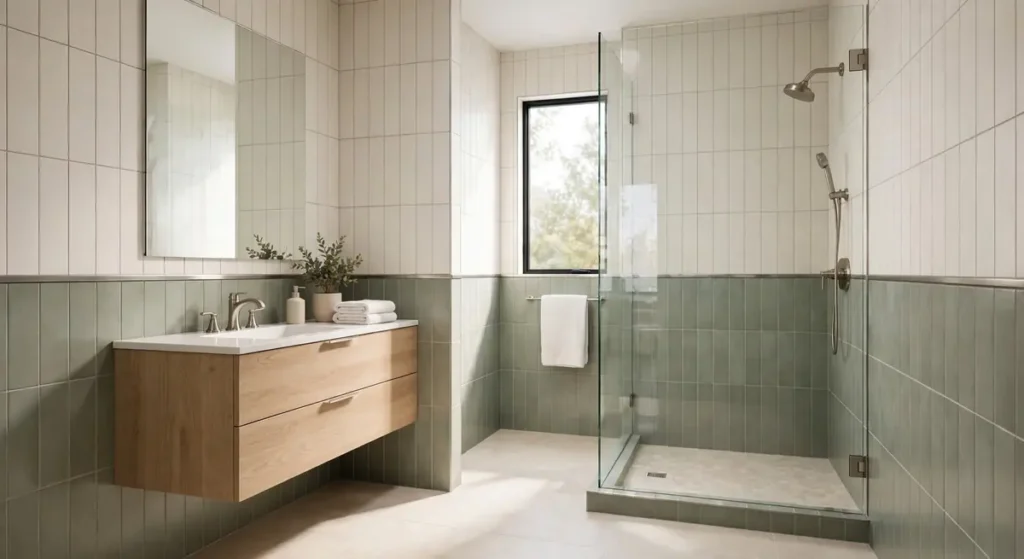
Styling Tip: Keep the darker or more saturated shade on the lower portion and use a lighter tile above to maintain an open feeling.
Choosing the Right Tile Size for Small Bathrooms
Tile size can influence how spacious a bathroom feels, but there isn’t one size that works for every layout. Large-format tiles often create a cleaner appearance because they reduce grout lines, while smaller tiles can be useful for curved surfaces, shower floors, and detailed patterns.
Consider these points before choosing:
Always check the manufacturer’s recommendations for the intended surface. A tile suitable for walls may not be appropriate for a wet bathroom floor.
Best Tile Colors for Small Bathrooms
Light colors are often helpful because they reflect more available light and create a softer visual effect. However, you don’t have to limit your choices to plain white. Warm neutrals and muted colors can also make a compact bathroom feel open while giving it more personality.
Some good options include:
For a cohesive result, choose two or three main finishes and repeat them throughout the bathroom instead of introducing a new color or pattern on every surface.
Small Bathroom Tiling Mistakes to Avoid
Even attractive tiles can make a compact bathroom feel crowded when they’re used without considering the room’s layout. Before finalizing your design, watch out for these common mistakes:
FAQs About Small Bathroom Tile Ideas
Are large tiles or small tiles better for a small bathroom?
Large tiles often help create a cleaner appearance because they have fewer grout lines. However, smaller tiles are useful for shower floors, detailed patterns, and areas that require more flexibility. The best choice depends on the bathroom layout and the surface being tiled.
Should bathroom floor and wall tiles match?
They don’t have to match exactly, but choosing complementary colors and finishes can make a small bathroom feel more connected. You can use the same tile in different sizes or combine a plain wall tile with a slightly more decorative floor.
Do glossy tiles make a small bathroom look bigger?
Glossy tiles can reflect available light, which may help a compact bathroom feel brighter. They are particularly useful on walls, but glossy finishes aren’t automatically suitable for floors. Choose floor tiles based on their slip resistance and wet-area rating.
What tile pattern makes a small bathroom look taller?
Vertical stack tiles and vertically installed subway tiles can draw the eye upward, creating the impression of greater height. They are especially useful in bathrooms with low ceilings or narrow wall spaces.
Can dark tiles work in a small bathroom?
Yes. Dark tiles can add depth and create a stylish focal point when used thoughtfully. Consider using them in a shower niche, behind the vanity, or on a limited accent wall while keeping other surfaces lighter.
Final Thoughts
The best small bathroom tile ideas balance appearance with practicality. Large-format tiles, light neutral colors, vertical layouts, and subtle patterns can all help a compact bathroom feel brighter and more thoughtfully designed.
You don’t need to use an elaborate tile pattern on every surface to make the room stand out. Choose one feature you love, such as a herringbone wall, muted green shower tiles, or a terrazzo floor, and build the rest of the bathroom around it. A coordinated design will usually make a bigger difference than adding too many decorative details.