18 Budget Kitchen Upgrades That Look Custom Without a Full Renovation
A kitchen remodel doesn’t always require new cabinets, expensive countertops, or a completely different layout. Sometimes, a few thoughtful upgrades can make an existing kitchen look more polished and custom-designed without the cost and disruption of a full renovation.
From adding cabinet trim to upgrading lighting and refreshing an outdated backsplash, small changes can make a noticeable difference. The key is choosing improvements that work with your existing kitchen rather than trying to replace everything.
Here are 18 budget-friendly kitchen upgrades that can give your space a more custom look without a full renovation.
18 Budget Kitchen Upgrades That Look Custom
1. Add Crown Molding Above Kitchen Cabinets
The empty gap between kitchen cabinets and the ceiling can make even good-quality cabinetry look unfinished. Adding crown molding along the top creates a more built-in appearance, making standard cabinets look like they were designed specifically for the room. It also helps connect the cabinets visually to the ceiling, giving the kitchen a more complete and polished finish.
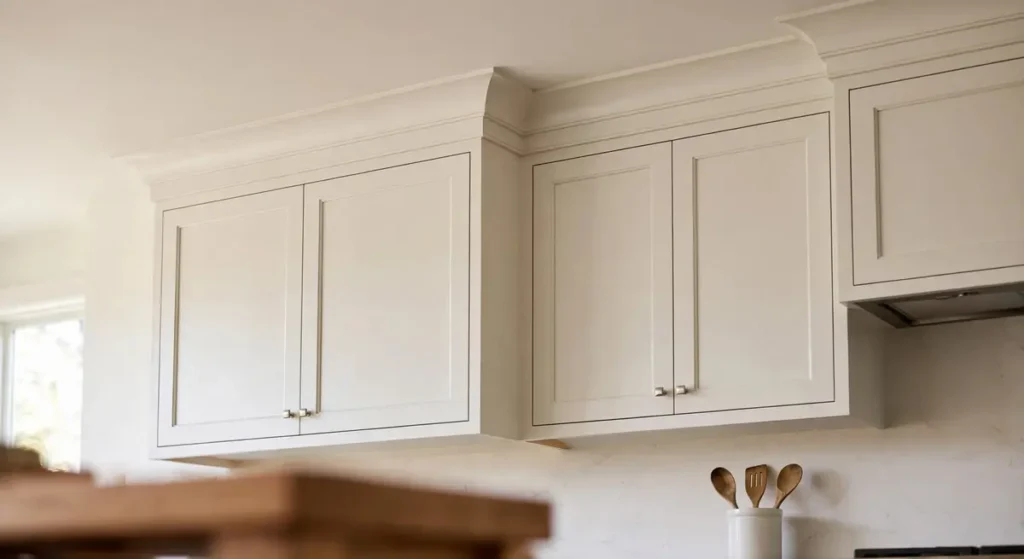
Styling Tip: Paint the molding to match your cabinets so it looks like part of the original cabinetry. For a cleaner result, choose a profile that suits the style of your existing doors.
2. Upgrade Cabinet Hardware
Basic cabinet knobs and pulls can make an otherwise attractive kitchen feel dated. Replacing them with thoughtfully chosen hardware is a relatively inexpensive way to introduce a more refined detail without changing the cabinets themselves. Brushed brass can add warmth, matte black creates contrast, and aged bronze works particularly well with traditional or natural finishes.
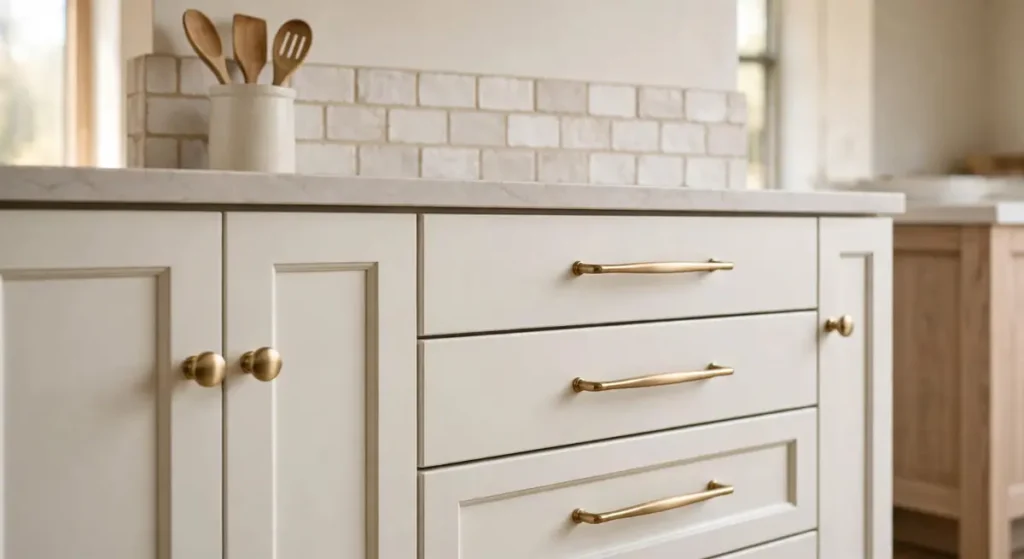
Styling Tip: Choose one main hardware finish and use it consistently across drawers and cabinet doors. Also, consider the size of each pull in relation to the cabinet door so the hardware looks properly proportioned.
3. Add Decorative Cabinet End Panels
The exposed sides of kitchen cabinets can sometimes look plain, especially at the end of a cabinet run or around a kitchen island. Adding decorative end panels gives these visible surfaces more detail and makes the cabinetry feel like a complete, custom installation. Even simple paneling can make a noticeable difference when it matches the design of the cabinet doors.
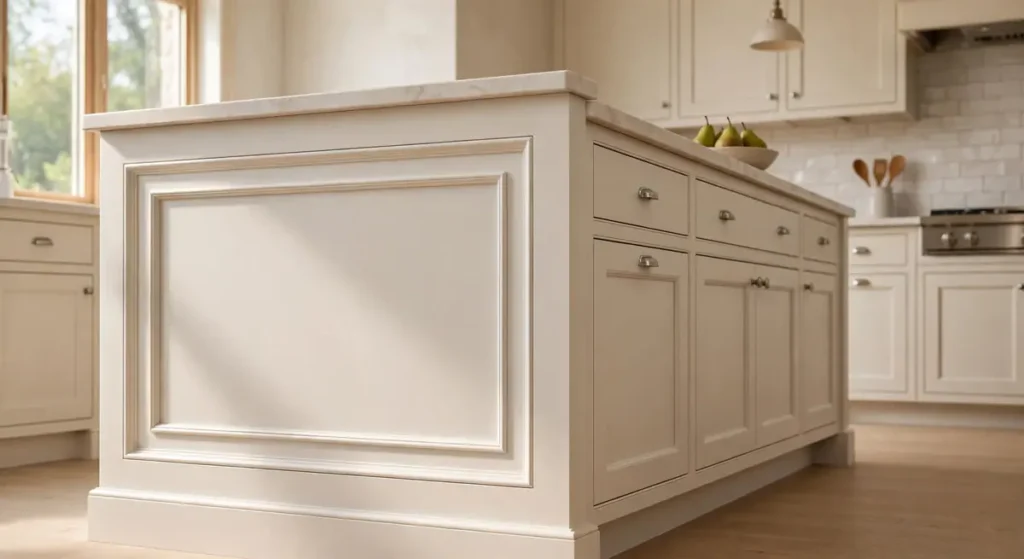
Styling Tip: Use simple panel molding that matches your existing cabinet style instead of adding overly decorative details. Keeping the finish consistent helps the panels blend naturally with the rest of the kitchen.
4. Paint Existing Kitchen Cabinets
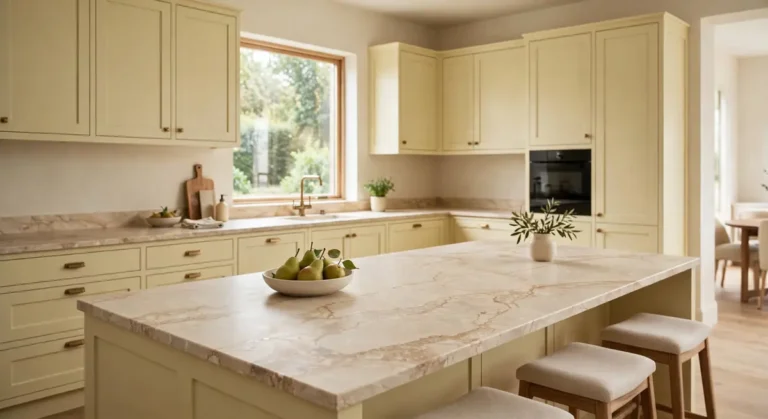
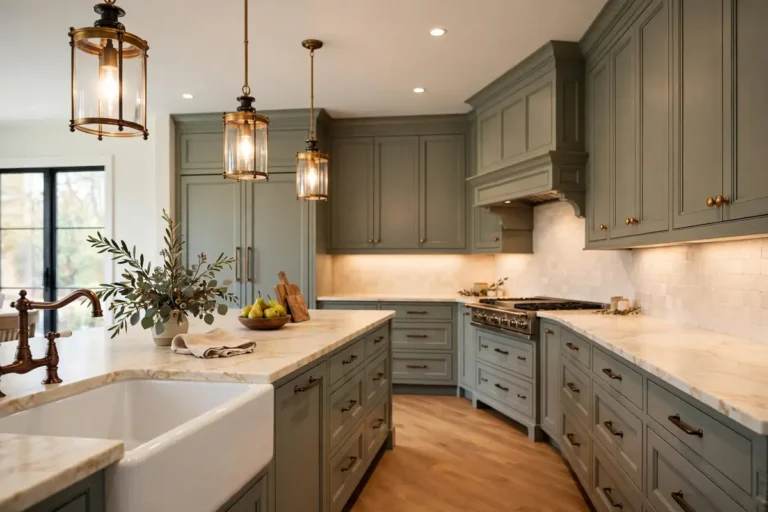
If your cabinets are structurally sound but look outdated, painting them can change the entire appearance of your kitchen without the expense of replacement. A fresh color can make older cabinetry feel more current and help create a more cohesive look with existing countertops, flooring, and backsplash. Warm white, soft greige, muted sage, and deep olive are versatile choices that work across different kitchen styles.
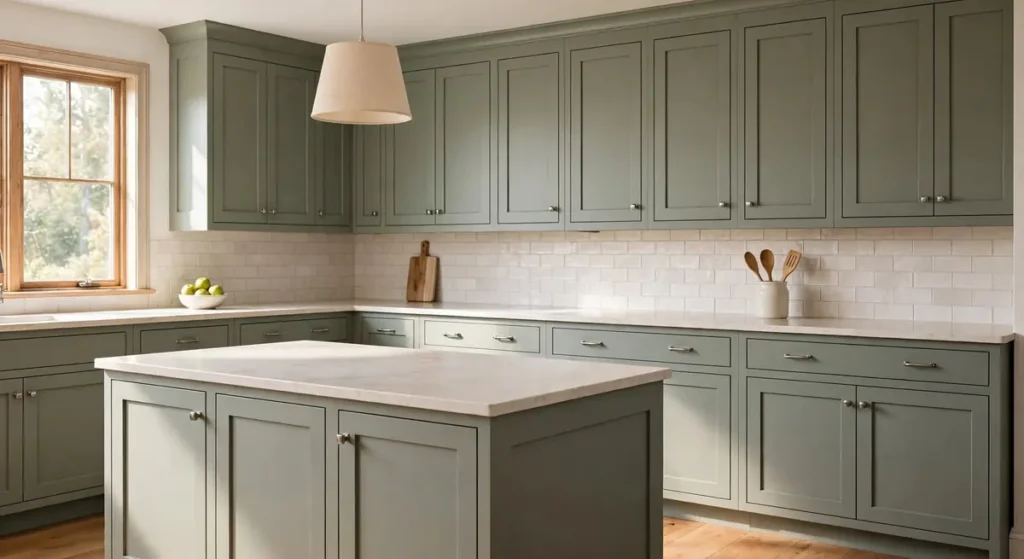
Styling Tip: Clean, sand, and prime cabinet surfaces properly before painting. Use a durable cabinet-specific paint and allow sufficient drying time to achieve a smoother, longer-lasting finish.
5. Install Under-Cabinet Lighting
Dark countertops can make food preparation difficult and leave the area beneath upper cabinets looking flat. Under-cabinet lighting solves both problems by illuminating the work surface while adding a soft layer of light to the kitchen. It can also make stone countertops and backsplash tiles more noticeable, giving the space a more finished appearance in the evening.
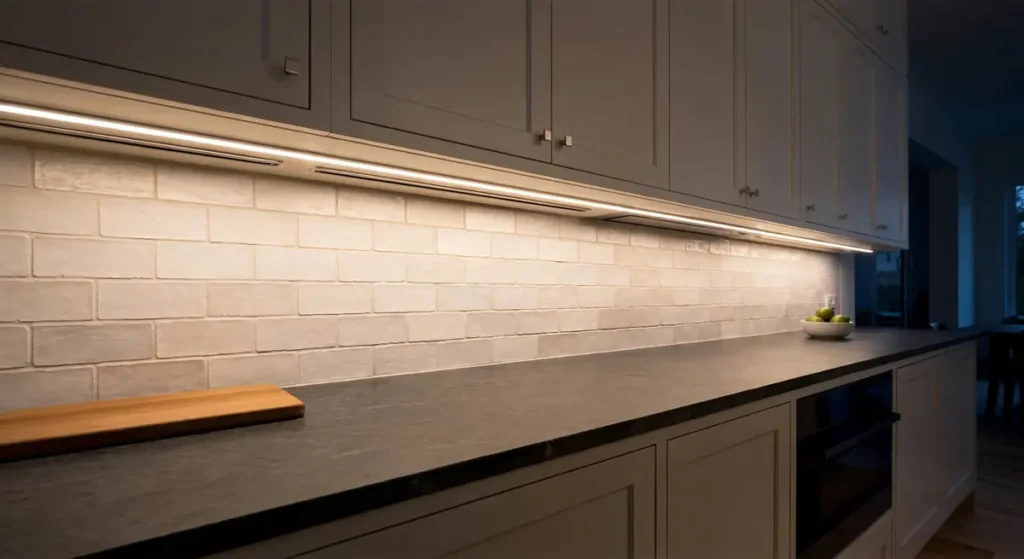
Styling Tip: Choose warm-white LED strips or low-profile fixtures for an even glow. Hide visible wires and position the lights carefully so they illuminate the countertop rather than shining directly into your eyes.
6. Add a Custom-Look Range Hood Cover
A basic range hood can sometimes look like a separate appliance rather than part of the kitchen design. A decorative cover can make it feel more intentional and create a focal point above the cooking area. Depending on your kitchen style, a simple plaster-inspired shape or a cabinet-matched cover can add architectural character without changing the entire layout.
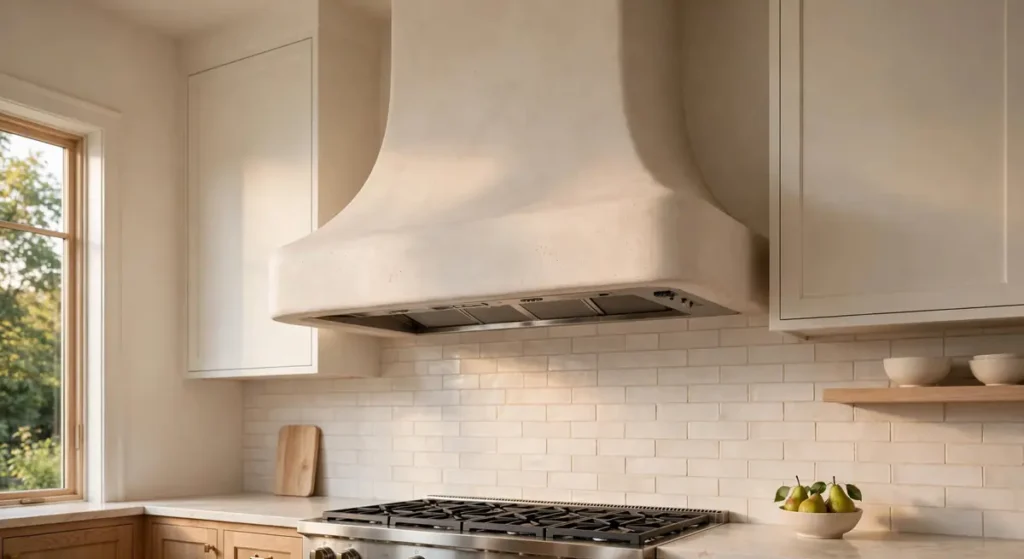
Styling Tip: Use a clean plaster-style or cabinet-matched design that complements the rest of the kitchen. Make sure the cover does not block ventilation, access panels, or the clearances required by the range hood manufacturer.
7. Replace an Outdated Backsplash
An old backsplash with busy patterns or dated colors can make the entire kitchen feel older than it really is. Replacing it with a simpler material can refresh the wall area and help connect the cabinets and countertops visually. Ceramic tiles, classic subway tiles, and handmade-look finishes can all create a more considered appearance without requiring changes to the rest of the kitchen.
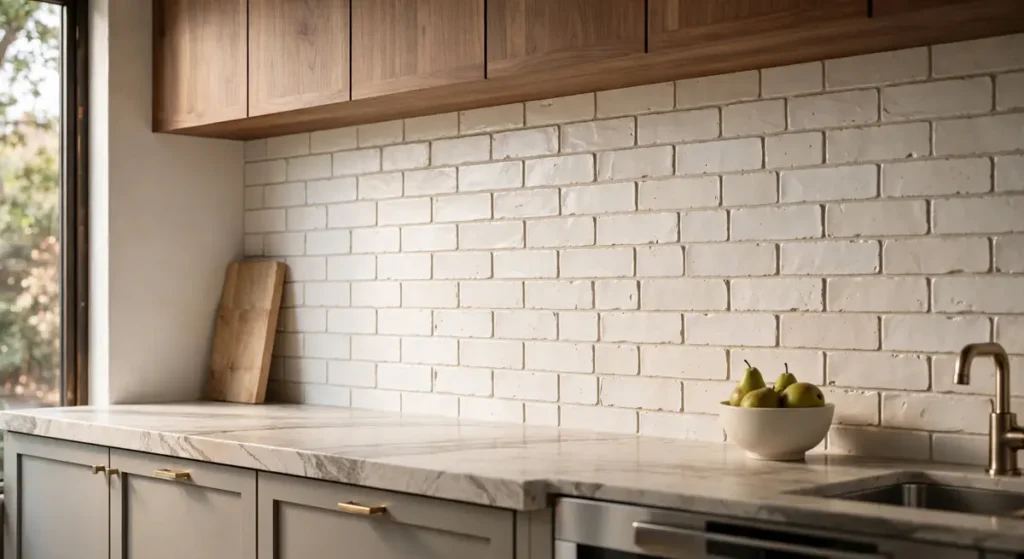
Styling Tip: Choose a backsplash that complements your countertop rather than introducing another strong pattern. If your countertop already has noticeable veining or movement, a simpler tile will usually create a more balanced result.
8. Add Open Wood Shelving
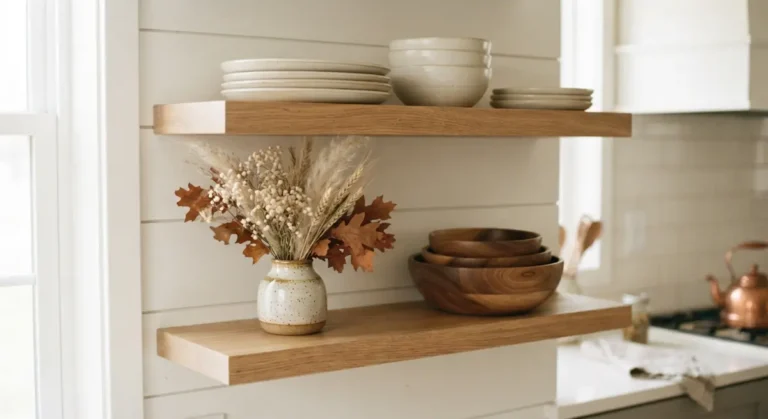
Replacing a small section of upper cabinetry with open wood shelves can make a kitchen feel lighter and less visually crowded. Natural oak or walnut shelves introduce warmth, especially when the surrounding cabinets and walls have lighter finishes. They also create an opportunity to display everyday dishes and a few useful kitchen pieces instead of filling the space with purely decorative objects.
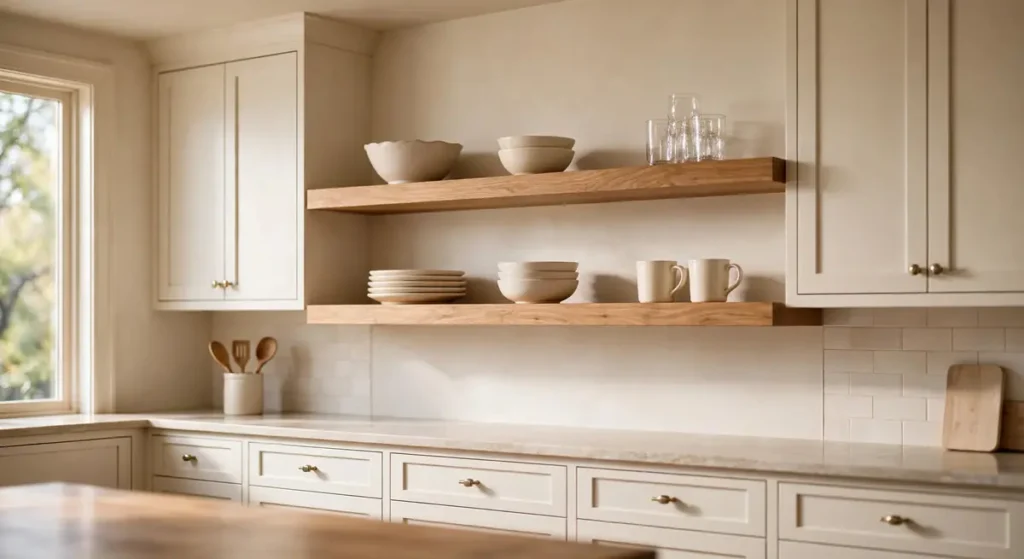
Styling Tip: Keep open shelving limited to one area rather than removing too many upper cabinets. Display a small collection of plates, glasses, and simple ceramic pieces, leaving enough empty space to keep the shelves from looking cluttered.
9. Upgrade the Kitchen Faucet
A dated faucet can stand out against otherwise attractive cabinets and countertops. Replacing it with a more streamlined design can make the sink area feel noticeably more updated, even if you keep the existing sink and surrounding surfaces. A well-chosen faucet also adds a small design detail that helps tie together the kitchen’s other metal finishes.
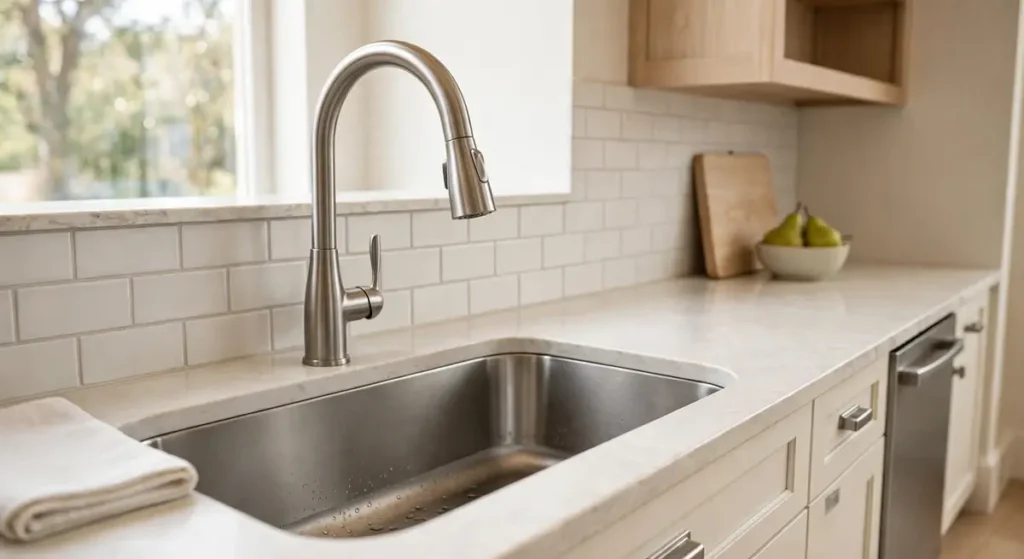
Styling Tip: Choose a faucet finish that coordinates with your cabinet hardware, such as brushed brass, stainless steel, or matte black. Before purchasing, check the number of sink holes and the available space to make sure the new faucet fits.
10. Add Furniture-Style Island Legs
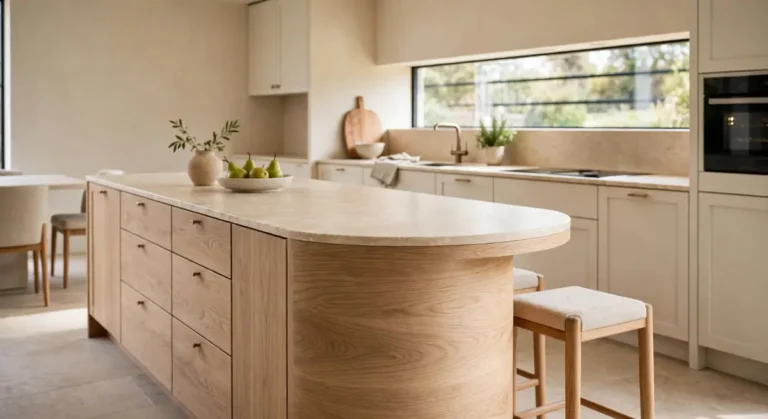
A standard kitchen island can look like an ordinary extension of the cabinetry, particularly when it has a plain, box-shaped base. Adding furniture-style legs or decorative supports can give it the appearance of a freestanding furniture piece. This small architectural detail works especially well in kitchens where the island is visible from the dining or living area.
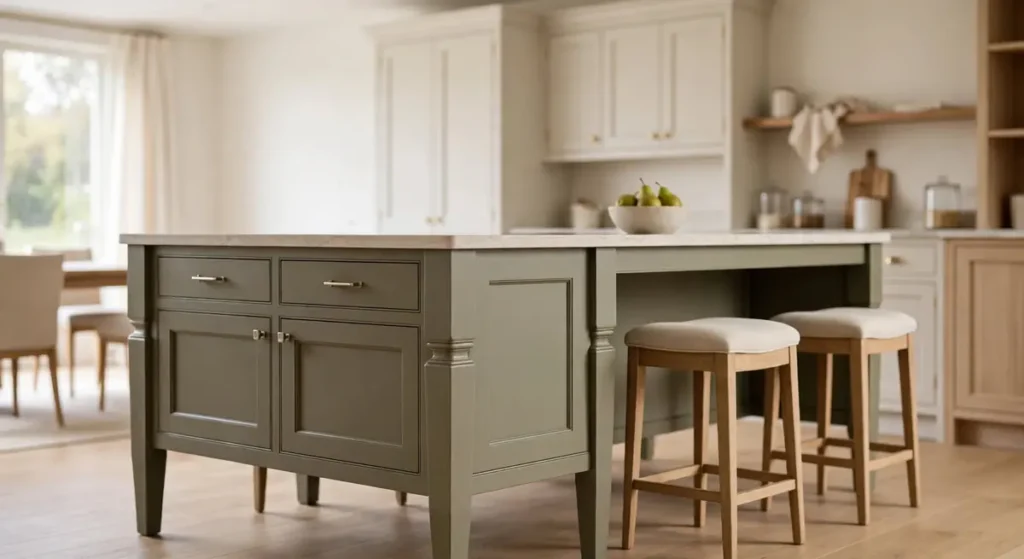
Styling Tip: Use legs that match the island’s finish and proportions. Keep the design subtle so it doesn’t interfere with seating, storage, or the practical use of the island.
11. Install Glass-Front Cabinet Inserts
Solid upper cabinet doors can make a kitchen feel visually heavy, especially when they cover a long stretch of wall. Replacing a few door panels with glass inserts creates a lighter appearance and adds a detail often found in more customized cabinetry. Clear or textured glass can also make selected cabinets feel like display areas for attractive everyday dishes.
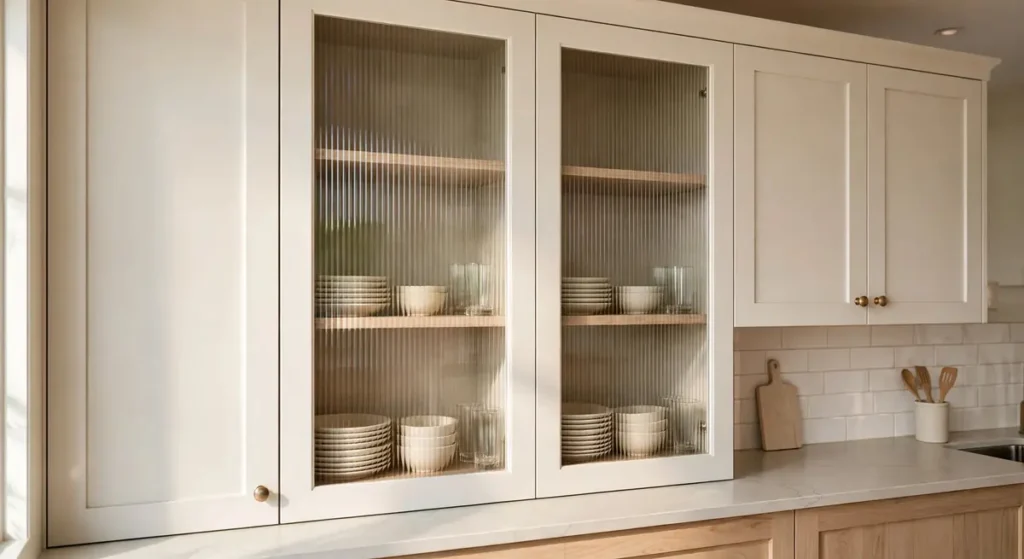
Styling Tip: Use clear or lightly textured glass on just a few cabinets rather than every door. Keep the shelves behind them organized with coordinated dishes and glassware so the display looks intentional.
12. Add Cabinet Door Trim
Plain cabinet doors can look more detailed with simple applied molding. Adding trim around the door panels creates a framed appearance and can give basic flat doors a more traditional or Shaker-inspired look. It is a useful option when the existing cabinet doors are in good condition but lack the detail you want.
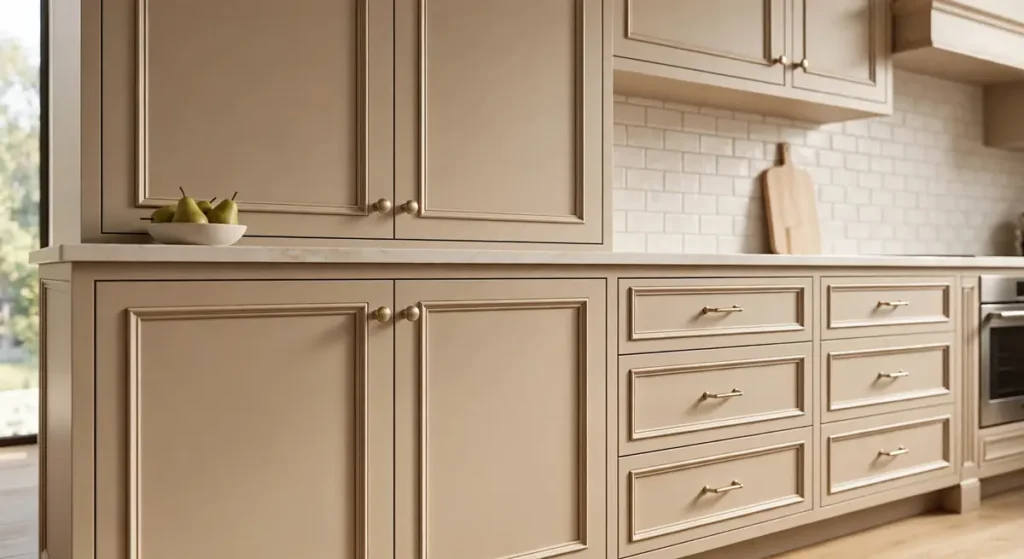
Styling Tip: Keep the trim proportions consistent across all doors and drawers. Once installed, paint the finished doors to match the existing cabinetry so the added molding looks like part of the original design.
13. Upgrade Kitchen Lighting Fixtures
Lighting has a strong influence on how a kitchen feels, and an outdated ceiling fixture can make the entire space look less considered. Replacing it with a simple pendant, a modern ceiling light, or a more decorative fixture can add character without changing cabinets or countertops. If you’re looking for more ways to improve lighting without major renovations, these renter-friendly lighting ideas offer practical inspiration. The right fixture can also help define areas such as a kitchen island or dining corner.
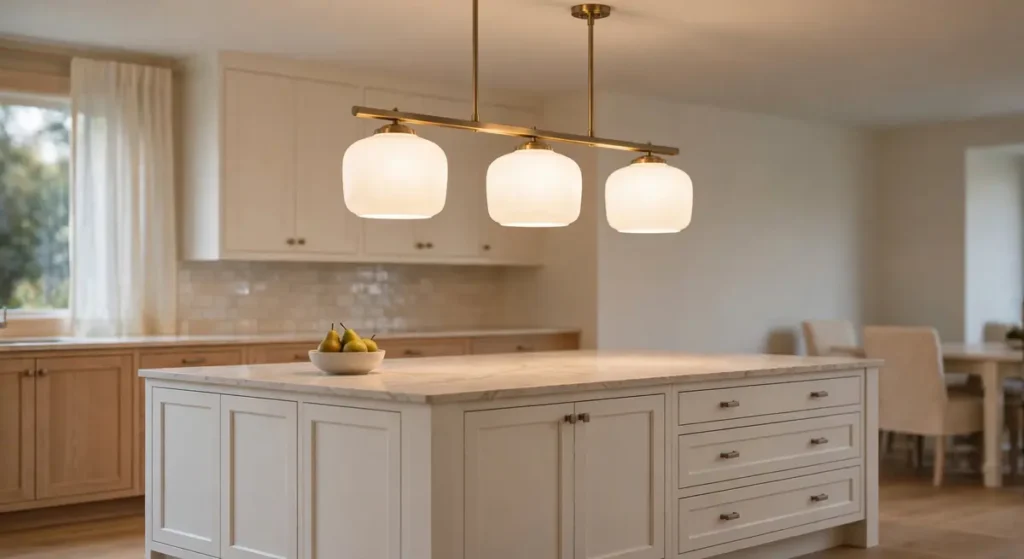
Styling Tip: Choose a fixture that suits the scale of your kitchen and the height of the ceiling. Coordinate its finish with other metal details, but avoid choosing a fixture that is too large for the space.
14. Add a Built-In-Look Fridge Surround
A freestanding refrigerator can sometimes look disconnected from the surrounding cabinetry, particularly when there is unused space above or beside it. Adding cabinet-matched side panels and an upper cabinet can make the refrigerator area feel more integrated. This creates a more continuous line of cabinetry and helps the appliance look like part of the overall kitchen design.
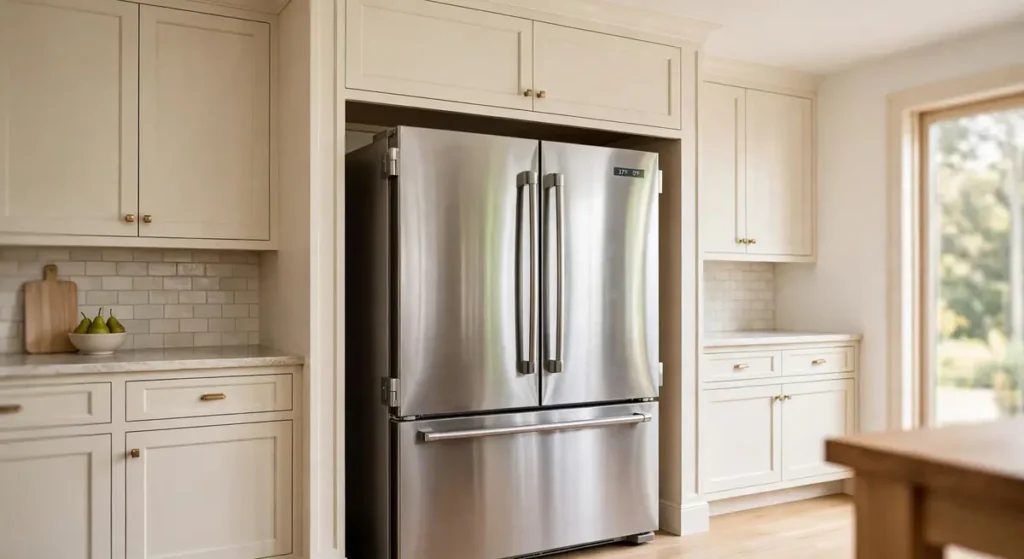
Styling Tip: Match the panels to your existing cabinets for a seamless appearance. Always leave the ventilation and installation clearances required by your refrigerator manufacturer, and make sure the doors can open fully.
15. Add Pull-Out Cabinet Organizers
A custom-looking kitchen is not only about attractive finishes; it should also make everyday tasks easier. Deep cabinets can become difficult to use when items are stacked at the back, while pull-out shelves and drawer dividers make storage more accessible. Adding these organizers to existing cabinets can improve functionality without replacing the cabinetry or changing the kitchen layout.
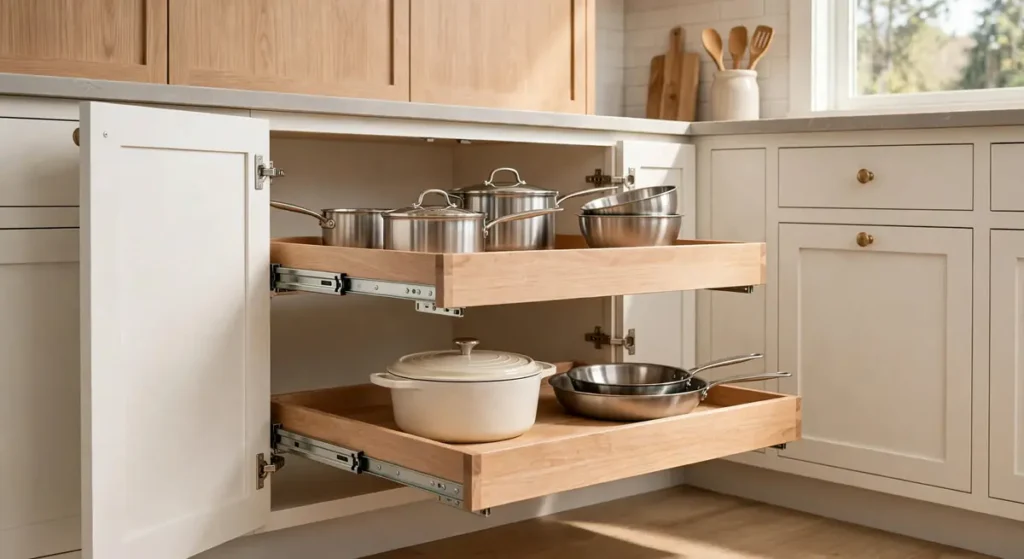
Styling Tip: Start with the cabinets you use most, such as pantry storage, pots-and-pans cabinets, or the area beneath the sink. Choose organizers that fit the cabinet dimensions rather than forcing an oversized system into a small space.
16. Paint the Kitchen Island a Contrasting Color
If your kitchen has an island, painting it a different color can create a focal point without changing the entire cabinetry. A contrasting island adds depth and helps break up a large stretch of matching cabinets. It can also introduce a new color into the room while keeping the overall design balanced and cohesive.
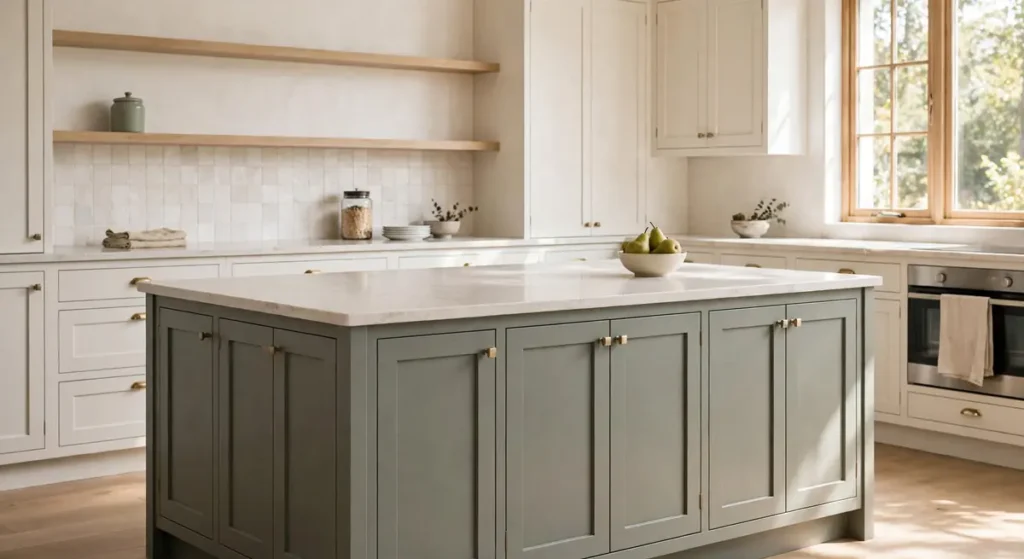
Styling Tip: Try muted sage, warm charcoal, or a deeper wood-inspired tone against lighter perimeter cabinets. Repeat a small detail from the island color elsewhere in the kitchen to make the contrast feel intentional.
17. Upgrade the Countertop Edge
If you’re keeping your existing countertop, the exposed edge is one detail worth considering. A professionally refined edge profile can give the surface a more finished appearance, particularly when the current edge looks rough, damaged, or very basic. This is a smaller detail than replacing the entire countertop, but it can help improve the overall finish of the kitchen.
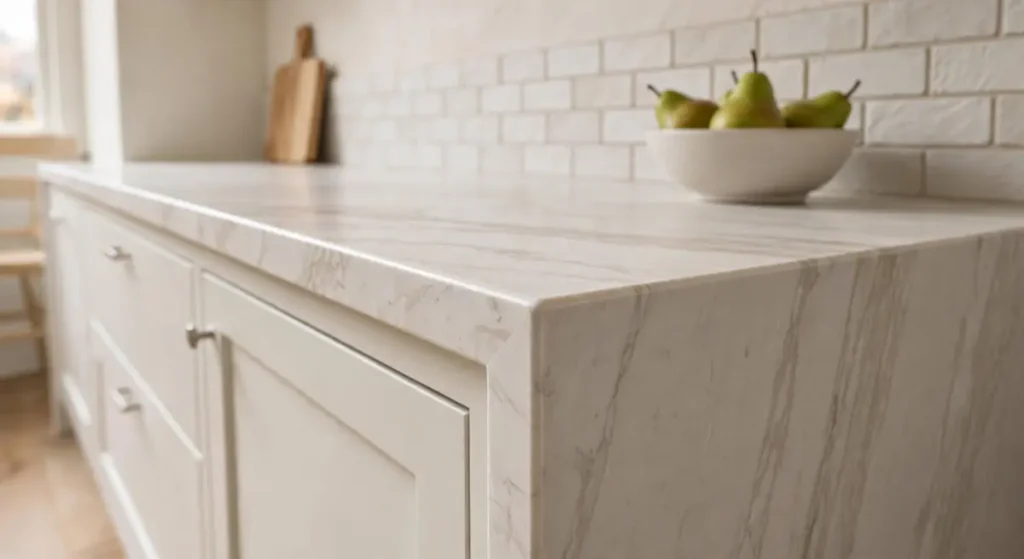
Styling Tip: Ask a countertop professional which edge profiles are suitable for your existing material. Avoid replacing a perfectly good countertop just for a decorative detail, and check whether the existing surface can be safely modified.
18. Style Countertops with Matching Accessories
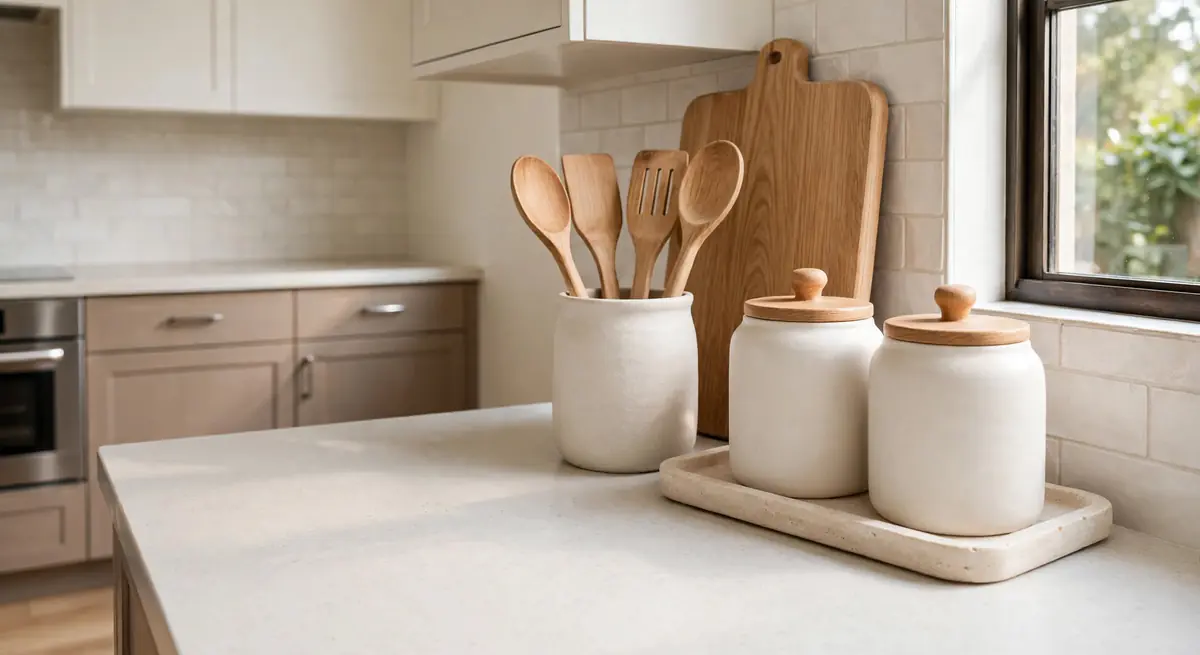
Even when the cabinets and countertops are attractive, a kitchen can feel unfinished if everyday items are scattered across the surfaces. A few coordinated accessories can make the space look more thoughtfully arranged without requiring any construction work. If you enjoy refreshing your kitchen with seasonal styling, explore these fall kitchen decor ideas for more inspiration. A wooden cutting board, ceramic utensil holder, matching canisters, and a simple tray can introduce texture and warmth while keeping useful items within reach.
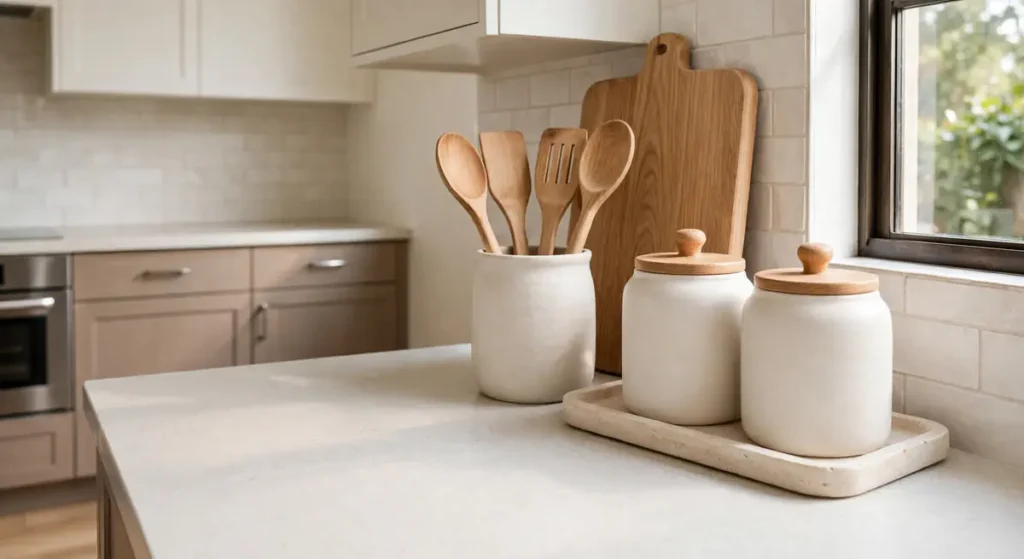
Styling Tip: Stick to two or three complementary materials, such as wood, ceramic, and stone. Group smaller items on a tray and leave plenty of clear countertop space so the kitchen still feels practical and uncluttered.
Kitchen Upgrades Worth the Investment
Not every upgrade needs the same budget. Spend a little more on improvements that affect everyday use or require professional installation.
For purely decorative changes, such as shelf styling or cabinet hardware, you can often achieve a polished result without spending much.
Budget Kitchen Update Mistakes to Avoid
FAQs About Budget Kitchen Upgrades
How can I make my kitchen look expensive without remodeling?
Focus on cabinet hardware, lighting, cabinet paint, and a clean backsplash. These smaller improvements can make an existing kitchen look more polished without changing its layout.
What is the cheapest way to update a kitchen?
Replacing cabinet hardware, painting cabinets, changing accessories, and adding simple open shelving are some affordable ways to refresh a kitchen.
How can I make old kitchen cabinets look custom?
Add crown molding, decorative end panels, cabinet door trim, or glass inserts. These details can give standard cabinetry a more finished appearance.
Can I update a kitchen without replacing countertops?
Yes. You can keep existing countertops and focus on cabinet paint, hardware, lighting, backsplash, and accessories to refresh the overall look.
Which kitchen upgrades add the most visual impact?
Cabinet painting, updated lighting, a refreshed backsplash, and improved cabinet details can make a noticeable difference because they affect large or highly visible areas.
Is it better to paint kitchen cabinets or replace them?
If the cabinet boxes and doors are in good condition, painting is often a more affordable option. Replacement makes more sense when cabinets are damaged, poorly constructed, or no longer meet your storage needs.
Final Thoughts
A kitchen doesn’t need a complete renovation to feel more custom and thoughtfully designed. Small improvements like cabinet trim, updated hardware, better lighting, and carefully chosen finishes can make a familiar space feel refreshed.
Start with the changes that will make the biggest difference in your existing kitchen, then add smaller details over time. A few well-planned upgrades can go a long way without the expense of a full remodel.