16 Friendsgiving Decorations and Games for a Fun, Cozy Party
Friendsgiving is all about gathering your favorite people for good food, meaningful conversations, and a relaxed evening together. Whether you are hosting a potluck dinner in a small apartment or planning a bigger get-together at home, the right decorations and a few easy games can make the occasion feel special without turning it into a stressful event.
The best Friendsgiving parties do not need expensive decorations or a packed schedule. A welcoming entryway, warm lighting, a simple photo corner, and games that everyone can understand are often enough. These Friendsgiving decorations and games will help you create a festive atmosphere while keeping the setup affordable, comfortable, and easy to manage.
8 Friendsgiving Decoration Ideas
1. Add a Simple Friendsgiving Welcome Sign
Make the entrance feel like part of the celebration with a small welcome sign. A wooden board, framed print, chalkboard, or piece of kraft paper can work beautifully. Write a simple message such as “Happy Friendsgiving,” “Gather Together,” or “Good Food, Great Friends.”
Place the sign on an entryway console, near the front door, or beside the area where guests will leave their coats and bags. Add a small vase of dried branches or a few mini pumpkins nearby to make the arrangement feel seasonal.
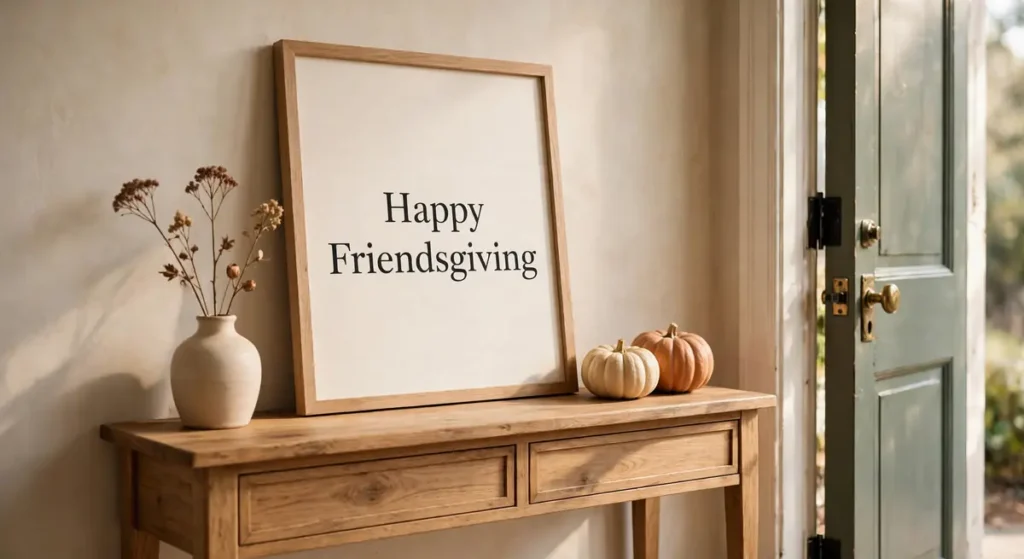
Styling tip: Stick to one main message and a couple of decorative accents. A clear, welcoming sign looks more polished than a large collection of unrelated fall decorations.
Budget-friendly idea: Use a frame you already own and print your own sign. You can also hand-letter a message on kraft paper and attach it to a board.
2. Hang a Fall Garland in the Gathering Area
A garland creates a festive backdrop without requiring a complete room makeover. Drape an artificial leaf garland across a mantel, doorway, shelf, or the wall behind a serving station. For a softer look, choose muted rust, brown, deep green, and warm cream rather than several bright colors.
You can also make your own garland with paper leaves cut from cardstock. Mix a few different leaf shapes and string them together with twine for a simple DIY decoration.
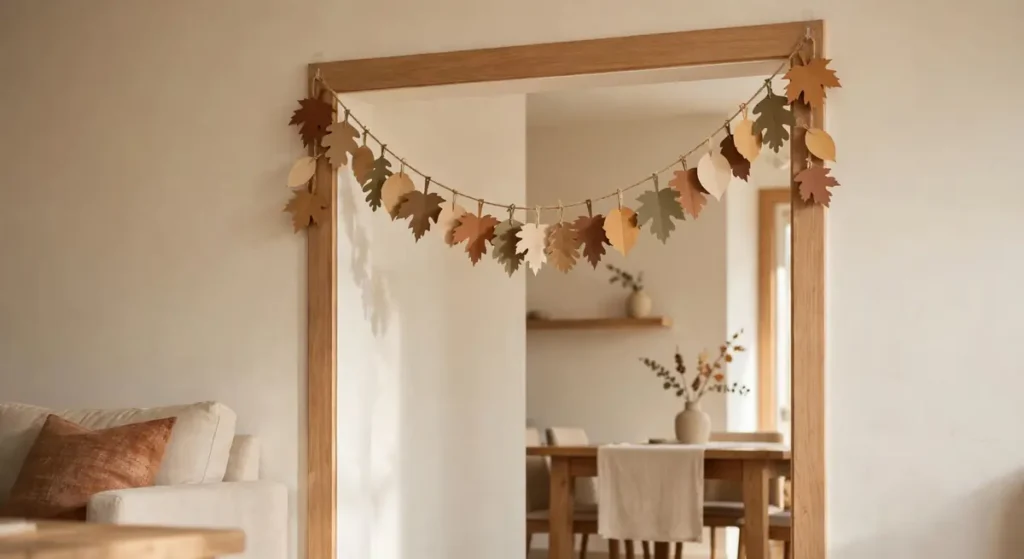
Styling tip: Choose one location for your garland instead of hanging it on every wall. The decoration should draw attention to a specific area rather than compete with everything else in the room.
Rental-friendly tip: Use removable hooks or suitable temporary hanging strips and follow the product instructions to avoid damaging walls.
3. Create a Warm, Inviting Glow
Lighting can make an ordinary room feel more festive, especially when the gathering continues into the evening. String warm-white fairy lights along a bookshelf, around a window, or behind a photo corner. Table lamps and flameless candles can add a softer glow to other areas.
Try to keep the lighting consistent instead of combining several different colors and flashing effects. Warm, gentle light generally works well with fall colors, natural wood, and neutral decorations.
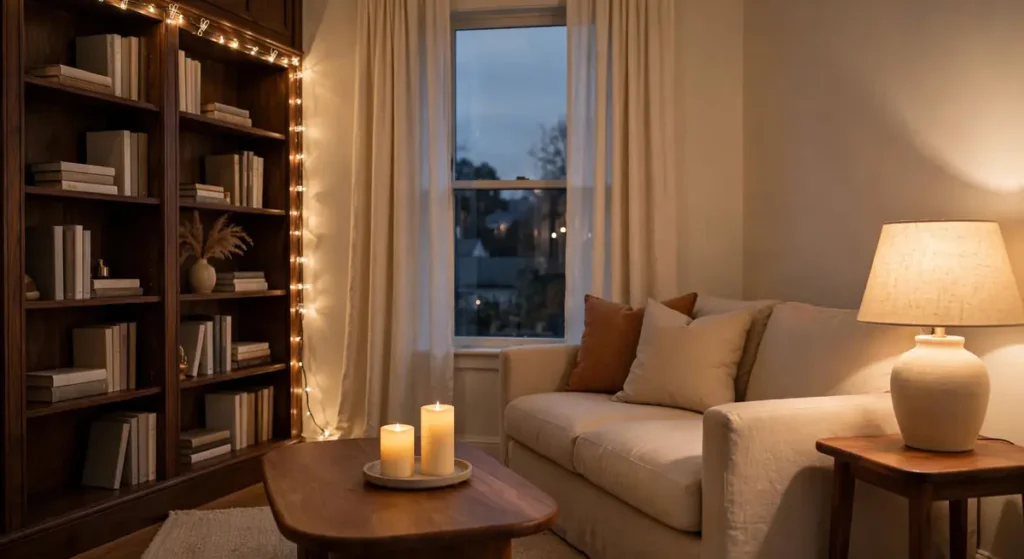
Styling tip: Use lighting to highlight the areas where people will spend time, such as the seating area, drinks station, or photo backdrop. Keep walkways and steps well lit so guests can move around safely.
Safety note: Secure light strings properly, follow their indoor or outdoor use instructions, and keep electrical decorations away from food spills and walkways.
4. Create a Friendsgiving Photo Corner
A photo corner gives friends a place to take group pictures and creates a fun memory of the gathering. You do not need a professional backdrop or an elaborate balloon installation. Choose a plain wall, hang a simple fabric backdrop or paper garland, and add a small Friendsgiving sign.
Keep a few easy props nearby, such as paper speech bubbles, fall-themed glasses, or handwritten signs with funny phrases. If you already have a tripod or phone stand, place it where everyone can fit into the frame.
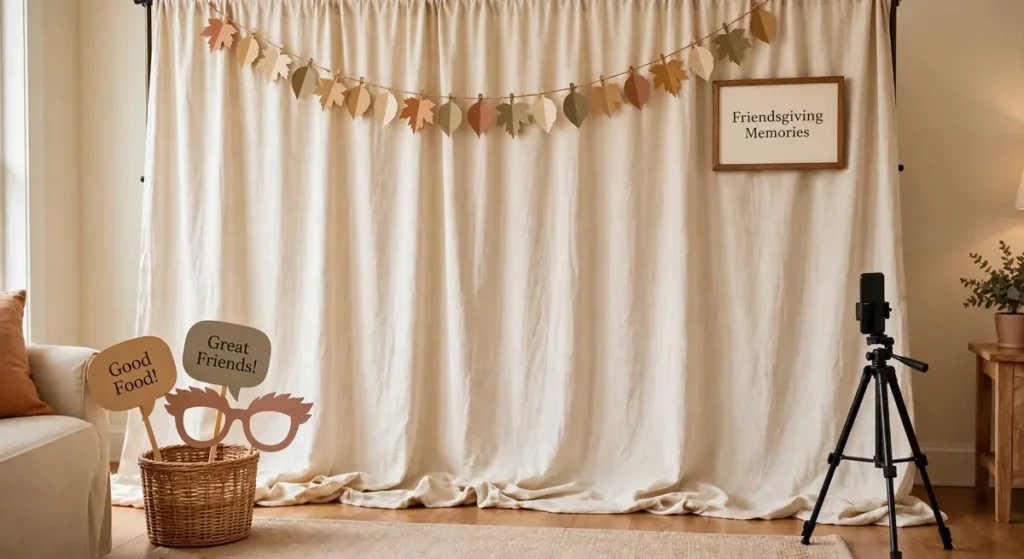
Styling tip: Use a restrained color palette such as cream, rust, brown, and olive so the backdrop looks coordinated in photographs. Leave enough room for several people to stand together.
Budget-friendly idea: Use a plain curtain or a wall you already have, then make the props from leftover craft paper. Good lighting and enough space often matter more than expensive decorations.
5. Make a Gratitude Wall With Paper Leaves
A gratitude wall works as decoration and gives guests an easy activity to enjoy throughout the evening. Attach a sheet of kraft paper to a wall or place a large board on an easel. Add the heading “What We’re Thankful For” and leave paper leaves or small cards nearby with pens.
Guests can write a note about something they appreciate, a favorite memory with the group, or something that made them smile this year. They can add their notes whenever they feel comfortable instead of stopping the party for a formal activity.
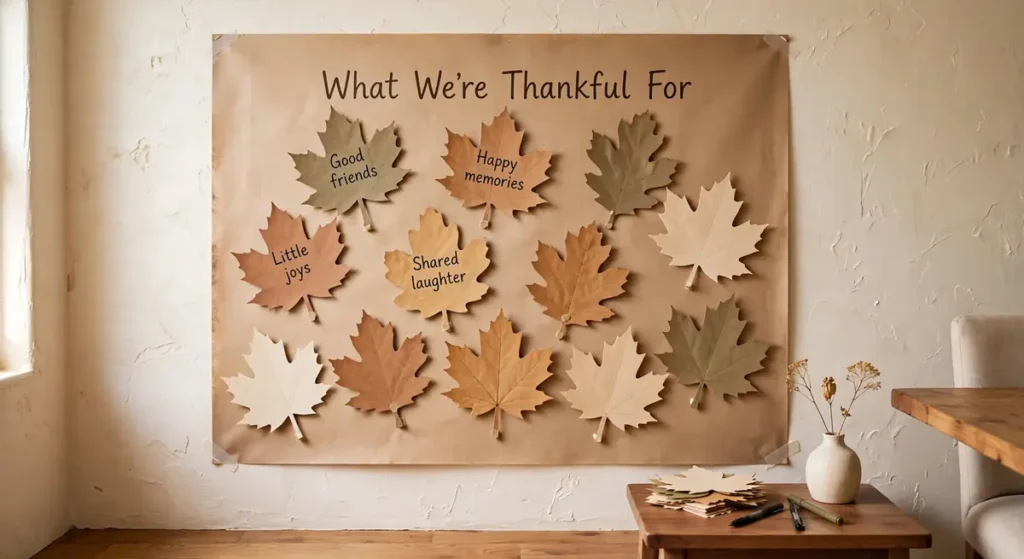
Styling tip: Use similar paper shapes and a few coordinated colors to keep the display visually tidy. Arrange the notes gradually rather than filling the board with decorations before guests arrive.
Make it more meaningful: At the end of the evening, invite anyone who wants to share a note to read it aloud. Participation should always be optional.
6. Style a Small Fall Display
A small seasonal display can make an entryway console, sideboard, or shelf feel ready for Friendsgiving. Combine two or three mini pumpkins with a ceramic vase, dried branches, or a few natural leaves. Cream, muted orange, olive, and brown create a warm autumn palette.
Vary the heights of your objects so the arrangement feels balanced. For example, place a taller vase at one end, group the pumpkins nearby, and leave some clear space between the objects.
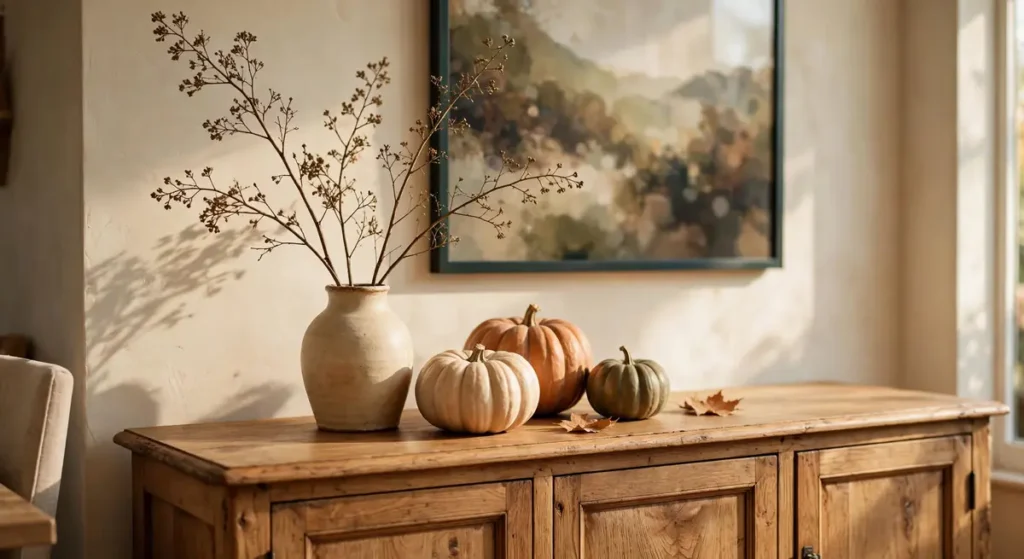
Styling tip: Use an existing console or shelf instead of buying a new piece of furniture. This idea is especially useful when you want seasonal decor without adding more items to the dining table.
Common mistake to avoid: Do not fill every empty space with pumpkins and leaves. Leaving part of the surface clear makes the display look intentional rather than crowded.
7. Create a Friendsgiving Food & Drink Station
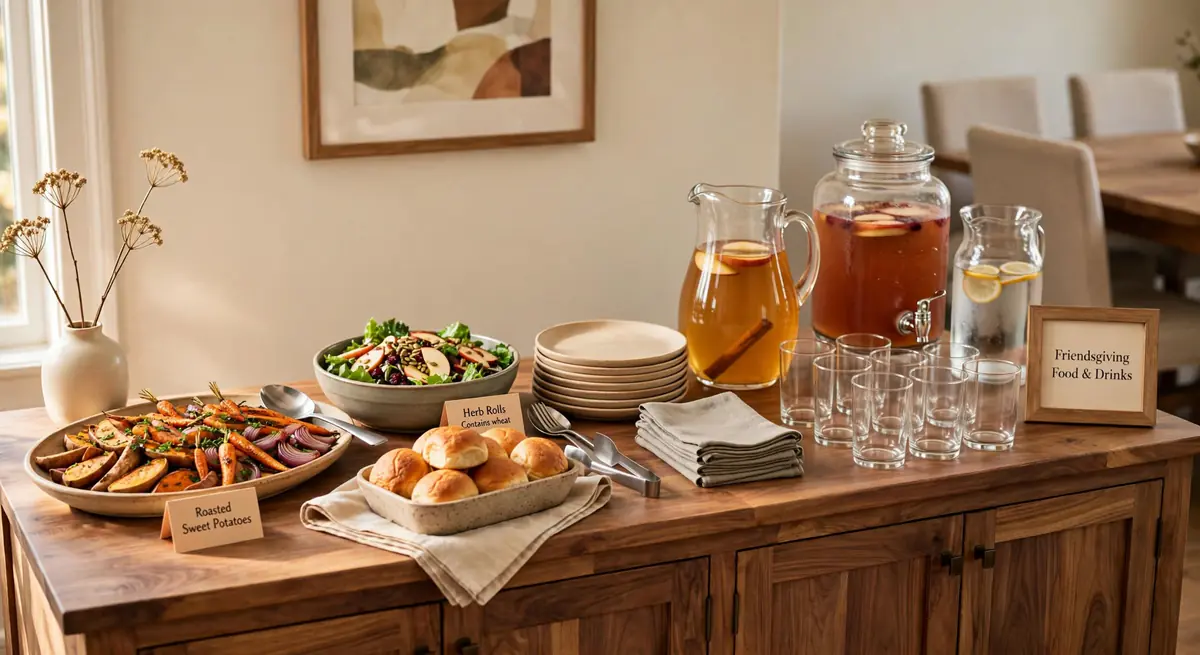
A food or drink station helps guests serve themselves and can become a decorative feature of the party. Use a sideboard, kitchen counter, or sturdy table to organize drinks, cups, napkins, serving utensils, and a few seasonal accents. If you’re decorating the kitchen for the season as well, these fall kitchen decor ideas offer more ways to bring autumn warmth into your home.
If guests are bringing food, add small labels showing each dish’s name and, when possible, relevant allergens. Keep plates and utensils close to the food so guests do not have to search around the room.
For drinks, you might set out a large pitcher of apple cider, a seasonal mocktail, water, and glasses. A small framed sign can help the station feel connected to the rest of your decor.
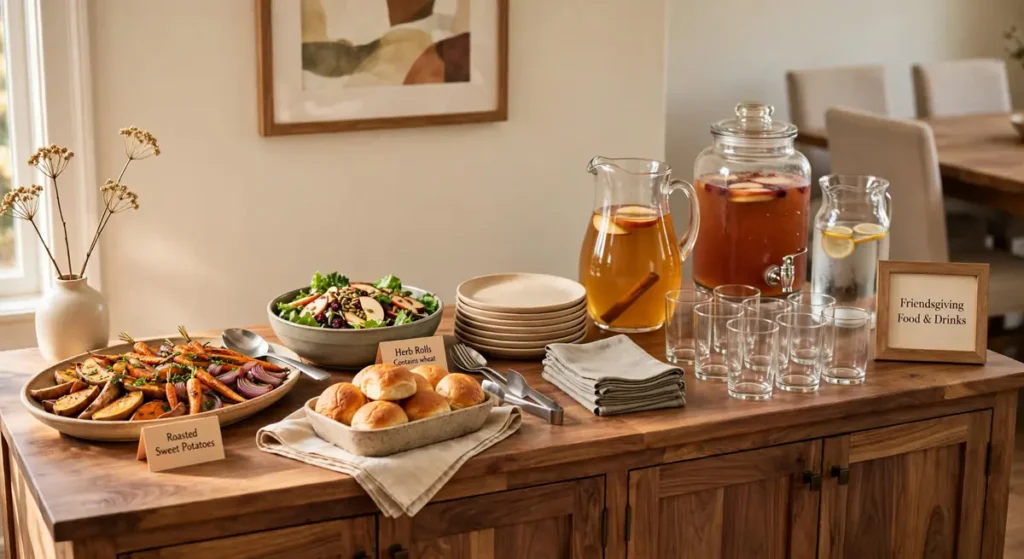
Styling tip: Keep decorations toward the edges and leave the middle of the surface available for dishes and drinks. Practical space matters more than making every corner look like a photograph.
Hosting tip: Ask guests to coordinate what they are bringing beforehand. This makes it easier to plan the station and reduces the chance of having several duplicate dishes.
8. Make a Cozy Seating Area
Friendsgiving is not only about dinner. A comfortable place to sit and talk can help the gathering feel relaxed, especially after the meal.
Arrange chairs and sofas so people can easily see and speak to one another. Add a few autumn-colored cushion covers, a soft throw, or a textured blanket to bring in seasonal warmth. For more ways to create a comfortable and inviting space with autumn colors and textures, explore these fall living room decor ideas. If you have a small living room, move a side table slightly and use existing stools or poufs for extra seating.
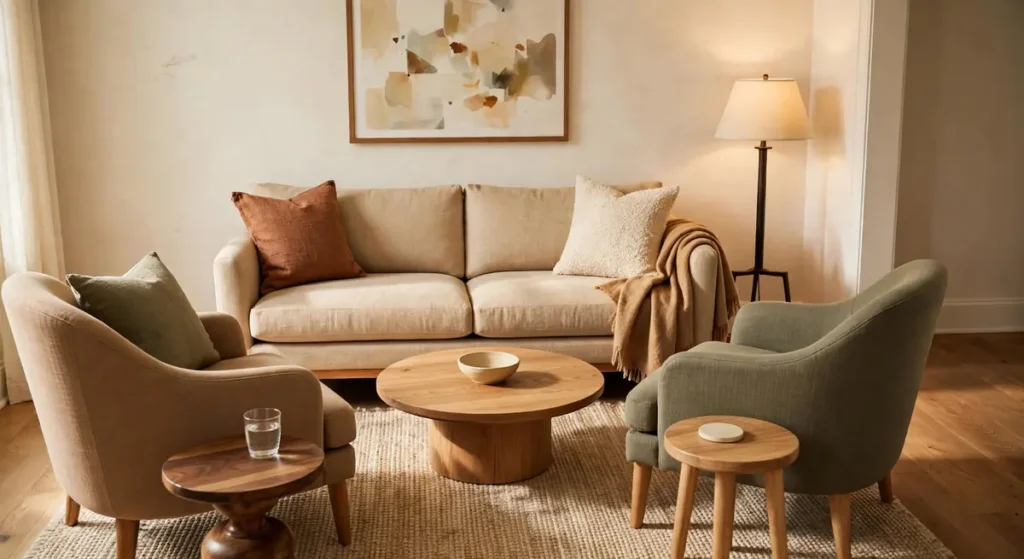
Styling tip: Keep the colors coordinated with your other decorations. Cream, tan, rust, and muted green can connect the seating area to your garland, entryway display, or photo corner.
Practical tip: Leave enough room to walk between seats and keep drinks on stable surfaces. Avoid placing throws or cushions where people might trip over them.
8 Friendsgiving Games ideas
The best Friendsgiving games are easy to explain, work with the space you have, and do not require every guest to participate at once. Choose a couple that match your group’s personality rather than trying to fit all eight games into one evening.
1. Play Friendsgiving Bingo
Friendsgiving Bingo is an easy icebreaker, especially when not everyone knows each other well. Make bingo cards with squares containing simple statements such as “brought a homemade dish,” “loves pumpkin pie,” “has known the host for five years,” or “already took a group photo.”
Give everyone a card and a pen. Guests mingle and find people who match the statements, writing a name in the appropriate square. You can ask guests to collect a different name for each square to encourage more conversations.
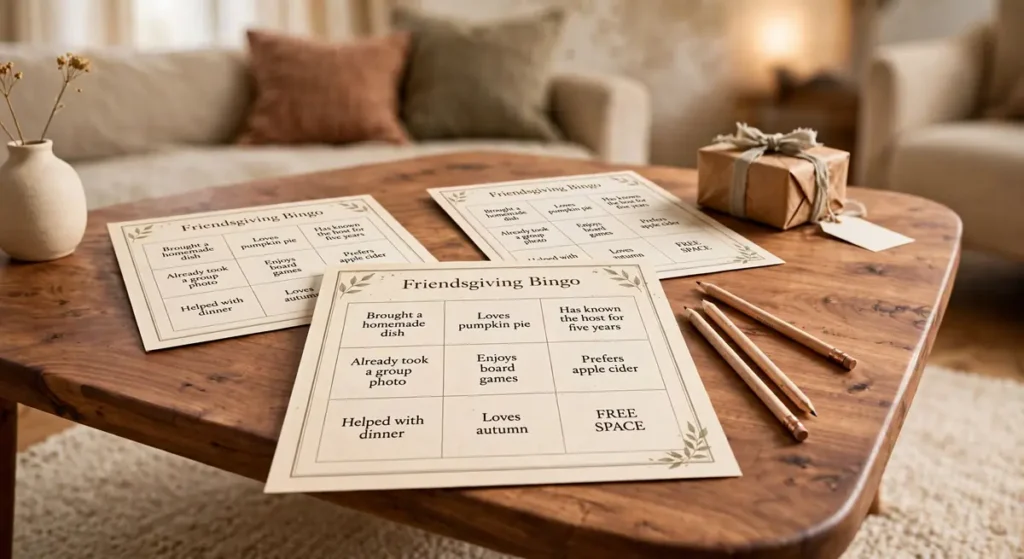
What you need: Printed bingo cards, pens, and a small prize if you want one.
How to win: Decide whether the winner is the first person to complete a row, column, or the entire card. Explain the rule before the game starts.
Make it more fun: Customize the statements to your actual group. Keep the prompts friendly and avoid questions that reveal personal information someone may not want to share.
2. Host a Friendsgiving Trivia Challenge
A trivia game adds a little friendly competition and can be played around the table or in teams after dinner. Prepare questions about fall traditions, Thanksgiving food, autumn facts, or fun details about your friend group.
You could ask questions such as “Which spice is commonly used in pumpkin pie?” or “What is the name of the day after Thanksgiving in the United States?” Mix easier questions with a few more challenging ones so everyone has a chance to contribute.
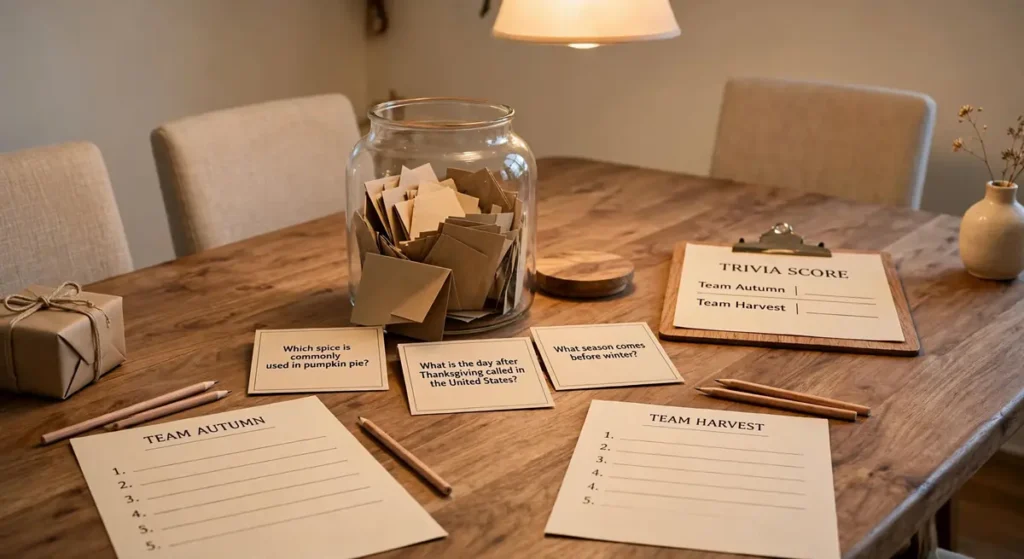
What you need: A list of questions, paper or a phone for keeping score, and an optional small prize.
How to play: Divide guests into two or more teams. Read one question at a time, give each team a short time to answer, and award one point for each correct answer.
Styling tip: Put the questions on small cards or in a decorated jar that matches your Friendsgiving setup. This keeps the game ready to play whenever there is a natural break in the evening.
3. Try Thanksgiving Charades
Charades is a good option when your group enjoys acting, guessing, and laughing together. Write words or phrases on slips of paper, fold them, and place them in a bowl. Ideas include carving a turkey, baking a pie, falling leaves, a crowded kitchen, or carrying too many grocery bags.
Split the group into two teams. A player picks a slip and acts out the phrase without speaking while their team tries to guess it before the timer runs out.
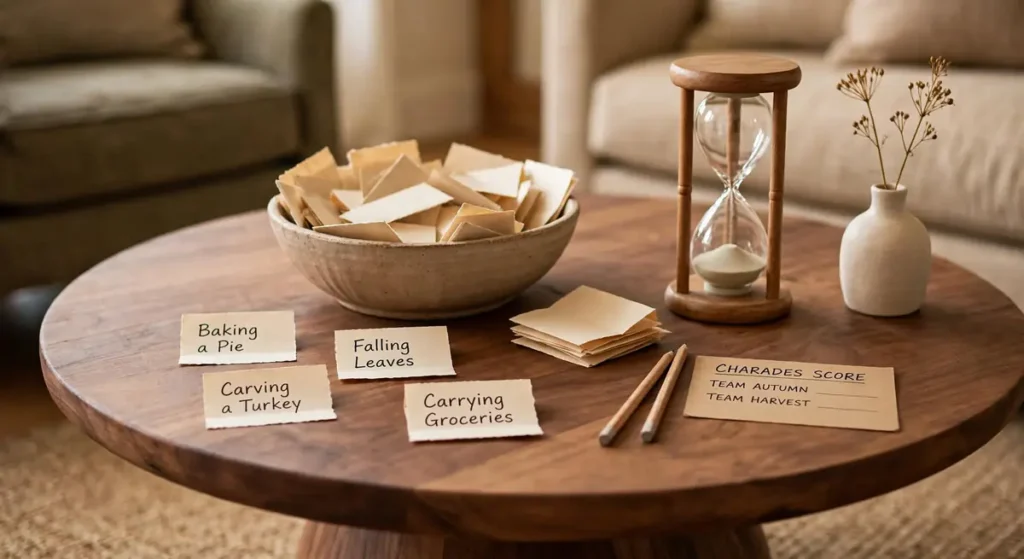
What you need: Paper slips, pens, a bowl, and a timer.
How to play: Give each player 30 to 60 seconds per turn. Teams earn one point for every correct guess, and the team with the highest score at the end wins.
Keep it comfortable: Offer easy and challenging prompts, and let anyone pass if they do not feel like acting. Guests should be able to enjoy the party without being pressured into performing.
4. Play Two Truths and a Lie
This classic icebreaker works especially well when friends from different parts of your life are meeting for the first time. Each person thinks of three statements about themselves: two true and one false.
For a Friendsgiving twist, statements could involve travel, cooking, childhood memories, or funny holiday experiences. One person reads their three statements, and the others guess which one is the lie.
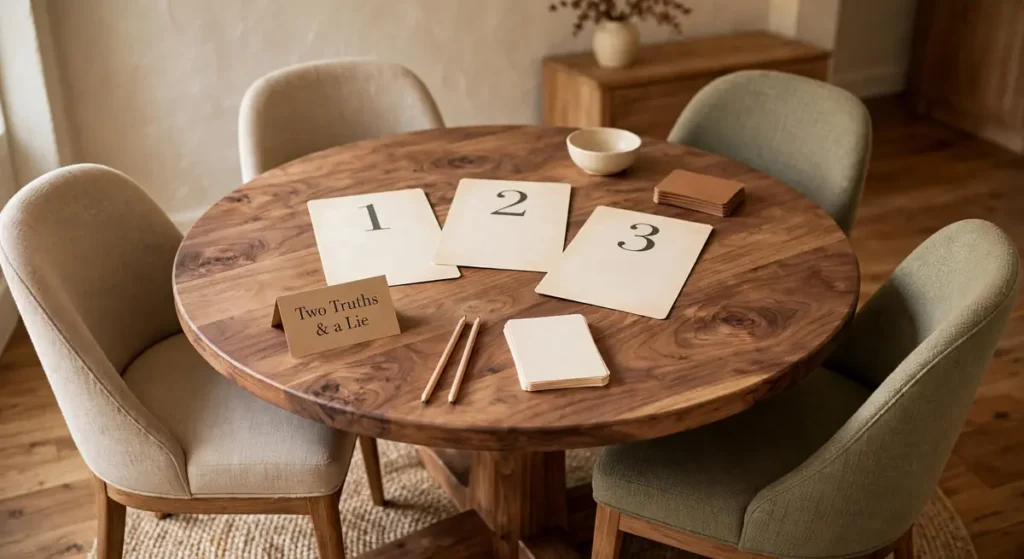
What you need: No special supplies, although guests can write their statements on cards if they prefer.
How to play: Let each person take a turn sharing their statements. Everyone votes for the lie, then the speaker reveals the answer. You can award a point to anyone who guesses correctly.
Make it more interesting: Encourage surprising but lighthearted stories rather than deeply personal information. The aim is to learn something funny or unexpected about each other.
5. Try the Common Ground Countdown
This game encourages conversation and works particularly well when you have invited friends who do not all know one another. Divide guests into small teams of three or four.
Give each team two or three minutes to discover as many things as possible that every person in their group has in common. They might discover that everyone loves a particular type of movie, prefers morning coffee, or has visited the same city.
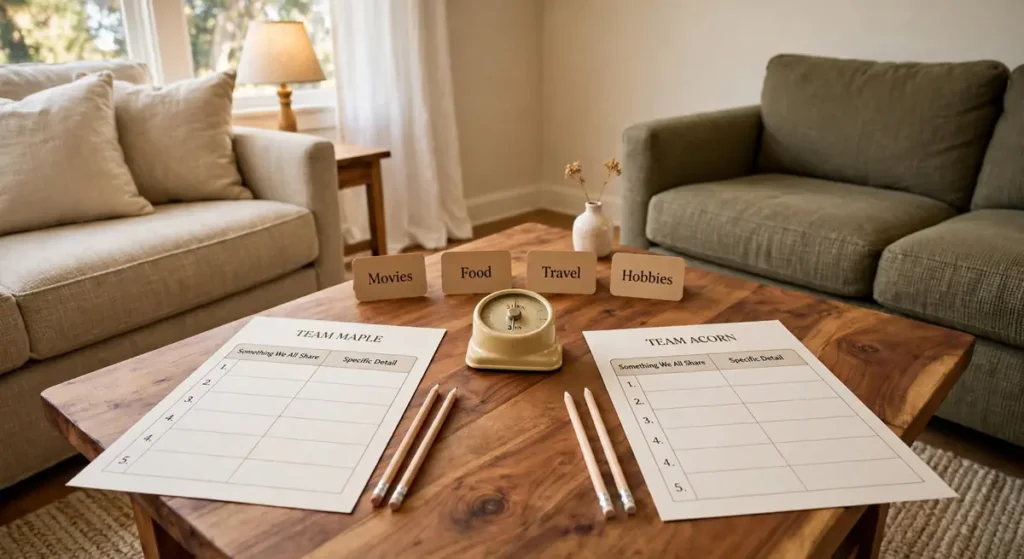
What you need: A timer and paper for recording answers.
How to play: Set a short time limit and have each team list its shared interests or experiences. At the end, teams read their lists aloud. Award a point for each valid shared detail, or simply let everyone compare their discoveries.
Keep it fair: General statements such as “we all like food” should not count. Encourage specific but comfortable answers, such as a favorite cuisine or a shared hobby.
6. Have a Paper-Plate Drawing Challenge
This simple game often produces the funniest results because drawing without looking at the paper is harder than it sounds. Give each guest a paper plate and a marker. Ask everyone to place the plate on top of their head and draw a turkey, pumpkin, pie, or fall landscape without looking at their work.
After a short countdown, everyone reveals their drawings. The group can vote for categories such as funniest drawing, most creative design, or best attempt.
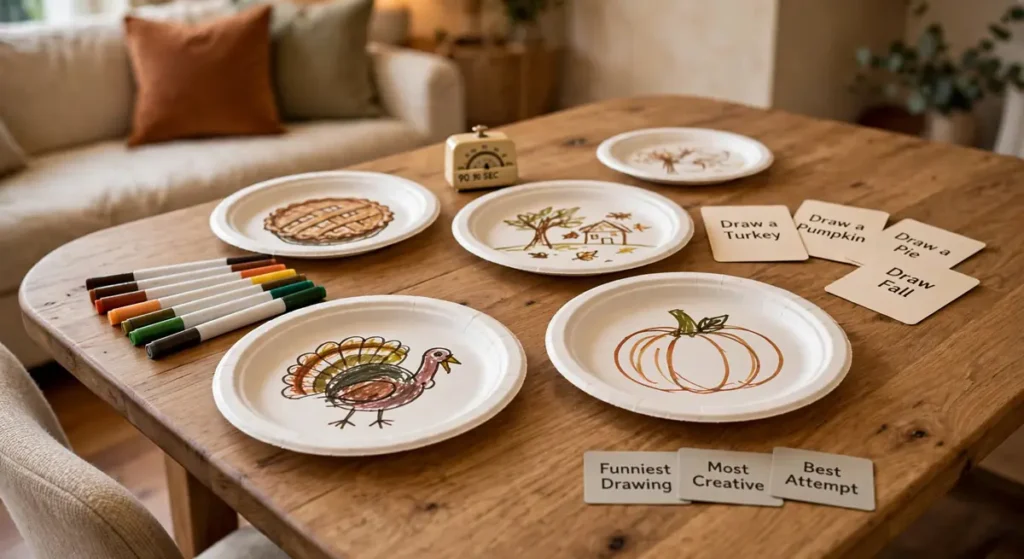
What you need: Paper plates, washable markers, and a few simple drawing prompts.
How to play: Give everyone 60 to 90 seconds to draw. There is no need for a serious scoring system; the point is to see the results and laugh together.
Budget-friendly tip: Use scrap paper or reusable mini whiteboards if you already have them. Avoid permanent markers that might stain furniture or clothing.
7. Play a Cup-Stacking Challenge
For a quick game with a little energy, challenge guests to stack and unstack paper or reusable cups within one minute. It takes very little preparation and can be played in teams or individually.
Set up an equal number of cups for each player. When the timer starts, participants build a pyramid and then return the cups to a single stack before time runs out.
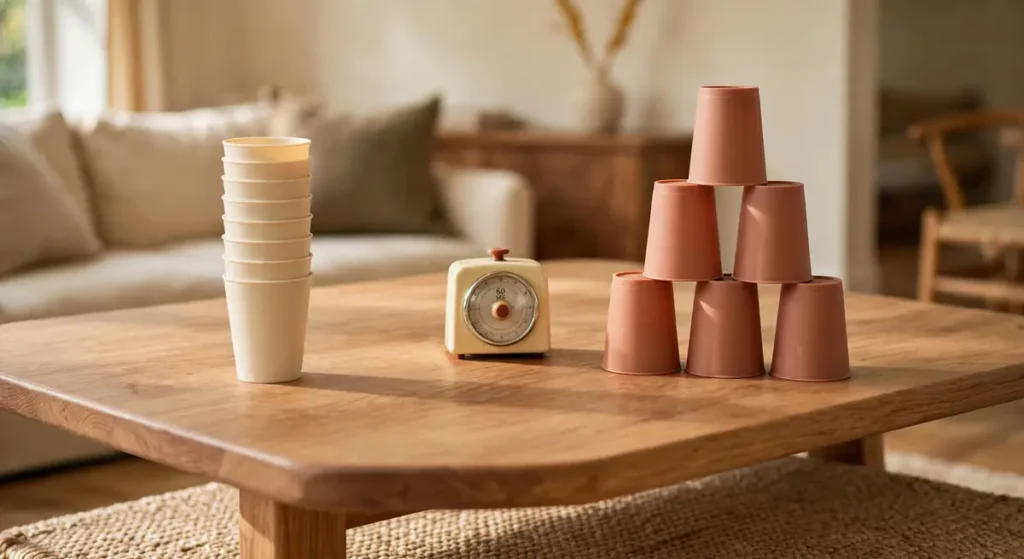
What you need: Lightweight cups, a flat surface, and a timer.
How to play: Give each player one minute. A successful player must complete both the pyramid and the final stack without knocking the cups over. If they fall, the player can try again until time runs out.
Make it easier: Use fewer cups for children or guests who prefer a simpler challenge. Keep the playing area clear of food, glasses, and breakable decorations.
8. Guess the Friend From a Childhood Photo
This game turns old photographs into an easy conversation starter. Before the party, ask friends to send you one childhood photo each. Save the pictures in a private album or print them and number them without revealing the names.
During the party, display one photo at a time. Guests write down or call out who they think is in the picture. Once everyone has guessed, reveal the answer and let the person share a short story about the photo if they wish.
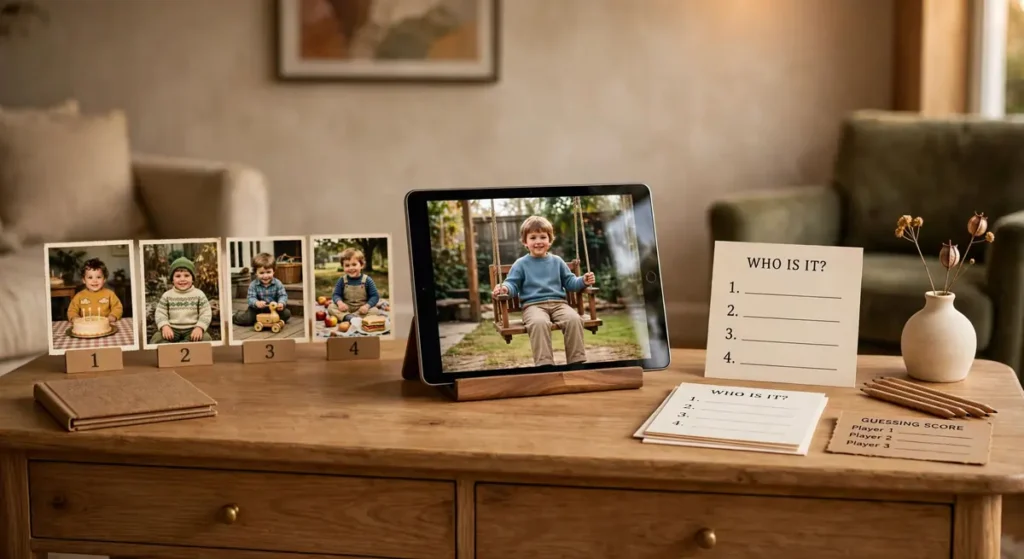
What you need: Childhood photos, a phone or screen to display them, and paper for guesses.
How to play: Award one point for each correct answer. After all the photos have been shown, the person with the most points wins.
Make it thoughtful: Ask permission before sharing photos, especially if the images include other people. Allow anyone to skip their photo, and avoid posting pictures online without permission.
Budget-Friendly Friendsgiving Decorations
You can create a festive atmosphere without buying a completely new set of decorations. Start by deciding which areas guests will notice most, then use what you already have to make those areas feel special.
The goal is not to make every corner look decorated. It is to create a welcoming space where everyone can relax and enjoy the gathering.
A Simple Friendsgiving Party Setup Checklist
A little preparation makes it easier to enjoy the gathering instead of spending the whole evening organizing things.
Before the party:
When guests arrive:
After the meal:
You do not need to complete every activity for the party to be successful. A few thoughtful details and plenty of time to connect are more important than a packed schedule.
Frequently Asked Questions
What are the best decorations for a Friendsgiving party?
Some of the easiest options include a welcome sign, a fall garland, warm string lights, a photo corner, a gratitude wall, a small pumpkin display, a decorated food station, and a cozy seating area. Choose decorations that suit the size of your space and can be reused.
What games can you play at Friendsgiving?
Popular options include Friendsgiving Bingo, trivia, charades, Two Truths and a Lie, icebreaker games, drawing challenges, cup-stacking competitions, and childhood-photo guessing games. Pick a few based on your guests’ ages, interests, and comfort levels.
How can I decorate for Friendsgiving on a budget?
Reuse fall decorations from previous seasons, make paper signs and garlands, use household frames and vases, and focus on one or two areas rather than decorating the entire home. You can also ask friends to share craft supplies and games.
How many games should you plan for Friendsgiving?
Two or three games are usually enough for a relaxed gathering. Keep additional ideas available in case guests want to continue playing. This gives everyone plenty of time for food, photos, and conversation without making the event feel scheduled.
How do you entertain guests who do not know each other well?
Start with simple icebreakers such as Friendsgiving Bingo, Common Ground Countdown, or Two Truths and a Lie. These activities help people find shared interests without requiring anyone to perform or reveal too much personal information.
How can you make Friendsgiving decorations look coordinated?
Choose two or three colors and repeat them in a few different places. For example, use rust and cream in your garland, photo backdrop, and seating area. Leave some surfaces clear so the decorations feel intentional instead of crowded.
Final Thoughts
A memorable Friendsgiving does not depend on elaborate decorations or expensive supplies. A welcoming entrance, soft lighting, a few seasonal touches, and comfortable seating can make your home feel ready for the occasion. Add two or three easy games to help guests connect, and let the rest of the evening unfold naturally.
The best part of Friendsgiving is spending time with people who make you feel at home. Keep the setup manageable, choose decorations you can reuse, and focus on activities that bring everyone together. With a little preparation, you can create a warm, fun gathering that your friends will look forward to repeating next year.