18 Shared Sibling Bedroom Ideas That Feel Designed, Not Decorated
Designing a shared bedroom for siblings takes more thought than simply fitting two beds into one room. Each child needs a comfortable place to sleep, enough storage for personal belongings, and a little space that feels like their own. At the same time, the room should look connected rather than like two completely separate bedrooms pushed together.
The best shared sibling bedroom ideas balance individual needs with a consistent overall design. Thoughtful furniture placement, coordinated colors, practical storage, and clearly defined personal zones can make even a small bedroom feel organized and welcoming.
Here are 18 shared sibling bedroom ideas that bring together smart space planning and a cohesive look.
18 Shared Sibling Bedroom Ideas
1. Style Matching Twin Beds Individually
Matching twin beds are a simple way to give both siblings equal space while keeping the bedroom visually balanced. Placing the beds along the same wall or opposite walls creates a clear sleeping arrangement without making the room feel crowded. Matching bed frames also provide a consistent foundation, even when the children have different tastes.
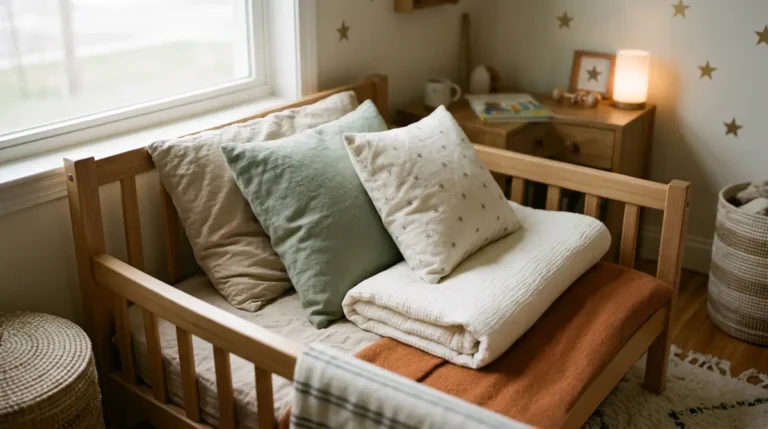
The individual character can come through in smaller details rather than completely different furniture. One sibling might prefer sage green bedding while the other chooses muted blue, with matching headboards and similar neutral blankets connecting the two sides.
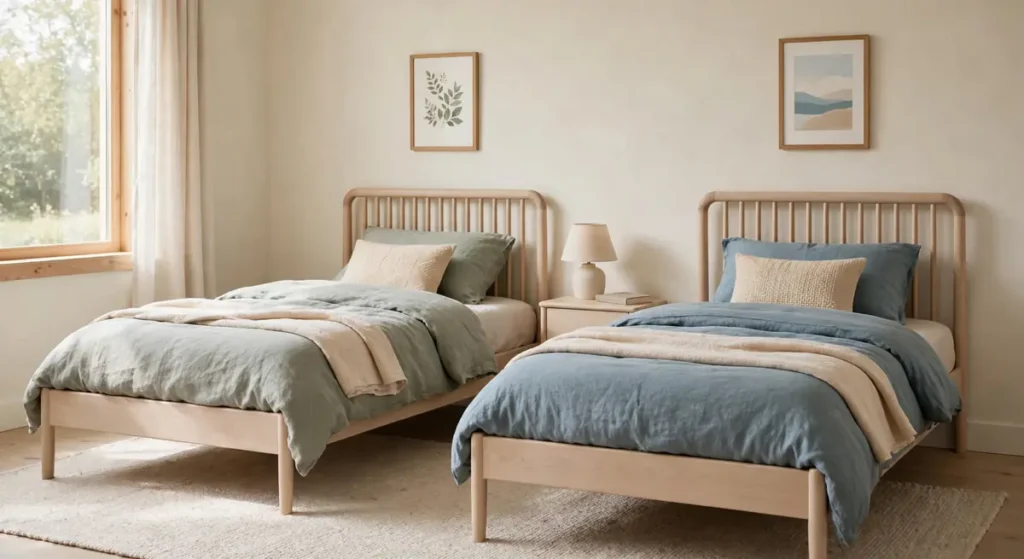
Design Tip: Keep the bed frames and larger textiles coordinated, then let each child choose a few personal details such as pillow colors, a favorite cushion, or a small framed print.
2. Add Built-In Bunk Beds with Storage
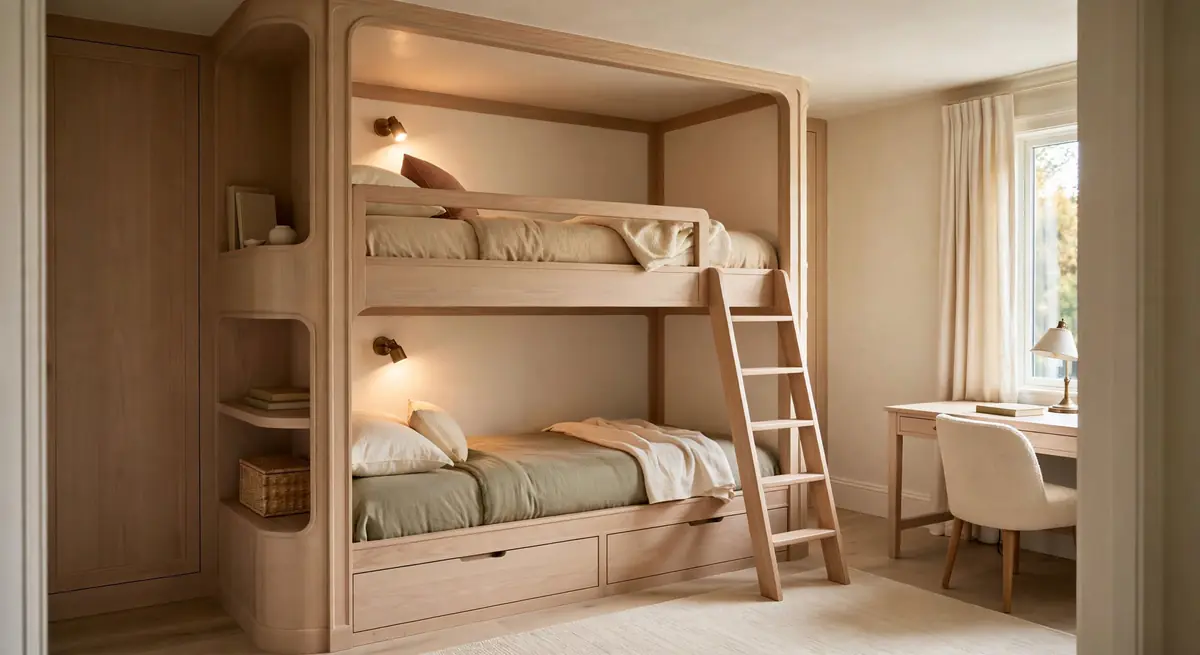
Built-in bunk beds are particularly useful when two siblings share a smaller bedroom. Instead of using floor space for two separate bed frames, the vertical arrangement leaves more room for a desk, play area, or wardrobe. A custom-style structure can also make the sleeping area feel like a planned part of the room rather than a temporary space-saving solution.
The area around the bunks can include integrated drawers, small shelves, or cabinets for books and bedtime essentials. If the beds are built into an alcove, adding matching panel details or a shared finish can make the whole arrangement look cohesive.
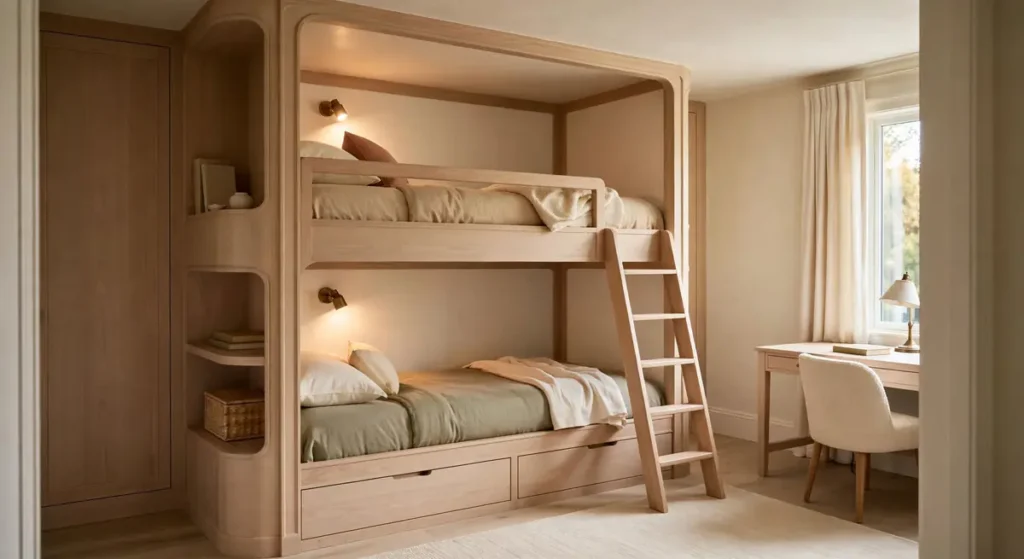
Design Tip: Give each bunk its own reading light and accessible shelf. Make sure the upper bunk has appropriate guardrails, a safe ladder, and enough clearance from the ceiling.
3. L-Shaped Bed Arrangement
An L-shaped layout works well when the bedroom has an available corner that can accommodate two beds. Instead of placing the beds directly beside each other, position one along each adjoining wall. This arrangement creates a natural separation between the sleeping areas while leaving the middle of the room more open.
The corner between the beds can become a shared nightstand, a small bookshelf, or a place for a table lamp. This layout also makes it easier to give each sibling a separate wall area for personal artwork or decorative details.
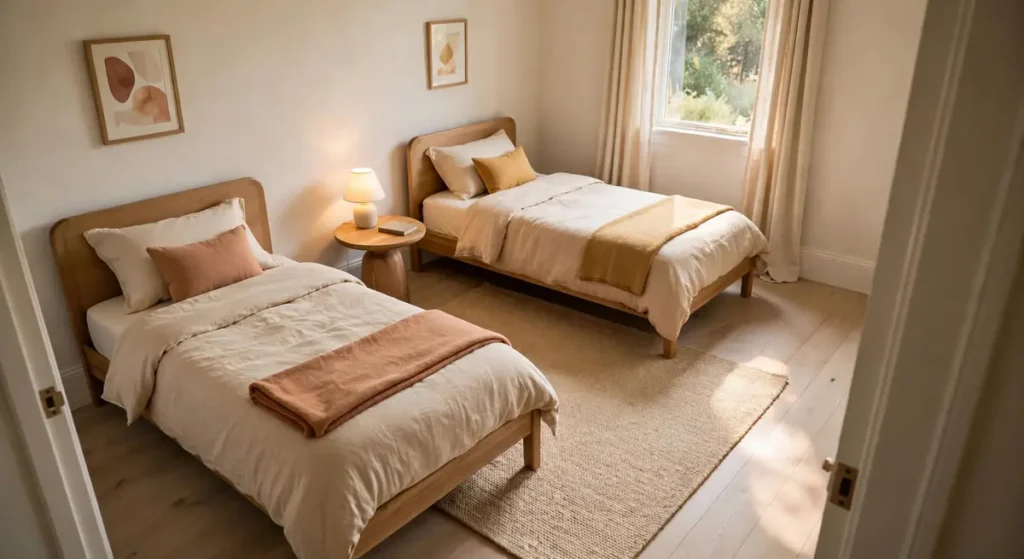
Design Tip: Use similar bed frames and bedding colors to connect both sides. A shared rug in the center can visually bring the arrangement together.
4. Shared Headboard Wall
A shared headboard wall creates a unified backdrop when two beds sit side by side. Rather than decorating each bed with unrelated wall art, use one continuous design element behind both sleeping areas. It could be simple wall paneling, a painted accent wall, or a long upholstered headboard that connects the beds.
This approach makes the bedroom feel intentionally designed and helps two separate beds read as one coordinated arrangement. It is especially effective when the room has enough width for twin beds placed together with a small gap between them.
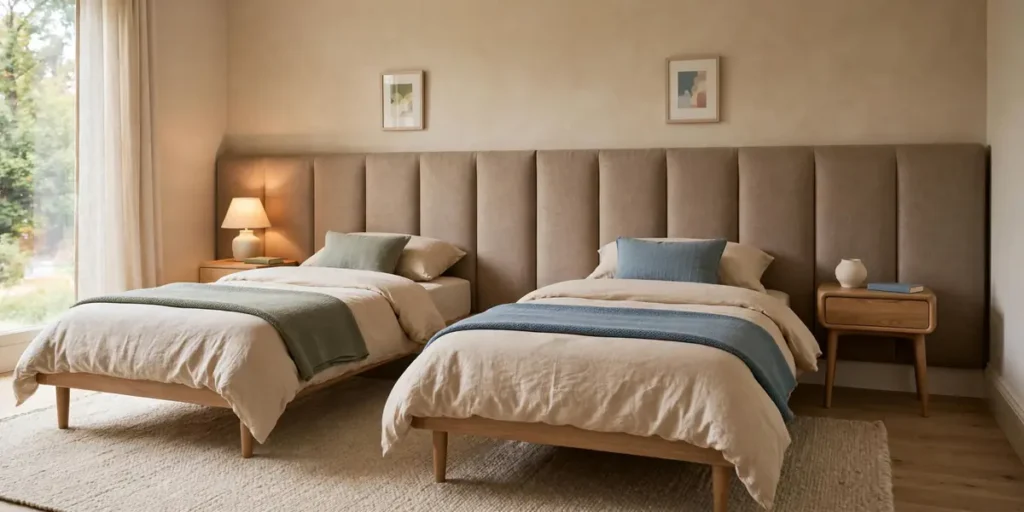
Design Tip: Use a warm neutral wall color or subtle paneling, then personalize each side with different bedside accessories or small framed prints.
5. Give Each Sibling Their Own Colors
Giving each sibling a small personal color accent is an easy way to create individuality without dividing the bedroom into two unrelated designs. The main room can stay neutral, using cream, warm white, pale grey, or natural wood as the foundation. For more inspiration on creating a comfortable and personalized space for children, explore these kids bedroom decor ideas. Each child can then have a chosen accent color for bedding, cushions, storage bins, or artwork.
For example, one side might use dusty blue while the other uses muted sage. Because the larger furniture and wall colors remain consistent, the two palettes can coexist without making the room look busy.
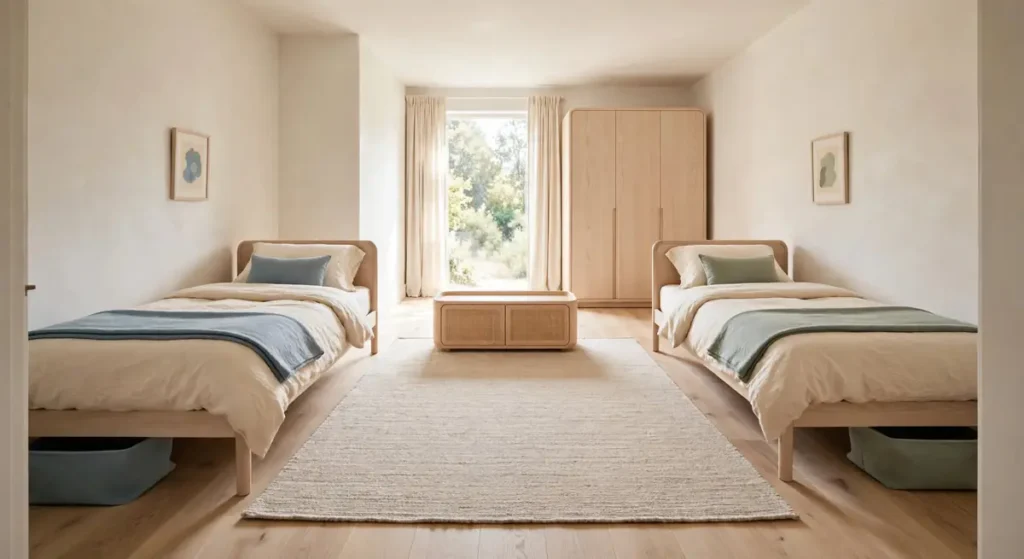
Design Tip: Limit each child’s accent color to a few repeated details. Avoid assigning completely different furniture finishes to each side, as this can make the shared space feel disconnected.
6. A Shared Nightstand Between Beds
When twin beds are placed close together, a shared nightstand between them can save space and reduce visual clutter. It also creates a natural connection between the sleeping areas, particularly in a narrow bedroom where two full-sized bedside tables would feel cramped.
Choose a nightstand with drawers or a lower shelf so both siblings can store small personal items. A shared lamp can provide soft ambient lighting, but each child should still have a practical way to access individual lighting when needed.
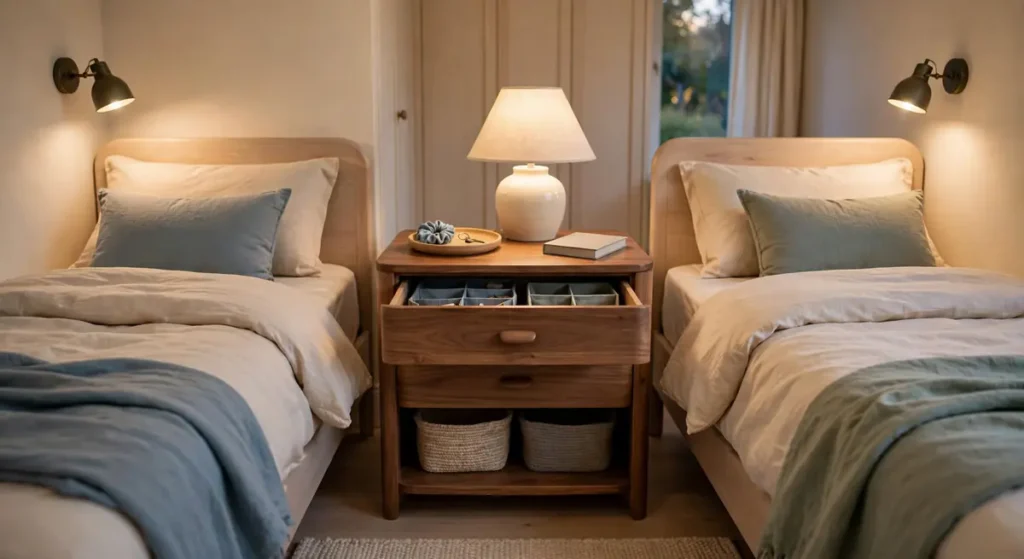
Design Tip: Use a nightstand wide enough for both sides, and consider separate small storage trays or baskets inside its drawers to keep each child’s belongings organized.
7. Individual Reading Lights
A shared ceiling light is rarely enough for two siblings with different bedtime routines. Individual reading lights allow one child to read or settle down without disturbing the other. Wall-mounted sconces, adjustable bedside lights, or small clip-on reading lamps can all work depending on the bed arrangement.
The lights can be installed at each headboard or beside the individual sleeping zones. Choosing similar fixtures keeps the room visually consistent, even if each child uses their light at different times.
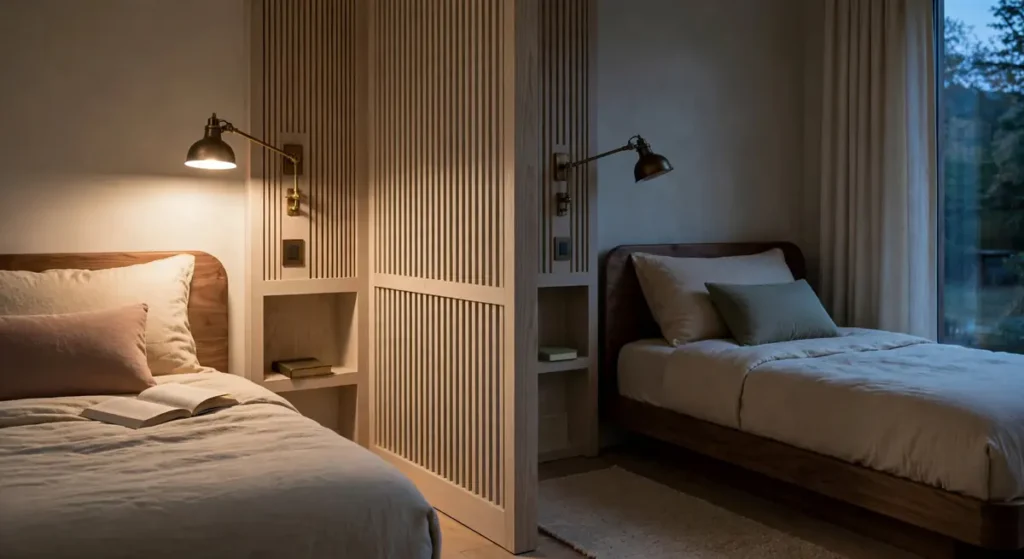
Design Tip: Select adjustable fixtures with focused lighting rather than bright exposed bulbs. Keep switches and cords safely accessible, especially around bunk beds.
8. Half-Height Bookshelf Room Divider
A half-height bookshelf can create a gentle separation between two sleeping areas without closing off the entire bedroom. Unlike a full-height partition, it allows natural light to move through the space and helps the room retain an open feeling.
The shelves can hold shared books, small baskets, and a few decorative objects, while the two sides remain available for individual bedding and personal touches. This arrangement works especially well when the beds are positioned parallel to each other.
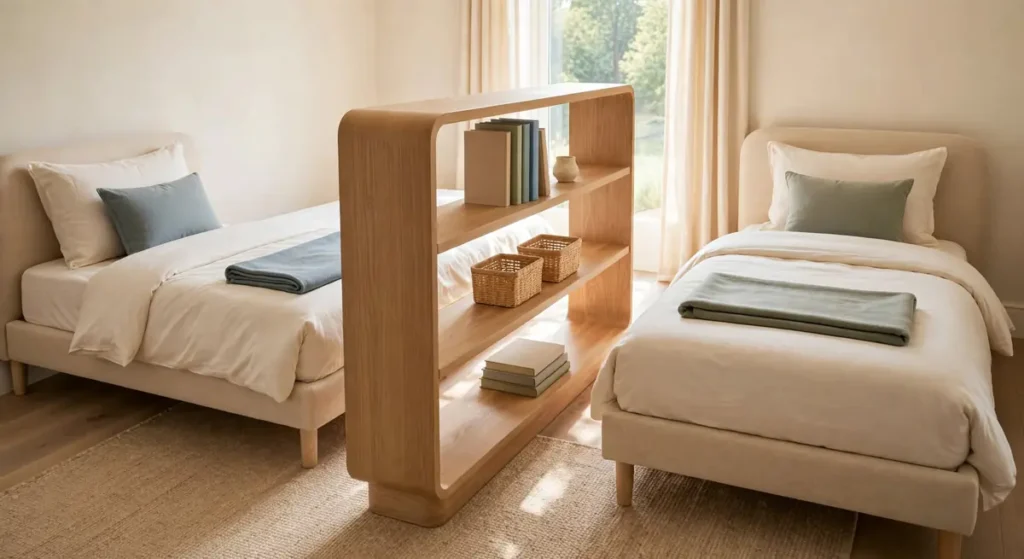
Design Tip: Choose an open-backed bookshelf with rounded or smooth edges, and secure it properly to the wall. Keep heavier items on lower shelves for stability.
9. Separate Bedside Storage Zones
Even when siblings share furniture, they still need clearly defined places for their personal belongings. Separate bedside storage zones can prevent everyday items from getting mixed together and make each sleeping area feel more independent.
If there is room, use two matching nightstands. In a smaller bedroom, consider wall-mounted shelves or narrow bedside cabinets instead. Each child can have space for a water bottle, books, a small lamp, and other nighttime essentials.
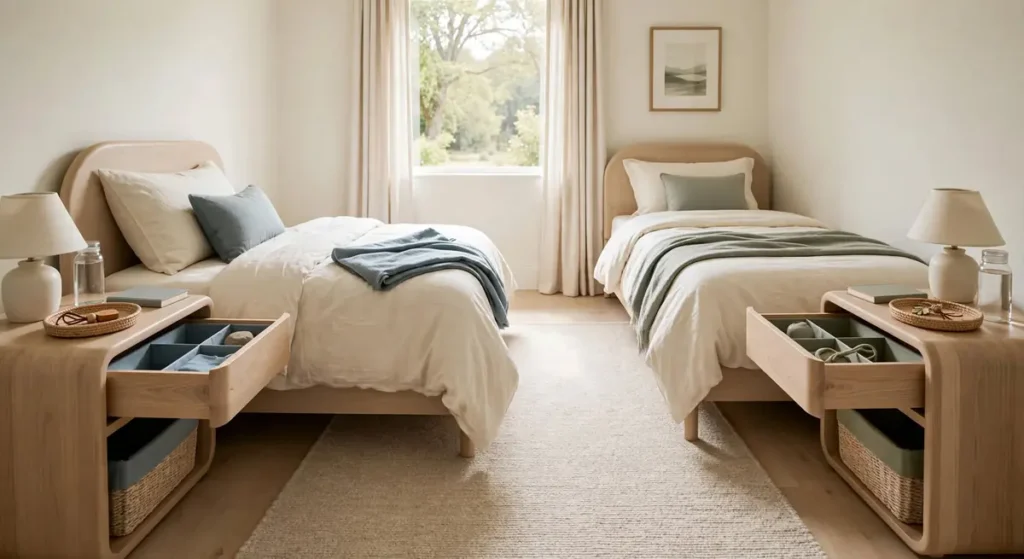
Design Tip: Use the same storage style on both sides but allow different baskets, drawer organizers, or labels to distinguish each child’s belongings.
10. Shared Study Desk with Two Workstations
A shared study desk is a practical solution when siblings need homework space but the bedroom cannot accommodate two separate desks. A long desk positioned against one wall can provide two individual workstations while keeping the overall layout simple.
Give each sibling their own chair, task light, and designated storage area. Drawer dividers, desk organizers, or separate wall shelves help keep school supplies from getting mixed together. If both children study at the same time, enough desk width and comfortable seating become particularly important.
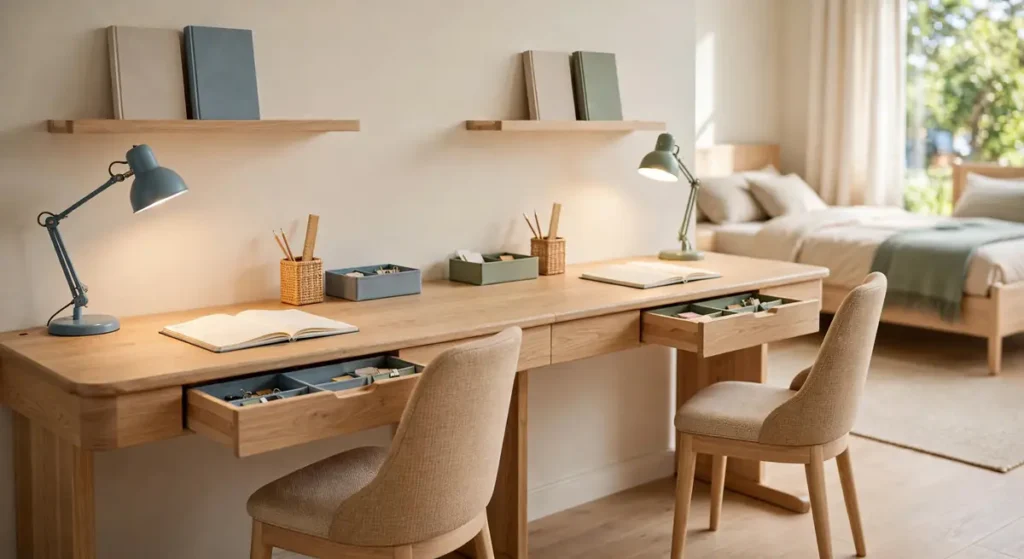
Design Tip: Use matching chairs and a continuous desktop for a cohesive look, but create clearly defined personal zones with separate organizers and lighting.
11. Built-In Wardrobe with Individual Sections
A shared wardrobe can work well when its interior is divided according to each sibling’s needs. Instead of treating the entire closet as common storage, assign each child a separate hanging section, shelves, and drawers. This makes it easier to keep clothing organized and gives both siblings a fair amount of space.
If you’re planning a new wardrobe, matching doors and simple handles can make it blend into the bedroom design. For an existing closet, labeled baskets and drawer dividers can create a similar arrangement without replacing the furniture.
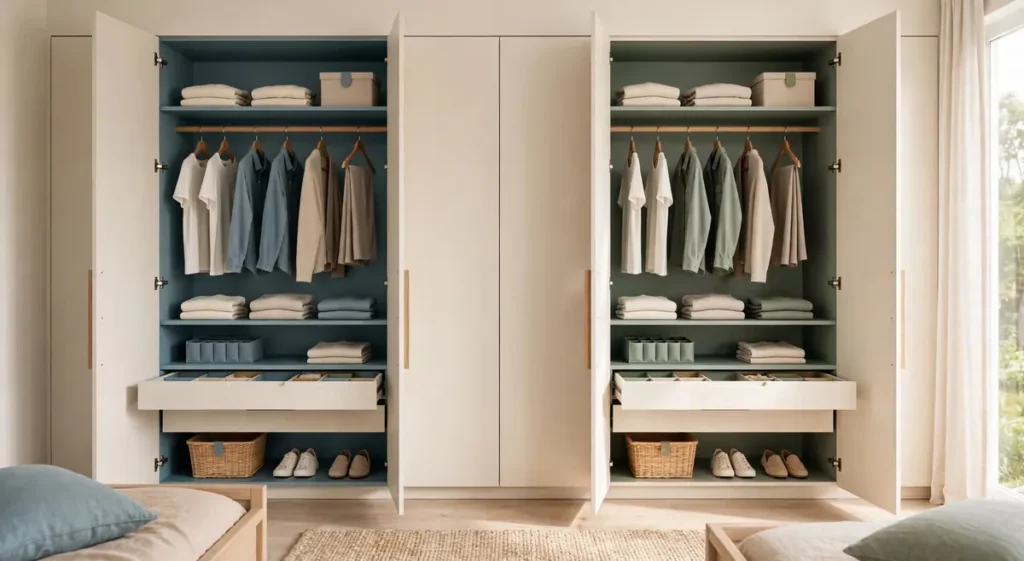
Design Tip: Keep frequently used clothing and personal accessories within each child’s reach. Adjust the shelf heights as the children grow.
12. Curtains for Personal Sleeping Zones
Curtains can provide a little privacy when siblings share a room but have different sleeping or resting routines. A ceiling-mounted track around a bunk or beside one sleeping area can create a flexible separation without adding a permanent wall.
This idea is especially helpful when one child wants a quieter place to read or relax. Light-filtering fabric can offer some visual separation while still allowing daylight into the room. It is important, however, to keep the curtains away from heaters, lights, and other potential hazards.
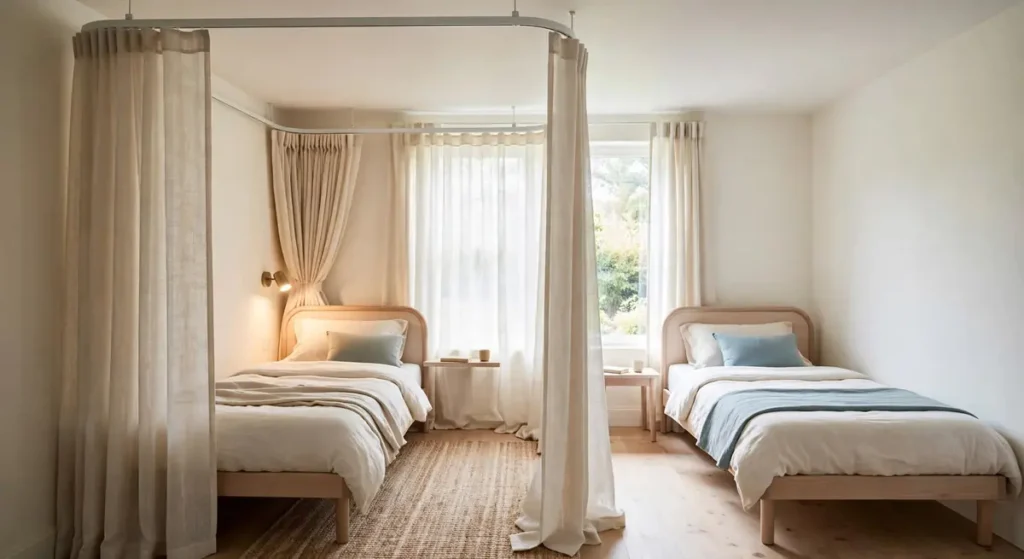
Design Tip: Choose simple neutral curtains that coordinate with the bedding. Use a secure track and make sure the fabric doesn’t block ventilation or create a safety hazard.
13. Matching Beds with Different Bedding
Using matching beds but different bedding is a straightforward way to balance unity and personality. Both siblings get the same furniture and sleeping space, but their individual preferences can show through colors, patterns, and textures.
For example, one bed could have soft blue bedding with a subtle stripe, while the other uses muted green with a small geometric pattern. Keeping the sheets, bed frames, and larger blankets within a similar visual style helps the room feel coordinated.
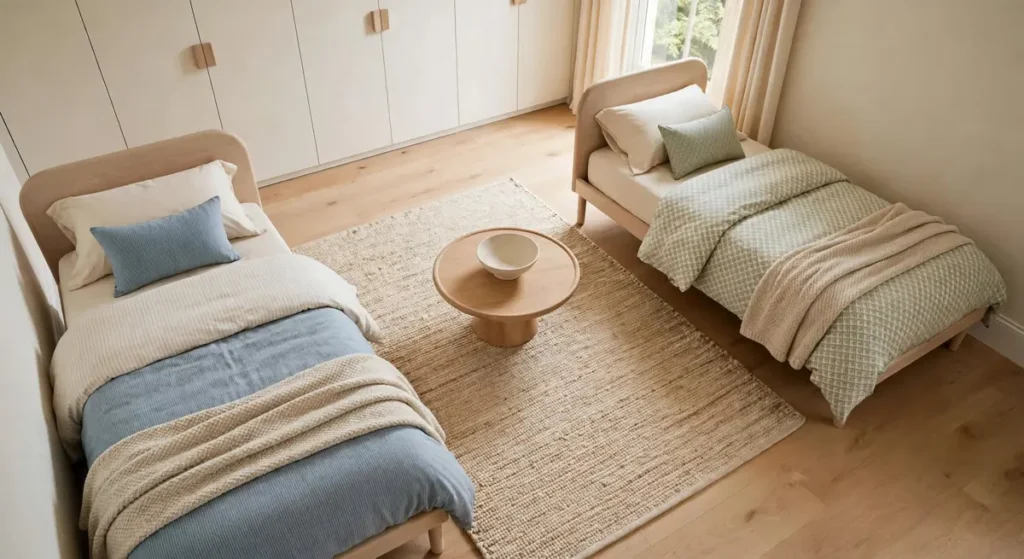
Design Tip: Choose bedding from the same general color family or with similar patterns. This gives each child room to express their preferences without making the bedroom feel visually scattered.
14. Shared Reading Nook
A shared reading nook gives siblings a comfortable place to enjoy books together outside their individual beds. It can be created with a small upholstered bench, a cushioned window seat, or a pair of floor cushions arranged in an unused corner.
Adding a low bookshelf nearby makes books easy to reach and keeps the reading area connected to the rest of the bedroom. For more inspiration on creating a comfortable reading space with cozy textures and thoughtful details, explore these cozy reading nook ideas. Soft lighting and a few comfortable cushions can make the corner feel inviting without requiring much furniture.
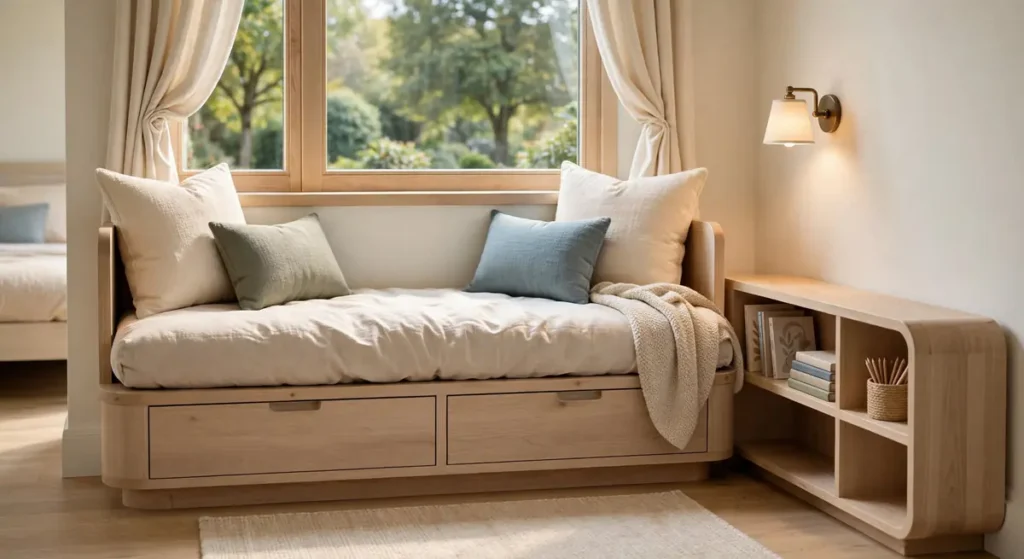
Design Tip: Use one shared rug or cushion palette to define the nook. Store books in low, accessible shelves so both siblings can use the space independently.
15. Under-Bed Storage for Each Sibling
Under-bed storage is especially useful in a shared bedroom because it makes use of space that would otherwise remain empty. Drawers, rolling storage boxes, or built-in compartments can hold extra bedding, seasonal clothing, toys, and personal belongings.
The important part is keeping the storage divided. When each sibling has their own drawers or labeled containers, it becomes easier to find things and maintain an organized room. This can also reduce the need for additional dressers that take up valuable floor space. For more practical ways to maximize bedroom space and keep belongings organized, explore these bedroom storage ideas.
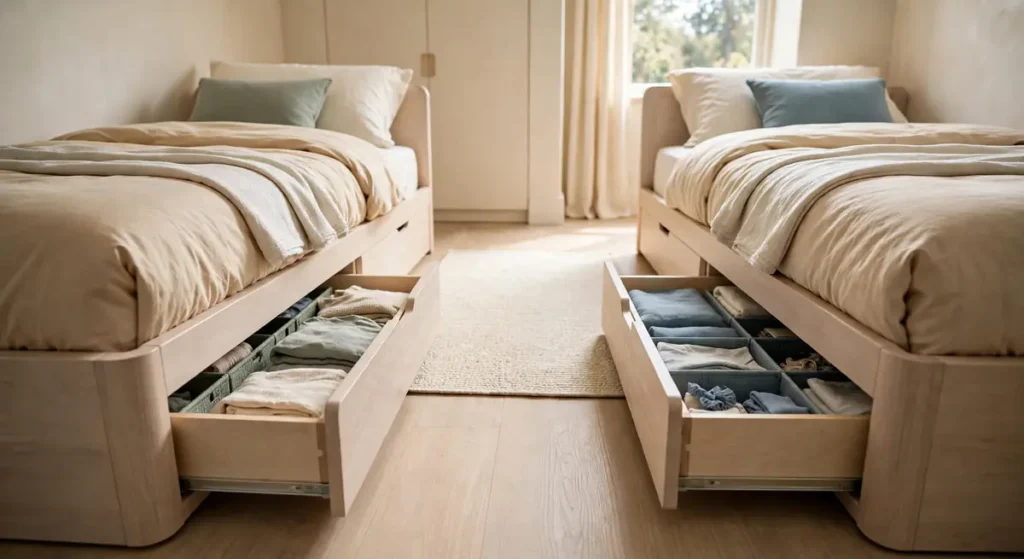
Design Tip: Use matching storage boxes for a consistent appearance, but give each child separate containers. Choose easy-to-pull drawers or boxes that fit the available clearance under the beds.
16. Coordinated Gallery Wall
A gallery wall can bring both sleeping areas together while still reflecting each sibling’s personality. Instead of giving each child a completely separate wall design, create one coordinated display using a mix of shared artwork and individual prints.
For example, the gallery might include nature illustrations, simple abstract art, and a few framed pictures chosen by each child. Similar frame finishes and consistent spacing help the arrangement feel planned rather than randomly collected.
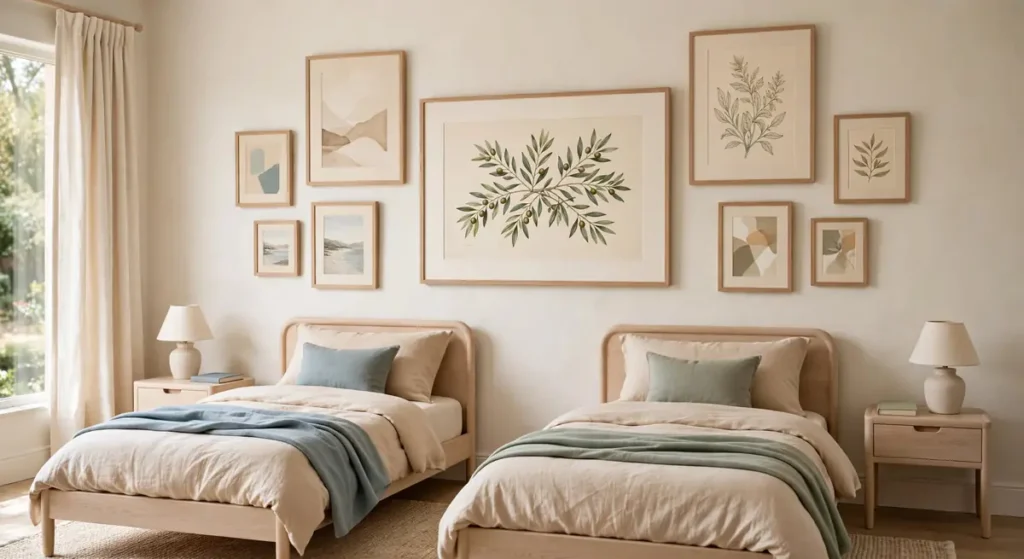
Design Tip: Lay out the frames on the floor before hanging them. Keep the overall color palette connected, and make sure the artwork is securely mounted.
17. Loft Beds with Functional Space Below
Loft beds can be a smart choice when the bedroom has enough ceiling height. Raising one or both sleeping areas creates usable floor space underneath for a desk, storage drawers, a reading corner, or a small play area.
In a shared room, the space beneath each loft bed can serve a different purpose according to the children’s needs. One side might become a study station, while the other holds organized storage. This gives the room multiple functions without adding more furniture across the floor.
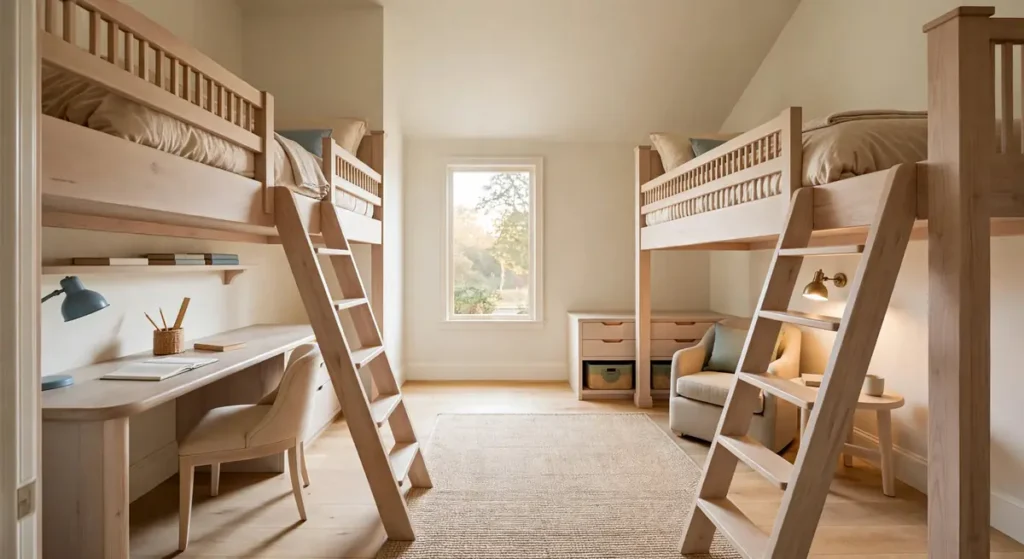
Design Tip: Check the bed’s recommended age, weight limits, guardrails, ladder design, and ceiling clearance before choosing a loft bed. Avoid placing it where the upper sleeper could hit a ceiling fan or light fixture.
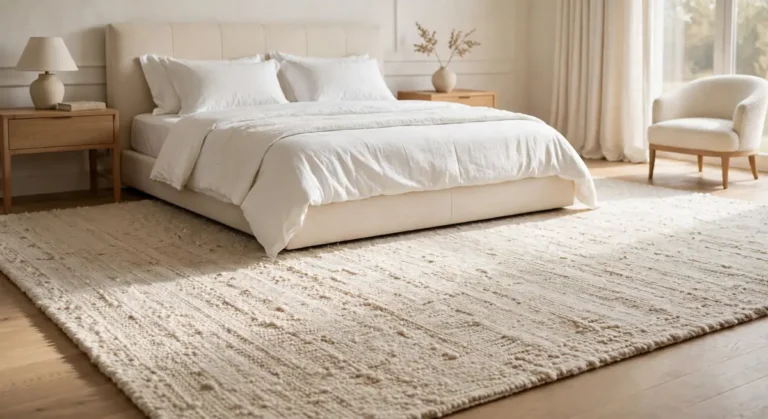
18. A Shared Rug to Connect the Room
A shared area rug can make two separate sleeping areas feel like part of one thoughtfully designed bedroom. It visually connects the beds, bedside furniture, and other elements while adding softness underfoot.
Choose a rug that extends beyond the beds rather than one that sits awkwardly in the middle of the room. A subtle pattern or textured neutral finish can work with different bedding colors and furniture styles without competing for attention.
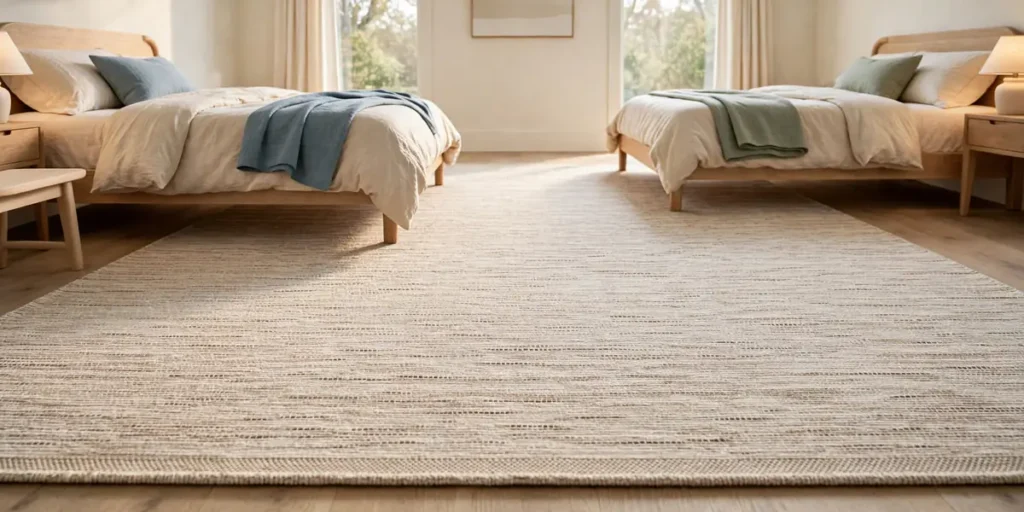
Design Tip: Select a rug large enough to anchor the furniture arrangement, and use a non-slip rug pad to keep it securely in place.
How to Create a Cohesive Sibling Bedroom
A well-designed shared bedroom needs more than matching furniture. The goal is to give each child a sense of ownership while keeping the overall room connected.
Sibling Bedroom Mistakes to Avoid
Frequently Asked Questions
How do you make a shared bedroom work for two siblings?
Start by giving each sibling a comfortable sleeping area, individual storage, and a little personal space. Then connect the room through coordinated furniture, colors, and shared design details.
How do you arrange two beds in a small shared bedroom?
Depending on the room’s shape, you can place twin beds side by side, arrange them in an L-shape, or use bunk beds to free up floor space. Measure the room and allow enough clearance for doors, drawers, and walking paths before choosing a layout.
How can siblings have privacy in a shared bedroom?
Bookshelf dividers, curtains, separate reading lights, and individually styled sleeping areas can provide a sense of privacy. The best solution depends on the children’s ages, room size, and daily routines.
Should siblings have matching bedroom furniture?
Matching furniture can make a shared room look balanced, but it isn’t essential. Coordinated finishes and similar proportions can create a cohesive appearance while allowing each child to choose different bedding and accessories.
How do you organize storage in a shared kids’ bedroom?
Divide wardrobes, drawers, shelves, and under-bed storage into clearly assigned sections. Separate baskets or organizers help prevent belongings from getting mixed together and make it easier for children to maintain their own spaces.
What is the best bed arrangement for siblings who share a room?
There isn’t one arrangement that works for every bedroom. Bunk beds are useful for saving floor space, while twin beds work well in wider rooms. L-shaped layouts can also provide a little separation when the room has a suitable corner.
Final Thoughts
A shared sibling bedroom can feel both practical and thoughtfully designed when the layout gives each child a comfortable place of their own. Matching furniture, individual storage zones, flexible dividers, and coordinated colors help create a room that feels connected without taking away personal identity.
Rather than decorating every corner, start with the sleeping arrangement and storage needs. Once those are working well, add the smaller details that make the room feel welcoming to both siblings.