20 Grey Bedroom Ideas That Feel Cozy, Not Cold
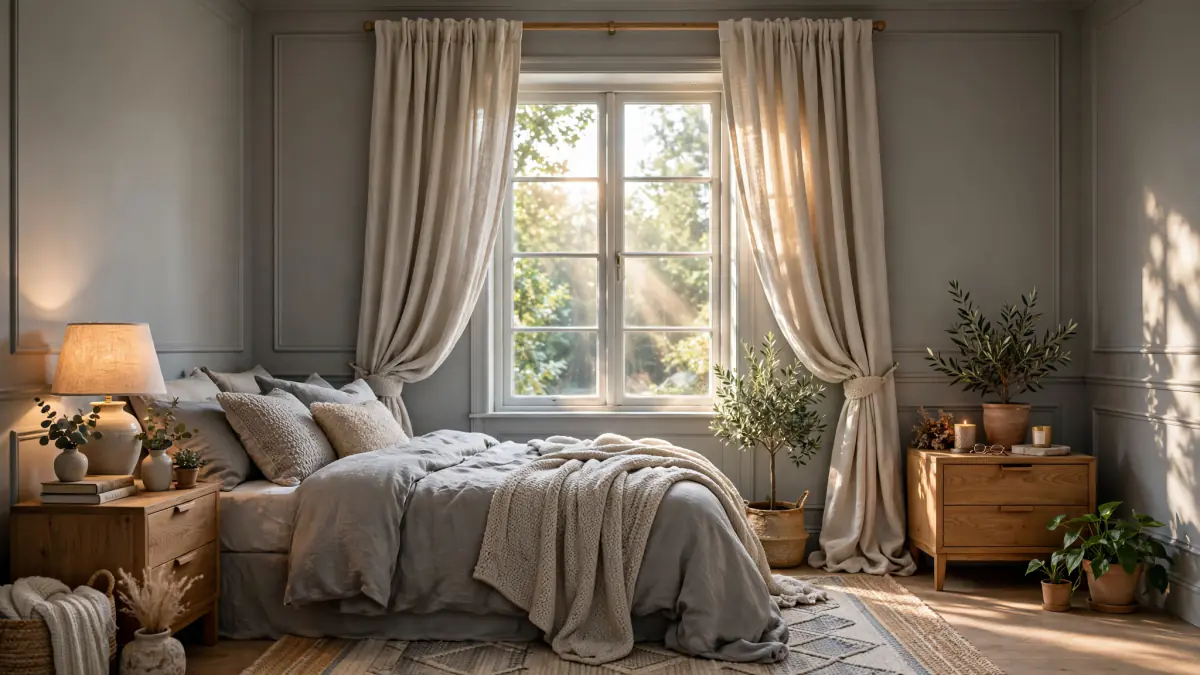
Grey is a versatile bedroom color, but choosing the wrong shade or pairing it with the wrong finishes can make a room feel flat, chilly, or unfinished. The good news is that grey doesn’t have to look cold. With the right mix of warm neutrals, natural materials, soft lighting, and comfortable textures, it can create a bedroom that feels peaceful and inviting.
Whether you love pale grey walls, charcoal accents, or a classic grey-and-white palette, there are plenty of ways to make this color work beautifully. These grey bedroom ideas focus on practical decorating choices that add warmth and personality without losing the clean, timeless look of grey.
From cozy bedding and natural wood furniture to layered lighting and elegant accent colors, here are 20 ways to create a grey bedroom that feels anything but cold.
20 Grey Bedroom Ideas That Feel Warm & Inviting
1. Choose Warm Grey Walls With Cream Accents
Warm grey walls are a great starting point if you want a bedroom that feels calm rather than chilly. Look for greys with subtle beige or brown undertones instead of shades that lean strongly toward blue.
Pair the walls with cream curtains, ivory bedding, and warm wood furniture. These softer elements balance the grey and create a relaxed, welcoming atmosphere without introducing too many colors.

Pro Tip: Test paint samples on different walls before committing. Grey can look noticeably different in natural daylight and under artificial lighting.
2. Layer Grey Bedding With Soft Neutral Textures
An all-grey bed can look beautiful, but using just one shade and fabric may make it feel flat. Layer a light grey duvet with charcoal cushions, a textured throw, and cream pillowcases to create depth.
Linen, cotton, knitted fabrics, and quilted bedding each bring a different texture to the arrangement. If you want more ideas for creating a comfortable bedroom with layered bedding and inviting textures, explore these cozy fall bedroom ideas for seasonal styling inspiration. The combination feels thoughtfully styled without requiring bold patterns or bright colors.

Pro Tip: Use two or three shades of grey and introduce one warm neutral, such as oatmeal or ivory, to break up the monochromatic look.
3. Add Natural Wood to Warm Up the Room
Natural wood is one of the easiest ways to balance grey bedroom decor. An oak bed frame, walnut nightstands, or a wooden dresser adds warmth and creates a pleasing contrast against grey walls or bedding.
Choose finishes that complement the room’s existing colors. Lighter oak works well in airy Scandinavian-inspired bedrooms, while walnut adds richness to deeper grey schemes.
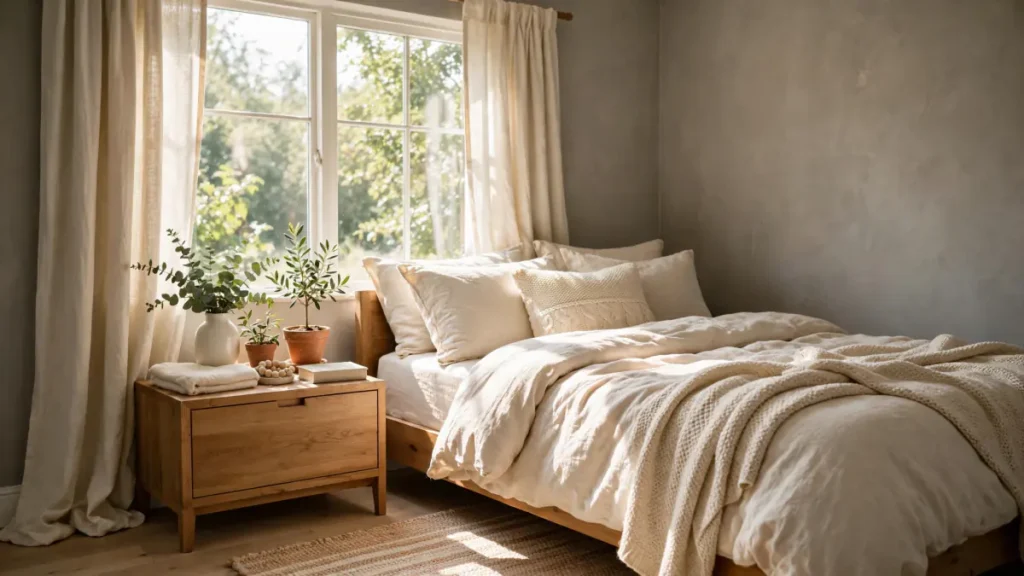
Pro Tip: Repeat your chosen wood finish in at least two places, such as the nightstands and picture frames, for a more cohesive look.
4. Create a Cozy Grey and Beige Bedroom
Grey and beige work beautifully together when their undertones complement each other. Grey adds definition, while beige brings a softer, warmer quality to the overall palette.
Try warm grey walls with a beige upholstered headboard, oatmeal bedding, and a pale neutral rug. You can introduce darker grey through cushions or a throw to keep the room from looking too uniform.
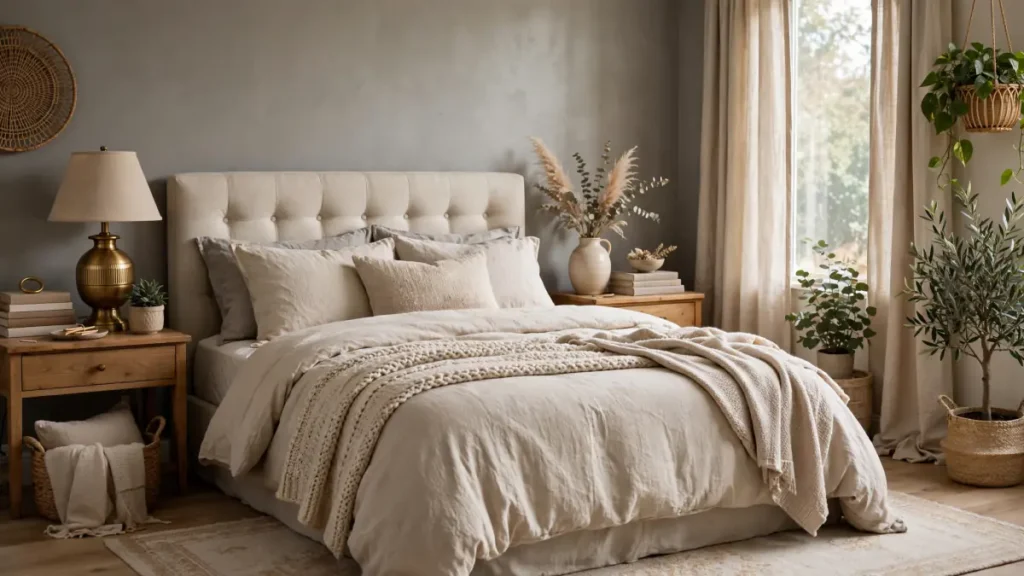
Pro Tip: Choose warm beige rather than a noticeably pink or yellow shade if you want a subtle, balanced combination.
5. Use a Textured Rug to Soften the Floor
A textured rug can make a grey bedroom feel more comfortable and visually complete. Choose a cream, taupe, or soft grey rug with a woven, wool-like, or low-pile texture to add interest without competing with the rest of the decor.
Place it beneath the bed so that it extends beyond the sides, creating a defined area around the main furniture. In a bedroom with grey flooring, a lighter rug can also provide useful contrast.
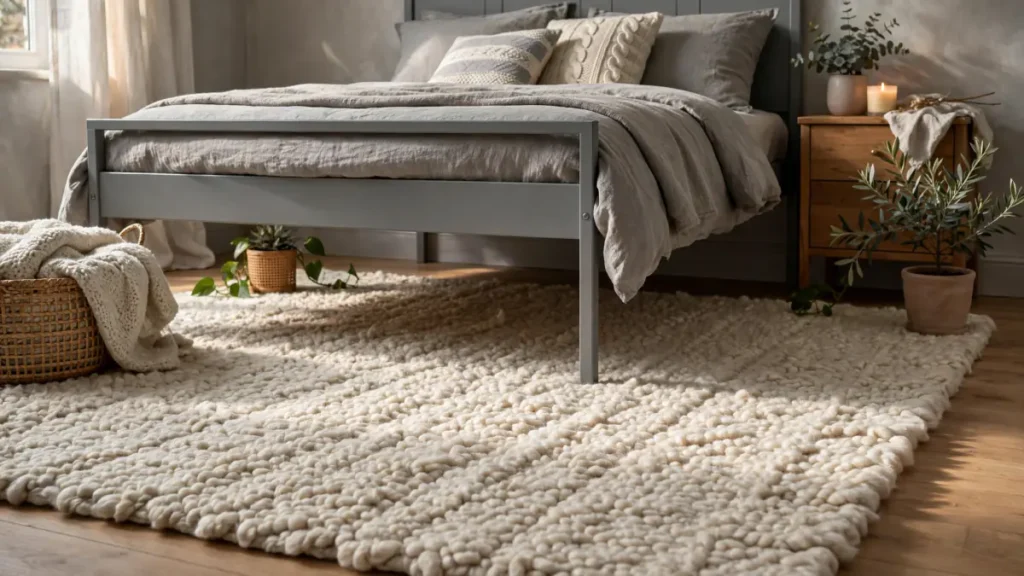
Pro Tip: If your room already has patterned bedding, choose a rug with a simple design. A subtle texture is often enough to make the space feel warmer.
6. Bring Warmth With Soft, Layered Lighting
Lighting can completely change how grey looks in a bedroom. Cool, harsh lighting may emphasize blue undertones and make the room feel stark, while warm lighting creates a softer atmosphere.
Combine bedside lamps with an overhead fixture and, where practical, wall sconces. This gives you different lighting options for reading, getting dressed, and winding down in the evening.
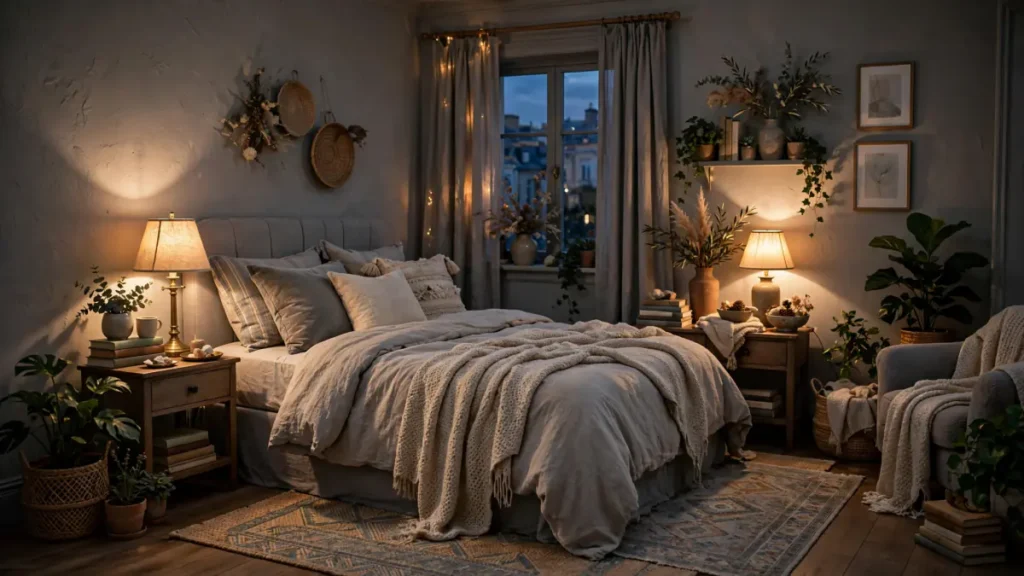
Pro Tip: Try warm-white bulbs around 2700K–3000K for a cozy feel, and consider dimmable fixtures where compatible.
7. Style a Grey Accent Wall Behind the Bed
If you want grey to stand out without covering every wall, create an accent wall behind the headboard. A medium or deep grey can give the bed more definition and make the room feel intentionally designed.
Balance the darker wall with cream bedding, lighter curtains, and natural wood details. If you prefer a softer appearance, choose a muted grey and keep the remaining walls a warm off-white.
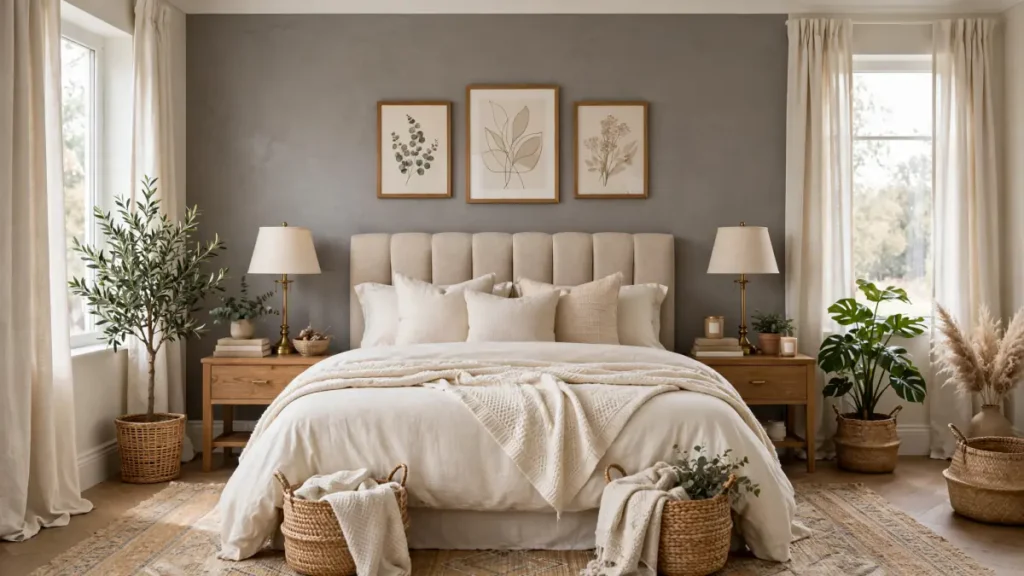
Pro Tip: Consider the room’s natural light before choosing a dark shade. In a dim bedroom, a medium warm grey may be easier to balance than charcoal.
8. Pair Grey With Warm White for an Airy Look
Grey and warm white make a timeless combination that suits both small bedrooms and larger spaces. White brings brightness, while grey adds depth and prevents the room from feeling too plain.
Use grey on the walls, headboard, or bedding and introduce warm white through curtains, sheets, and lampshades. This approach keeps the bedroom visually light while adding enough contrast to make the decor feel finished.
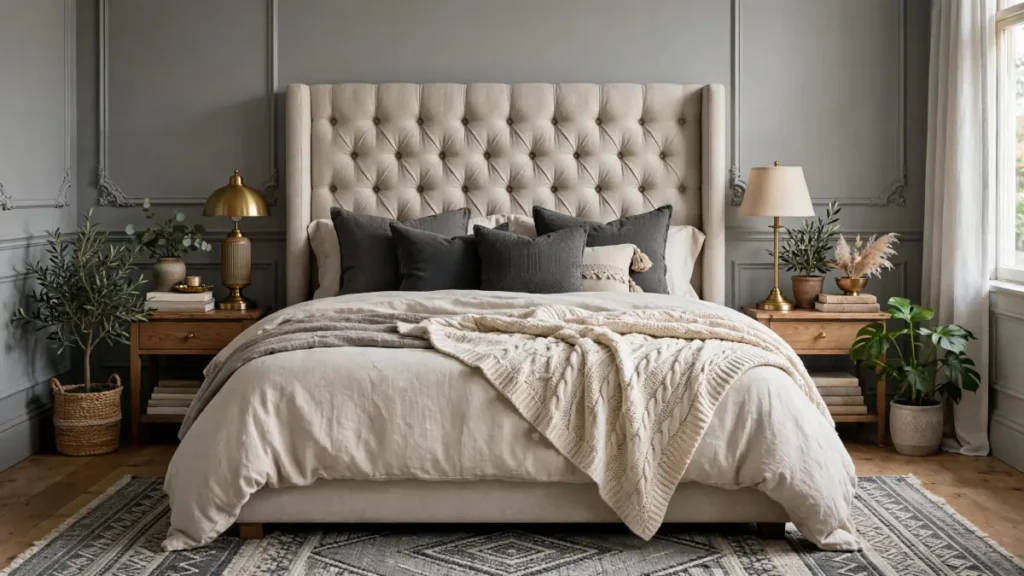
Pro Tip: Choose a soft, warm white instead of an icy white if your grey has beige or brown undertones.
9. Add a Upholstered Headboard in a Soft Fabric
An upholstered headboard can soften the appearance of a grey bedroom, particularly when the walls and furniture have clean, simple lines. Linen, boucle, and textured woven fabrics add tactile interest while making the bed feel more inviting.
A beige or oatmeal headboard looks especially attractive against grey walls. Alternatively, a lighter grey headboard can create a subtle tonal effect when paired with darker bedding.

Pro Tip: Choose a headboard fabric that contrasts slightly with the wall color so the bed remains a clear focal point.
10. Introduce Muted Green for a Natural Accent
Muted sage or olive green can bring a fresh, natural quality to grey bedroom decor. These shades work especially well when the rest of the room uses warm neutrals and natural materials. For more inspiration on using earthy green tones in your sleeping space, explore these olive green bedroom ideas for ways to create a calm, coordinated look.
Add green through cushions, a throw blanket, botanical artwork, or a small upholstered accent. You can also use a plant if the bedroom has suitable natural light and the plant is appropriate for your household.
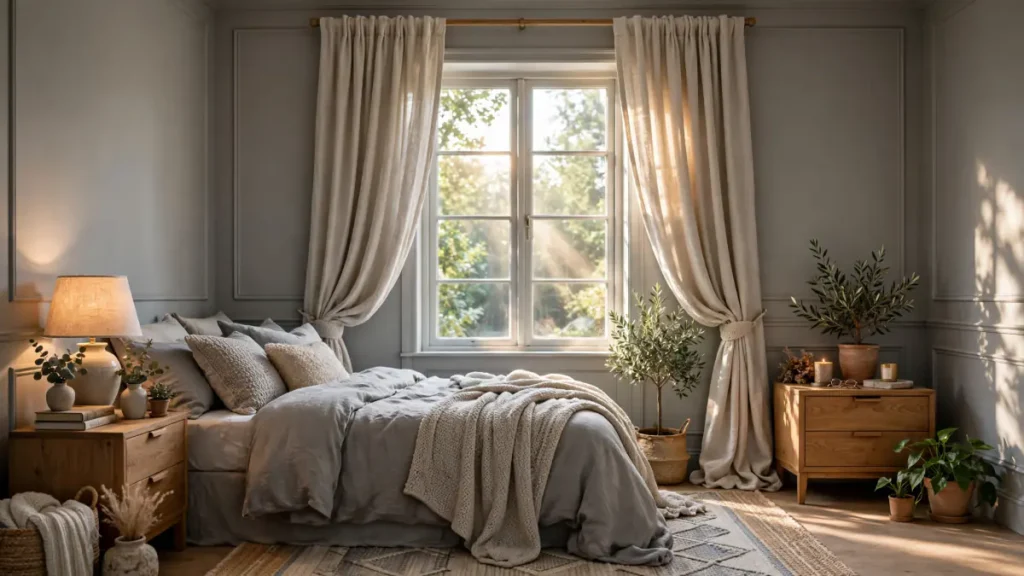
Pro Tip: Keep green to a few coordinated accents if you want grey to remain the main color of the bedroom.
11. Use Charcoal Accents for Sophisticated Contrast
Charcoal adds depth to a light or medium grey bedroom without requiring a completely dark color scheme. Consider charcoal cushions, a bedside lamp, picture frames, or a darker throw at the foot of the bed.
The contrast helps define the different elements of the room and creates a more polished appearance. To prevent the darker accents from making the bedroom feel heavy, balance them with warm white bedding and natural textures.

Pro Tip: Repeat charcoal in two or three small details instead of scattering black and dark grey accessories throughout the room.
12. Hang Soft Curtains to Frame the Windows
Curtains can make a grey bedroom feel softer by introducing fabric, movement, and a more finished window treatment. Cream, oatmeal, warm white, and muted taupe are all attractive choices.
For a layered look, combine sheer curtains with a heavier blackout layer if you need better light control. This adds depth while letting you adjust the room’s brightness throughout the day.
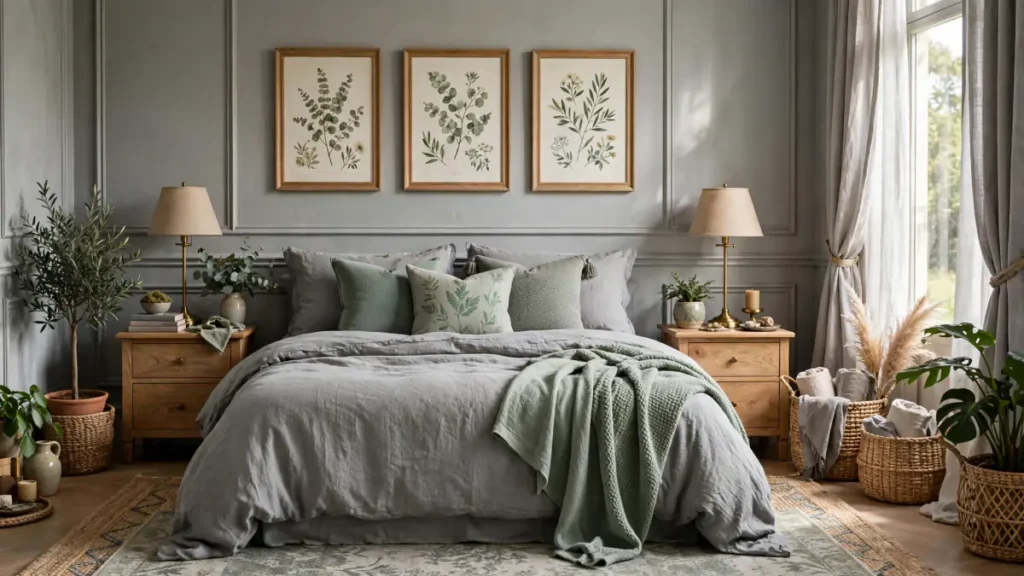
Pro Tip: Hang curtains slightly above the window frame and allow enough width for them to fall in soft folds. Keep the fabric and hardware securely installed.
13. Decorate With Warm Metallic Accents
Warm metallic finishes can add a subtle touch of elegance to a grey bedroom. Brushed brass, champagne gold, and antique bronze work well with warm greys and neutral textiles.
Try a brass bedside lamp, a small metallic frame, or understated drawer handles. These details create contrast and reflect light without overwhelming the room.
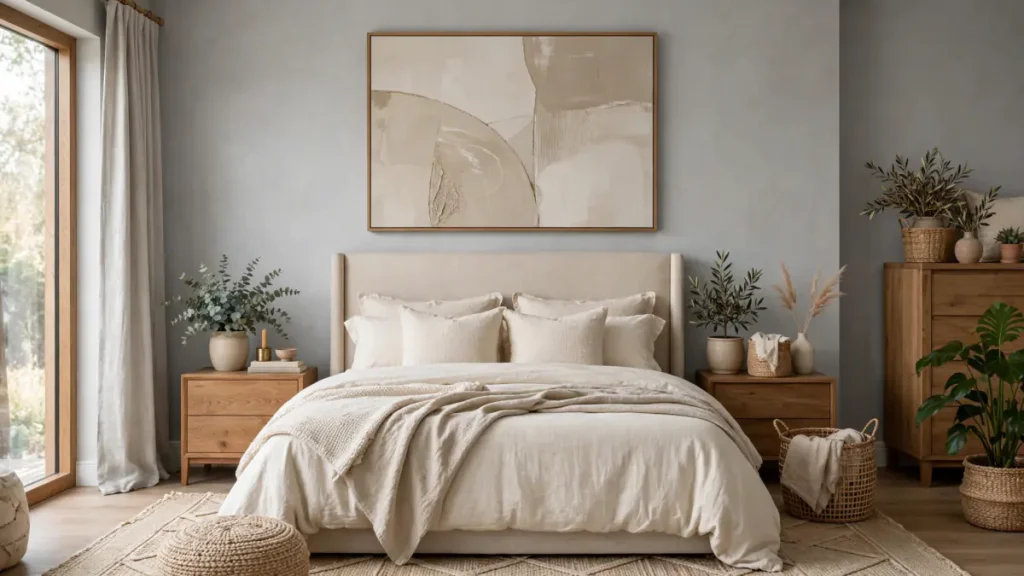
Pro Tip: Pick one main metallic finish and repeat it sparingly. A few coordinated details usually look more intentional than several competing finishes.
14. Add Personality With Neutral Wall Art
Artwork can help a grey bedroom feel personal rather than like a showroom. Choose abstract prints, soft landscapes, botanical illustrations, or photography that includes warm white, beige, muted green, or brown.
A single larger artwork above the headboard can create a focal point, while a small gallery arrangement works well on a wider wall. Matching or coordinating frames help the display feel connected to the room.
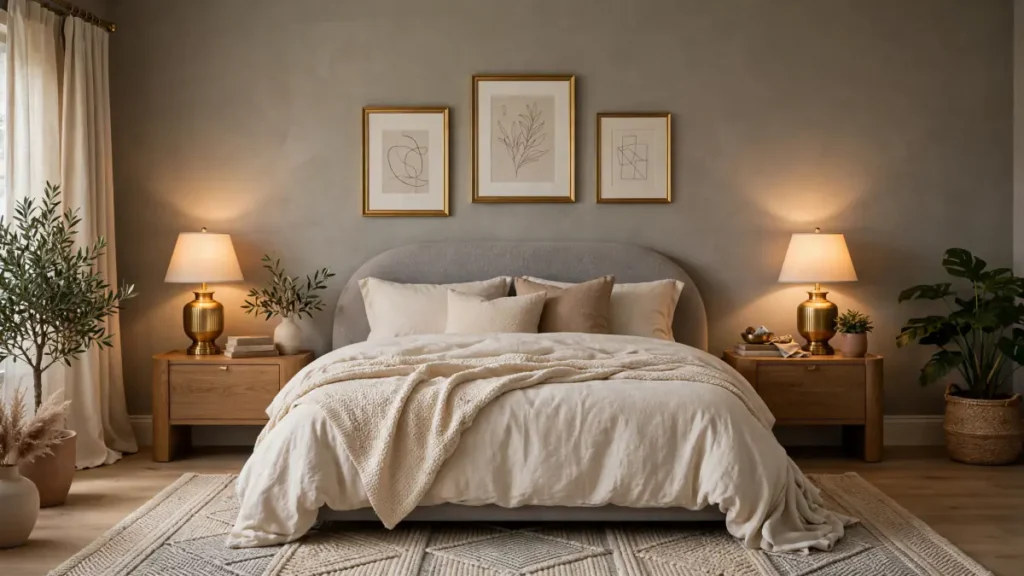
Pro Tip: Pull one color from your chosen artwork into the bedding or cushions to tie the decor together.
15. Mix Different Shades of Grey for a Layered Look
A grey bedroom doesn’t need to rely on one exact shade. Combining pale grey, medium grey, and charcoal can create depth while maintaining a consistent color scheme.
For example, use light grey walls, a medium-grey headboard, and darker cushions. Introduce cream or warm beige through a rug or throw to keep the overall look from feeling too cool.
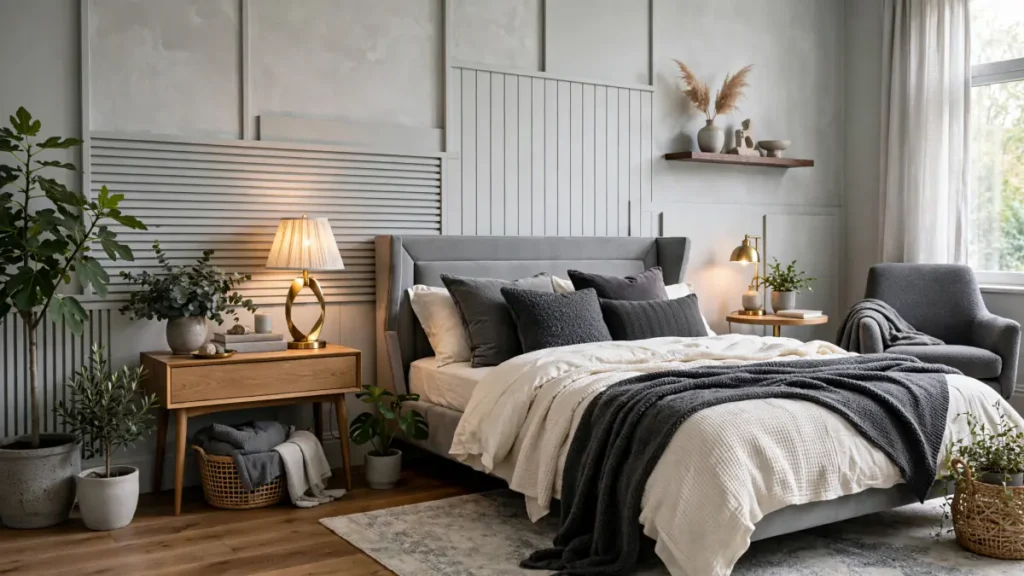
Pro Tip: Keep the undertones reasonably consistent. Warm greys generally pair more easily with one another than warm greys mixed with strong blue-grey shades.
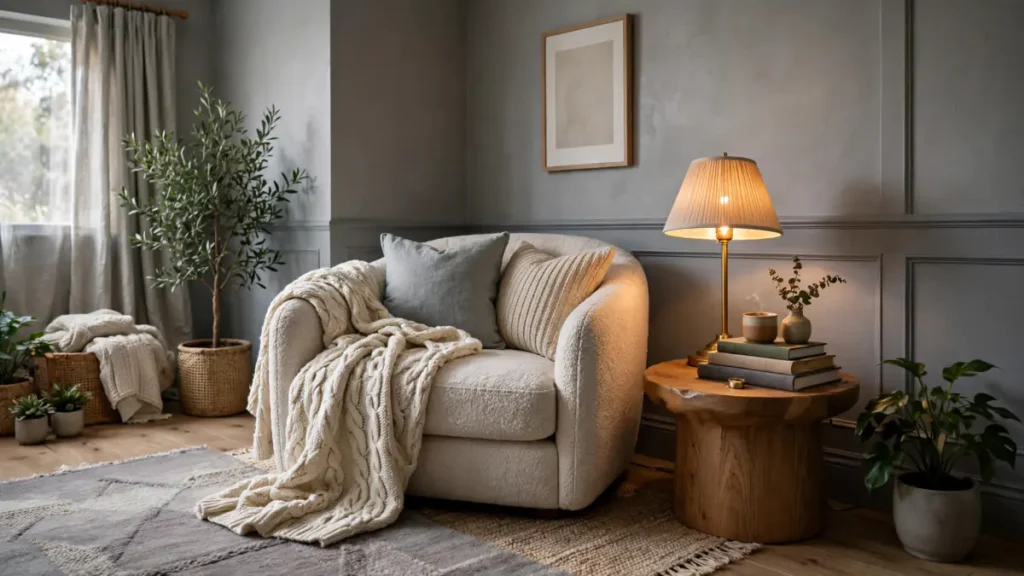
16. Create a Cozy Reading Corner
A small reading corner can make a bedroom feel more personal and comfortable. Place an upholstered chair in a corner, add a soft throw, and include a small side table or reading lamp.
In a grey bedroom, a beige or oatmeal chair creates warmth, while a muted green cushion or wooden side table adds a natural touch. Even a compact corner can become a useful place to relax without requiring much furniture.
Pro Tip: Choose furniture that fits the available space and keep the walkway clear. A floor lamp or wall-mounted reading light can save table space.
17. Bring in Woven and Natural Accessories
Natural textures can prevent grey bedroom decor from feeling too smooth or uniform. Woven baskets, linen cushions, wooden trays, and natural-fiber accessories add variation without introducing a strong new color.
Use a basket for extra blankets or choose a woven lampshade to soften the look of a bedside table. The goal is to introduce a few tactile details that make the room feel lived-in.

Pro Tip: Mix only a few natural textures at a time. Repeating a woven finish or wood tone in different areas helps the bedroom feel coordinated rather than cluttered.
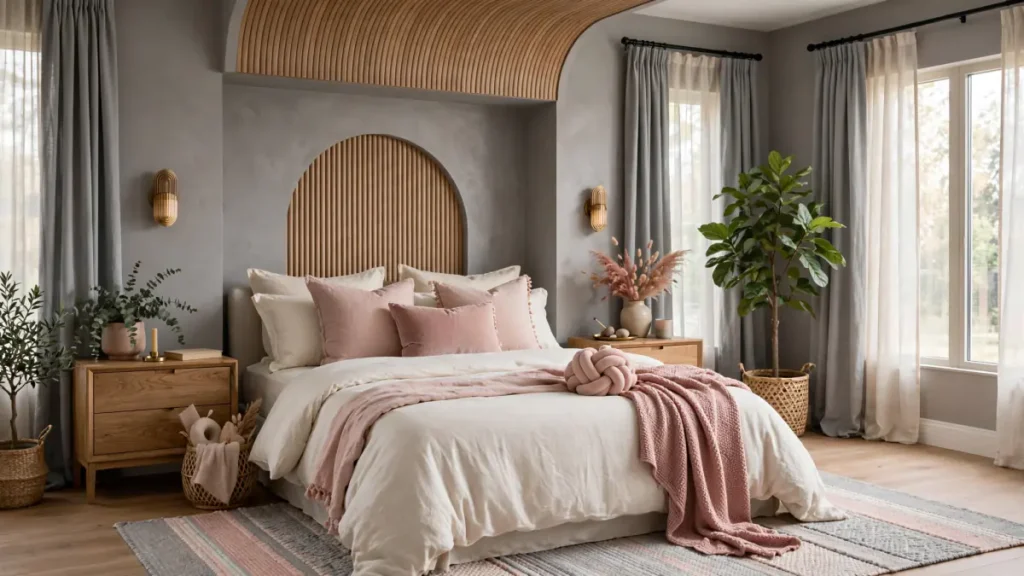
18. Choose a Grey and Blush Color Combination
Muted blush pink can soften grey and introduce a gentle hint of color. The combination works particularly well when grey is used as the main neutral and blush appears in a few carefully chosen accessories.
Try blush cushions, a soft pink throw, or understated artwork against warm grey walls. Pair these accents with ivory bedding and natural wood for a balanced look that feels elegant rather than overly sweet.
Pro Tip: Choose dusty rose or muted blush instead of a very bright pink if you want the bedroom to maintain a calm, sophisticated appearance.
19. Make a Small Grey Bedroom Feel Brighter
Grey can work well in a small bedroom when the shade, lighting, and furniture are chosen carefully. Lighter grey walls, warm white bedding, and simple furniture help keep the room from feeling visually crowded.
Use mirrors where they can reflect available daylight, choose curtains that don’t overwhelm the windows, and avoid filling every surface with accessories. Storage that keeps everyday items out of sight can also make a noticeable difference.
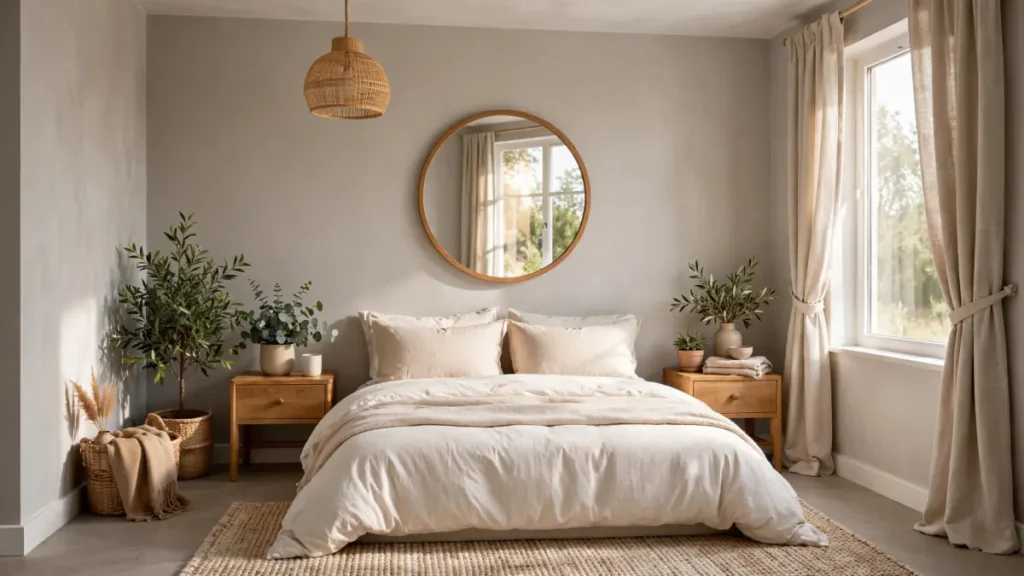
Pro Tip: In a room with limited daylight, test a light warm grey before committing to a darker wall color. Keep larger surfaces light and use deeper grey for smaller accents.
20. Finish With Soft Throws and Decorative Cushions
The final details can make a grey bedroom feel complete. A knitted throw, linen cushions, a textured bedspread, and a few coordinated accessories add comfort and make the bed look more inviting.
Choose pieces that repeat colors already present in the room, such as cream, beige, muted green, or charcoal. You don’t need to add everything at once; a few well-chosen details can create a more balanced result.
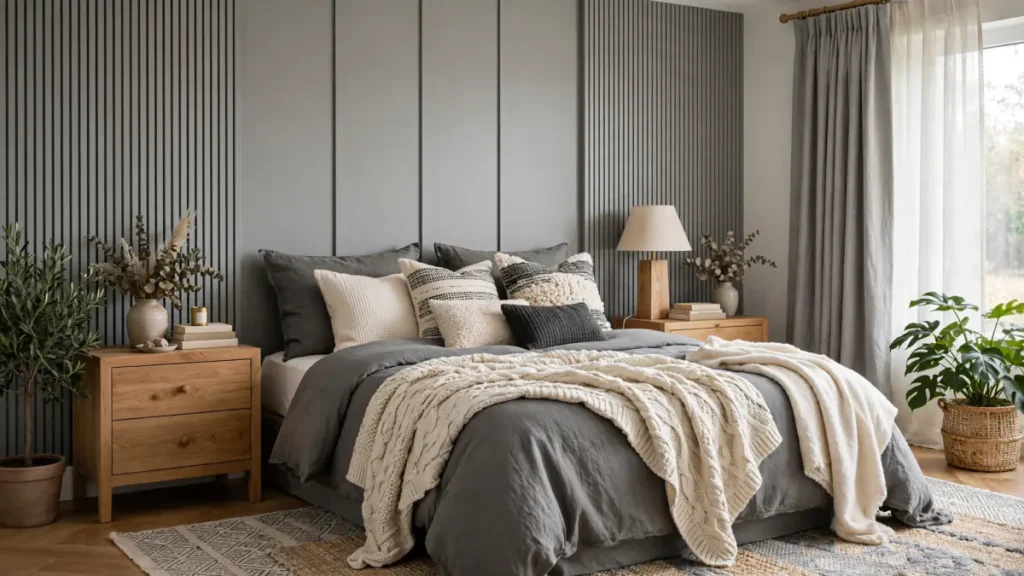
Pro Tip: Arrange cushions in different sizes and textures, but leave enough space for the bed to remain practical and comfortable to use.
How to Make a Grey Bedroom Feel Warm & Balanced
Choose the Right Grey Undertone
Not every grey creates the same atmosphere. Some shades lean toward blue, while others have subtle beige, brown, or green undertones. Warm greys and greige often feel softer when paired with cream textiles and natural wood.
Before choosing paint or large furnishings, look at samples in your actual bedroom. Natural light, flooring, and nearby colors can all affect how a shade appears.
Combine Soft Textures With Smooth Finishes
A room filled with smooth, uniform surfaces can look flat regardless of the color palette. Add contrast with linen bedding, a woven rug, a textured throw, or an upholstered headboard.
You can still keep the bedroom simple and uncluttered. The aim is to create enough variation for the grey to feel layered rather than sterile.
Use Warm Lighting and Keep the Palette Consistent
Warm lighting helps create a relaxing atmosphere, especially in the evening. Combine it with a consistent palette of grey, cream, beige, and one or two accent colors.
Avoid adding too many unrelated shades or decorative pieces. Repeating a small selection of colors and materials throughout the room makes the final design feel more intentional.
Frequently Asked Questions
How do you make a grey bedroom feel less cold?
Combine grey with warm wood, cream or beige textiles, textured rugs, and warm-white lighting. Using several textures and a few complementary colors helps prevent the room from looking flat or sterile.
What colors go best with grey in a bedroom?
Cream, ivory, beige, warm brown, muted green, blush pink, and natural wood can all complement grey. The best combination depends on the grey’s undertone and the atmosphere you want to create.
Is grey a good color for a bedroom?
Yes. Grey is a versatile neutral that can create a calm, sophisticated bedroom. The key is choosing a suitable shade and balancing it with comfortable textures, good lighting, and complementary colors.
What shade of grey is best for a cozy bedroom?
Warm grey, greige, and muted dove grey are good starting points for a cozy bedroom. However, the best shade depends on the natural light in your room and the colors of your flooring and furniture.
How can I decorate a grey bedroom on a budget?
Start by updating smaller items such as cushion covers, throws, curtains, or a bedside lampshade. Rearranging existing accessories and introducing a warm-toned rug can also help refresh the room without replacing the furniture.
How do you style grey bedroom walls without using too much grey?
Use grey on the walls and introduce cream bedding, wooden furniture, neutral curtains, and a few accent colors. This keeps grey as the foundation while allowing other materials and shades to bring warmth and personality.
Final Thoughts
Grey doesn’t have to make a bedroom feel cold. The right undertones, warm lighting, natural wood, and comfortable textiles can transform this versatile neutral into a welcoming retreat.
Start with one or two changes that suit your space, whether that’s softer bedding, a warm grey wall color, or a textured rug. By keeping the palette balanced and layering details thoughtfully, you can create a grey bedroom that feels calm, cozy, and beautifully finished.