20 Apartment Bedroom Storage Ideas That Save Space
Living in an apartment often means working with limited bedroom space, small closets, and little room for extra furniture. The challenge is finding enough storage without making the bedroom feel crowded or cluttered.
The good news is that you don’t need a larger room to stay organized. With smart furniture, vertical storage, and a few creative solutions, you can make better use of the space you already have.
These 20 apartment bedroom storage ideas will help you organize clothing, bedding, accessories, and everyday essentials while keeping your bedroom comfortable and stylish.
20 Apartment Bedroom Storage Ideas
1. Make Use of Under-Bed Storage
The space beneath your bed is perfect for storing items you don’t need every day. For more ways to organize your sleeping space, explore these bedroom storage ideas for practical solutions that work with different room layouts. Slide shallow storage bins or fabric organizers underneath to keep extra bedding, seasonal clothing, shoes, and spare pillows out of sight.
Choose containers with lids to protect your belongings from dust and make everything easier to organize.
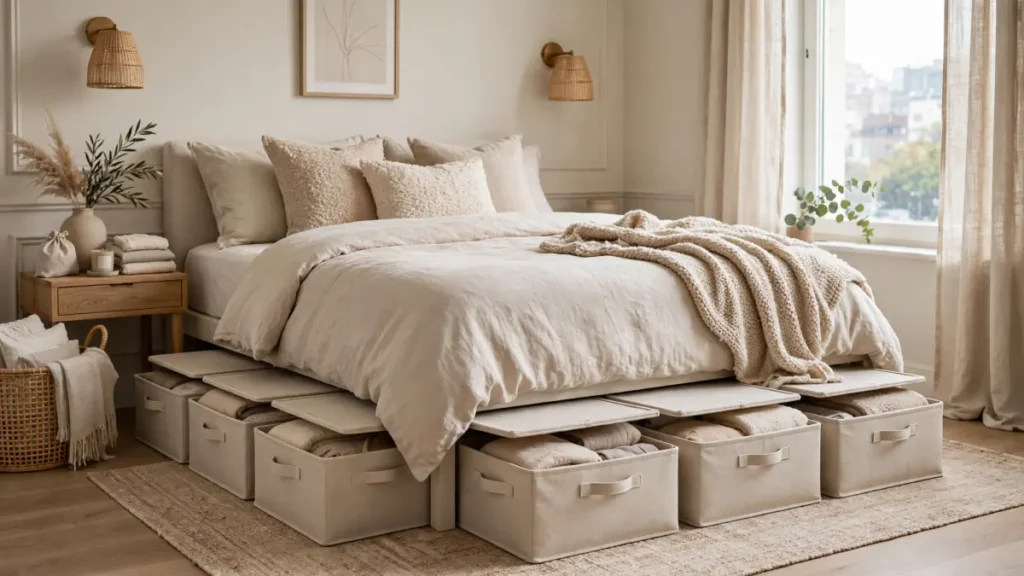
Pro Tip: Use matching under-bed containers to create a cleaner, more coordinated look when they’re visible.
2. Choose a Bed With Built-In Drawers
A storage bed combines sleeping space and hidden storage in one piece of furniture. Built-in drawers are especially useful for apartments where a separate dresser would take up too much floor space.
Use the drawers for folded clothing, extra sheets, blankets, or accessories. Before choosing a frame, make sure the drawers can open fully in your bedroom layout.
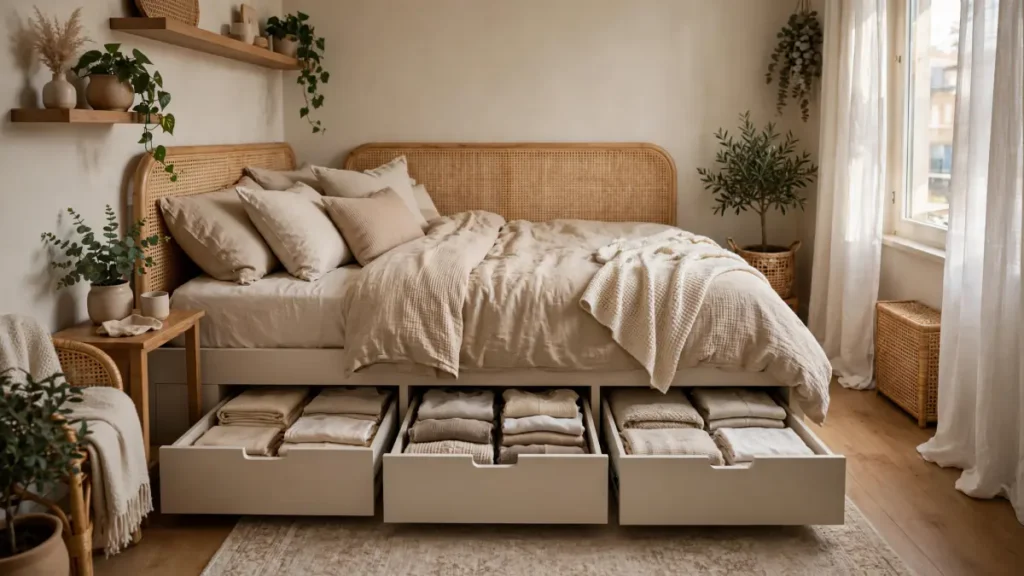
Pro Tip: If your bed sits close to a wall, consider a lift-up storage bed instead of side-opening drawers.
3. Install Floating Nightstands
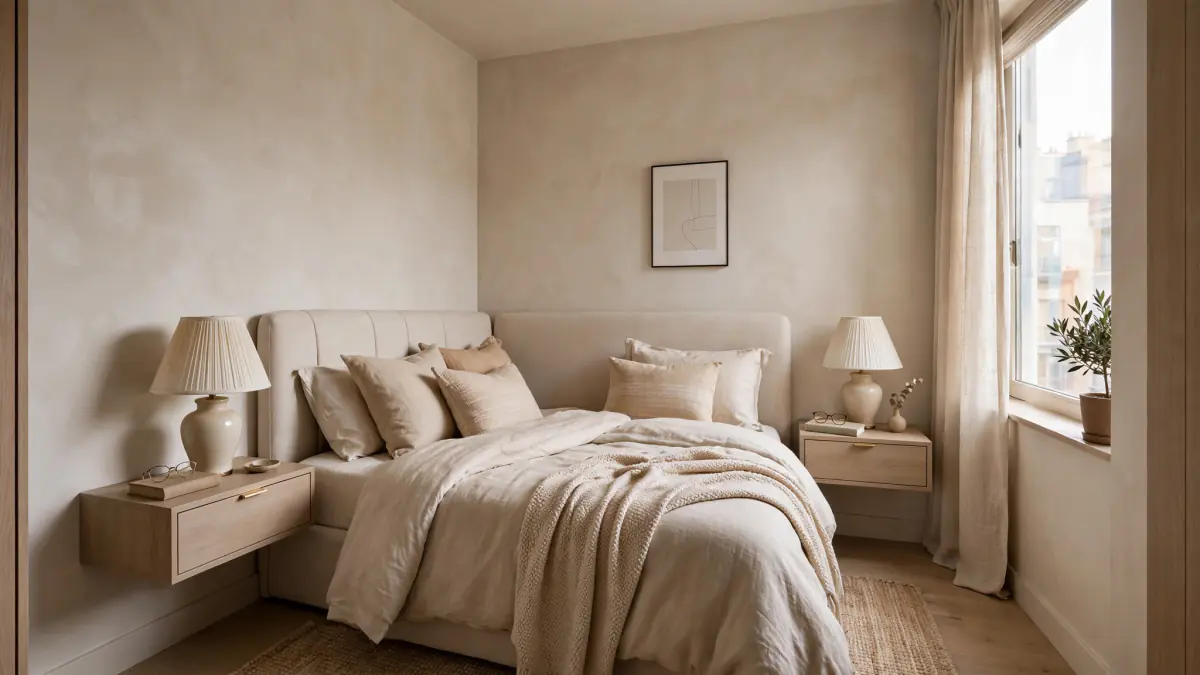
Traditional nightstands can make a small bedroom feel crowded, especially when there’s limited walking space beside the bed. Floating nightstands provide a convenient surface without taking up floor space.
Choose a compact design with a drawer to store glasses, charging cables, books, and other bedside essentials.
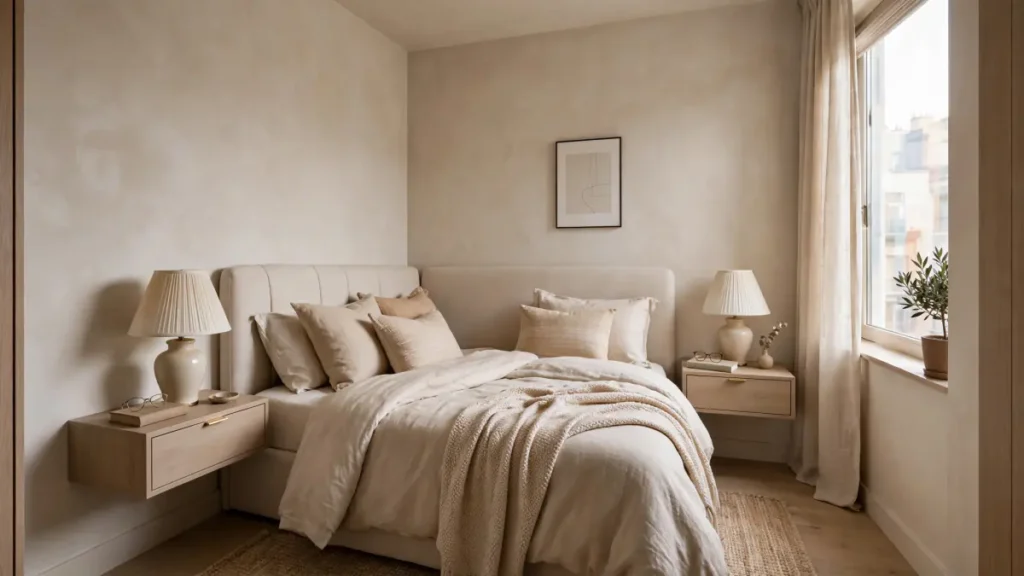
Pro Tip: Keep the tabletop simple with just a small lamp or a few everyday items to prevent visual clutter.
4. Use Tall, Narrow Dressers
When floor space is limited, think vertically. A tall, narrow dresser can hold clothing and accessories without occupying as much floor area as a wide, bulky unit.
Place it against an unused wall or in a suitable corner, making sure drawers can open comfortably.
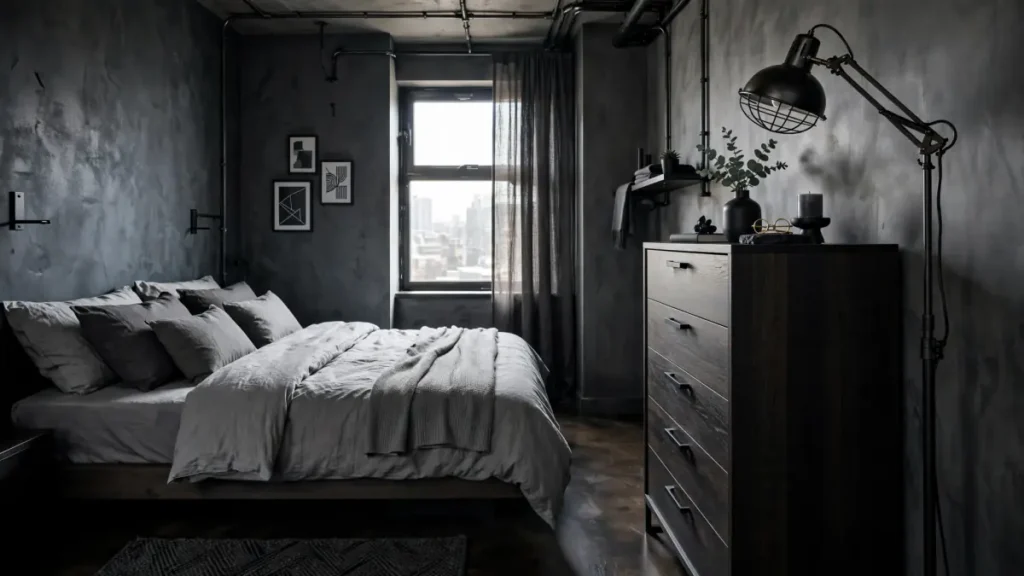
Pro Tip: Choose a dresser with a simple finish that complements your bed and other furniture for a cohesive bedroom design.
5. Organize Your Closet With Shelf Dividers
A small apartment closet can become difficult to manage when folded clothes, bags, and accessories are stacked together. Shelf dividers help separate these items and prevent piles from toppling over.
Use them for sweaters, handbags, jeans, towels, or extra linens.
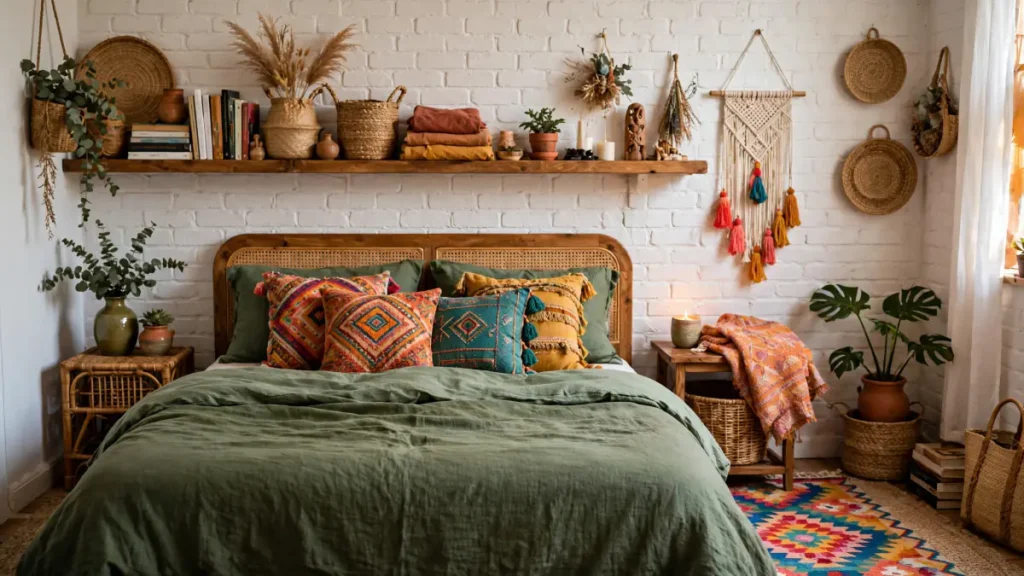
Pro Tip: Group similar items together so you can find what you need without rearranging the entire shelf.
6. Use the Back of Your Bedroom Door
The back of a bedroom door is an often-overlooked storage spot. You can use the same space-saving approach near your entrance with these apartment entryway drop zone ideas to organize bags, keys, and everyday essentials. An over-the-door organizer or a set of suitable hooks can hold bags, scarves, belts, lightweight clothing, or accessories.
This is particularly helpful when closet space is limited.
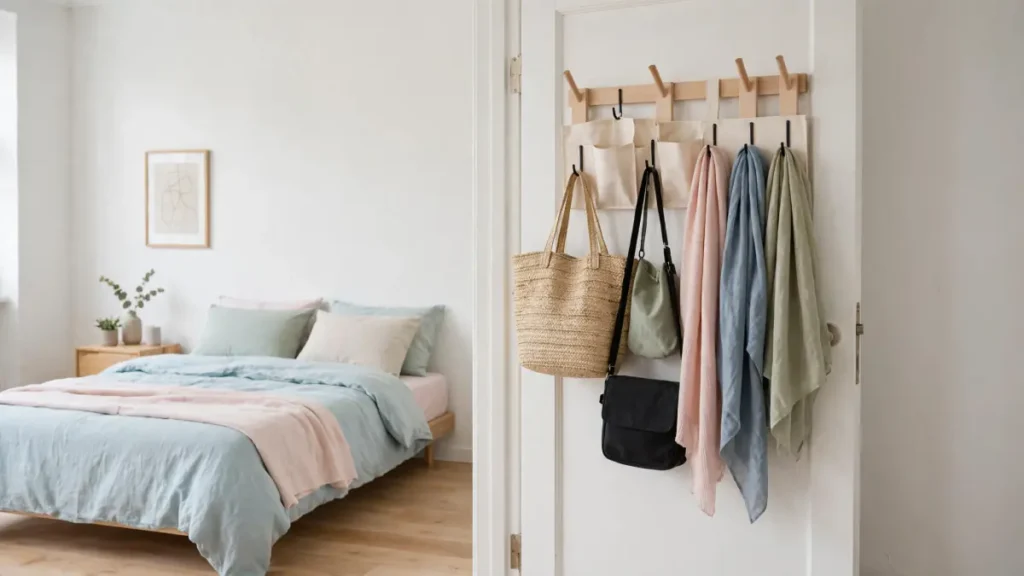
Pro Tip: Choose a slim organizer that allows the door to close properly without hitting nearby furniture.
7. Add a Storage Bench at the Foot of the Bed
A storage bench gives you a place to sit while putting on shoes and a convenient spot to hide extra belongings. It works well for spare blankets, decorative pillows, or seasonal bedding.
Choose a narrow bench that fits the width of your bed without blocking the main walkway.
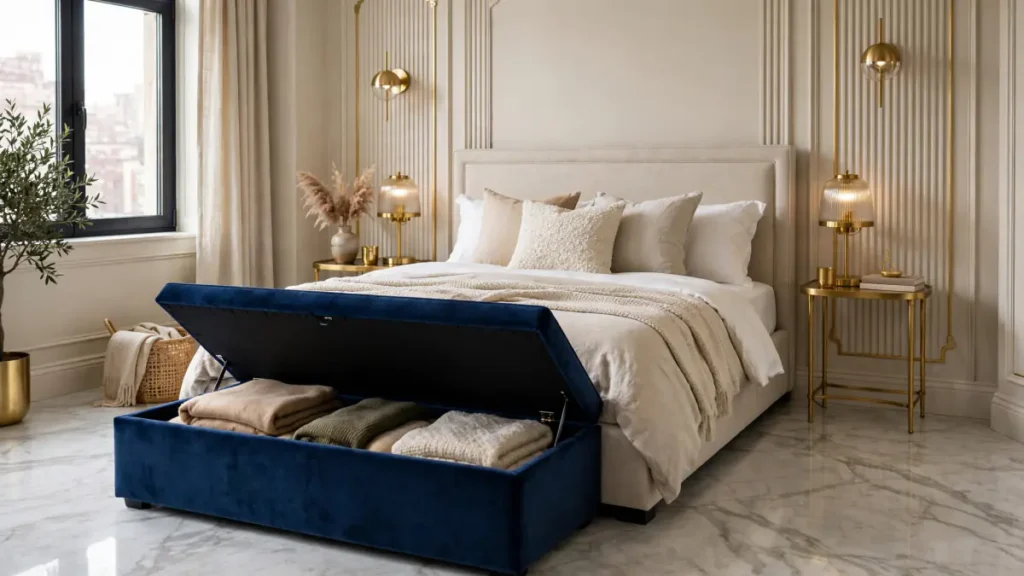
Pro Tip: An upholstered bench in a neutral fabric can add a soft, finished look while providing practical storage.
8. Create Storage With Floating Wall Shelves
Floating shelves can turn an empty wall into useful storage for books, folded accessories, small baskets, and everyday essentials.
Instead of covering every wall, install a few shelves where they will be most useful. This helps preserve the room’s open feel.
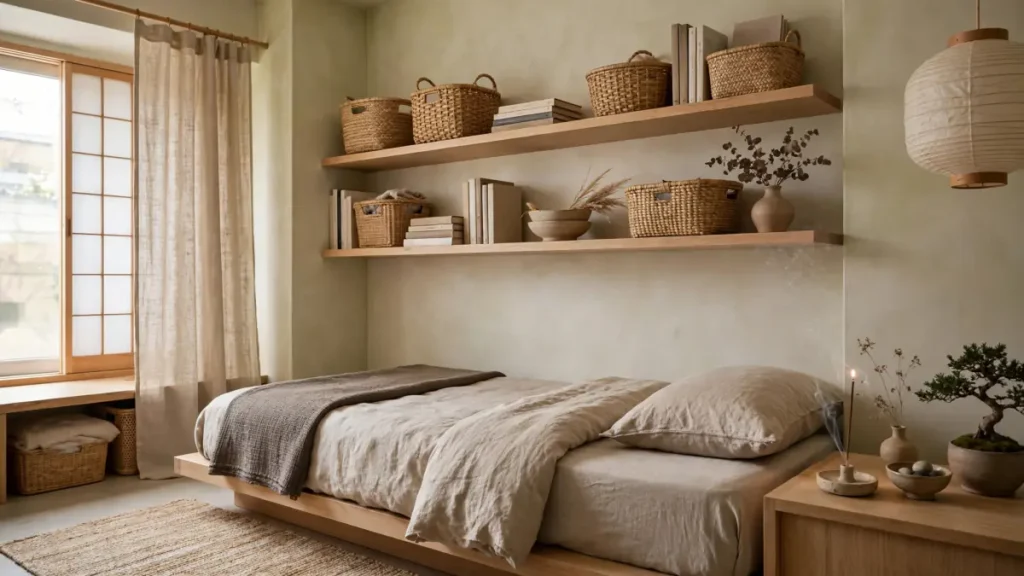
Pro Tip: Use baskets or small containers on the shelves to keep loose items organized and visually tidy.
9. Use Space Above Your Wardrobe
If your wardrobe doesn’t reach the ceiling, the space above it can hold items you rarely need. Place neatly labeled storage boxes there for seasonal clothing, spare bedding, or travel accessories.
Choose coordinated containers so this upper area looks intentional rather than messy.
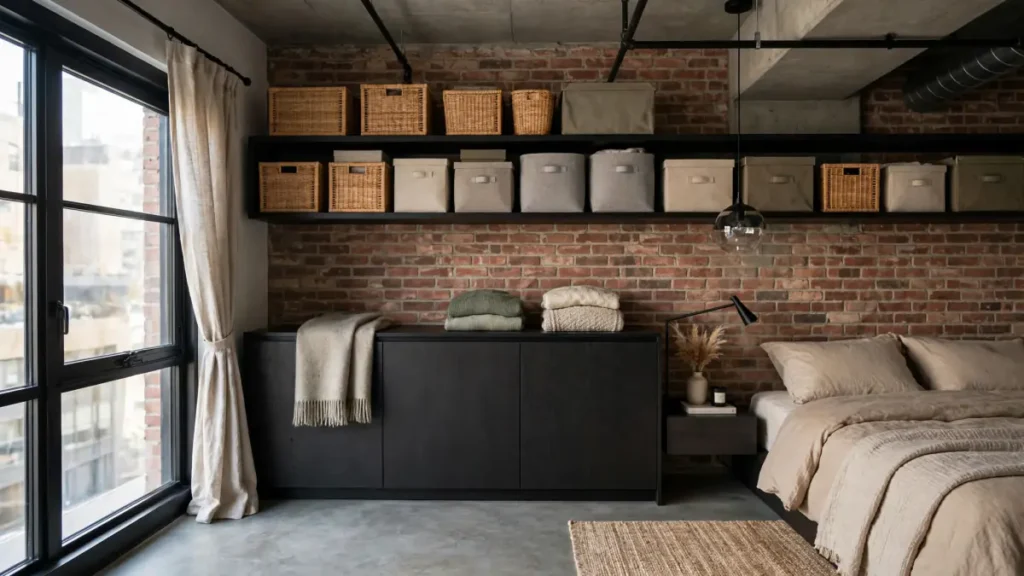
Pro Tip: Store lightweight items in easy-to-handle boxes and avoid placing anything heavy or unstable overhead.
10. Use Wall-Mounted Drawers
If a regular nightstand makes it difficult to move around your bed, consider a wall-mounted drawer unit. It provides enclosed storage while leaving the floor underneath clear.
This option is useful for storing small personal items without adding another bulky piece of furniture.
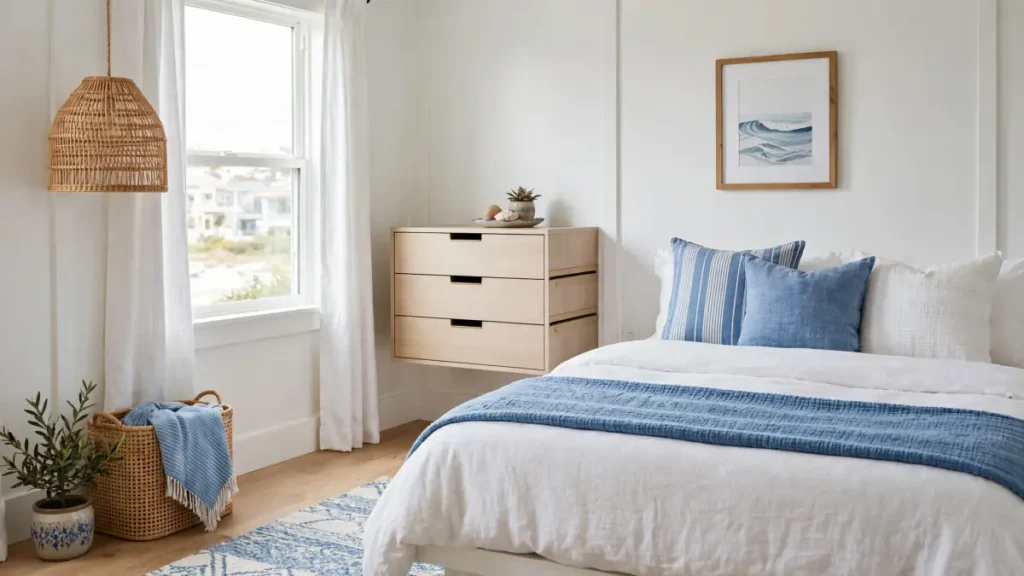
Pro Tip: Measure the available wall space and check the mounting requirements before choosing a unit, especially in a rental apartment.
11. Use a Slim Clothing Rack
When your closet cannot accommodate all your clothes, a slim clothing rack can provide extra hanging space. Choose a design with a lower shelf for shoes or storage baskets.
Keep only frequently worn clothing on display to prevent the bedroom from feeling like a crowded dressing room.
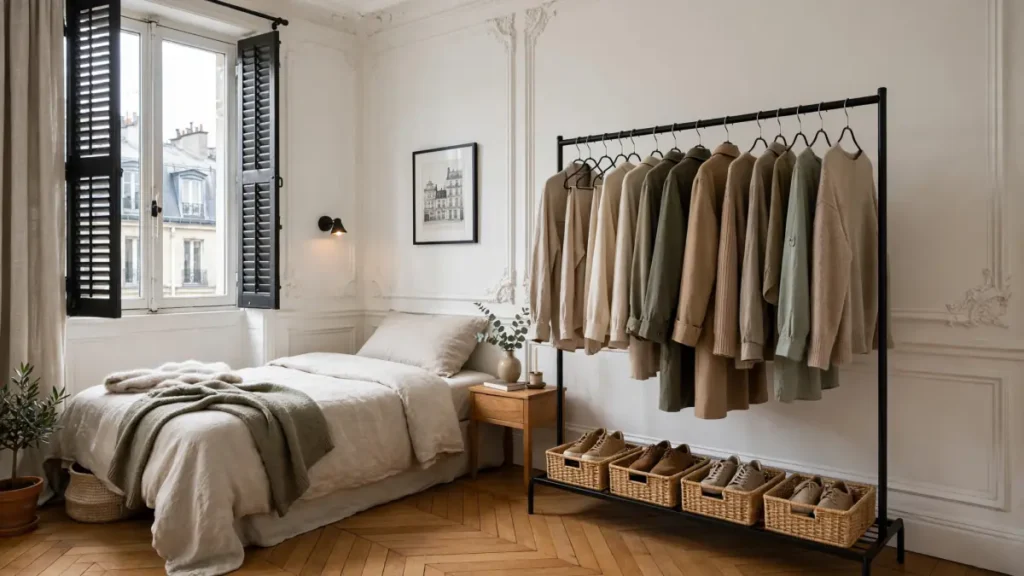
Pro Tip: Arrange clothes by color or type and use matching hangers for a more organized appearance.
12. Choose a Headboard With Built-In Storage
A storage headboard can provide small compartments or shelves for books, glasses, charging accessories, and other bedside necessities.
Because it combines storage with an existing piece of furniture, it can reduce the need for extra bedside tables.
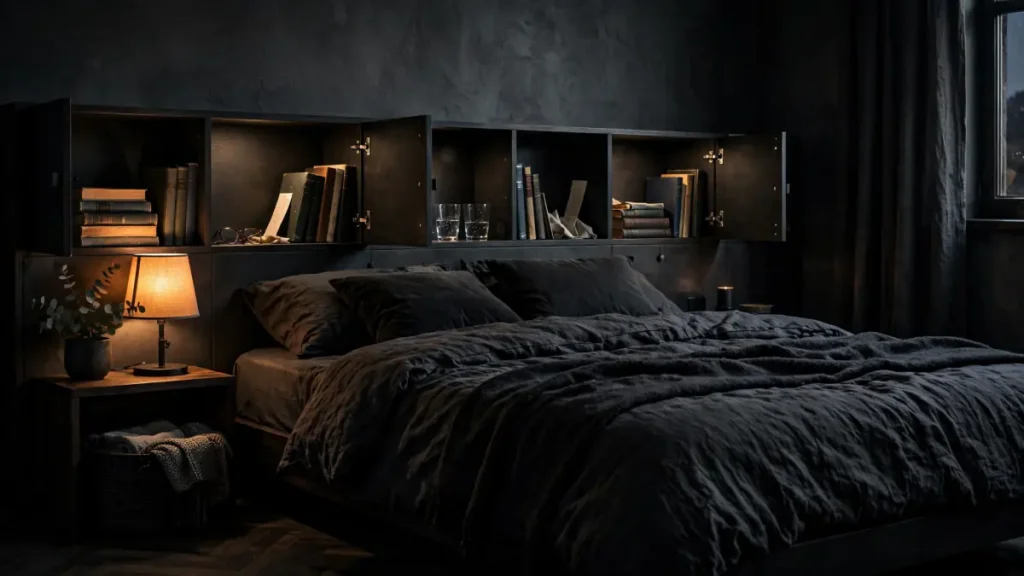
Pro Tip: Look for a design with closed compartments if you prefer to keep everyday clutter hidden.
13. Add Storage Baskets to Empty Corners
Small corners can hold useful storage without requiring custom furniture. Place a woven basket in an unused corner for extra pillows, blankets, laundry, or accessories.
Natural textures can also add warmth to a bedroom decorated in neutral colors.
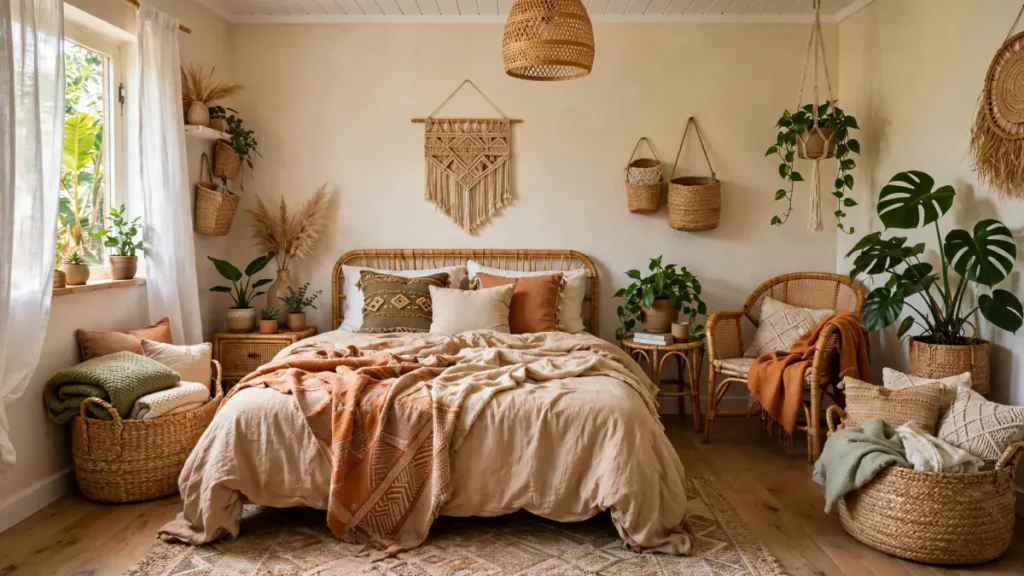
Pro Tip: Choose one or two baskets that fit the space rather than filling every corner with containers.
14. Use Drawer Organizers for Small Items
Bedroom drawers often become cluttered with socks, belts, jewelry, accessories, and other small belongings. Drawer organizers divide the available space into separate sections so everything has a place.
They are especially useful when you have limited storage and need to make every drawer count.
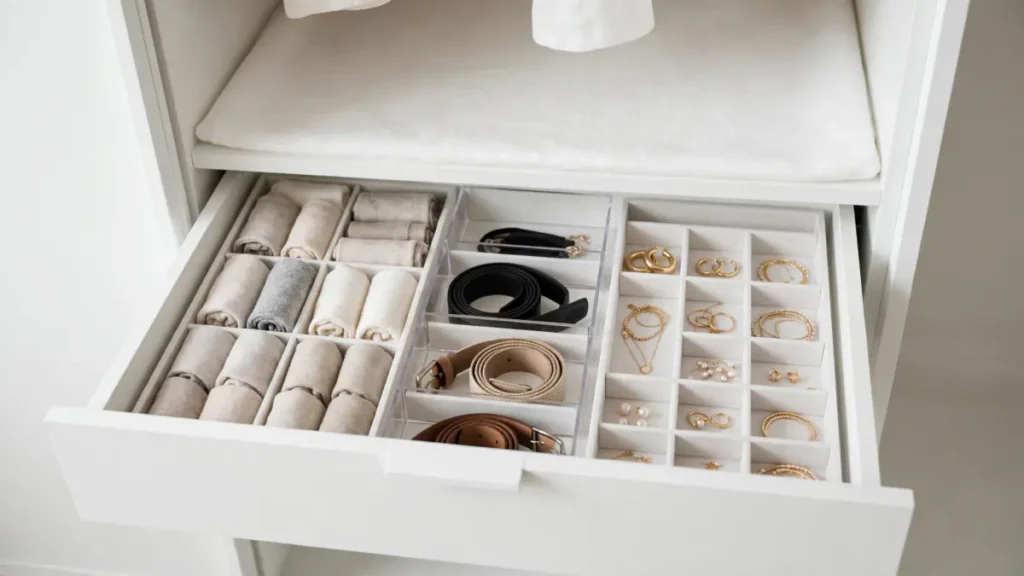
Pro Tip: Measure the inside of your drawers before buying organizers to avoid wasting space between compartments.
15. Try a Lift-Up Ottoman
A compact ottoman with a hidden compartment can provide extra storage without looking like a traditional storage box. Place it beside a wall, near a dressing area, or at the foot of the bed if space allows.
Use it for spare linens, accessories, or items you want to keep close but out of sight.
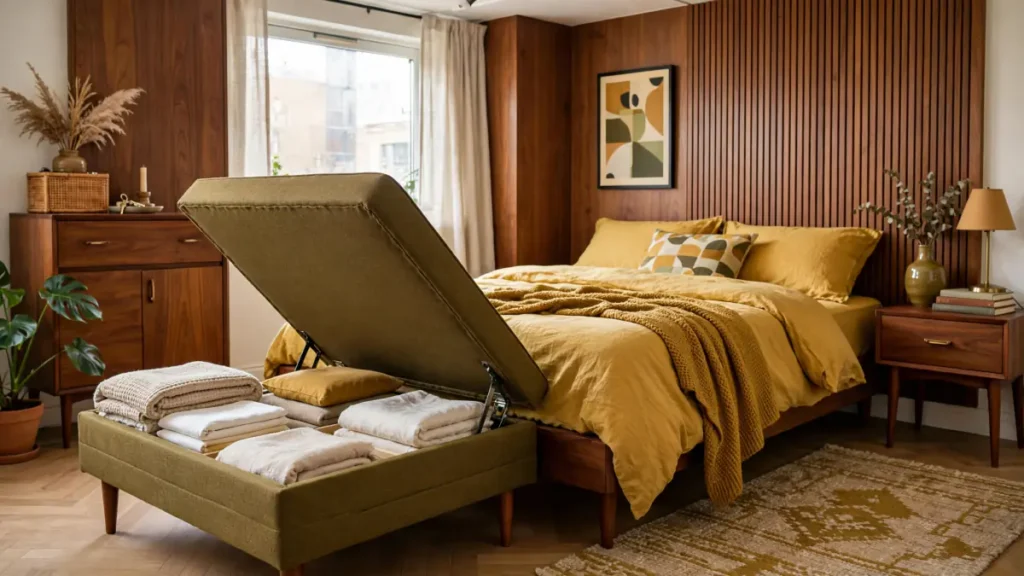
Pro Tip: Choose an ottoman with a lightweight lid that is easy to open and close during everyday use.
16. Install Hooks for Bags and Accessories
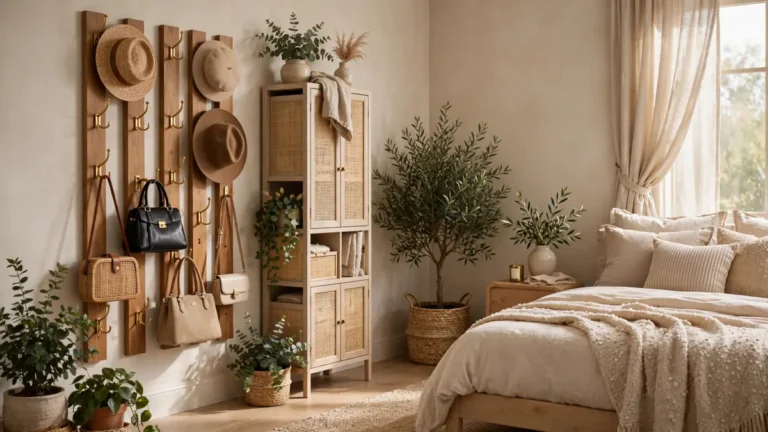
Wall hooks provide a simple way to organize handbags, hats, scarves, and lightweight accessories. They are particularly helpful if your closet has limited hanging space.
Install them on an unused wall or inside a closet where they won’t interfere with doors or furniture.
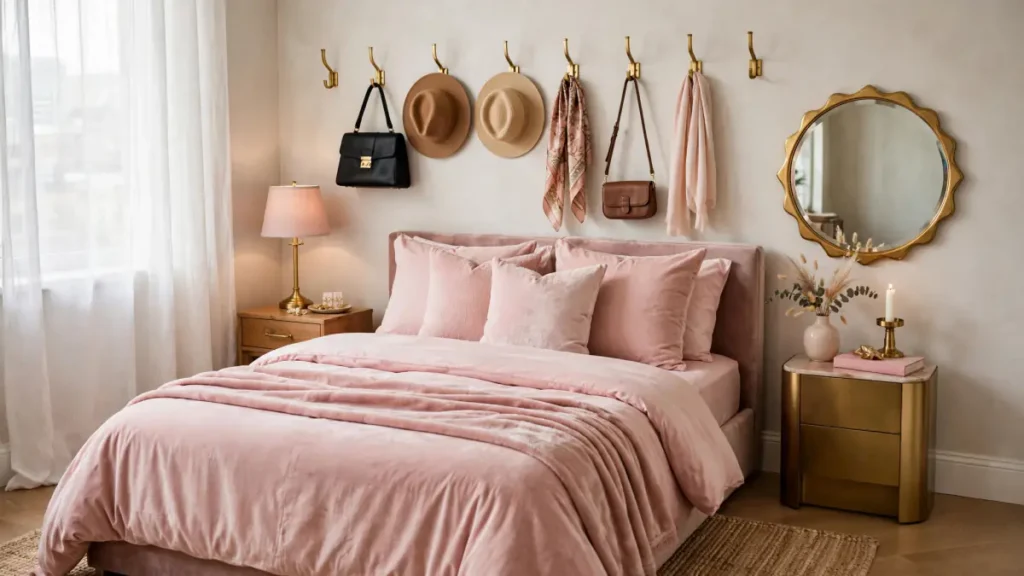
Pro Tip: Arrange hooks in a neat row and leave enough space between items to prevent them from overlapping.
17. Add Storage Drawers Inside the Closet
Make your existing closet work harder by adding stackable drawers, small drawer units, or modular organizers. These can create separate spaces for folded clothing, undergarments, accessories, and smaller belongings.
This approach is useful when you want more organization without adding another dresser to the bedroom.
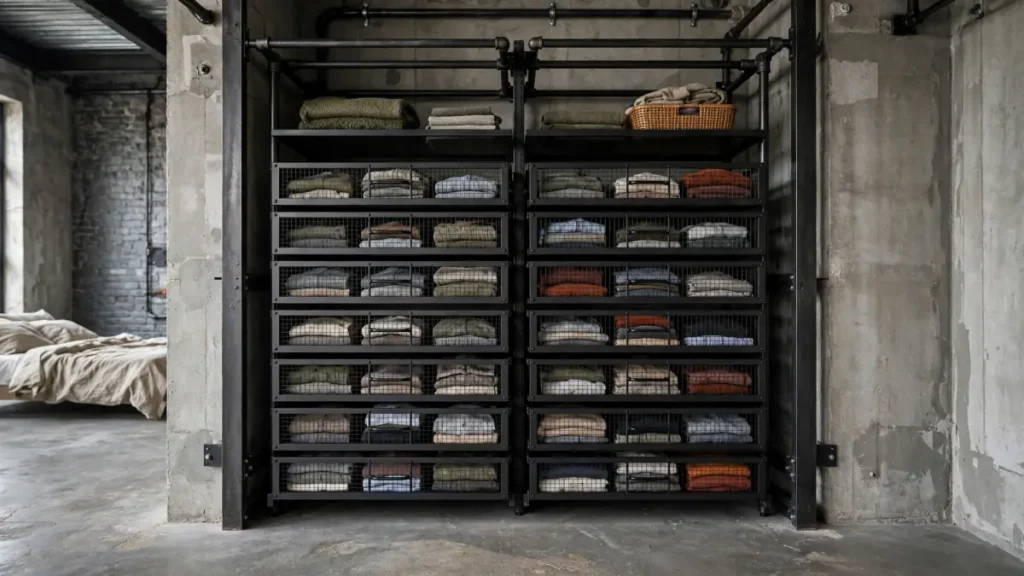
Pro Tip: Use the lower part of the closet for drawers and reserve hanging space for clothing that wrinkles easily.
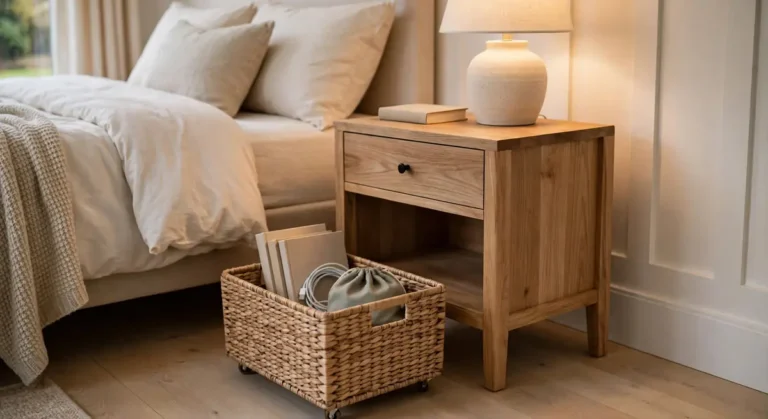
18. Choose a Bedside Table With Multiple Functions
A small bedside table with drawers, shelves, or a built-in charging area can provide more utility than a simple table. Some compact designs also include a pull-out surface for additional space when needed.
Look for furniture that meets your daily needs without adding unnecessary bulk.
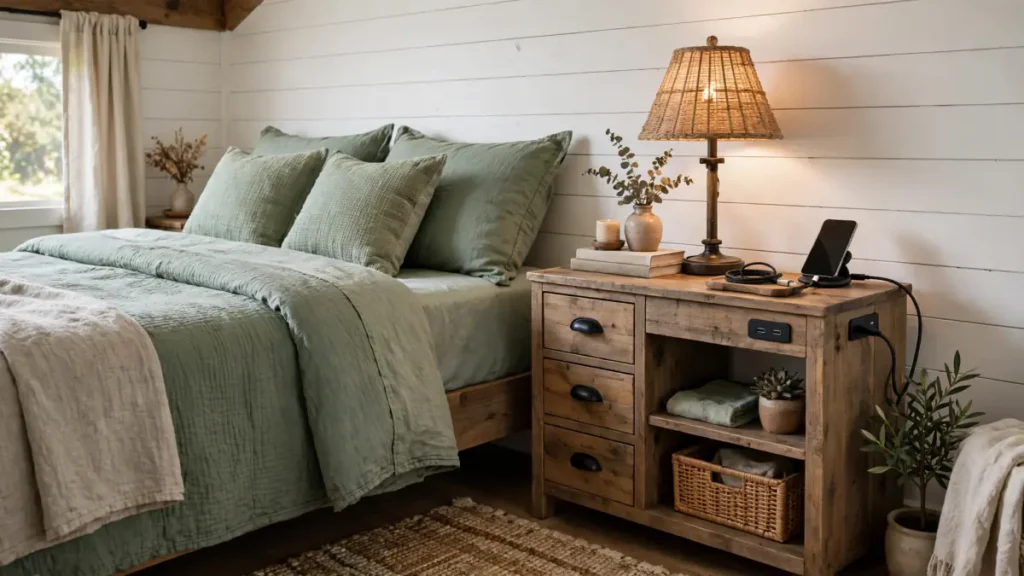
Pro Tip: Prioritize useful storage compartments over decorative features that you won’t regularly use.
19. Use Matching Storage Boxes on Open Shelves
Open shelves are convenient, but too many loose belongings can make a small bedroom look untidy. Matching storage boxes help conceal smaller items while keeping them easy to access.
Use them for cables, accessories, documents, craft supplies, or miscellaneous belongings that don’t have a dedicated drawer.
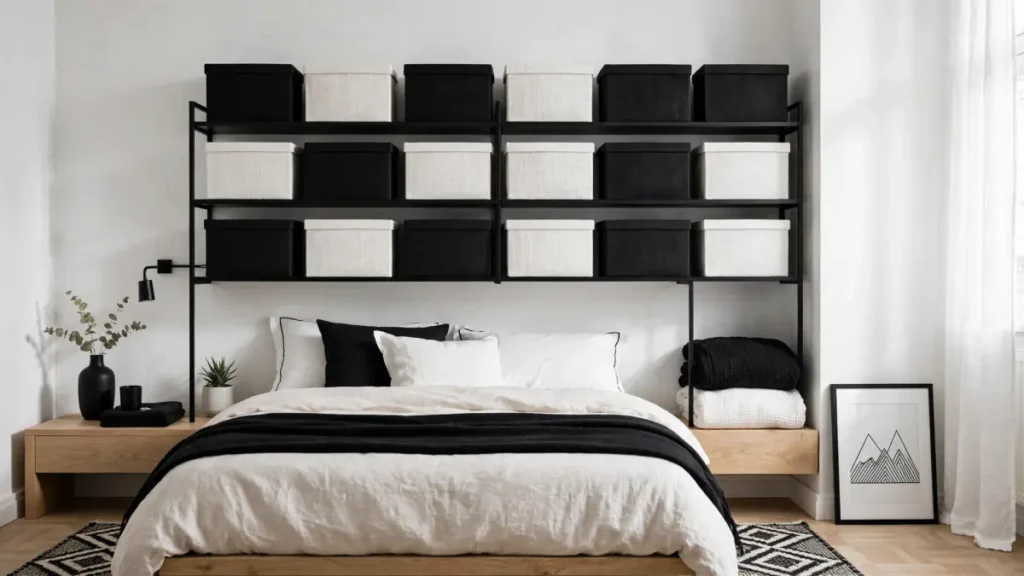
Pro Tip: Choose boxes in two or three complementary colors to keep the overall look calm and coordinated.
20. Consider a Wall-Mounted Folding Desk With Storage
If your apartment bedroom also serves as a workspace, a wall-mounted folding desk can provide a useful surface without permanently occupying floor space.
Choose a model with small compartments or nearby shelving for notebooks, stationery, and work essentials. Fold it away when it isn’t needed, provided the setup allows for safe and convenient use.
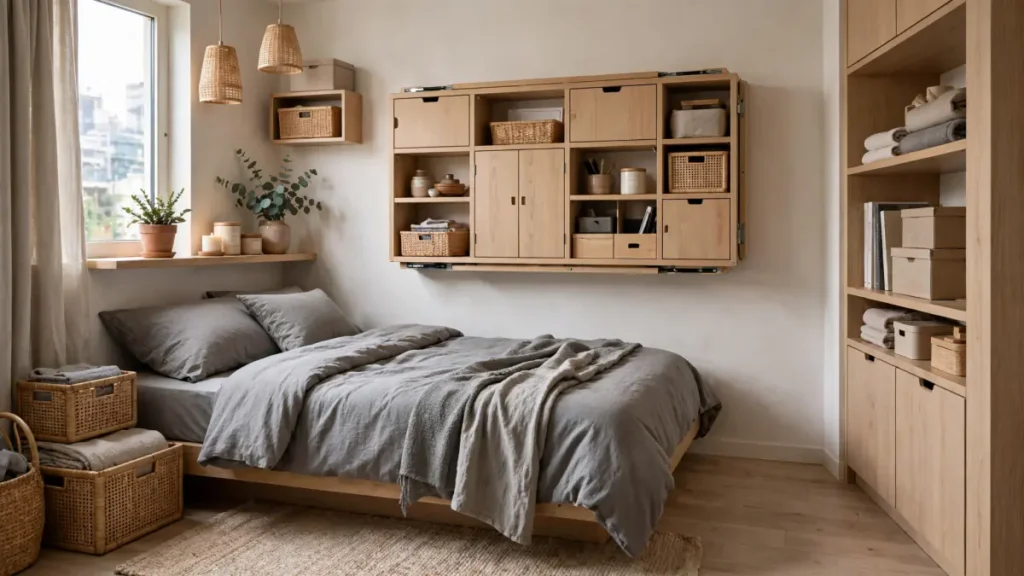
Pro Tip: Keep the surrounding wall organized and avoid placing too many shelves above the desk, especially if the bedroom already has limited visual space.
Choose the Best Storage for a Small Bedroom
Before buying new organizers or furniture, consider how you use your bedroom and which belongings need the most space.
- Measure first: Check wall lengths, furniture dimensions, drawer clearance, and walking paths.
- Use hidden storage: Under-bed containers, storage beds, and closed drawers help keep clutter out of sight.
- Think vertically: Tall dressers and wall shelves make use of space that might otherwise go unused.
- Choose multifunctional furniture: Look for pieces that provide storage and another practical purpose.
- Keep everyday items accessible: Store frequently used belongings within easy reach and move seasonal items to higher shelves or under-bed containers.
- Avoid overfilling the room: Storage should make the bedroom easier to use, not leave you with less room to move.
Frequently Asked Questions
How can I add storage to a small apartment bedroom?
Start with the space under your bed, the upper part of your closet, and unused wall areas. Under-bed bins, vertical shelving, floating nightstands, and closet organizers can add storage without requiring much extra floor space.
What furniture is best for a small bedroom apartment?
Storage beds, tall narrow dressers, floating nightstands, storage benches, and multifunctional ottomans are useful choices. The best option depends on your room layout and the items you need to store.
How do I store clothes when my apartment bedroom has no closet?
A slim clothing rack, a compact wardrobe, a tall dresser, and under-bed clothing organizers can help. You can also use wall hooks and stackable drawers to organize accessories and folded clothing.
How can I make bedroom storage look stylish?
Choose storage pieces that complement your existing furniture, use coordinated baskets or boxes, and keep open shelves from becoming overcrowded. Combining concealed storage with a few attractive accessories helps maintain a balanced look.
How do I keep a small apartment bedroom from looking cluttered?
Give everyday belongings a designated place, use closed storage for smaller items, and keep frequently used surfaces relatively clear. Avoid adding storage furniture unless it solves a specific problem.
Final Thoughts
A small apartment bedroom can be both organized and inviting when storage is planned around the space you actually have. From hidden under-bed containers to floating shelves and multifunctional furniture, even a few thoughtful changes can make everyday life easier.
Start with one problem area, such as a crowded closet or an untidy bedside table, and choose a solution that fits your layout. With the right combination of practical storage and simple styling, you can create a bedroom that feels more spacious, comfortable, and organized.