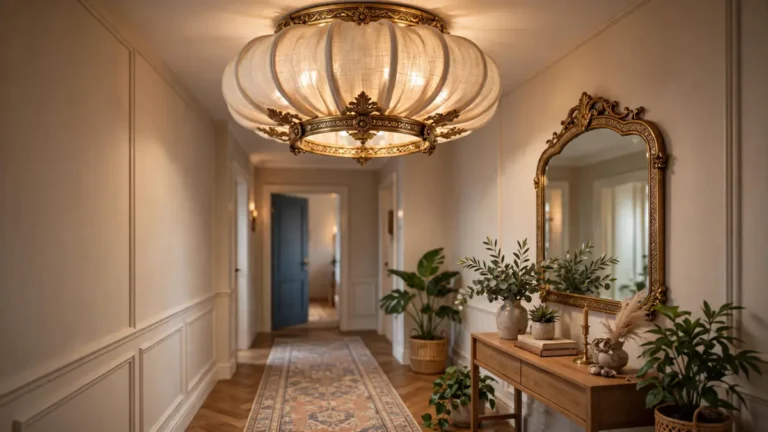
18 Apartment Entryway Drop Zone Ideas for a Stylish, Organized Home
When you live in an apartment, the entryway can become cluttered surprisingly quickly. Shoes collect beside the door, keys disappear into bags, jackets end up on dining chairs, and mail lands on the nearest available surface. Without a dedicated mudroom or spacious foyer, keeping everything organized can feel like a constant challenge.
The solution is to create a simple drop zone that gives your everyday essentials a designated place. With the right combination of hooks, compact furniture, shoe storage, and decorative details, even a tiny apartment entrance can feel intentional and welcoming.
These apartment entryway drop zone ideas offer practical ways to organize your belongings without sacrificing valuable floor space. Whether your front door opens directly into your living room or you have a narrow hallway to work with, you’ll find inspiration for creating an entryway that looks beautiful and works for everyday life.
18 Apartment Entryway Drop Zone Ideas
1. Create a Drop Zone With a Slim Console Table
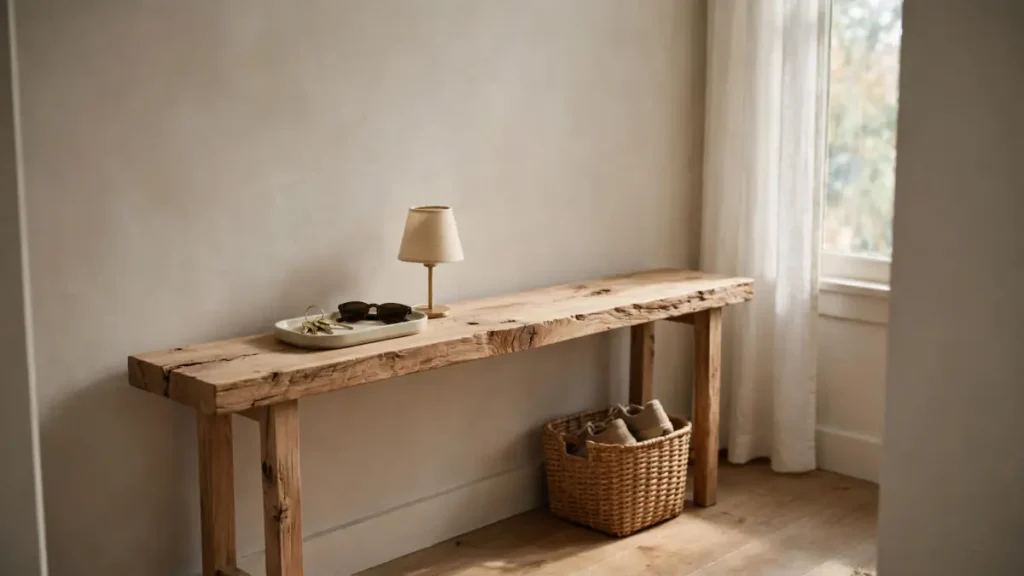
A slim console table provides a convenient landing spot for keys, wallets, sunglasses, mail, and other everyday essentials. Its narrow profile makes it especially useful in apartments where a full-size entryway table would block the walkway. Style the top with a small tray, a table lamp, or a simple decorative object to keep the arrangement attractive without overcrowding it.
If the area beneath the table is open, you can also add a compact basket for reusable shopping bags or a small shoe organizer.
Pro Tip: Choose a console with a shallow depth and measure the available walkway before purchasing it. A table that looks compact online can still make a narrow entrance feel cramped.
2. Install Wall Hooks for Coats and Everyday Bags
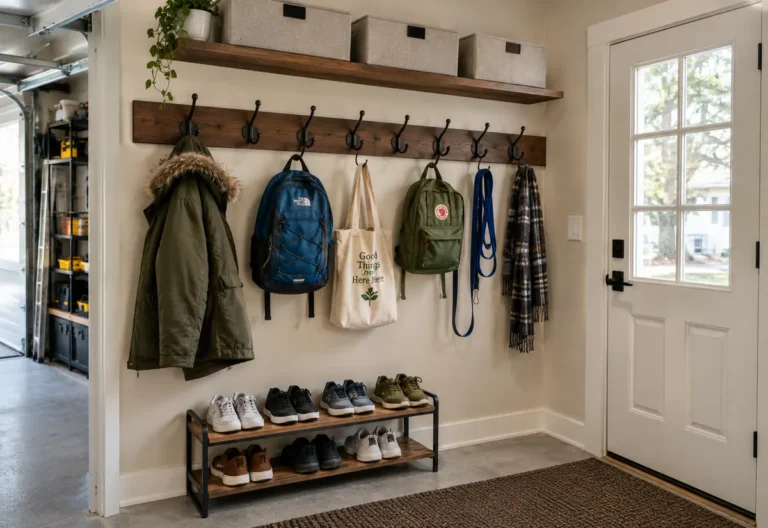
Wall hooks offer a straightforward way to keep jackets, tote bags, backpacks, and hats off the floor. They are particularly useful when an apartment doesn’t have a coat closet or when the existing closet is already full. Arrange a row of hooks near the front door so frequently used belongings are easy to grab when leaving.
For a more decorative look, choose wood pegs, matte-black hooks, or brushed-metal finishes that complement your existing furniture and hardware.
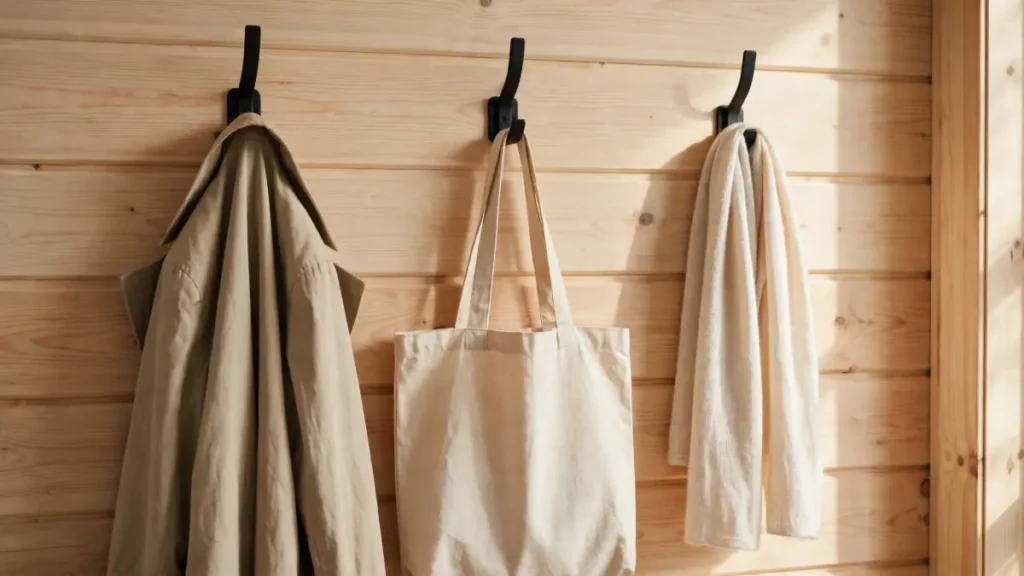
Pro Tip: If you’re renting, check your lease and consider removable hooks or an over-the-door rack where appropriate. Follow the manufacturer’s weight limits and test adhesive products on a suitable surface before relying on them for heavier items.
3. Use a Slim Shoe Cabinet to Hide Clutter
Shoes are often the biggest source of entryway mess, particularly when several people share a small apartment. A slim shoe cabinet keeps footwear organized behind closed doors, creating a cleaner appearance than a collection of shoes lined up beside the entrance.
Choose a cabinet that fits your available wall space and accommodates the footwear you use most often. A light wood or white finish can help the furniture blend into a small entryway, while a darker finish can create a more defined focal point.
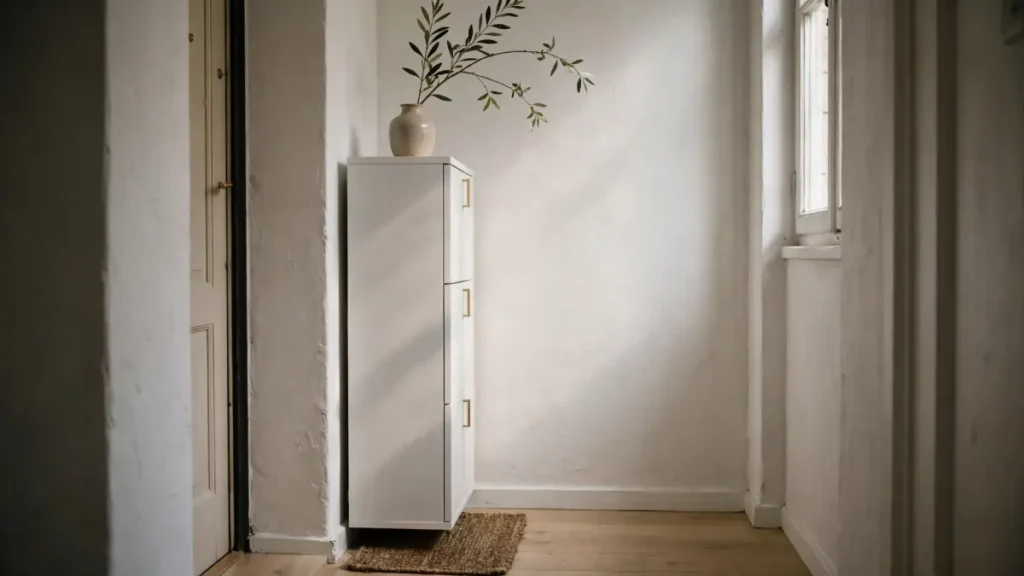
Pro Tip: Check the cabinet’s interior dimensions, door clearance, and ventilation before buying it. Store clean, dry shoes inside to help prevent moisture and unpleasant odors from building up.
4. Add a Small Bench With Storage Underneath
A compact entryway bench gives you a place to sit while putting on shoes and offers extra storage underneath. Depending on the design, the lower section can hold baskets, everyday footwear, or small bags. This combination is especially useful when you want both seating and organization without adding several separate furniture pieces.
Choose a bench with a simple frame and upholstery or wood finishes that suit the rest of your apartment. If the entrance is very narrow, a small backless bench may feel less visually bulky.
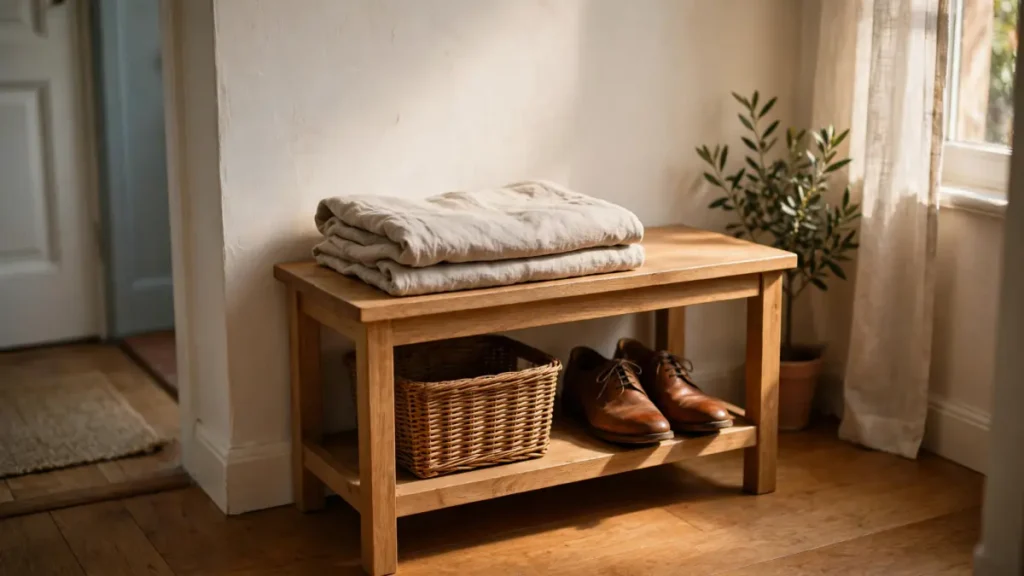
Pro Tip: Look for a bench that fits comfortably against the wall without interfering with the door swing. Keep only frequently worn shoes underneath so the area doesn’t turn into another clutter pile.
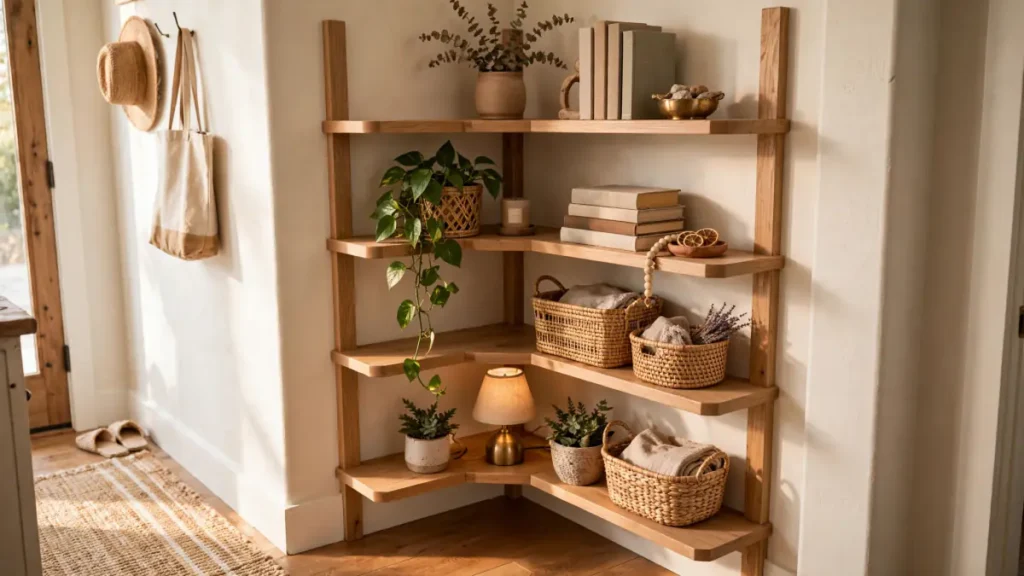
5. Create a Drop Zone With Floating Shelves
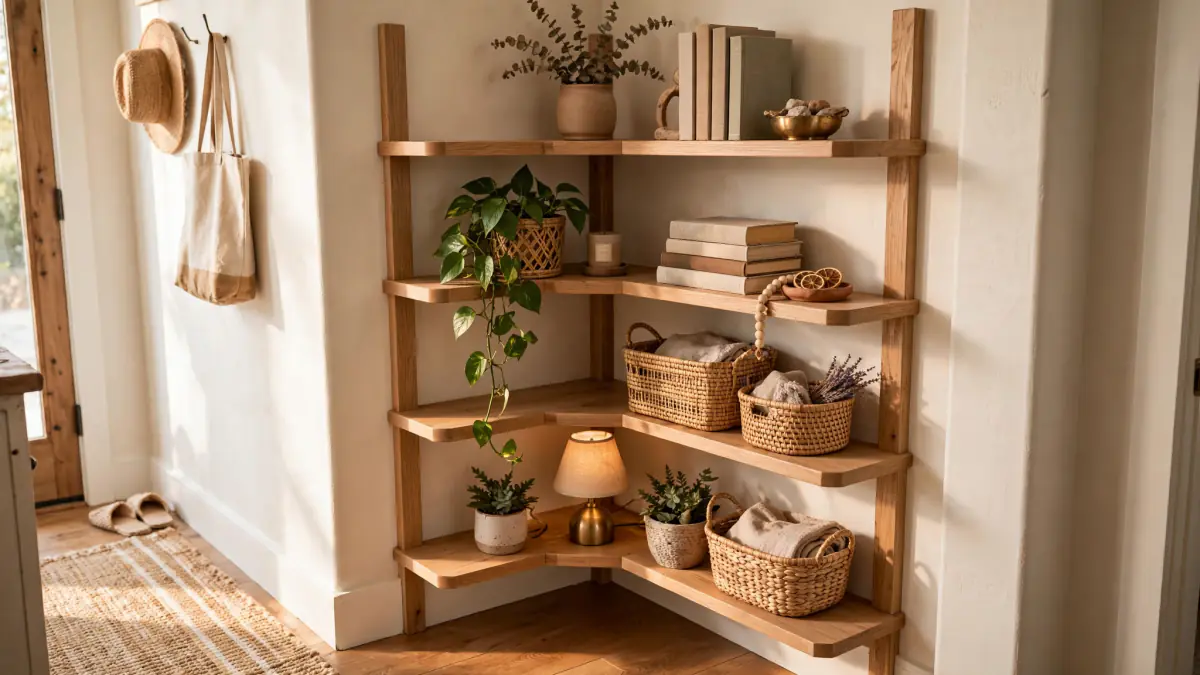
Floating shelves make use of vertical wall space instead of taking up valuable floor area. A small shelf near the door can hold a key tray, sunglasses, a compact catchall dish, or a few decorative accents. If you have more vertical room, a second shelf can provide space for hats, small baskets, or other lightweight essentials.
This arrangement works especially well in studio apartments where the entrance opens directly into the main living area. The shelves create a designated landing spot without requiring a traditional foyer.
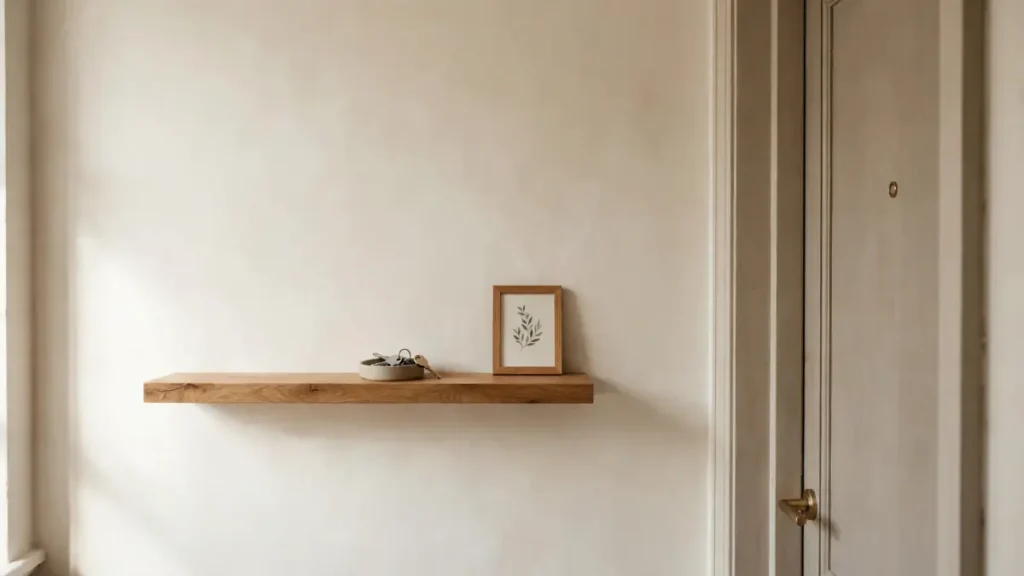
Pro Tip: Keep the most frequently used items on the lowest, easiest-to-reach shelf. Check the wall construction and use suitable mounting hardware for the intended load, or choose a freestanding alternative if drilling isn’t permitted.
6. Turn the Back of the Door Into Storage
When there is almost no room beside the entrance, the back of a door can provide useful extra storage. Over-the-door organizers and hook racks can hold lightweight bags, scarves, hats, umbrellas, and other daily accessories without requiring additional furniture.
This is a practical choice for renters and anyone working with an unusually narrow entryway. Choose a design that suits the door and doesn’t interfere with its closing mechanism.
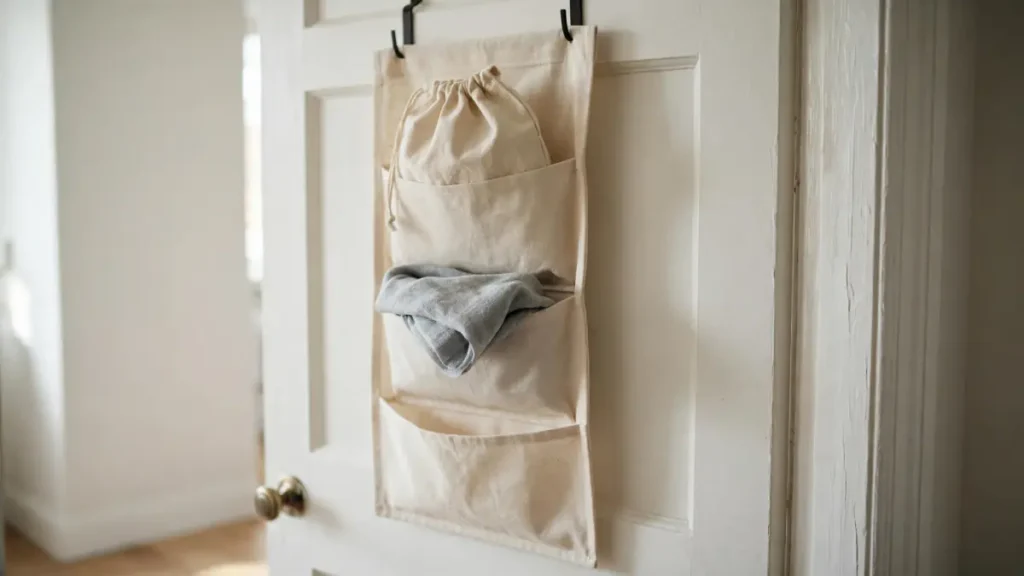
Pro Tip: Check the door’s thickness and the clearance around its frame before purchasing an over-the-door organizer. Avoid placing too much weight on the door, and make sure the organizer won’t scratch the finish.
7. Use a Decorative Tray for Keys and Small Essentials
A simple tray can make an entryway look more organized almost immediately. Place it on a console, shelf, or cabinet top to collect keys, sunglasses, earbuds, and other small items that otherwise end up scattered around the apartment.
Choose a material that complements your decor, such as ceramic, wood, stone, or metal. A tray also creates a visual boundary, helping everyday objects look grouped rather than randomly placed.
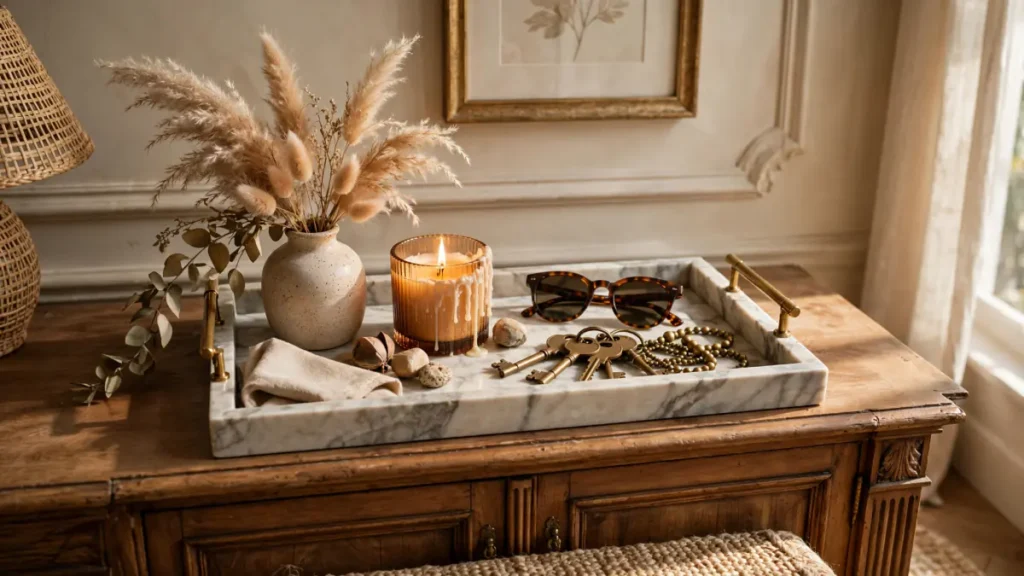
Pro Tip: Give the tray a specific purpose and limit it to the items you regularly use when leaving home. If it starts collecting receipts, coins, and unrelated objects, clear it out before the clutter spreads.
8. Create a Mini Entryway in an Open-Plan Apartment
Some apartments have no separate entrance at all. The front door may open directly into the living room or kitchen, making it difficult to distinguish the entryway from the rest of the space. A compact console, a small rug, a mirror, and a few hooks can establish a recognizable drop zone without building a wall.
Keep the arrangement visually connected to the surrounding room by repeating colors or materials from your existing furniture. This makes the entryway feel like part of the interior design rather than an improvised storage corner.
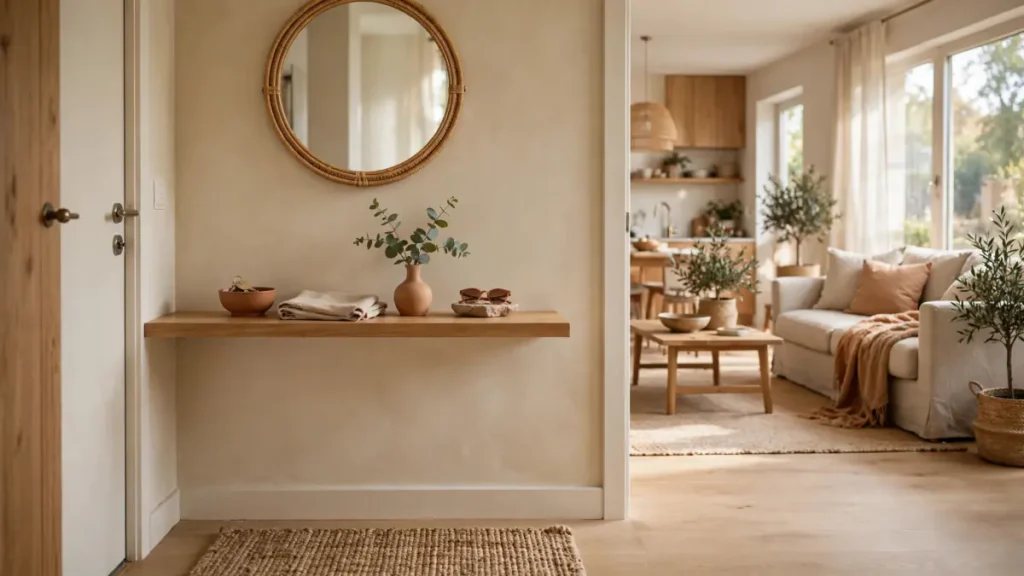
Pro Tip: Use the furniture placement and rug to define the entry zone, but keep the route from the front door clear. Avoid large room dividers that make a small apartment feel more enclosed.
9. Hang a Mirror Above the Entryway Console
A mirror can make a small entryway feel brighter and more open while providing a convenient place for a final appearance check before leaving. Position it above a narrow console or a floating shelf to create a practical focal point.
Round mirrors soften an arrangement with straight lines, while rectangular mirrors can emphasize height or width depending on their orientation. Choose a frame that works with your other finishes for a coordinated look.
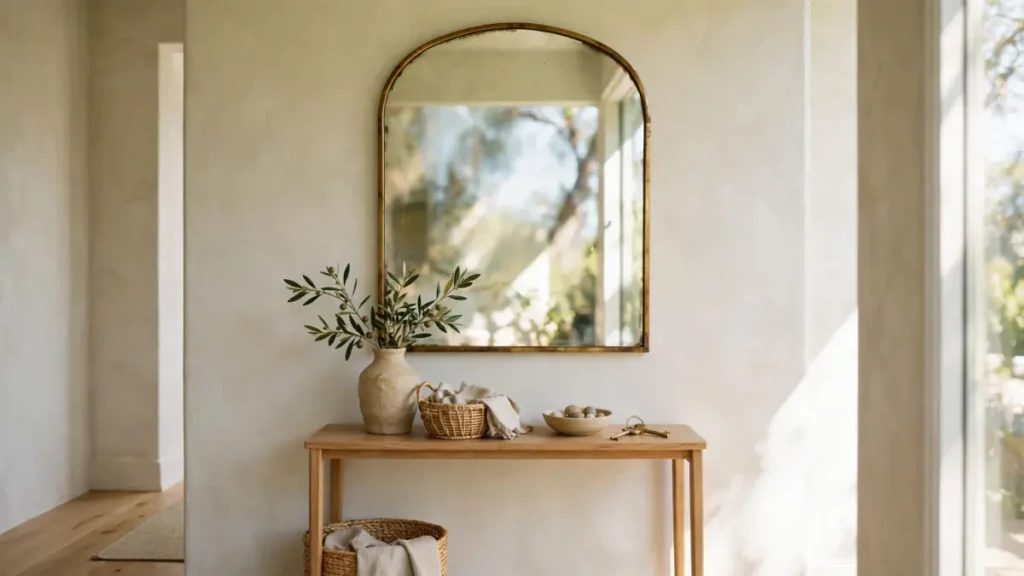
Pro Tip: Consider what the mirror will reflect. Positioning it opposite a light source or an attractive part of the room can help the entrance feel more open, while reflecting a cluttered corner may have the opposite effect.
10. Combine a Coat Rack and Shoe Storage
A freestanding hall tree or compact coat-and-shoe organizer combines several entryway functions in one unit. Depending on the design, it may include hooks, a bench, shoe shelves, and a small upper shelf for hats or bags.
This can be especially helpful in apartments without built-in closets because it gives everyday belongings one clearly defined home. If you have a larger entrance or a garage entry that needs more extensive organization, explore these garage mudroom ideas for additional storage and drop-zone inspiration. Choose a size that matches the household’s needs instead of buying the largest unit available.
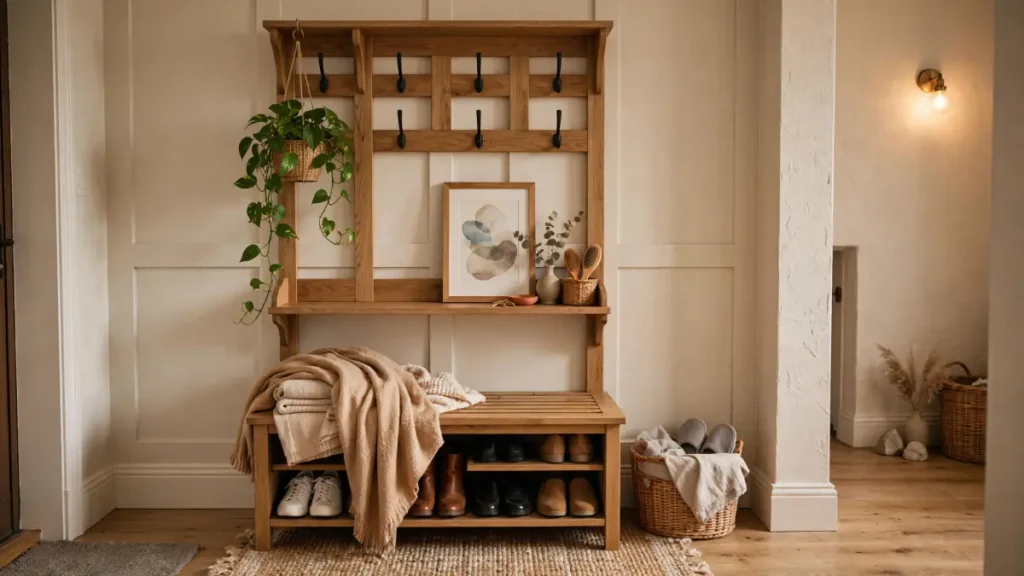
Pro Tip: Measure the full footprint, including any bench or shelf that projects outward. A multifunctional unit is only useful if it leaves enough room to open the door and move through the entrance comfortably.
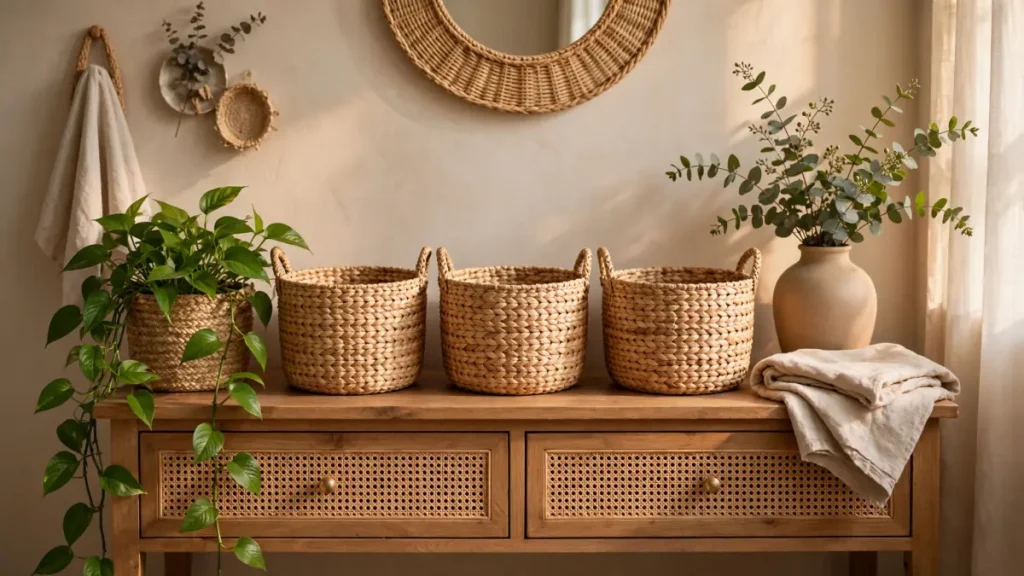
11. Add Matching Baskets for Everyday Storage
Baskets provide a simple way to group items that don’t need to be displayed individually. Use them beneath a console, inside an open shelf, or beside a bench to hold reusable shopping bags, scarves, pet accessories, and other small belongings.
Matching baskets can make an open storage area look more cohesive, while different sizes help accommodate items with different shapes. Choose materials that suit your lifestyle and are easy to clean.
Pro Tip: Assign one category to each basket and avoid using every basket as a general catchall. Labels or simple visual cues can make it easier for everyone in the household to return things to the correct place.
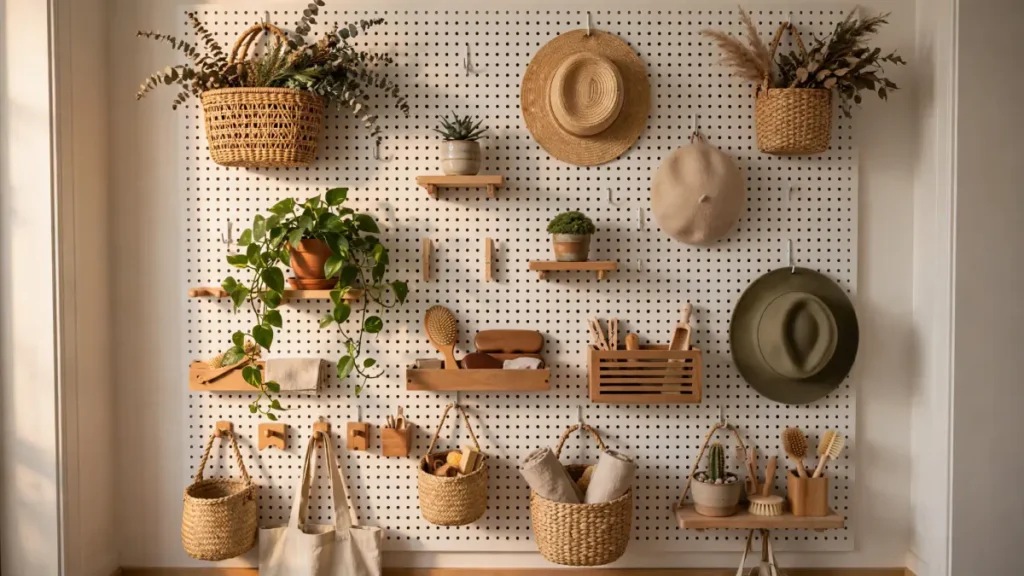
12. Set Up a Wall-Mounted Key and Mail Organizer
A wall-mounted organizer can keep keys, incoming mail, small notes, and everyday essentials together in one compact location. This is particularly helpful when there isn’t enough space for a console table or cabinet.
Look for a design with separate compartments or hooks so keys don’t get mixed with paper clutter. A simple wood organizer can add warmth, while a clean metal design suits a more modern apartment.
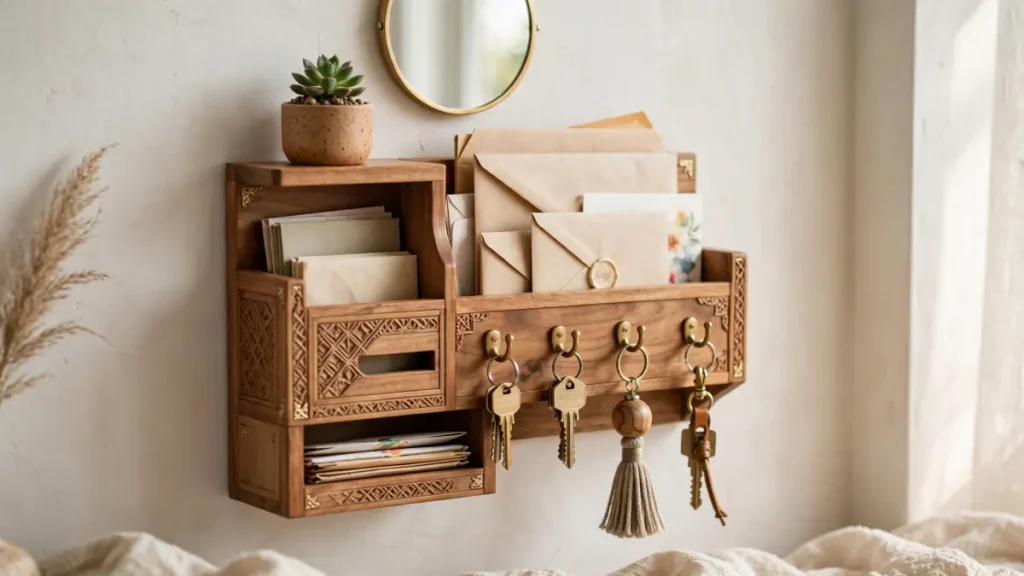
Pro Tip: Make a habit of sorting mail regularly rather than allowing the organizer to become a permanent paper pile. Keep private documents and sensitive information out of view, especially if the entrance is shared with visitors or roommates.
13. Try a Narrow Wall-Mounted Shoe Rack
If a closed cabinet feels too bulky, a wall-mounted shoe rack can keep footwear organized while leaving more of the floor visible. This option works well in tight entrances where a traditional shoe rack would interfere with movement.
Depending on the design, the rack can hold a few pairs of frequently worn shoes or provide several tiers of storage. Pair it with a small mat to help contain dirt near the front door.
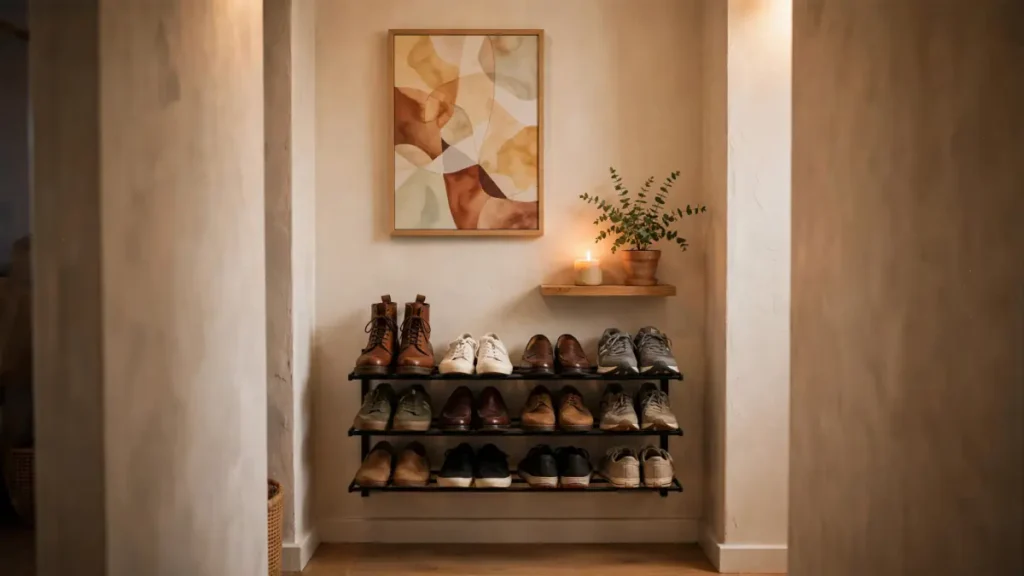
Pro Tip: Confirm that the wall and mounting hardware can support the combined weight of the rack and shoes. If drilling isn’t allowed, choose a suitable freestanding rack instead.
14. Use a Small Storage Ottoman as a Flexible Drop Zone
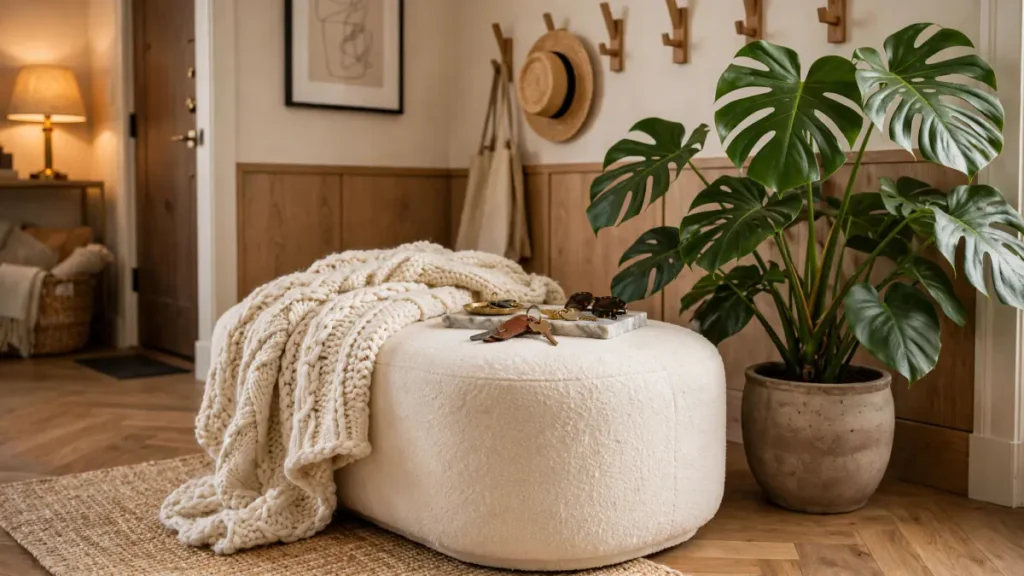
A compact storage ottoman can serve as seating, concealed storage, and an occasional surface for setting down a bag. Inside, you can store seasonal accessories, reusable bags, or other items that you don’t need to access every time you enter the apartment.
Choose an ottoman that complements your living room furniture if the entryway is part of an open-plan space. A neutral fabric or simple leather-look finish can help it blend naturally into the room.
Pro Tip: Avoid using the ottoman to store damp shoes or wet outdoor gear. Keep its contents limited to clean, dry items, and leave enough clearance to open the lid without blocking the walkway.
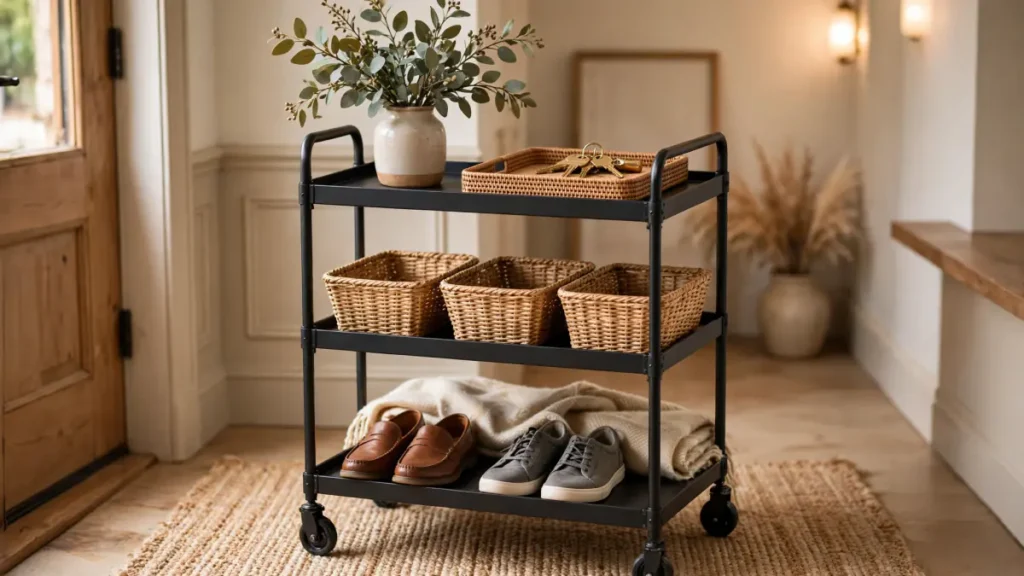
15. Make a Renter-Friendly Drop Zone Without Drilling
Renting doesn’t mean you have to live with a cluttered entrance. Freestanding consoles, removable hooks, over-the-door organizers, lightweight baskets, and leaning mirrors can help create a functional drop zone without permanent changes to the walls.
Choose a few pieces that work together instead of trying to recreate a built-in mudroom. A small furniture arrangement can be just as useful when it reflects the way you actually use the entrance. To make the area feel more welcoming without permanent alterations, explore these renter-friendly lighting ideas for practical ways to improve the lighting in your apartment.
Pro Tip: Always check your lease and the product instructions before using adhesive hooks or removable mounting systems. Wall texture, paint condition, humidity, and weight can affect how well they perform.
16. Add a Small Umbrella and Everyday Essentials Stand
Umbrellas, reusable shopping bags, and other items you grab on the way out can easily become scattered around the entrance. A compact stand or narrow floor organizer gives these belongings a designated location without requiring a large cabinet.
If floor space is extremely limited, a wall hook for an umbrella and a basket for reusable bags may work better than a dedicated stand. Keep the arrangement close enough to the door that it becomes part of your everyday routine.
Pro Tip: Let wet umbrellas dry properly and use a suitable drip tray or water-resistant holder. This helps protect nearby flooring and keeps moisture from spreading into the apartment.
17. Define the Entryway With a Runner or Doormat
A runner or doormat can visually mark the entrance in an apartment that lacks a separate foyer. It also helps contain dirt brought in from outside and adds texture to a small, otherwise plain area.
Choose a rug that suits the amount of foot traffic and is easy to clean. A simple pattern can introduce visual interest without making the entryway feel busy, while a neutral rug can connect the entrance to the surrounding decor.
Pro Tip: Choose a rug with a suitable nonslip backing and make sure its edges don’t curl into the walking path. Measure the area around the door so the rug doesn’t interfere with opening or closing it.
18. Style the Drop Zone With a Cohesive Color Palette
A drop zone doesn’t need lots of decorative accessories to look finished. Coordinating the colors and materials of your console, hooks, baskets, mirror, and shoe storage can make the arrangement feel intentional. Natural wood, soft white, warm beige, muted green, or matte black can each work well depending on the apartment’s overall style.
The goal is to make practical storage look like a natural part of the home. A few coordinated pieces usually create a cleaner result than a collection of unrelated organizers and decorative objects.
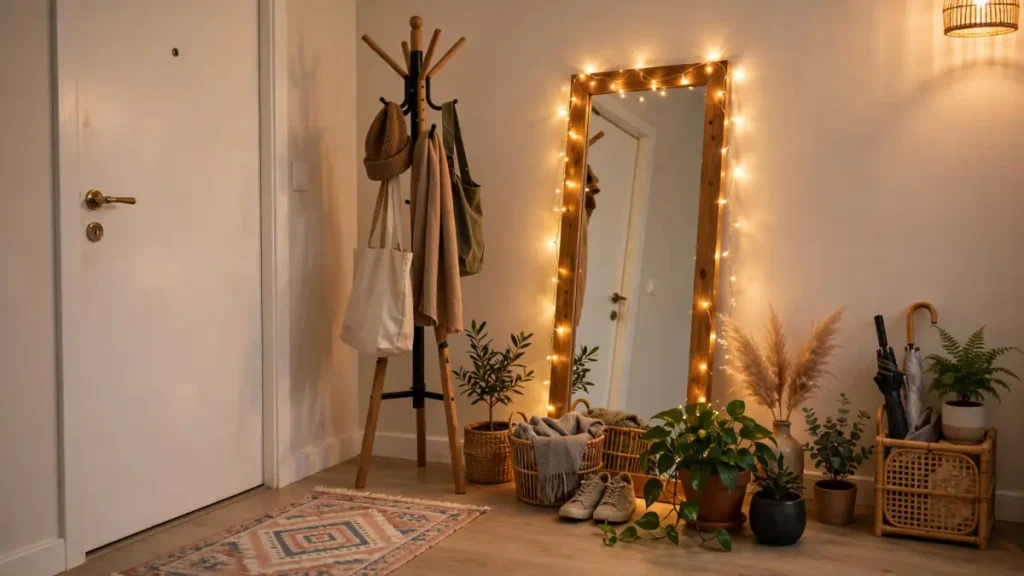
Pro Tip: Choose two or three finishes or colors to repeat throughout the entryway. Keep the surfaces mostly clear so the storage remains easy to use and the overall design feels calm.
How to Create an Apartment Entryway Drop Zone
A beautiful entryway is helpful, but a practical system is what keeps it organized over time. Before adding furniture or storage accessories, think about the items that regularly come through your front door and where you naturally place them.
Start With Your Everyday Essentials
Identify the belongings that need a home near the entrance. These might include keys, a wallet, a work bag, shoes, jackets, sunglasses, mail, or a pet leash. Start with those essentials instead of trying to store everything you own in the entryway.
Once you know what needs to fit, it becomes easier to choose the right combination of hooks, shelves, baskets, and furniture.
Use Vertical Space Before Adding More Furniture
In a small apartment, floor space is valuable. Wall hooks, floating shelves, and suitable wall-mounted organizers can provide useful storage without filling the entrance with bulky furniture.
If your lease doesn’t allow drilling, consider freestanding pieces and over-the-door solutions that fit your door and daily needs.
Keep the Walking Path Clear
The entryway should remain easy to navigate when you’re carrying groceries, bringing in packages, or leaving in a hurry. Measure the available space and check the door swing before placing a console, bench, shoe cabinet, or storage unit.
If a piece makes the entrance difficult to use, choose a slimmer option or move that storage elsewhere in the apartment.
Make Every Item Easy to Put Away
A drop zone works best when returning items to their places requires very little effort. Keep keys beside the door, shoes near the entrance, and bags on accessible hooks. Store less frequently used belongings in another closet or cabinet so the entryway doesn’t become overloaded.
A quick reset at the end of the day can help keep the arrangement neat without requiring a major organizing session.
Frequently Asked Questions
What is an apartment entryway drop zone?
An apartment entryway drop zone is a designated area near the front door where you keep everyday essentials such as keys, bags, shoes, jackets, and mail. It can be as simple as a few hooks and a small tray or as complete as a console, shoe cabinet, and storage bench.
How do you create a drop zone in a small apartment?
Start with the items you use every day and assign each one a specific place. Use wall hooks, a slim shoe cabinet, a floating shelf, or a narrow console to keep belongings organized without taking up too much floor space. Keep the walking path clear and avoid adding furniture that doesn’t serve a practical purpose.
How can renters create an entryway drop zone without drilling?
Renters can use freestanding consoles, compact benches, over-the-door hooks, baskets, and suitable removable organizers. A small rug and a leaning mirror can also help define the space. Always check the lease and the manufacturer’s installation instructions before using adhesive products or other mounting systems.
What should you keep in an entryway drop zone?
Keep the items you regularly need when leaving home, such as keys, a wallet, sunglasses, everyday shoes, a bag, and perhaps an umbrella or pet leash. Mail can have a small designated spot, but it should be sorted regularly. Less frequently used belongings are usually better stored elsewhere.
How do you organize shoes in a tiny apartment entryway?
A slim shoe cabinet, narrow rack, small bench with shoe storage, or wall-mounted shoe organizer can help keep footwear contained. Choose a solution based on the number of shoes you use regularly and the amount of space available. Store seasonal and rarely worn shoes in another suitable location.
How can I make an apartment entryway look more expensive?
Keep the arrangement simple and coordinated. Choose a few complementary finishes, use a decorative tray to contain small essentials, add a mirror or artwork, and select storage pieces that fit the space properly. A clean surface and consistent color palette often look more polished than lots of decorative accessories.
What if my apartment doesn’t have an entryway?
You can create a visual entryway within your living room or open-plan space by placing a slim console near the door, adding hooks or a small shoe cabinet, and using a rug to define the area. The key is to establish a consistent place for everyday belongings without blocking the main walking route.
Final Thoughts
An organized apartment entryway doesn’t require a dedicated foyer, expensive built-ins, or a complete makeover. A few well-chosen storage solutions can give your keys, shoes, bags, and everyday essentials a proper home while making the entrance feel more welcoming.
Start with the space you have and focus on the items that create the most clutter. Whether you choose a slim console, wall hooks, a compact shoe cabinet, or a renter-friendly combination of organizers, the best drop zone is one that fits naturally into your daily routine. With a little planning and consistent habits, even the smallest apartment entrance can feel stylish, functional, and organized.