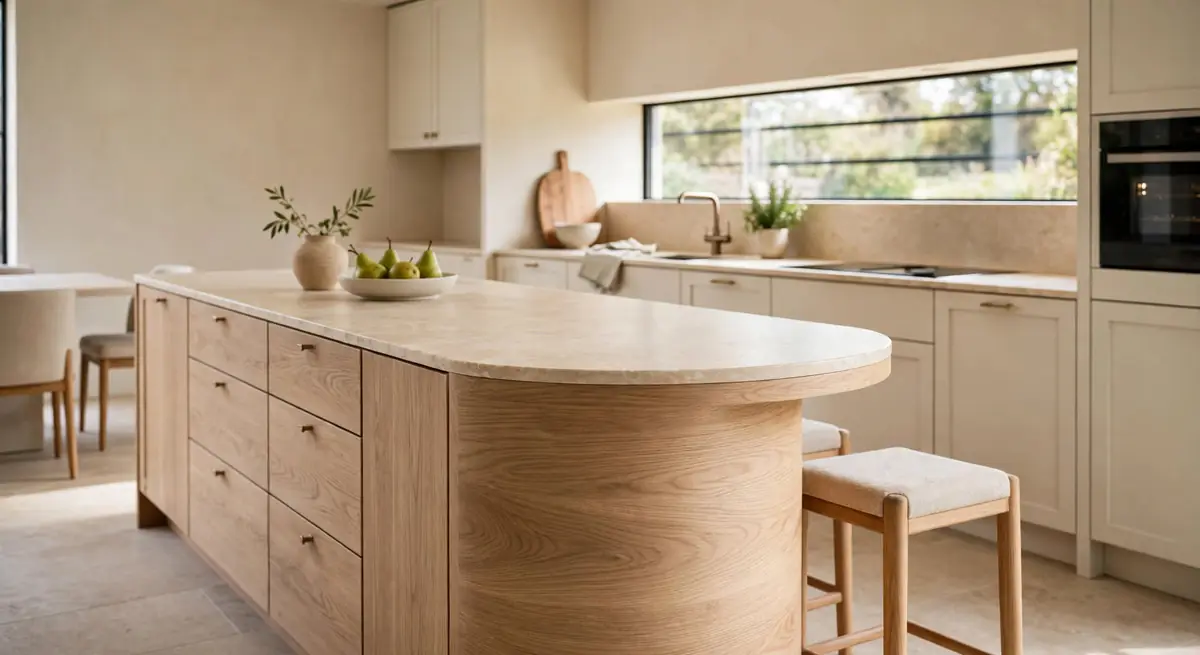
18 Natural Wood Kitchen Cabinet Ideas for a Warm, Timeless Look
Natural wood kitchen cabinets bring warmth, texture, and character into a kitchen. From light white oak to rich walnut, wood finishes can make a space feel welcoming without relying on bold colors or elaborate decoration. The challenge is choosing a style that feels fresh rather than making the kitchen look outdated.
The secret is choosing the right wood tone, cabinet profile, hardware, and surrounding materials. Clean-lined doors, natural-looking finishes, and thoughtful combinations can make wood cabinetry feel modern while keeping its timeless appeal.
Whether you are planning a kitchen renovation or updating existing cabinets, these natural wood kitchen cabinet ideas will help you create a warm, practical space that feels current.
18 Natural Wood Kitchen Cabinet Ideas
1. Choose Natural White Oak Cabinets
White oak is a beautiful option when you want the warmth of natural wood without making the kitchen feel dark or heavy. Its soft grain and light neutral tone work especially well with cream walls, pale stone countertops, and simple cabinet hardware.
For a clean look, choose flat-panel or slim Shaker doors in a natural white oak finish.
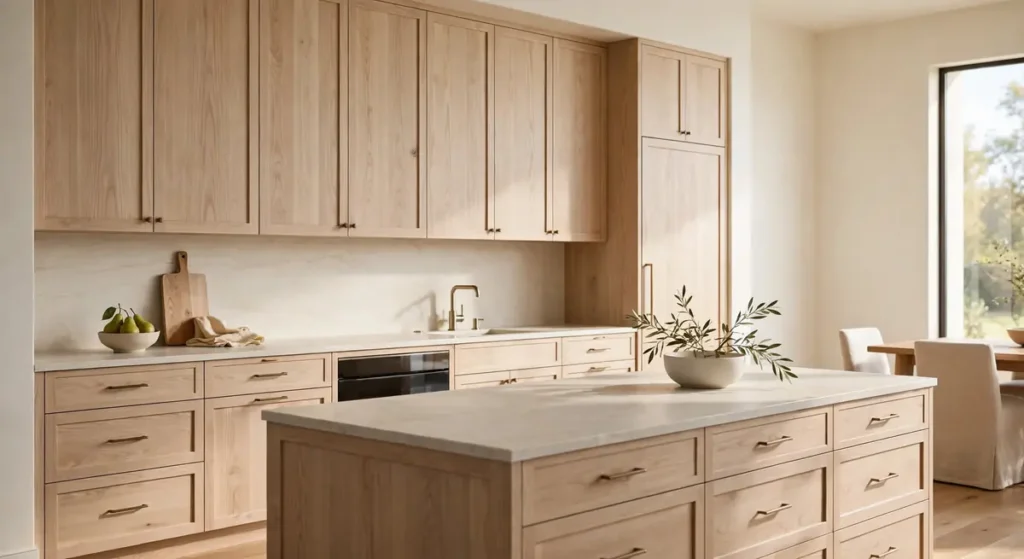
Styling tip: Look for white oak with balanced beige undertones rather than a strong yellow or orange stain. Compare a sample with your countertop and flooring before choosing the finish.
2. Choose Rich Walnut Cabinets
Walnut is an excellent choice when you want natural wood cabinetry with a deeper, more sophisticated appearance. Its brown tones and distinctive grain can give a kitchen a rich look without elaborate cabinet details.
Walnut works particularly well with warm white walls, cream stone surfaces, and simple metal hardware. You can use it throughout the kitchen or reserve it for an island and selected lower cabinets.
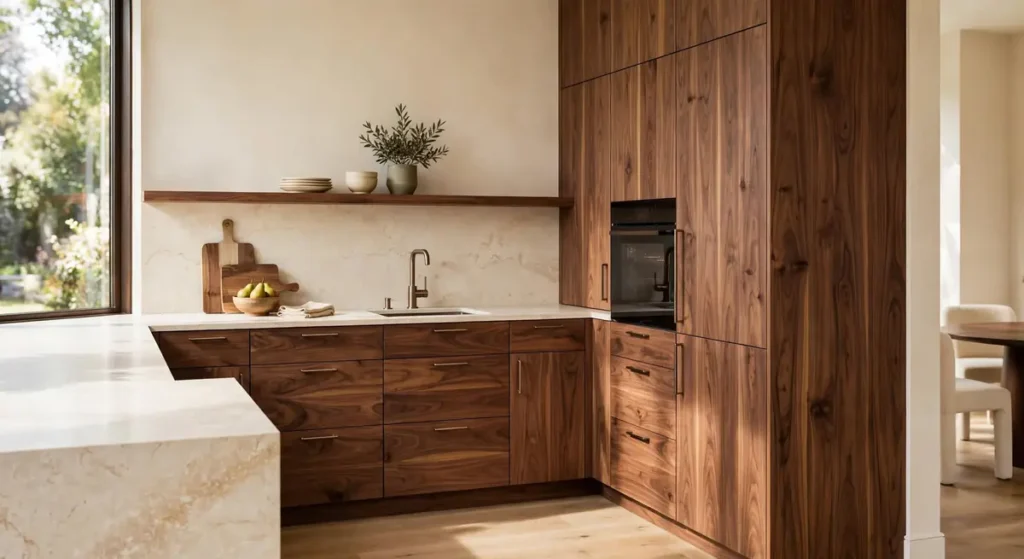
Styling tip: Balance darker walnut with lighter countertops and backsplash surfaces to keep the kitchen from feeling too heavy.
3. Pair Wood Base Cabinets with Cream Uppers
A two-tone kitchen is a practical way to enjoy natural wood without making the entire space feel covered in timber. Use oak or maple for the lower cabinets and choose warm cream or soft ivory for the upper cabinets.
This arrangement keeps the warmth of wood close to the floor while making the upper portion of the kitchen feel lighter.
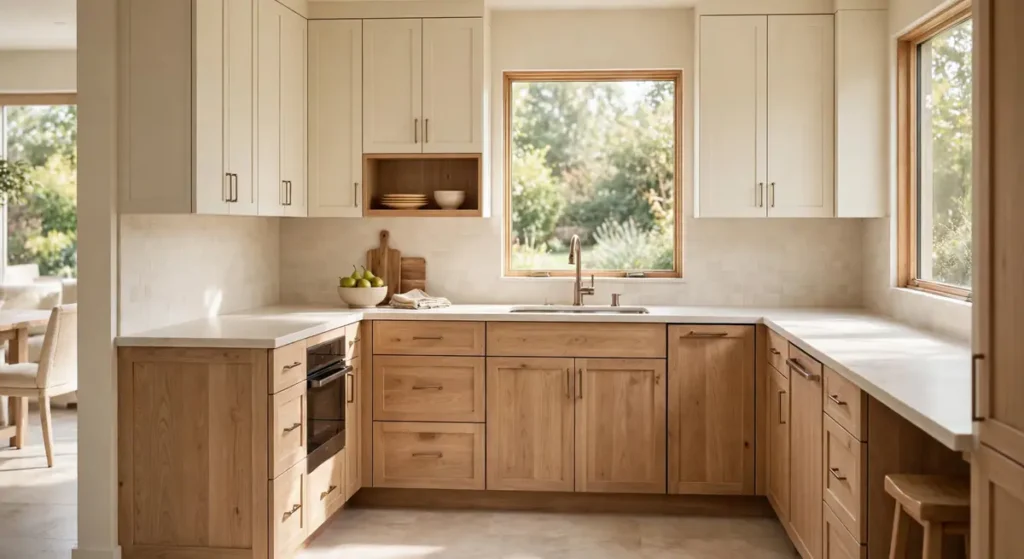
Styling tip: Choose warm cream instead of a very cool white. Repeat the wood tone in a shelf or kitchen stool to connect both finishes.
4. Make a Wood Island the Focal Point
You do not need wood cabinets throughout the entire kitchen to introduce natural warmth. A wood-finished island can become the main feature while the surrounding cabinets remain painted in cream, warm white, or muted green.
White oak works well for a light look, while walnut creates a richer statement.
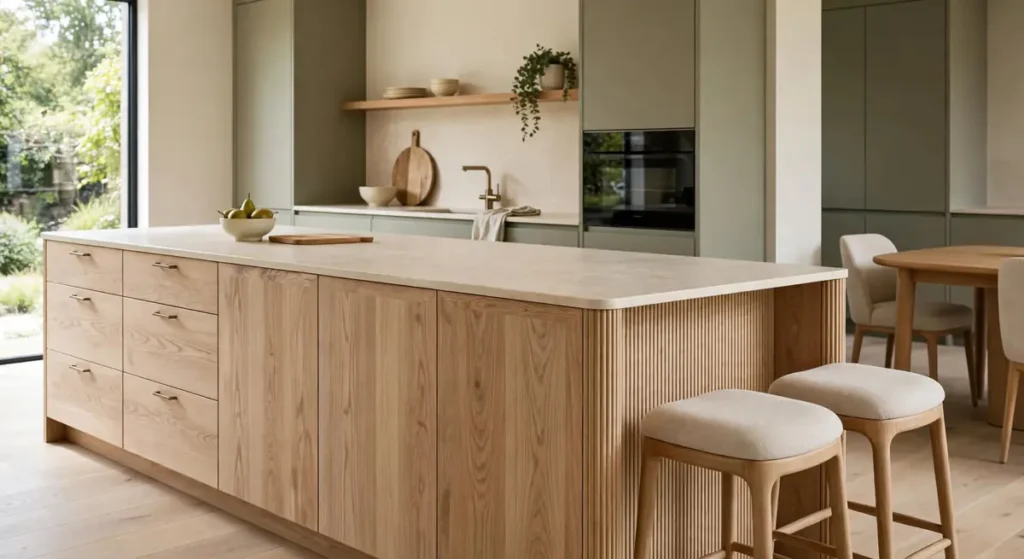
Styling tip: Coordinate the island’s wood tone with another element, such as open shelving or a nearby dining table, without needing an exact match.
5. Update Slim Shaker Wood Cabinets
Shaker cabinets have a framed door design, but a slim and understated profile can make them feel more contemporary. Choose a narrower border with natural oak or maple grain instead of a wide, heavy frame.
Pair the cabinets with simple hardware and a restrained backsplash.
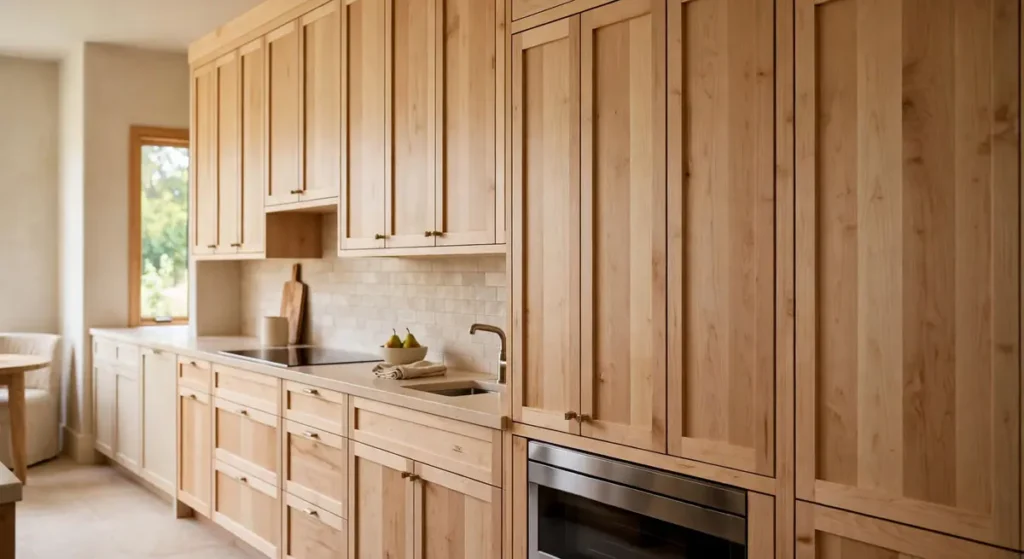
Styling tip: Avoid combining slim Shaker doors with ornate handles and excessive trim. Let the natural wood and simple cabinet profile provide the visual interest.
6. Try Flat-Panel Maple Cabinets
Flat-panel cabinets have smooth, uninterrupted fronts that suit modern and minimalist kitchens. Natural maple is a lovely choice because it has a light appearance and relatively subtle grain.
Use it with simple countertops, understated hardware, and a clean backsplash.
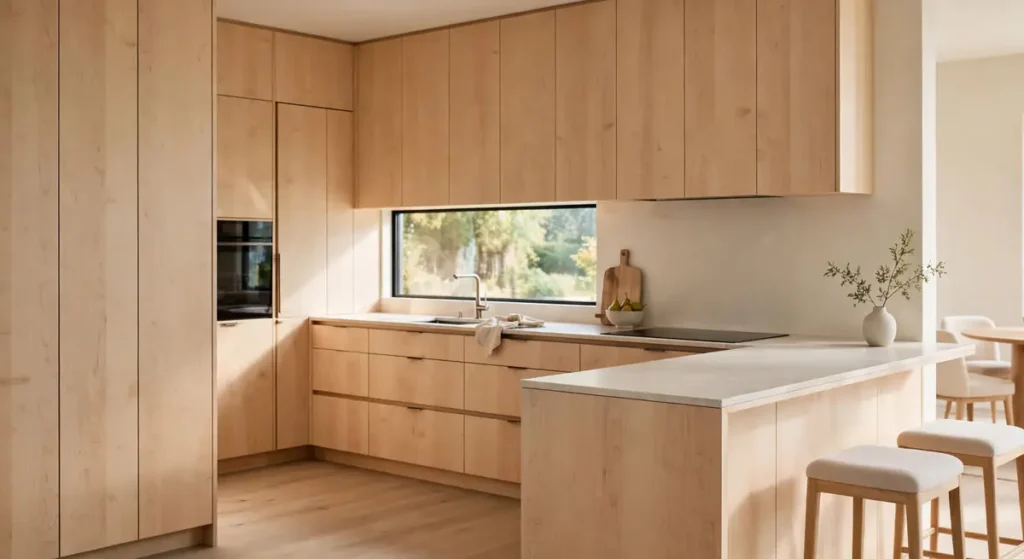
Styling tip: Choose a finish that preserves the natural appearance of maple. A very glossy coating can make the cabinets look less organic.
7. Highlight Rift-Sawn Oak Grain
Rift-sawn white oak is known for its more consistent, linear grain, making it suitable for kitchens where you want the wood to look refined and orderly.
It works particularly well on modern flat-panel cabinet doors and pairs nicely with pale stone and warm neutral walls.
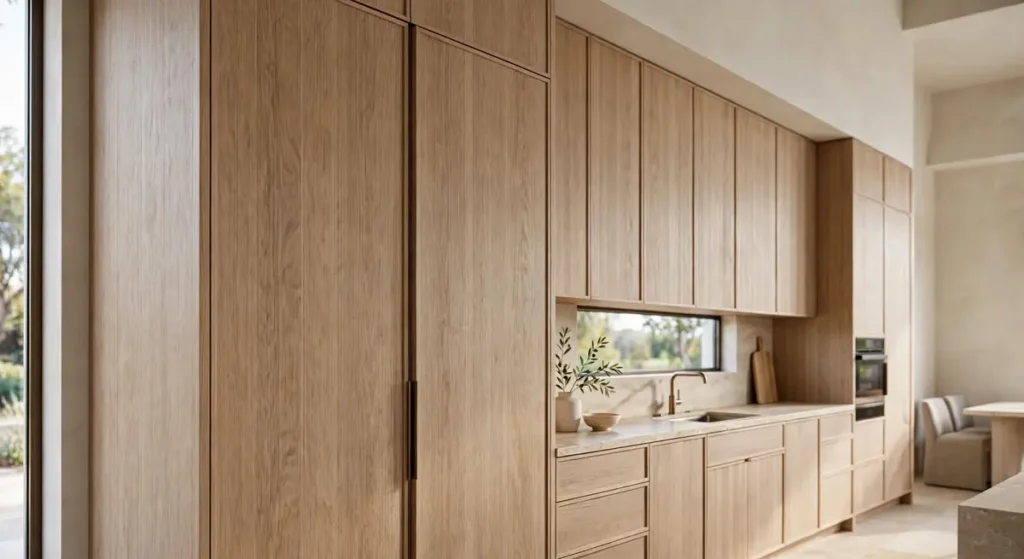
Styling tip: Review a sample cabinet door before committing. Grain patterns can vary, and seeing a larger sample helps you understand the overall appearance.
8. Choose a Matte Wood Finish
The finish can make a significant difference to how natural wood cabinets look. A low-sheen or matte finish usually allows the grain to remain visible without creating a highly polished surface.
Oak, ash, maple, and walnut can all work with a natural-looking finish.
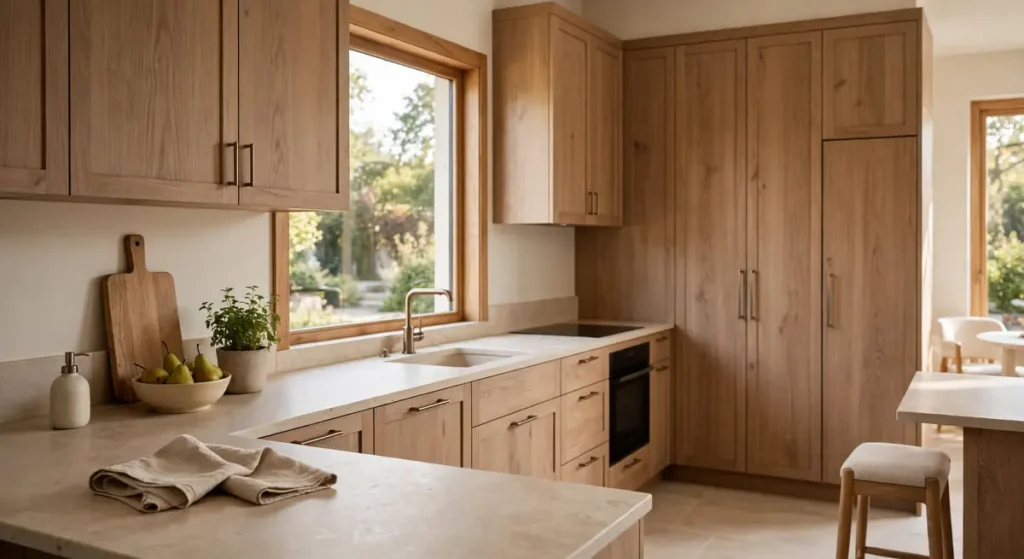
Styling tip: Check the finish’s cleaning and maintenance requirements before choosing it. Kitchen cabinets need to handle moisture, grease, and regular cleaning.
9. Pair Oak Cabinets with Minimal Hardware
Medium-tone oak can bring more warmth and depth than very pale wood while remaining lighter than dark walnut. It is a versatile option for kitchens that need some visual richness without feeling too heavy.
Choose simple bar pulls, discreet knobs, or a clean handle profile.
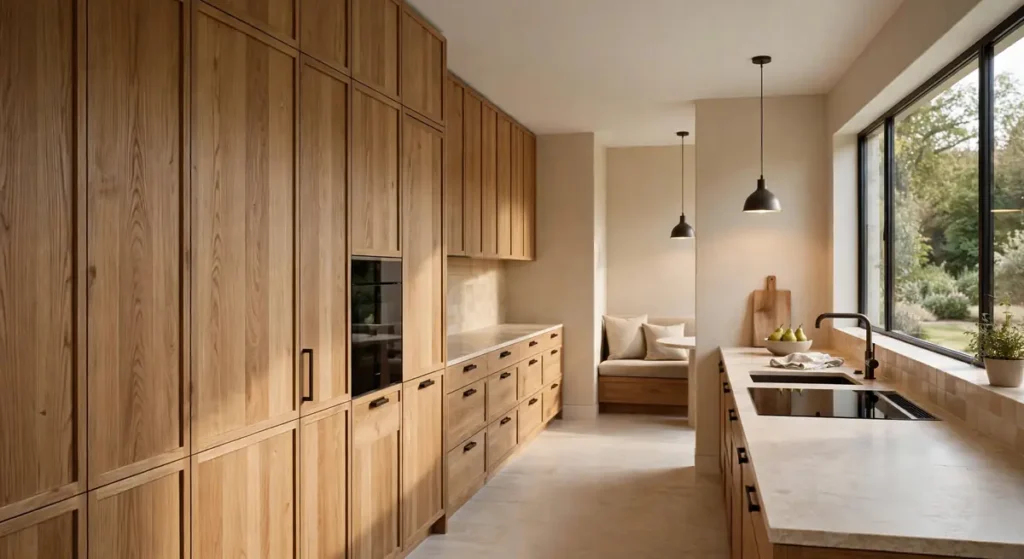
Styling tip: If you use dark hardware, repeat that finish in a faucet or lighting detail so the kitchen feels coordinated.
10. Extend Wood Cabinets to the Ceiling
Full-height cabinetry can create a clean, continuous appearance while making better use of vertical storage space. Instead of stopping the cabinets well below the ceiling, extend the design upward for a more integrated look.
Natural oak or walnut can work beautifully for this treatment.
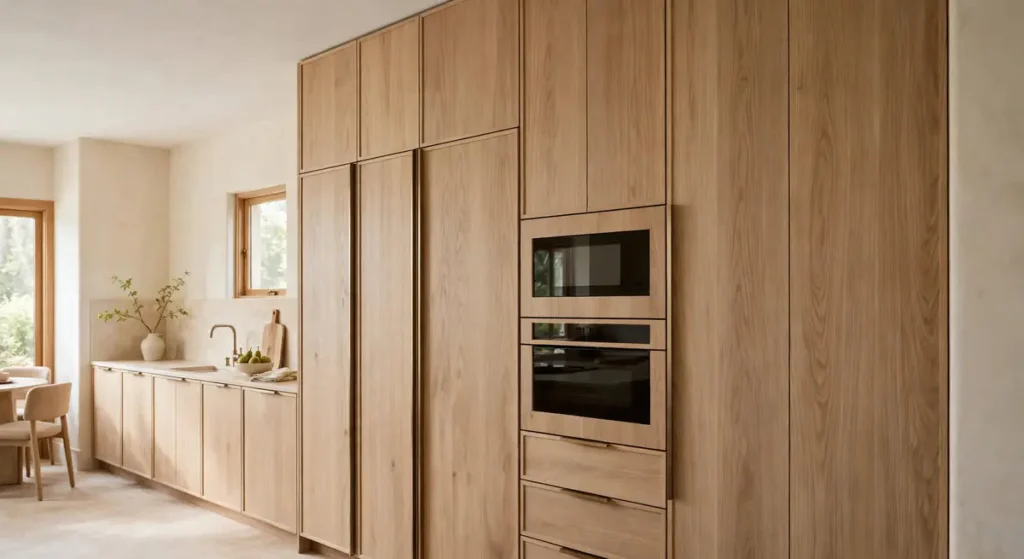
Styling tip: In a small or low-ceilinged kitchen, lighter wood tones may feel more open. Keep the upper cabinet detailing simple.
11. Add a Plaster-Style Range Hood
A plaster-style range hood creates a soft contrast against the visible grain of natural wood cabinets. Its smooth surface can break up a long run of timber cabinetry while keeping the kitchen warm and cohesive.
Cream or warm white finishes work particularly well with oak and walnut.
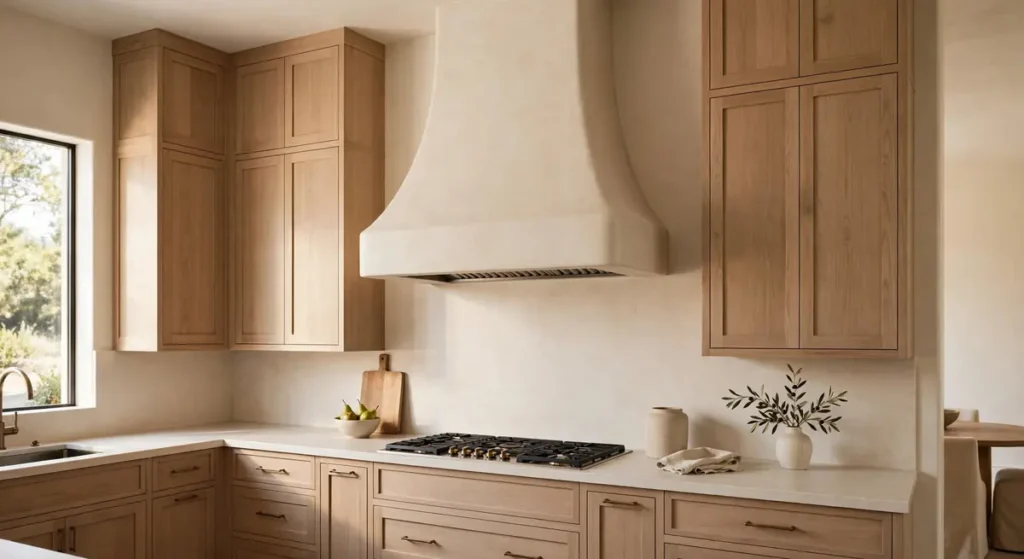
Styling tip: Coordinate the hood’s finish with the walls or backsplash, and make sure the design accommodates suitable ventilation.
12. Pair Wood Cabinets with Stone Backsplash
Stone complements natural wood because both materials have organic variation and texture. A light marble-look surface, warm quartz, or softly veined natural stone can create a calm background for oak and walnut cabinets.
For a more seamless appearance, consider extending the countertop material up the wall as a backsplash.
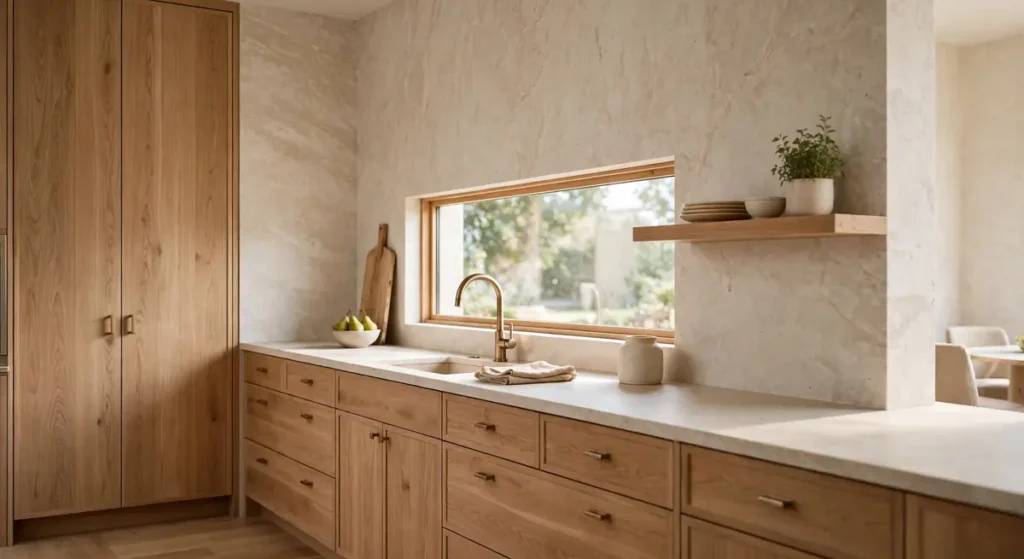
Styling tip: If your wood grain is prominent, choose stone with subtle veining so the two materials do not compete.
13. Mix Natural Wood with Muted Green
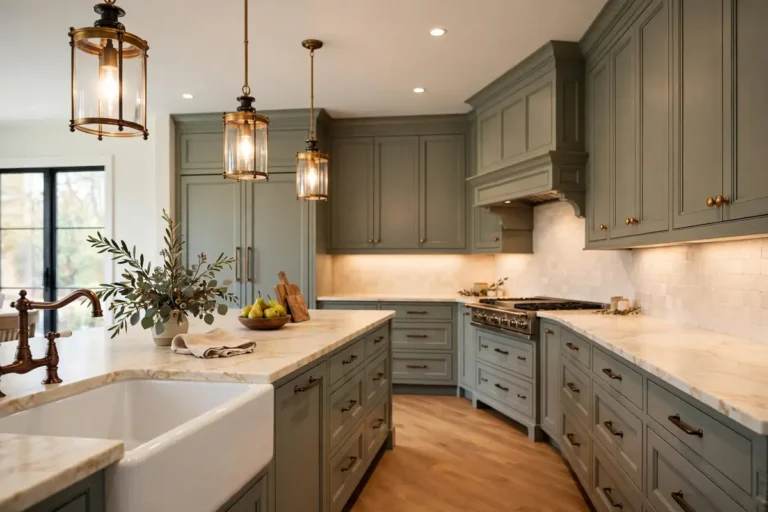
Muted green and natural wood make a comfortable combination because both bring an earthy quality to a kitchen. Use sage or olive green on an island, selected cabinet sections, or a nearby pantry wall.
Pair the green with light oak cabinets and warm white surfaces. If you want to refresh the rest of your kitchen without a full renovation, explore these budget kitchen upgrades.
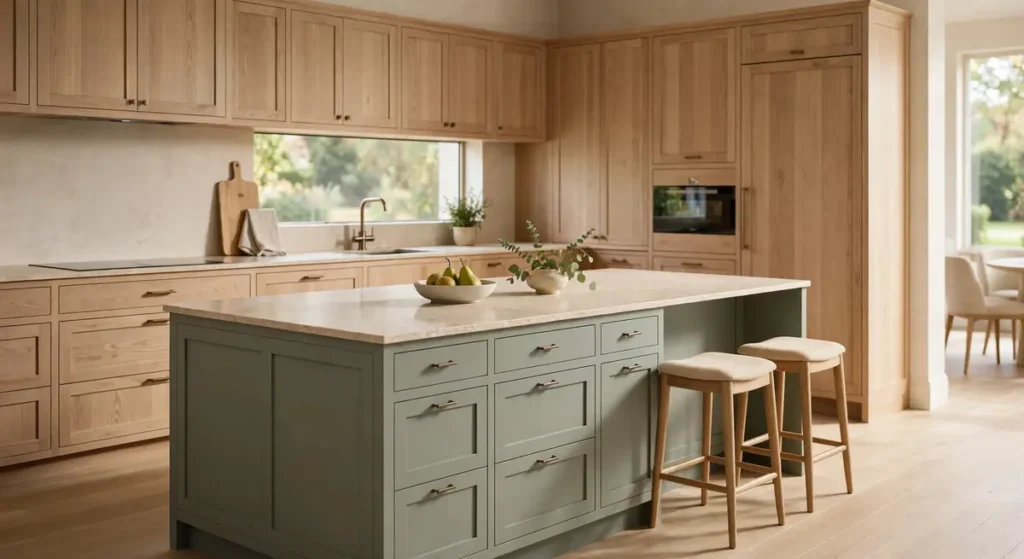
Styling tip: Softer sage generally works well with pale oak, while deeper olive can complement richer wood tones.
14. Combine Two Wood Tones
Using more than one wood finish can add depth and make a kitchen feel less like a matching furniture set. For example, combine light oak cabinets with a walnut island or use medium-tone cabinetry with darker open shelving.
The key is creating enough contrast for the finishes to look intentional.
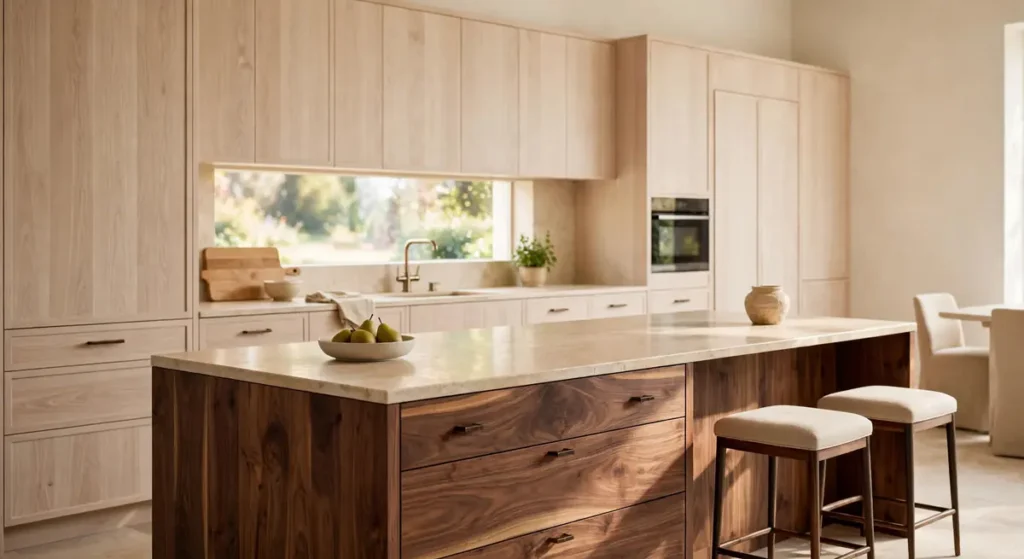
Styling tip: Choose one wood tone as the dominant finish and let the second act as an accent. Avoid introducing several unrelated wood shades.
15. Add Reeded Wood Details
Reeded or fluted wood fronts introduce vertical texture and can give a kitchen a more custom appearance. Instead of using this detail on every cabinet, reserve it for an island, a small pantry section, or selected cabinet panels.
Oak is a lovely choice because its grain works naturally with the vertical detailing.
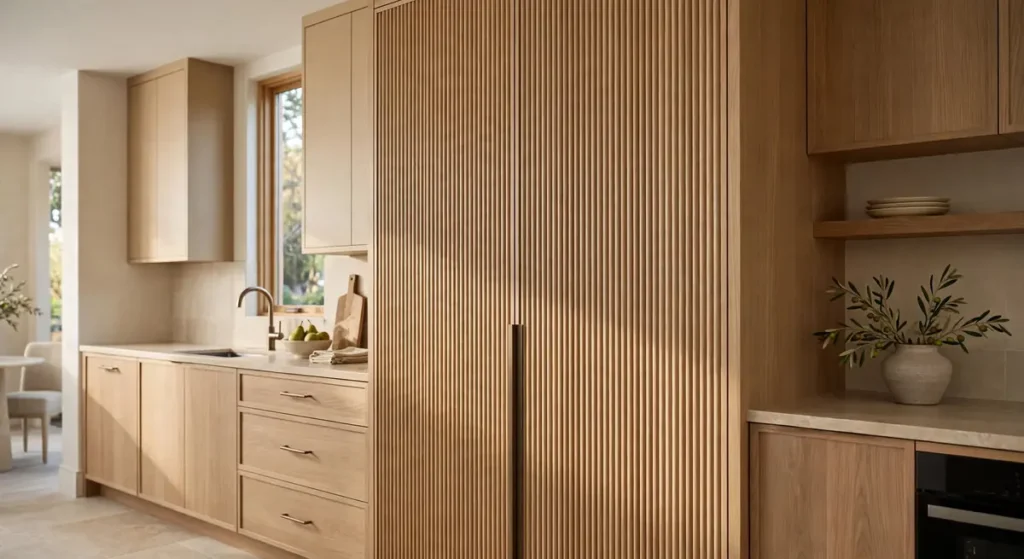
Styling tip: Use reeded details sparingly, especially in smaller kitchens. Too much repeated texture can make the design feel busy.
16. Include Glass-Front Wood Cabinets
Glass-front cabinets can break up a continuous wall of solid wood cabinetry and create a place to display attractive everyday pieces.
Use them for glassware, coordinated ceramics, or serving dishes. For another practical way to keep frequently used kitchen tools organized, consider these stylish kitchen organization ideas. Clear glass creates an open look, while lightly textured glass offers a softer level of visibility.
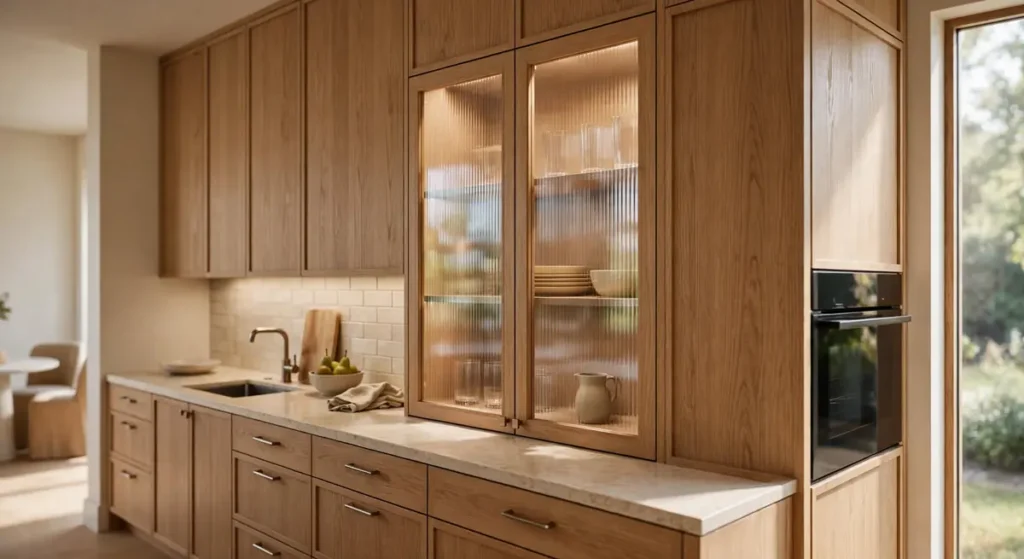
Styling tip: Keep the contents organized and avoid overcrowding the shelves.
17. Choose Cabinets with Integrated Handles
Integrated handles help keep cabinet fronts clean and uninterrupted. Depending on the design, they can be built into the cabinet edge, recessed into the door, or created with a slim routed detail.
This approach works particularly well with flat-panel oak, maple, and walnut cabinets.
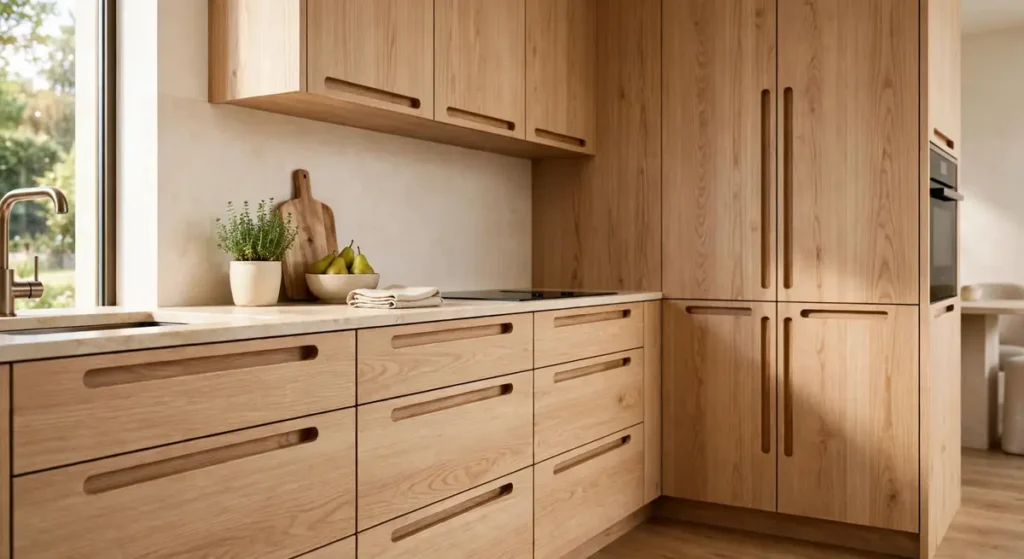
Styling tip: Test the handle design before choosing it for the entire kitchen. Comfort and ease of use matter just as much as appearance.
18. Try Curved Wood Cabinetry
Curved edges can make a kitchen feel softer and less rigid, particularly when most cabinets and countertops have straight lines. A rounded wood island end, curved open shelving, or a softly shaped cabinet detail can introduce this look.
Natural oak and walnut can both work well for curved details.
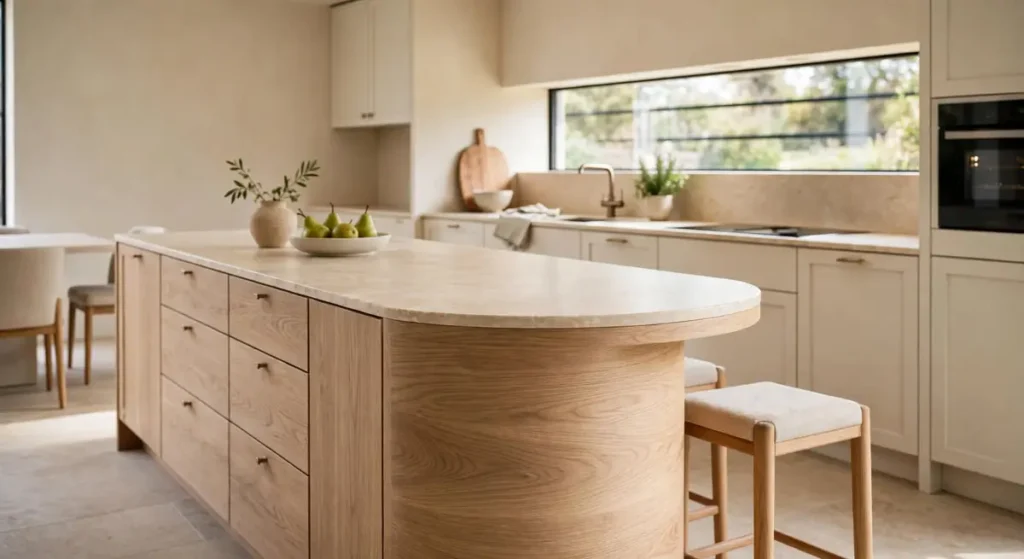
Styling tip: Use curves as a small architectural feature rather than adding them everywhere. A single rounded island end can provide enough visual contrast.
Best Wood Tones for Modern Kitchens
Different wood finishes create different atmospheres. Some make a kitchen feel light and relaxed, while others introduce deeper color and a more dramatic appearance.
Choose a shade that complements your kitchen’s lighting, flooring, and countertops. Always compare actual samples together before making a final decision.
Modernize Existing Wood Kitchen Cabinets
You do not always need to replace your cabinets to give the kitchen a fresher appearance. If the wood is in good condition, a few carefully chosen updates may be enough.
1. Replace Outdated Cabinet Hardware
Older decorative handles can make otherwise attractive wood cabinets feel dated. Consider replacing them with simple bar pulls or understated knobs in a finish that complements your faucet and lighting.
2. Simplify the Backsplash
A busy backsplash can compete with prominent wood grain. Replacing it with simple tile, warm neutral surfaces, or understated stone may help the cabinetry feel more current.
3. Improve the Kitchen Lighting
Poor lighting can make wood appear more orange, yellow, or dark than expected. Under-cabinet lighting and suitable ceiling fixtures can help the finish look more balanced.
4. Reduce Countertop Clutter
When countertops are covered with small appliances and decorative objects, it becomes difficult to appreciate the cabinetry. Keep frequently used items accessible and organize the rest in cabinets or drawers.
Natural Wood Kitchen Mistakes to Avoid
1. Choosing Too-Orange Wood Finishes
Strong orange or yellow undertones can make wood cabinetry feel more traditional than intended. Compare samples with your flooring and countertops before selecting a finish.
2. Matching All Wood Tones
Using the same wood finish on cabinets, flooring, shelving, and furniture can make the kitchen feel like a matching set. A little variation adds depth and character.
3. Overdoing Decorative Details
Ornate handles, heavy trim, elaborate cabinet profiles, and several competing patterns can make a natural wood kitchen feel visually busy. Simpler details allow the wood grain to stand out.
4. Using Dark Wood in Dim Kitchens
Dark walnut can look beautiful, but using it across every cabinet in a dim kitchen may make the room feel smaller. Consider using darker wood on the island or lower cabinets while keeping upper sections lighter.
Frequently Asked Questions
Are natural wood kitchen cabinets still in style?
Yes. Natural wood remains a popular choice because it adds warmth, texture, and character. Its overall appearance depends on the wood species, finish, cabinet profile, and surrounding materials.
What wood color makes kitchen cabinets look modern?
Light white oak, natural maple, medium oak, and walnut can all work in modern kitchens. Choose a balanced finish with suitable undertones and pair it with clean cabinet lines and complementary countertops.
Do natural wood kitchen cabinets work with white countertops?
Yes. White and warm-white countertops complement natural wood beautifully. If your cabinets have warm undertones, a soft cream or warm-white countertop can create a more balanced look.
Which is better for kitchen cabinets: oak or walnut?
Both can be excellent choices. Oak usually offers a lighter or medium-toned appearance with noticeable grain, while walnut provides deeper brown tones and a richer look. Your choice depends on the room’s lighting, size, and preferred style.
How do you keep wood kitchen cabinets from looking old-fashioned?
Choose simple cabinet profiles, balanced wood tones, understated hardware, and complementary surfaces. Avoid overly orange stains, excessive decorative trim, and too many competing materials.
Can you mix wood cabinets with painted kitchen cabinets?
Yes. Two-tone kitchens are a useful way to balance natural warmth with a lighter or more colorful finish. Try natural wood lower cabinets with cream upper cabinets, or use a wood island with painted perimeter cabinetry.
Final Thoughts
Natural wood kitchen cabinets do not need to look dated. The right wood tone, a simple cabinet profile, and thoughtful combinations of stone, hardware, and neutral colors can create a kitchen that feels warm and current.
Whether you prefer light white oak, subtle maple, medium oak, or rich walnut, focus on choosing materials that work together rather than following every new design trend. When the natural grain is allowed to stand out without too many competing details, the result can feel timeless rather than tied to a particular year.