12 Cozy Reading Nook Ideas With Warm Layered Textures
A cozy reading nook doesn’t need an entire room or an expensive makeover. Even an unused bedroom corner, an empty living room wall, or a sunny spot beside a window can become a comfortable place to slow down with a good book.
The secret is layering textures, choosing comfortable seating, and adding warm lighting that makes the space feel inviting. Think soft cushions, chunky knit throws, natural wood, woven rugs, and gentle ambient light. These details work together to create a reading corner that feels warm without looking overcrowded.
Whether you have a spacious home or just a small corner to work with, these cozy reading nook ideas will help you create a space that feels personal, comfortable, and beautifully finished.
12 Cozy Reading Nook Ideas
1. Create a Cozy Armchair Corner
A comfortable armchair is one of the easiest ways to establish a reading nook. Choose a deep seat with supportive arms and soft upholstery in a warm neutral shade like oatmeal, beige, taupe, or muted brown. A slightly oversized silhouette makes the corner feel more relaxed and gives you enough room to settle in with a book.
Place the chair near a window or beside a quiet wall, then add a small cushion and a soft throw to make it feel more inviting. If space allows, leave enough room beside the chair for a compact table and reading lamp.
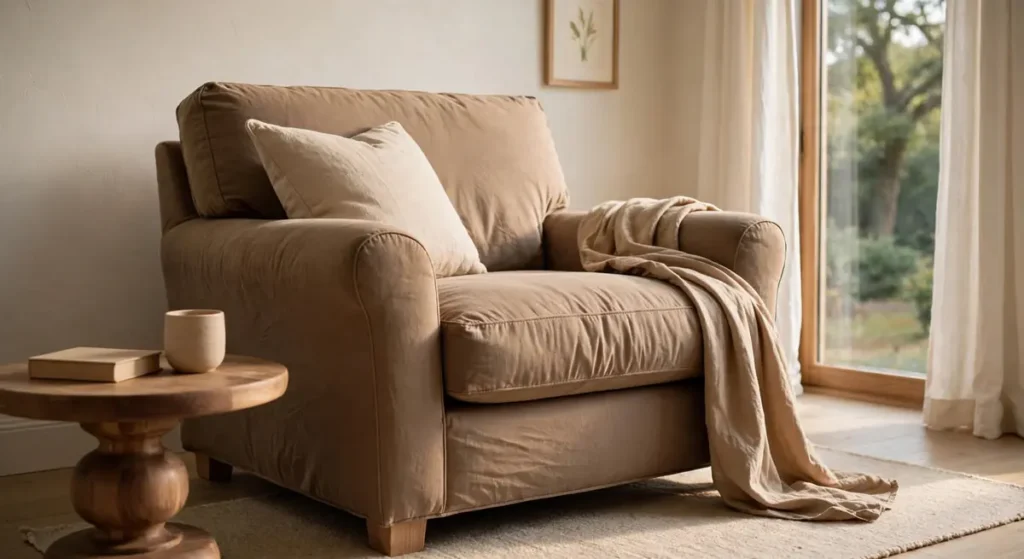
Styling Tip: Choose textured upholstery such as linen, boucle, or brushed cotton to introduce warmth without relying on too many decorative accessories.
2. Layer Chunky Knit Throws & Soft Cushions
Textiles can completely change the atmosphere of a reading nook. If you love creating warm, layered spaces throughout your home, explore these cozy fall bedroom ideas for more inspiration. A chunky knit throw draped over an armchair instantly makes the space feel softer, while cushions in different fabrics add depth and comfort. Instead of choosing several matching pieces, combine materials like linen, cotton, wool, and velvet.
Keep the color palette connected through warm neutrals, such as cream, sand, caramel, and soft brown. You can also introduce one muted accent shade, like olive green or dusty rust, to give the arrangement a little more character.
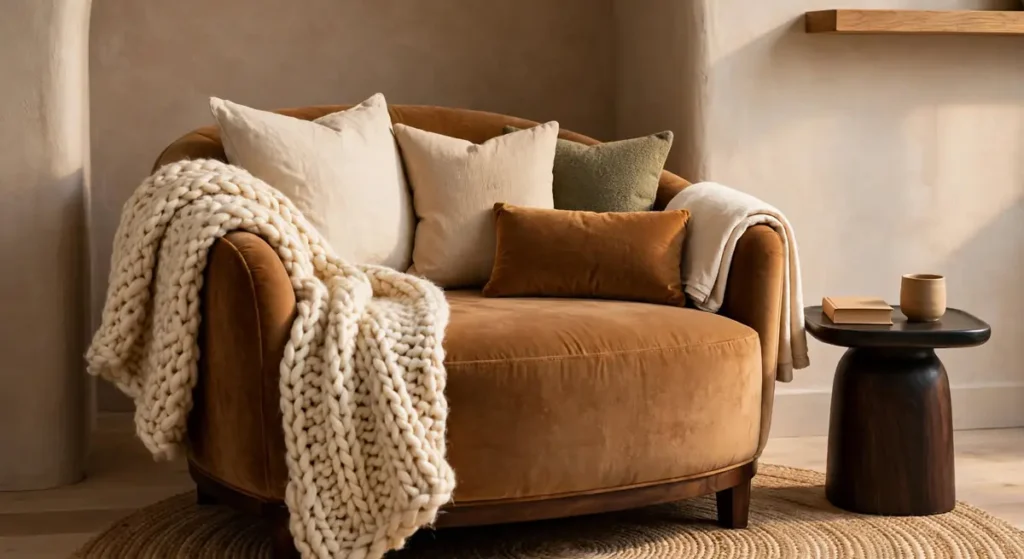
Styling Tip: Mix different fabric textures but keep the cushion colors within a coordinated palette so the nook feels layered rather than visually busy.
3. Add a Plush Rug to Define the Reading Area
A rug helps make a reading corner feel like a separate little destination, especially when it sits within a larger living room or bedroom. Choose a soft wool, textured cotton, or low-pile rug that feels comfortable underfoot. Natural shades such as ivory, warm beige, and oatmeal work particularly well with layered neutral interiors.
The rug should be large enough to sit beneath the front legs of your chair and nearby furniture. This creates a more connected arrangement instead of making the chair look like an isolated piece.
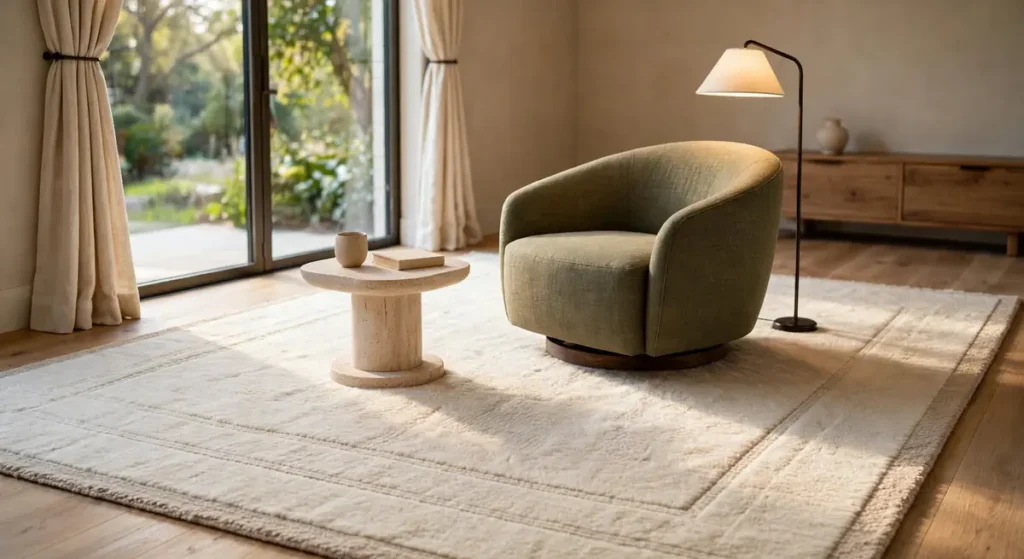
Styling Tip: If your nook already has several soft furnishings, choose a subtly textured rug rather than introducing another bold pattern.
4. Create a Cozy Window Seat
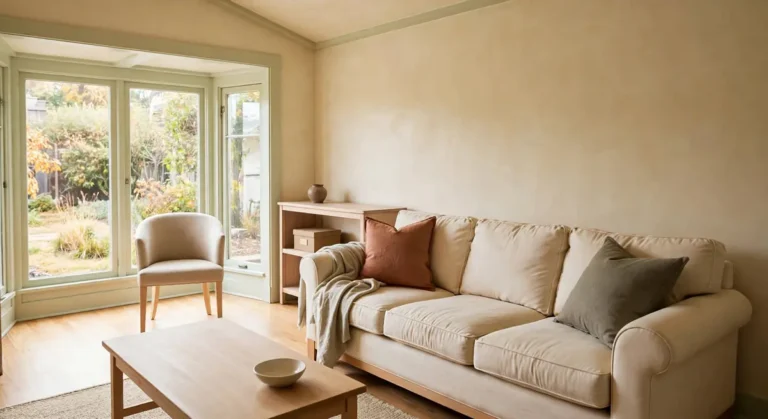
A window seat can become one of the most inviting places in the home to read. If you have a wide windowsill or a built-in bench, add a comfortable seat cushion and arrange a few pillows along the back. Soft linen, cotton, and woven fabrics make the setup feel relaxed while allowing natural light to become part of the experience.
For a more finished look, use a warm wood base or add storage drawers underneath the seat. This gives you somewhere to keep extra blankets and books without filling the surrounding area with furniture.

Styling Tip: Choose cushions in slightly different sizes and textures, but avoid covering the entire seat. Leave enough room to sit comfortably.
5. Add a Wooden Side Table
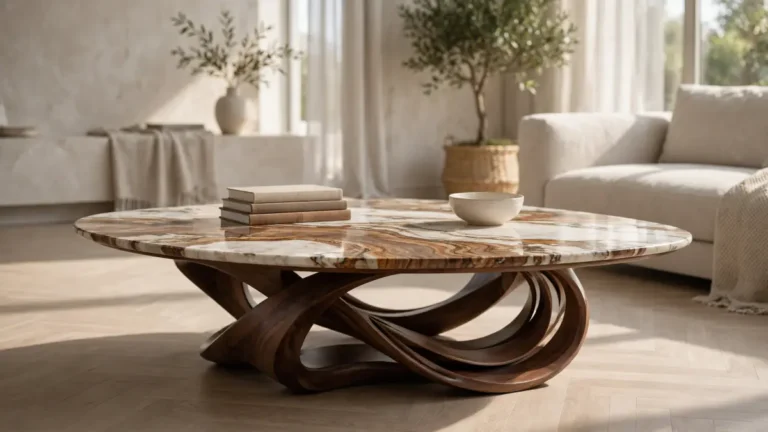
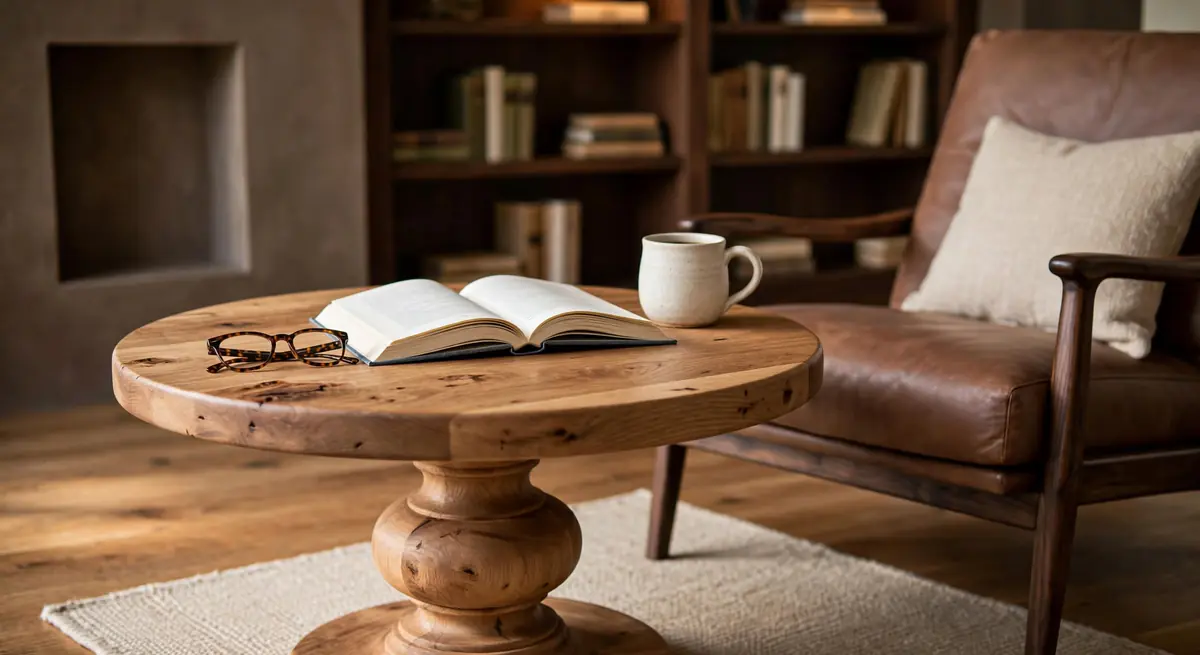
A small side table makes a reading nook more practical without taking attention away from the main seating area. Natural oak, walnut, or reclaimed wood can introduce warmth and balance out softer materials like upholstery and knitted throws. Look for a compact design with a simple silhouette that fits beside your chair.
Use the tabletop for a current read, a ceramic mug, reading glasses, or a small decorative object. Keeping only a few useful items on display makes the corner feel intentional and prevents the surface from becoming cluttered.
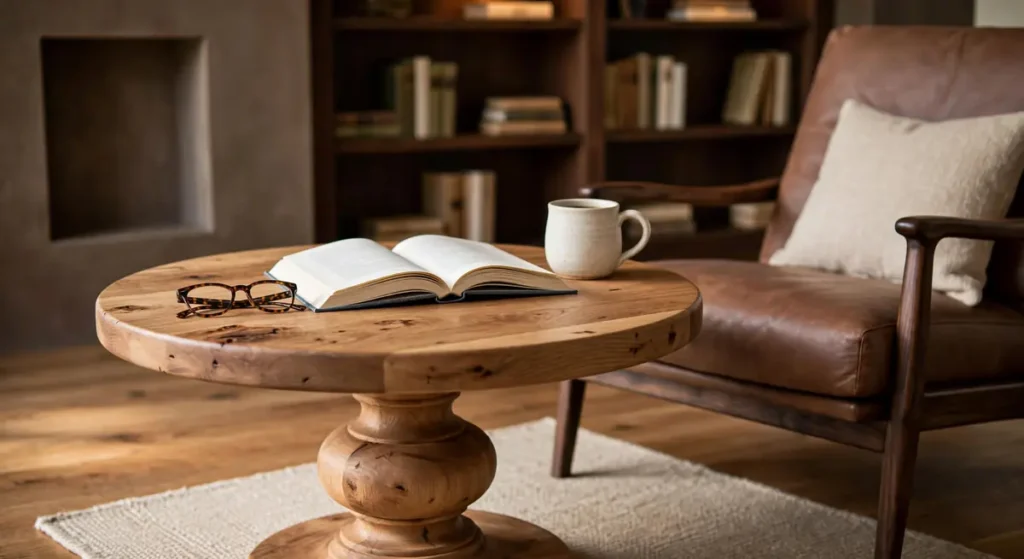
Styling Tip: A rounded wooden side table is a good choice for a compact nook because it softens the arrangement and takes up less visual space.
6. Add a Sculptural Floor Lamp
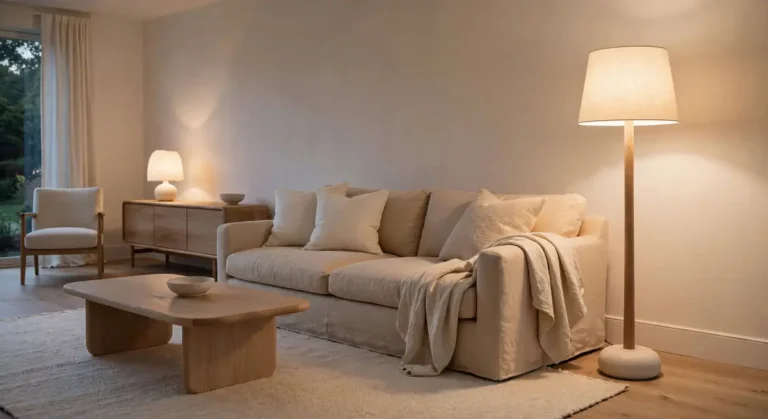
Good lighting is essential for a reading nook, particularly if you enjoy reading in the evening. For more practical ways to improve lighting without making permanent changes, explore these renter-friendly lighting ideas. A floor lamp positioned beside or slightly behind the chair provides focused light while adding another design element to the corner. Look for warm metal finishes, natural wood details, or fabric shades that complement the surrounding textures.
An adjustable floor lamp is especially useful because you can direct the light toward your book without illuminating the entire room. Choose a warm-white bulb that feels comfortable rather than harsh.
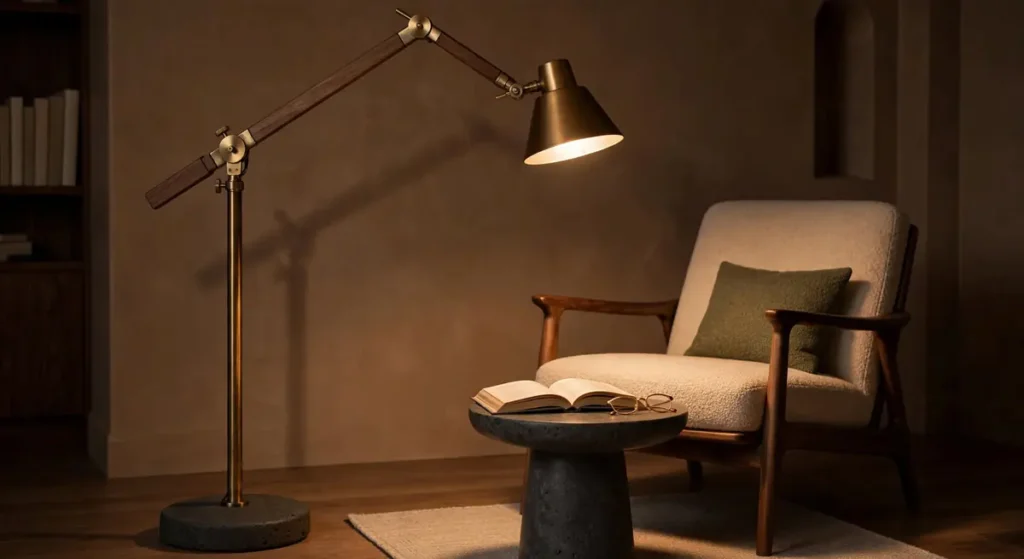
Styling Tip: Use a lamp with an adjustable head or angled arm so the light reaches your reading position without creating unnecessary glare.
7. Add a Small Bookshelf Beside Your Chair
A nearby bookshelf makes your reading nook feel more personal and keeps favorite books within easy reach. You don’t need a large bookcase to achieve this look. A narrow open shelf, a small wooden bookcase, or a compact wall-mounted unit can provide enough space for a carefully selected collection.
Arrange books vertically and horizontally to create a relaxed display. You can also leave a little room for handmade ceramics, a small framed print, or a decorative object that reflects your style.
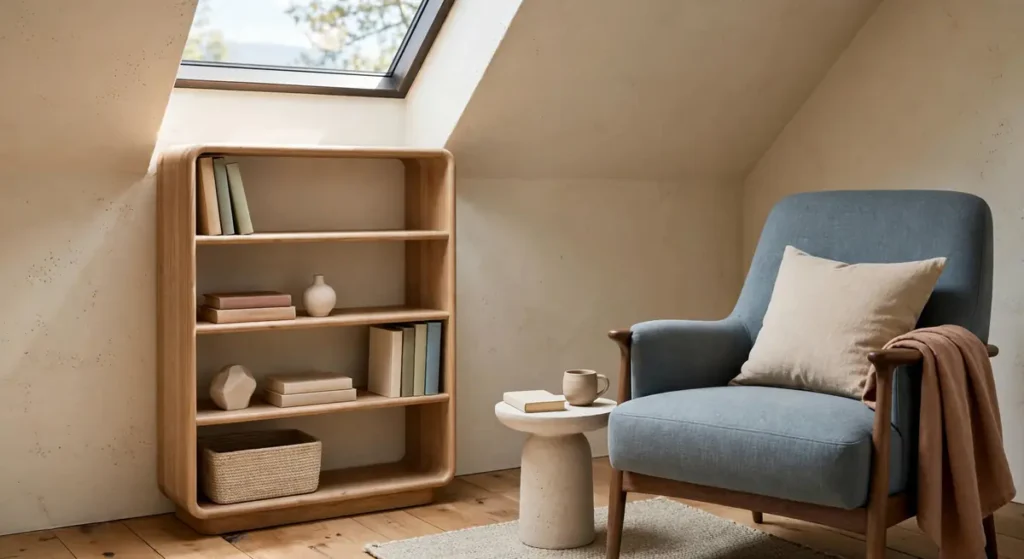
Styling Tip: Mix books with a few simple decorative pieces, but leave some open space on the shelves to avoid making the nook feel crowded.
8. Add Soft Linen Curtains
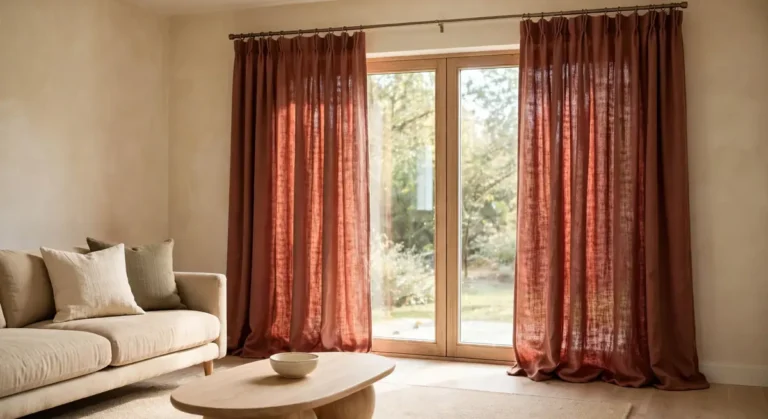
Curtains can make a reading nook feel more sheltered and comfortable, especially when the seating is placed near a window. Lightweight linen or linen-look panels soften natural light and introduce another layer of texture. Their relaxed drape also makes the corner feel more connected to the rest of the room.
Warm white, natural flax, and soft beige are easy choices for neutral interiors. If your walls are already light, slightly deeper oatmeal curtains can add subtle contrast without making the space feel dark.
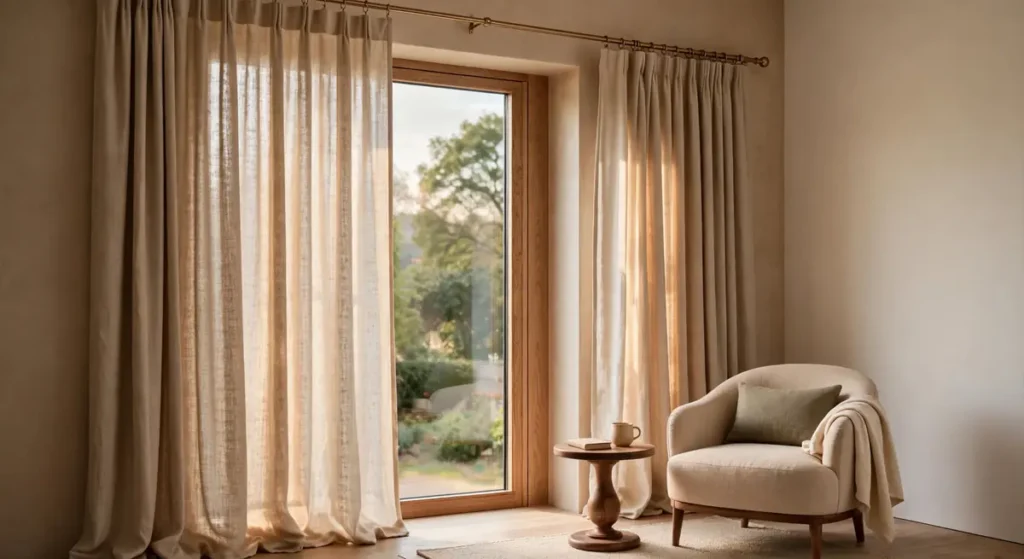
Styling Tip: Hang curtains slightly higher and wider than the window frame when possible. This creates a softer backdrop and makes the window area feel more finished.
9. Mix Cozy, Natural Textures
A reading nook feels more interesting when its materials have different finishes. Boucle upholstery adds a soft, nubby surface, velvet introduces a gentle richness, and woven baskets or jute accessories bring in natural texture. Combining these materials creates depth even when the color palette remains simple.
You might pair a boucle chair with a velvet cushion, a woven basket for blankets, and a natural fiber rug underneath. The contrast between these finishes makes the corner feel thoughtfully layered without needing lots of decoration.
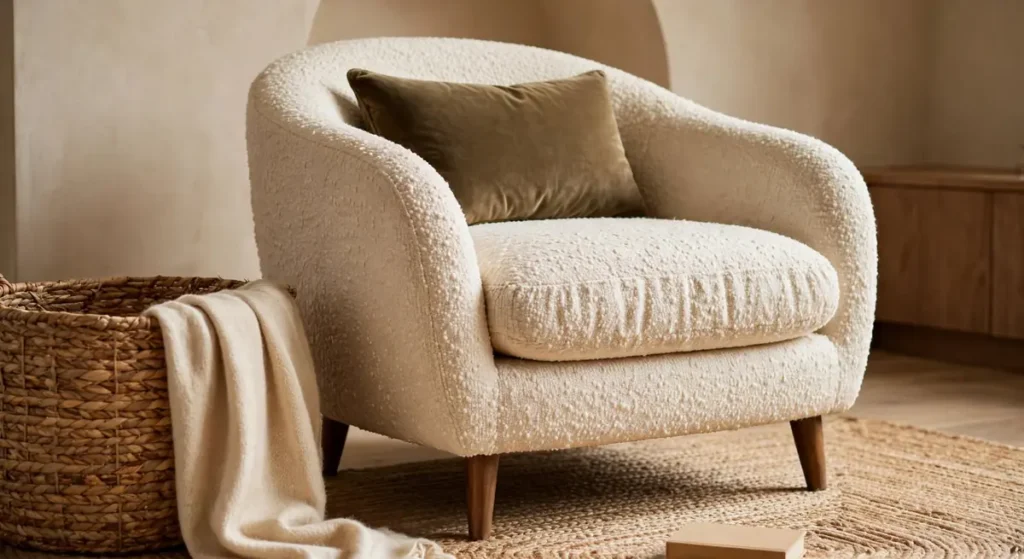
Styling Tip: Choose two or three main textures and repeat them in different places. This creates a cohesive look instead of making every accessory feel unrelated.
10. Add an Ottoman to Your Reading Nook
An ottoman adds another level of comfort to a reading corner. It gives you a place to rest your feet, makes a chair feel more relaxed, and can provide additional seating when needed. Upholstered designs in boucle, linen, or textured cotton work especially well with warm layered interiors.
If your nook is small, choose a compact ottoman that can slide beneath a side table or sit neatly beside the chair. A storage ottoman is another practical option for keeping extra throws, magazines, or reading accessories out of sight.
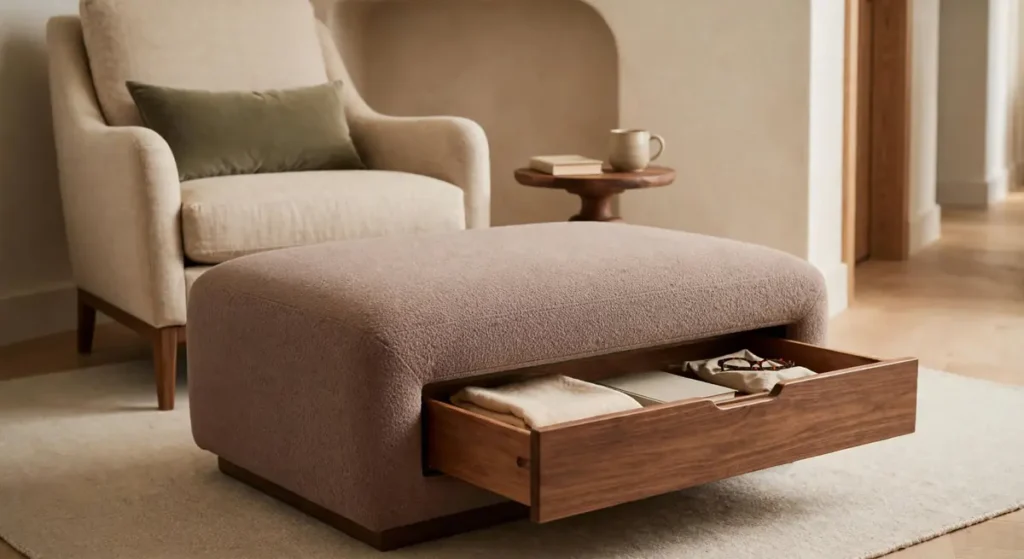
Styling Tip: Choose an ottoman in a slightly different shade or texture from your armchair to create gentle contrast while keeping the overall palette connected.
11. Add Warm Wood & Handmade Ceramics
Natural materials give a reading nook a more personal and lived-in atmosphere. A wooden stool, a small carved tray, or a handmade ceramic vase can add character without taking up much room. These details work particularly well alongside linen upholstery, soft rugs, and woven accessories.
You don’t need to display several decorative objects at once. A single ceramic vase with a few dried branches or a small wooden tray on the side table can be enough to finish the arrangement.
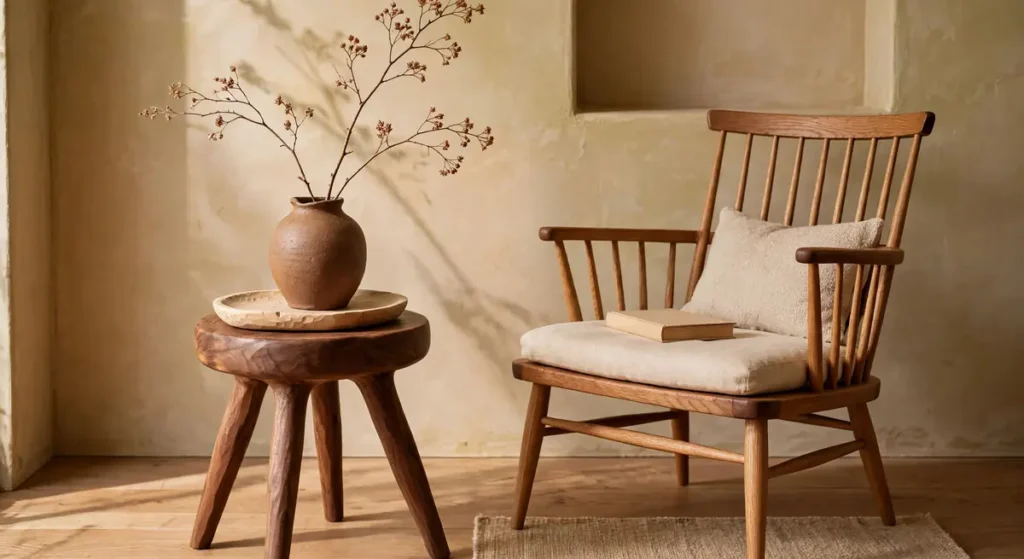
Styling Tip: Combine warm wood with matte ceramic finishes in ivory, sand, or earthy brown for a simple, natural look.
12. Create a Tucked-Away Reading Corner
Not every home has an obvious space for a reading nook. An unused corner beside a bedroom wardrobe, a quiet area near the living room, or a small space beneath the stairs can work just as well. Start with a comfortable chair or compact bench, then build around it with a soft rug, a cushion, and a warm reading light.
A narrow shelf or wall-mounted book ledge can provide storage without taking up valuable floor space. The goal is to make the corner feel separate enough to enjoy, while keeping the arrangement practical for everyday use.
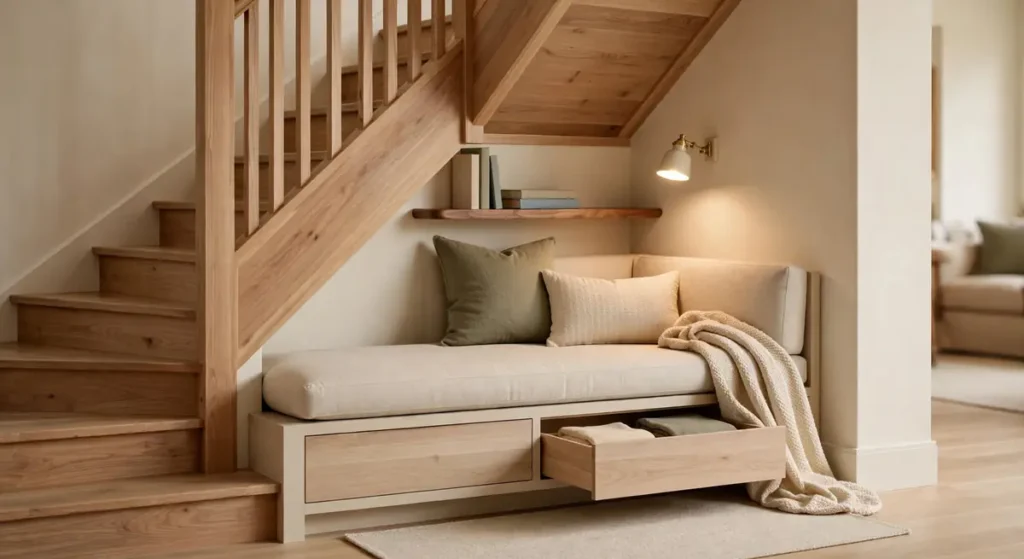
Styling Tip: Use a consistent color palette and repeat a few materials from the surrounding room so the nook feels connected to your home rather than like an unrelated setup.
How to Create a Warm, Inviting Reading Nook
A beautiful reading nook is about more than choosing a comfortable chair. The right combination of materials, lighting, and furniture placement makes the space feel complete.
Reading Nook Decorating Mistakes to Avoid
Even a small reading corner can feel unfinished if a few practical details are overlooked.
FAQs About Cozy Reading Nooks
How do you make a reading nook feel cozy?
Start with comfortable seating, then add soft cushions, a warm throw, and a textured rug. Warm lighting and natural materials like wood, linen, and woven accessories help create a relaxed atmosphere.
What furniture do you need for a reading nook?
The essentials are comfortable seating, a good reading light, and a small surface for books or drinks. A bookshelf, ottoman, or storage basket can be added depending on your available space.
How can you create a reading nook in a small space?
Use an unused corner, a window area, or a narrow section of your bedroom or living room. Choose compact furniture, wall-mounted shelves, and layered textiles to make the space comfortable without overcrowding it.
What colors work best for a cozy reading nook?
Warm neutrals such as cream, beige, oatmeal, taupe, and soft brown create a welcoming foundation. Muted olive, dusty rust, and deeper earthy shades can add contrast while keeping the atmosphere relaxed.
How do you layer textures in a reading nook?
Combine materials with different surfaces, such as a boucle chair, linen cushions, a chunky knit throw, and a woven rug. Keep the colors coordinated so the different textures add depth without making the corner look busy.
Final Thoughts
A cozy reading nook can turn an overlooked corner into one of the most enjoyable spaces in your home. You don’t need expensive furniture or a complete room makeover to achieve the look. Comfortable seating, warm lighting, layered textiles, and a few natural accents can make even a small corner feel inviting.
Start with the pieces that make the space comfortable, then gradually add textures and personal details that reflect your style. The best reading nook is one that looks beautiful but, more importantly, makes you want to sit down, relax, and enjoy a good book.