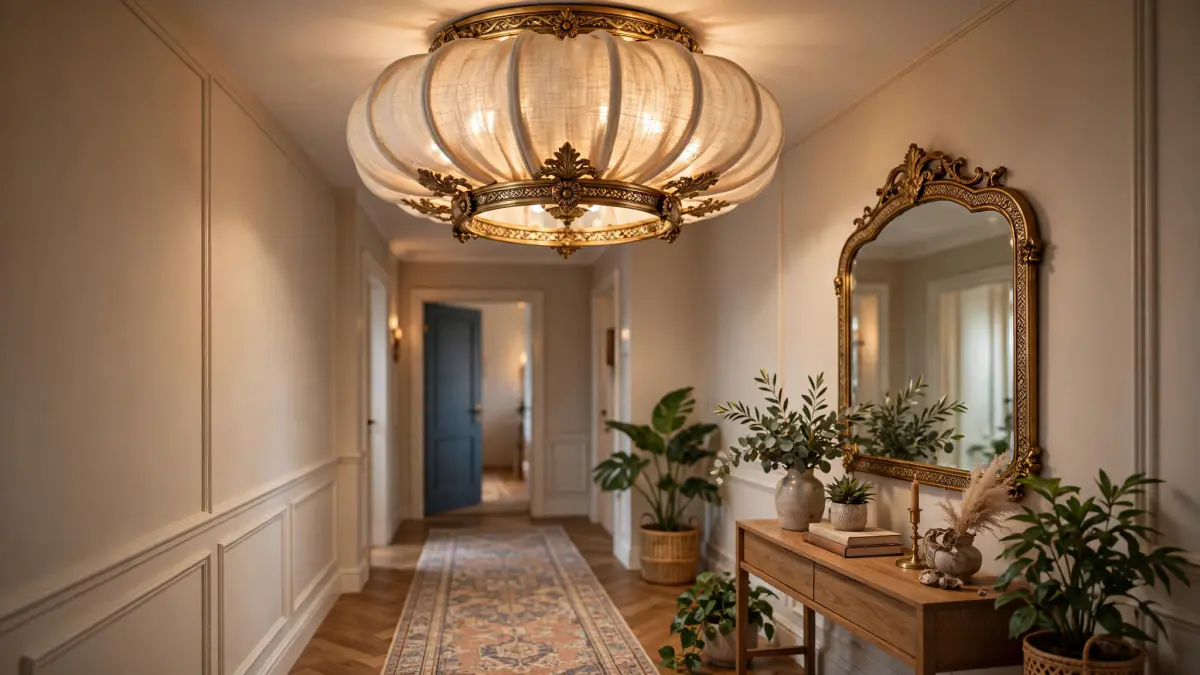
Hallway Lighting Ideas: 18 Ideas That Turn Dark Passages Into Beautiful Spaces
A dark hallway can make even a beautifully decorated home feel less inviting. With little natural light, narrow walkways and plain walls, these transitional spaces are often overlooked when planning a home’s interior design. The right lighting, however, can turn an ordinary passage into a warm, welcoming part of your home.
The best hallway lighting ideas combine practical illumination with thoughtful design. From elegant wall sconces and sculptural ceiling fixtures to subtle LED strips and picture lights, there are plenty of ways to brighten a dark corridor without making it feel cluttered. Whether your hallway is long and narrow, has a low ceiling, or lacks windows altogether, these ideas will help you create a space that feels intentional, stylish and connected to the rest of your home.
18 Hallway Lighting Ideas
1. Install Elegant Wall Sconces Along the Hallway
Wall sconces are a beautiful way to add character to a dark hallway while illuminating the walls rather than concentrating all the light on the floor. Choose fixtures with frosted glass, fabric shades or softly diffused light to create a comfortable glow. Brass sconces can complement traditional interiors, while simple black or white designs work well in contemporary homes.
Placing matching sconces along a longer passage creates a visual rhythm that makes the hallway feel thoughtfully designed. They also work beautifully beside framed artwork, decorative molding or a console table.
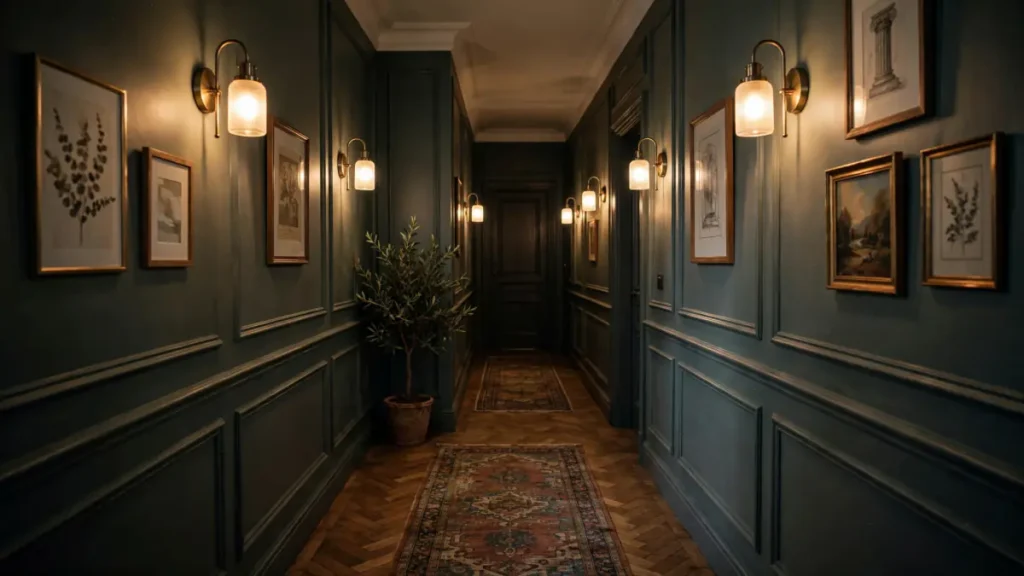
Pro Tip: In a narrow hallway, look for slim wall sconces that don’t project too far into the walking space. Plan their placement around doors, artwork and existing wall features for a balanced layout.
2. Choose Flush-Mount Ceiling Lights for Low Ceilings
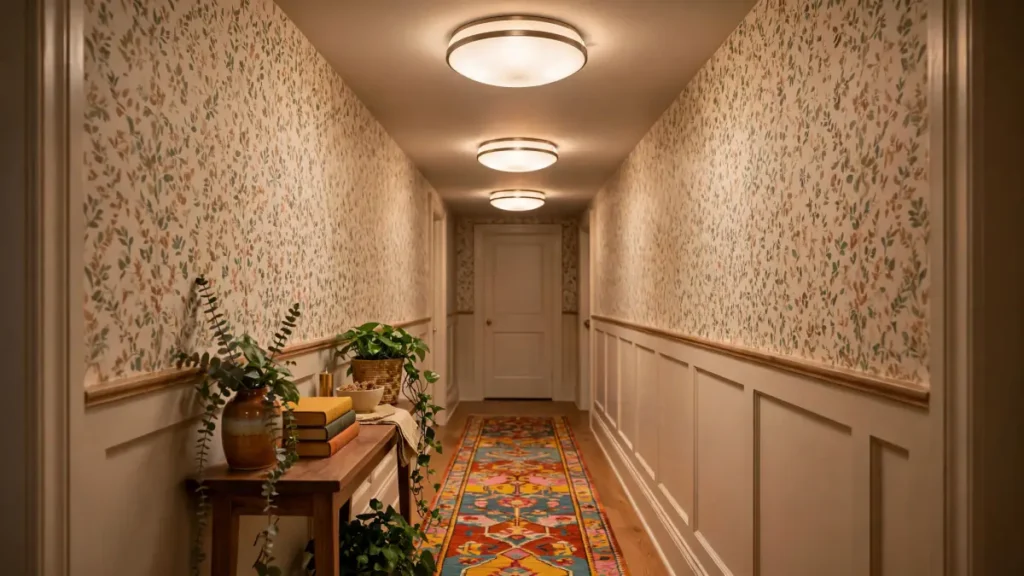
Flush-mount fixtures sit close to the ceiling, making them a practical choice for hallways where hanging lights would feel overwhelming. Modern designs come in a wide range of styles, from simple opal-glass discs to decorative fixtures with metal detailing.
A well-chosen flush mount can provide general illumination without drawing too much attention to the ceiling. For a longer corridor, using a coordinated series of fixtures helps distribute light more evenly and creates a consistent look.
Pro Tip: Choose a fixture that spreads light across the space rather than creating one harsh pool directly beneath it. Diffused shades are particularly useful in hallways with plain walls and limited natural light.
3. Use Recessed Lights for a Clean, Minimalist Look
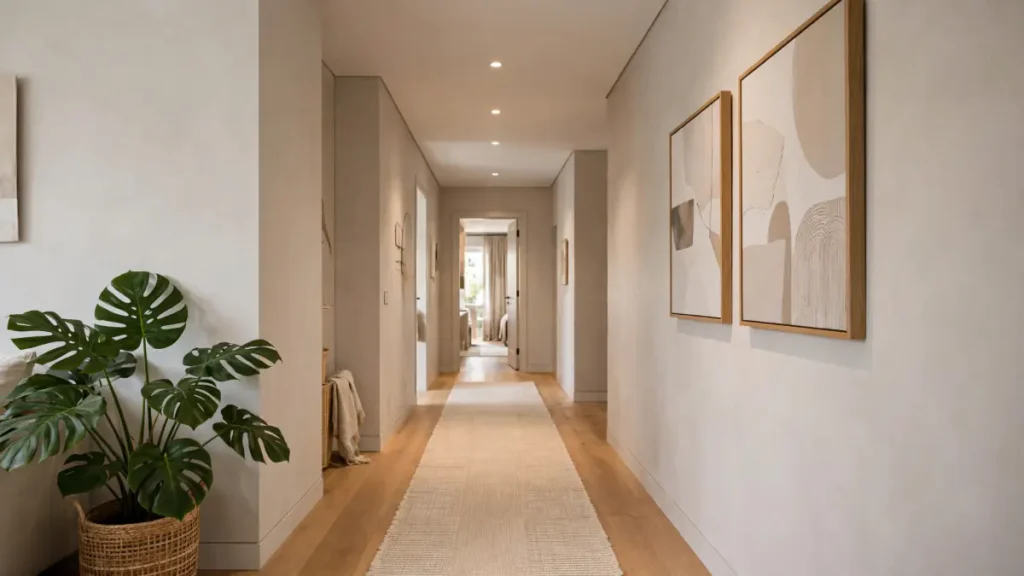
Recessed lights are installed within the ceiling, creating a streamlined appearance that works especially well in modern and minimalist interiors. Because the fixtures don’t hang down, they help keep the visual space open in narrow corridors.
A carefully planned arrangement can illuminate a long passage without introducing bulky decorative elements. Adjustable recessed fixtures can also direct light toward artwork or architectural details instead of pointing every beam straight down.
Pro Tip: Avoid placing recessed lights too close together without considering the beam spread. Plan the layout to minimize dark patches, harsh glare and uneven brightness along the hallway.
4. Make a Statement With a Hallway Pendant Light
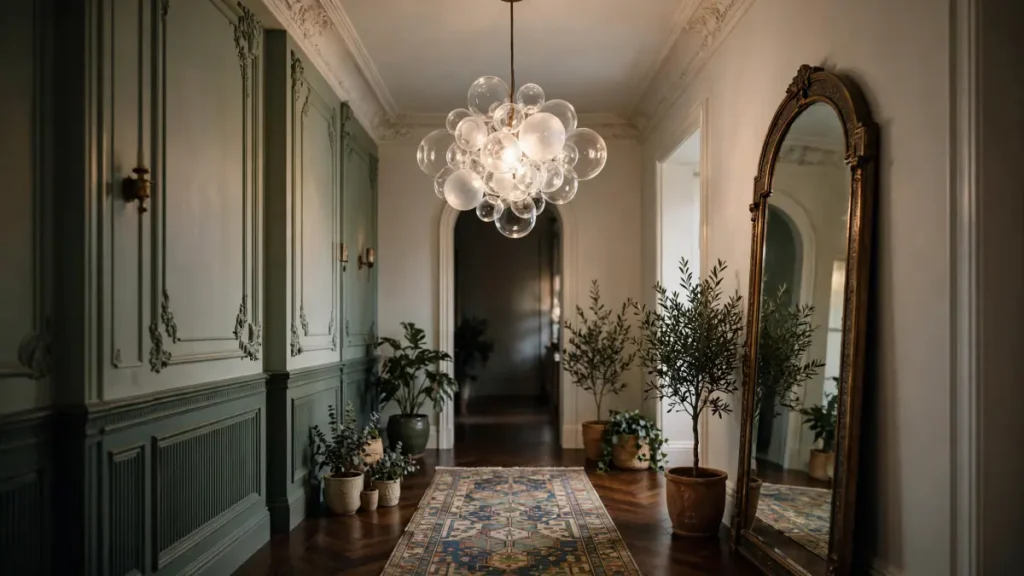
A pendant light can turn a plain hallway into a memorable design feature. Glass globes, sculptural metal shades and softly glowing lantern-style pendants can add personality while providing useful illumination.
This idea works particularly well in an entry hallway with enough ceiling height and clearance. In a longer passage, a sequence of smaller pendants can create a sense of continuity, provided the fixtures don’t obstruct movement or overwhelm the space.
Pro Tip: Check the ceiling height and the full walking clearance before choosing a pendant. If the hallway is narrow or has a low ceiling, a semi-flush fixture can provide a similar decorative effect without hanging as low.
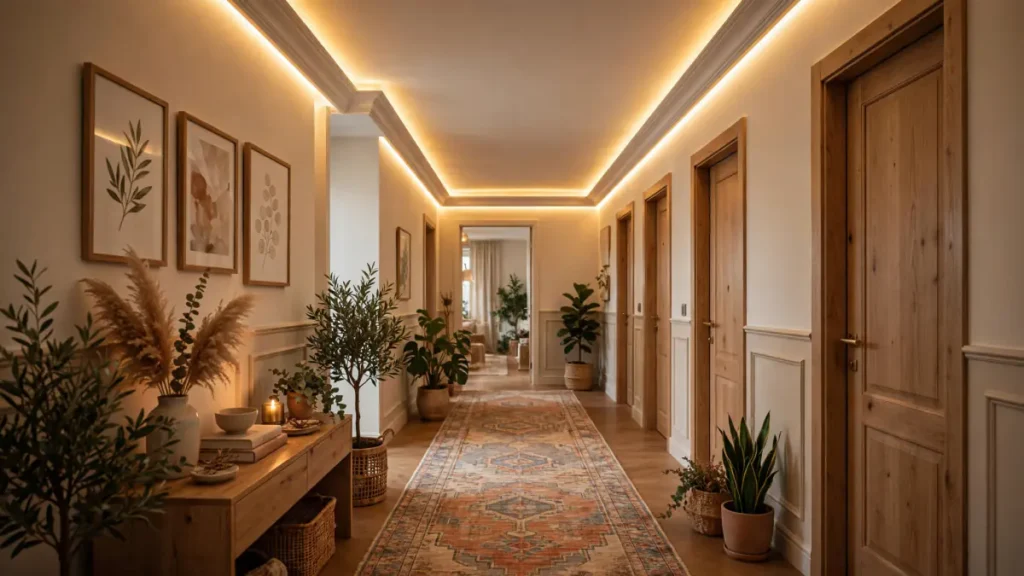
5. Add Warm LED Strip Lighting Along the Ceiling
Concealed LED strip lighting creates a soft, contemporary glow that can make a dark hallway feel more inviting. Installed within a suitable ceiling recess, along a cove or behind a subtle architectural detail, it produces indirect illumination rather than a direct beam from a visible bulb.
This approach works especially well in modern interiors with clean lines, neutral colors and simple finishes. It can also complement recessed lights when you need both general illumination and a softer ambient effect.
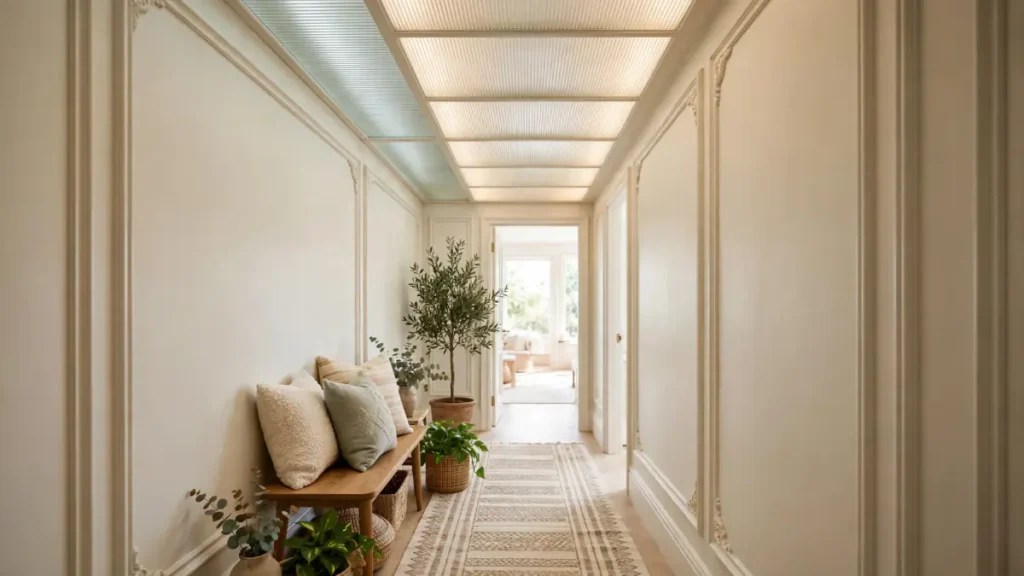
Pro Tip: Use LED strips designed for the intended installation location and provide access to their drivers or power components. A dimmable option gives you more control over the atmosphere in the evening.
6. Highlight Hallway Artwork With Picture Lights
If your hallway features framed prints, paintings or photographs, picture lights can make the display feel like a curated gallery. These fixtures direct attention toward the artwork while adding another layer of illumination to the corridor.
Choose a finish that complements your frames and other metal details. A slim brass picture light can look elegant above traditional artwork, while a discreet black fixture suits modern photography and graphic prints.
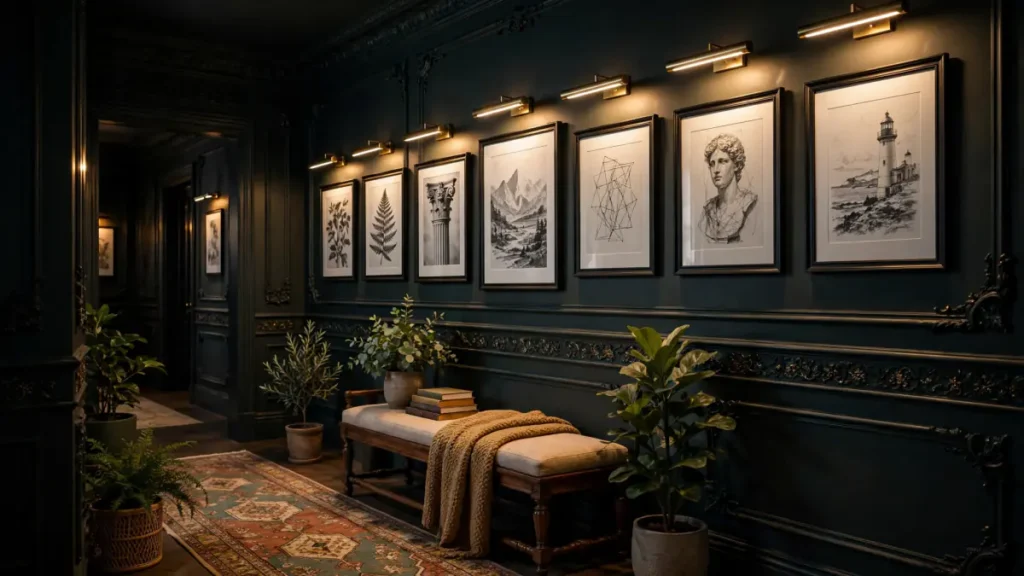
Pro Tip: Check the artwork’s material and the light manufacturer’s recommendations before positioning a fixture close to it. Use an appropriate light source and avoid unnecessary heat or excessive brightness.
7. Choose Glass Fixtures to Keep the Hallway Feeling Open
Glass lighting can be particularly effective in compact hallways because transparent or translucent shades create less visual bulk than solid, oversized fixtures. Opal glass offers a soft, diffused glow, while clear glass can introduce a lighter, more delicate appearance.
A glass flush mount works well in a small corridor, while a glass pendant can become a decorative focal point in an entrance with more ceiling height. Pair the fixture with simple wall finishes to keep the overall design from feeling busy.
Pro Tip: Consider how visible the bulb will be through the glass. If exposed bulbs create uncomfortable glare, choose an opal shade or a compatible diffused bulb instead.
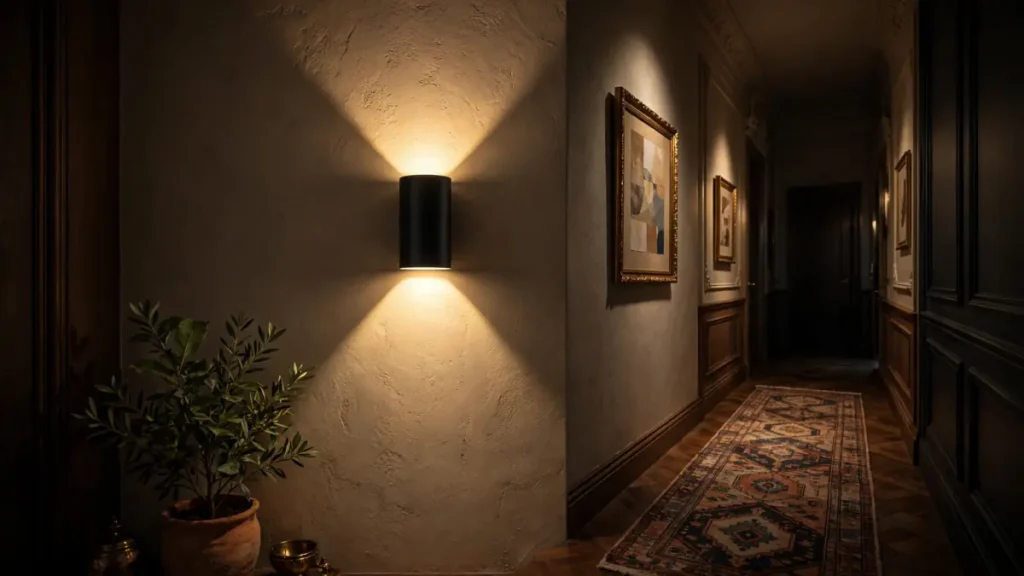
8. Use Up-and-Down Wall Lights for Architectural Interest
Up-and-down wall lights direct illumination toward both the ceiling and the floor, creating an attractive pattern of light across the wall. This makes them useful when you want a hallway to feel more architectural without adding artwork or decorative accessories.
Simple cylindrical fixtures suit contemporary spaces, while more sculptural versions can complement modern organic or industrial interiors. Repeating the same fixture along a wall helps create a cohesive visual effect.
Pro Tip: Test the light pattern before committing to a full row of fixtures. The beam shape can look very different on textured, painted and paneled walls.
9. Install Motion-Sensor Lights for Nighttime Convenience
Motion-sensor lighting is a practical choice for hallways used frequently at night. The lights can turn on when someone enters the passage and switch off after a set period, helping make nighttime trips more convenient.
You can use motion-sensor ceiling fixtures, compatible wall lights or a low-level lighting system. This idea is especially useful in family homes, upstairs corridors and passages leading to bedrooms or bathrooms.
Pro Tip: Choose a sensor with adjustable sensitivity and a suitable detection range. Position it so normal movement triggers the light without causing unnecessary activation from nearby rooms.
10. Add Subtle Baseboard or Low-Level Lighting
Low-level lighting creates a gentle path along the bottom of a hallway wall or near the skirting board. It can help define the walkway after dark without filling the entire corridor with bright overhead illumination.
Integrated LED channels and purpose-designed step lights can work well in contemporary homes. The effect is particularly attractive alongside simple walls, natural wood floors and restrained decor.
Pro Tip: Keep low-level lighting subtle enough to guide movement rather than create distracting bright lines. Use fixtures and wiring suitable for their installation location, and avoid placing them where furniture or shoes may block the light.
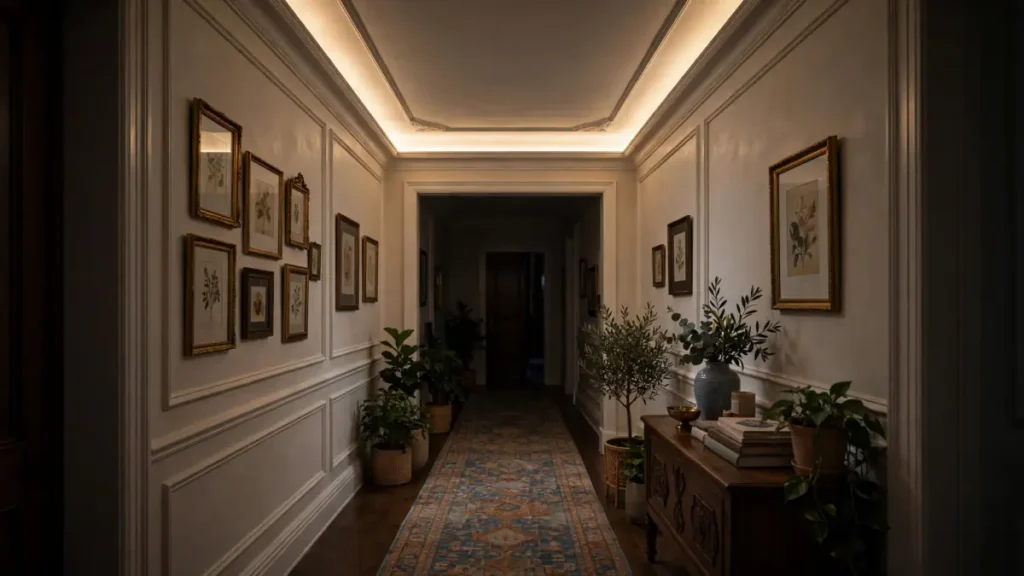
11. Create a Soft Glow With Cove Lighting
Cove lighting hides the light source within a ceiling recess or architectural ledge, allowing illumination to reflect off the ceiling. The result is a soft, indirect glow that can make a dark passage feel calmer and more refined.
This idea works particularly well in hallways with modern ceiling details, simple wall colors and minimal decoration. It can also complement a central ceiling fixture when the space needs more than one layer of lighting.
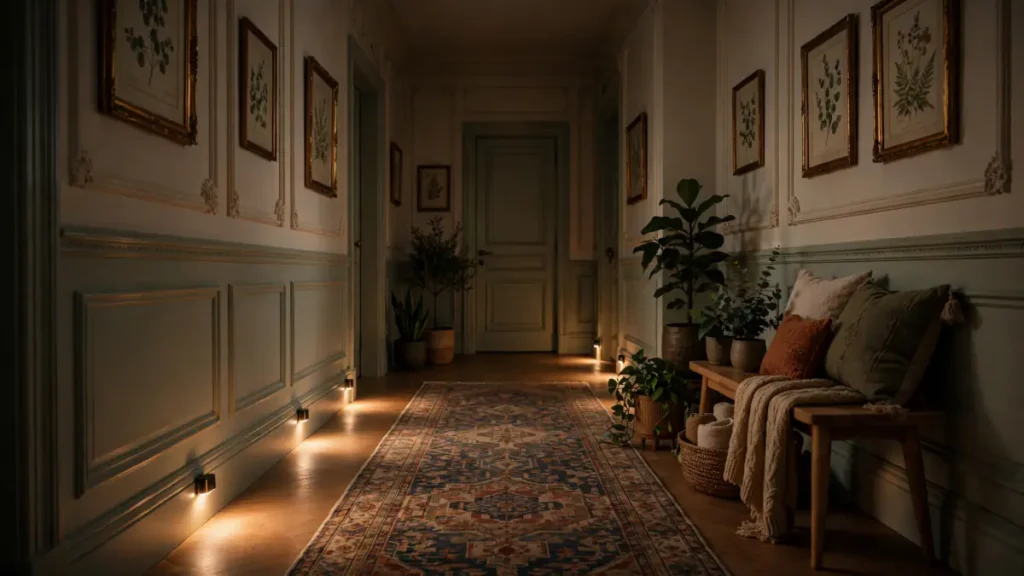
Pro Tip: Cove lighting is most effective when the ceiling surface reflects light evenly. Plan the recess and light source together so the finished effect looks intentional rather than revealing visible strips or uneven bright spots.
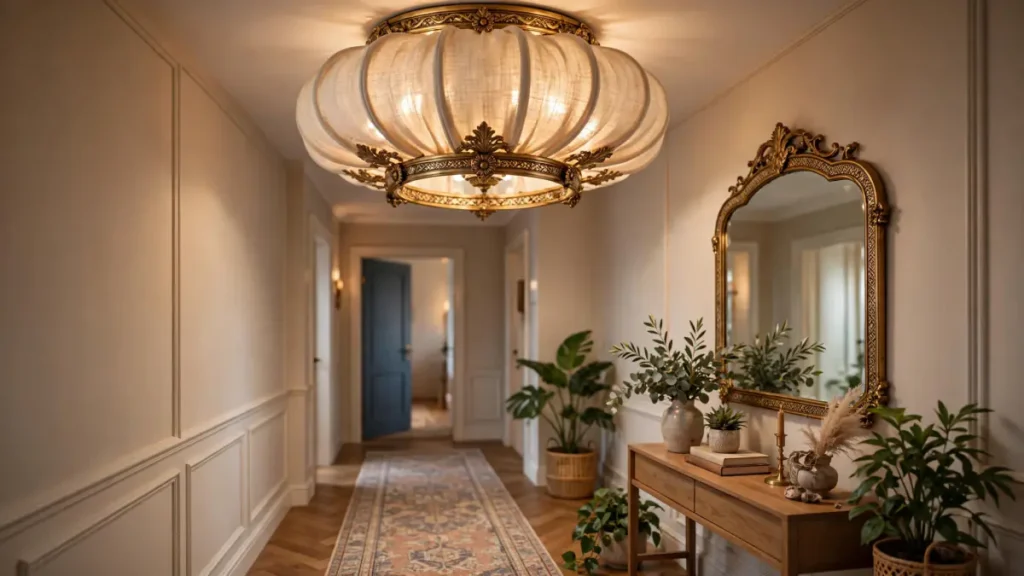
12. Use a Decorative Semi-Flush Mount Fixture
A semi-flush mount hangs slightly below the ceiling while keeping a relatively compact profile. It offers more decorative presence than a basic flush mount without requiring the height needed for a large pendant.
Consider a sculptural fixture, a small brass design or a rounded shade that complements the home’s interior style. Semi-flush mounts are especially useful in entrance halls where you want the ceiling fixture to feel like a design choice rather than a purely functional necessity.
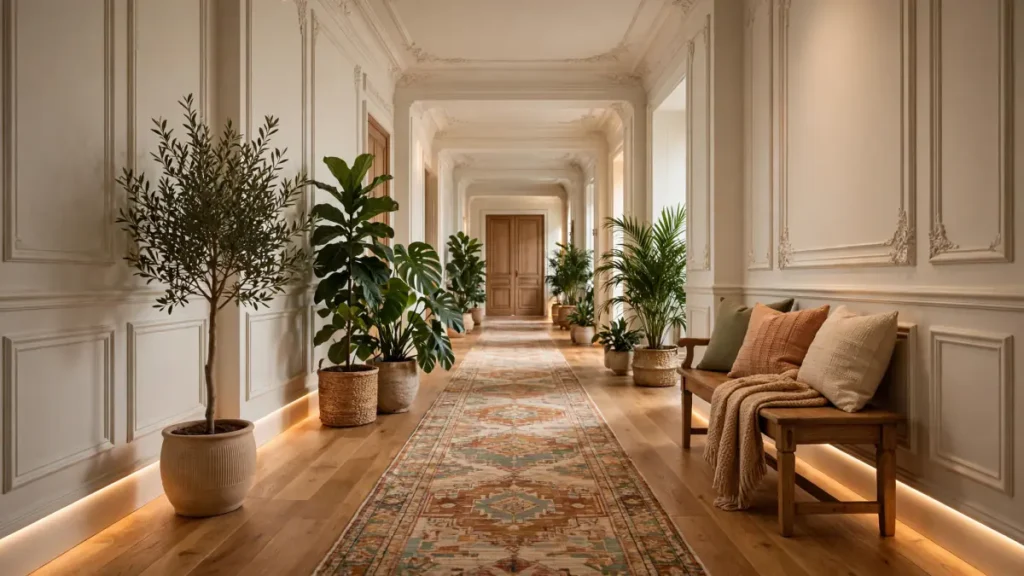
Pro Tip: Choose a fixture scale that suits the hallway’s width. A decorative light should create a focal point without making the ceiling feel crowded or competing with nearby door frames.
13. Pair Hallway Lighting With a Large Mirror
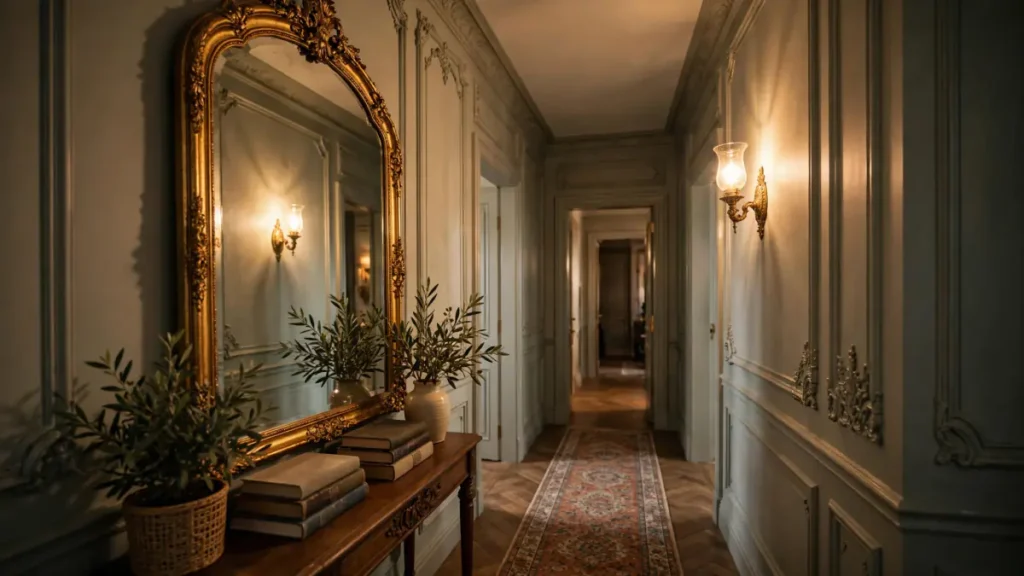
A mirror can reflect available light and visually open up a hallway, particularly when positioned opposite or near a suitable light source. Pairing it with a wall sconce, a flush mount or a decorative ceiling fixture helps the lighting feel more connected to the overall design.
A tall mirror can emphasize vertical space, while a horizontal mirror above a narrow console can make an entrance feel more finished. If your hallway forms part of a small apartment entrance, these apartment entryway drop zone ideas can help you organize keys, bags, and other everyday essentials. Keep the surrounding decor simple so the reflection doesn’t create a cluttered appearance.
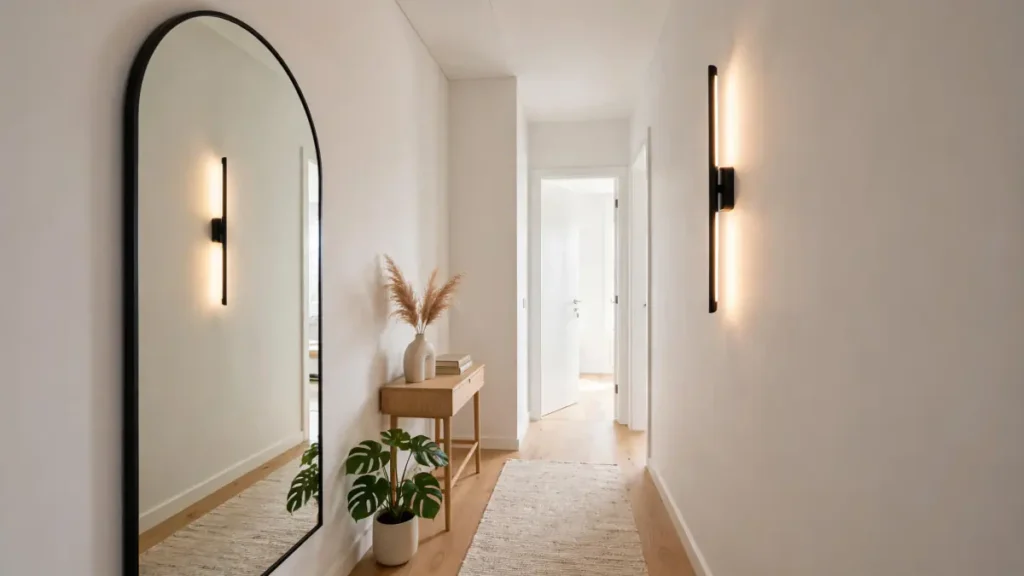
Pro Tip: Check what the mirror will reflect before choosing its position. Reflecting a light source or an attractive part of the hallway can enhance the design, while reflecting a cluttered corner may make the space feel busier.
14. Choose Sculptural Lighting for a Modern Hallway
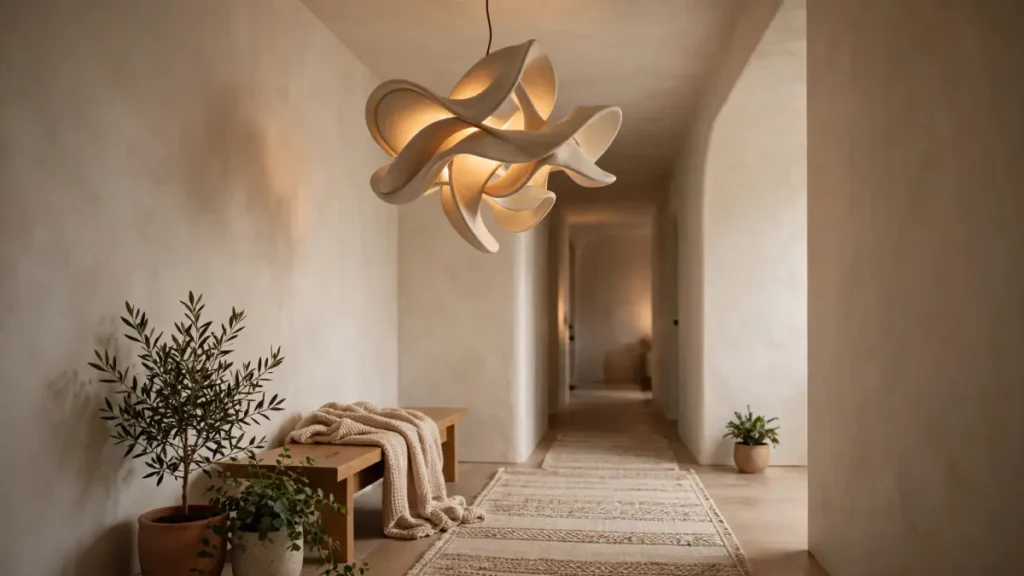
A sculptural light fixture can act as artwork in a hallway that has little room for furniture or decorative objects. Organic curves, geometric forms and interesting combinations of metal and glass can give a plain passage a more distinctive personality.
This approach is particularly effective when the walls and flooring are relatively simple. One well-chosen fixture can create enough visual interest without requiring multiple decorative elements.
Pro Tip: Let the fixture be the main statement by keeping nearby decor restrained. Before purchasing, confirm that the design provides enough useful light as well as visual interest.
15. Illuminate Hallway Niches and Built-In Shelves
If your hallway includes an architectural niche, recessed shelf or built-in display, discreet lighting can highlight its shape and contents. Small integrated lights or carefully concealed LED strips can draw attention to ceramics, framed photographs or a single decorative object.
This idea works best when the display is edited rather than crowded. A few thoughtfully chosen objects look more intentional when illuminated than a shelf filled with unrelated accessories.
Pro Tip: Use a light source with a suitable beam angle for the niche. Avoid aiming a strong beam directly at reflective objects, which can create distracting glare.
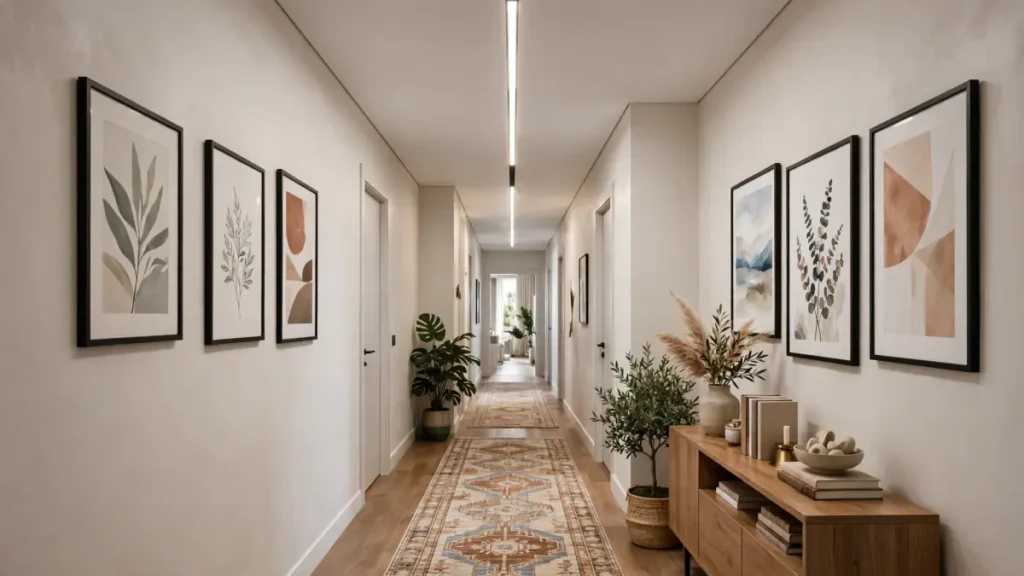
16. Try a Linear Ceiling Light for a Long Corridor
A linear ceiling light can complement the long proportions of a hallway while providing a clean, modern appearance. Slim bar fixtures work well in contemporary homes, especially when their shape follows the direction of the corridor.
Depending on the design, a linear fixture can provide general illumination or serve as a decorative element within a larger lighting scheme. It is particularly useful when a row of separate ceiling lights would make the ceiling feel visually busy.
Pro Tip: Consider the fixture’s light distribution, not just its length. A narrow beam aimed straight down may leave the walls dim, so look for a design that spreads light comfortably across the surrounding surfaces.
17. Use Warm Lighting to Make Dark Walls Feel Inviting
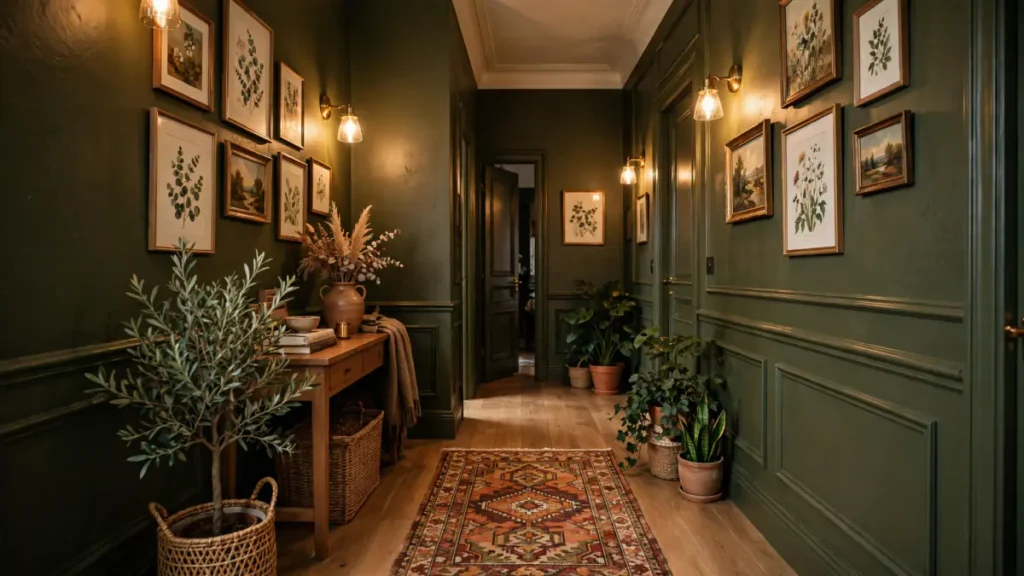
The color temperature of a light source influences the atmosphere of a hallway. Warm-white lighting can create a relaxed, welcoming feeling, especially when paired with natural wood, cream walls, beige finishes or traditional decor.
For many residential hallways, a warm-white bulb around 2700K to 3000K is a useful starting point. The right choice also depends on the paint color, flooring, nearby rooms and the mood you want to create.
Pro Tip: Keep the light color reasonably consistent between adjoining spaces so the transition from hallway to living room or bedroom doesn’t feel abrupt. Test bulbs in the actual space before replacing every fixture.
18. Combine Ceiling Lights & Wall Lighting
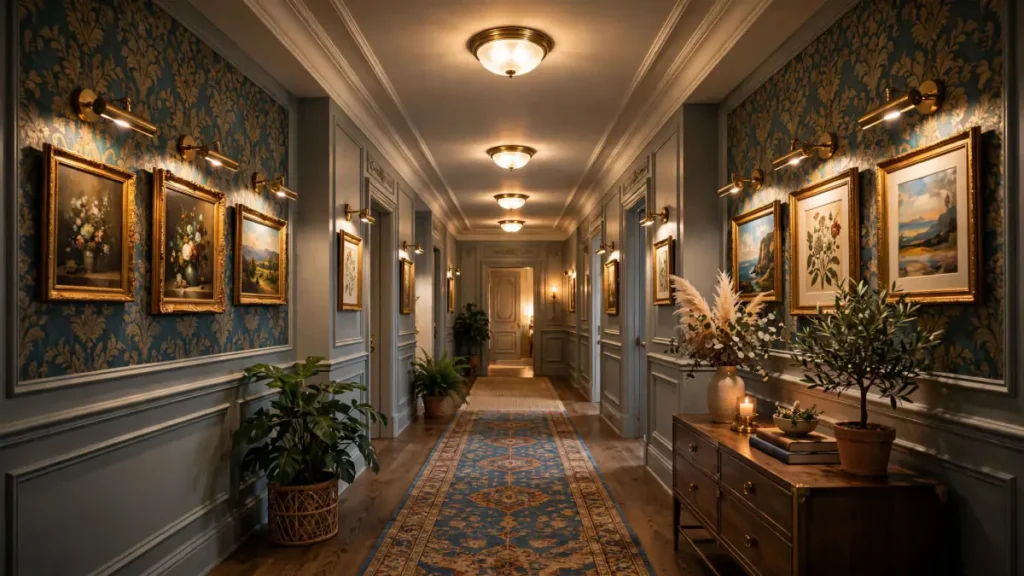
Layered lighting combines different light sources to make a hallway both functional and visually interesting. Ceiling fixtures can provide general illumination, while wall sconces, picture lights or indirect LED lighting add depth and highlight specific details.
This approach is especially useful in long or windowless hallways, where a single ceiling light may leave the ends or walls looking dull. You can also use dimmable controls to adjust the atmosphere at different times of day.
Pro Tip: Start with the general lighting you need for safe movement, then add accent lighting only where it serves a purpose. Planning the layers together helps prevent glare and avoids installing more fixtures than the hallway requires. If you’re updating your home without making permanent changes, explore these renter-friendly lighting ideas for practical ways to improve lighting throughout your space.
How to Choose the Right Hallway Lighting
The most attractive hallway lighting ideas are the ones that suit the actual shape and needs of your space. Before choosing fixtures, consider the ceiling height, corridor width, natural light, wall finishes and how people move through the area.
Consider the Hallway’s Size and Ceiling Height
A narrow corridor usually benefits from compact ceiling fixtures and slim wall lights that don’t interfere with movement. Flush mounts, recessed lights and shallow sconces are useful options when headroom and width are limited.
A wider entrance with a high ceiling can accommodate more decorative lighting, including pendants or a statement chandelier. Always check fixture dimensions and required clearance before installation.
Balance Brightness With Comfort
A hallway should be bright enough for people to walk safely and see doors, stairs and other features clearly. However, excessive brightness or direct glare can make the space uncomfortable.
Consider how the light spreads across the floor and walls, and whether the fixtures leave dark patches at either end. Dimmers can provide flexibility when the same hallway is used throughout the day and evening.
Match the Fixtures to Your Home’s Style
Lighting helps connect the hallway to the rest of your home. Brass or bronze fixtures can complement traditional interiors, while black metal, simple glass and streamlined shapes often suit modern spaces.
You don’t need every fixture to match exactly, but repeating a finish, shape or material can make the design feel cohesive.
Think About Installation and Maintenance
Before selecting a fixture, check the existing electrical points, ceiling construction and wall space. New wiring, recessed lights and integrated LED systems may require professional installation.
Choose fixtures that are easy to clean and use bulbs or components that can be replaced or serviced when necessary. For any electrical work, follow local requirements and use a qualified electrician where appropriate.
Frequently Asked Questions
What is the best lighting for a dark hallway?
The best solution depends on the hallway’s size, ceiling height and existing electrical points. Flush-mount or recessed ceiling lights can provide general illumination, while wall sconces and indirect lighting help brighten the walls and create a more inviting atmosphere. Combining more than one type of lighting often gives you greater flexibility.
How do you make a narrow hallway look wider with lighting?
Use compact fixtures that don’t intrude into the walking space, and consider wall sconces or wall-washing lights that illuminate the vertical surfaces. A well-positioned mirror can also reflect light and make the passage feel more open. Avoid oversized fixtures that overwhelm the available space.
Should hallway lighting be warm or cool?
Warm-white lighting is often a comfortable choice for residential hallways because it creates a welcoming atmosphere. Bulbs around 2700K to 3000K are a useful starting point, although the ideal temperature depends on the finishes and lighting in adjoining rooms.
How many lights should a hallway have?
There isn’t one ideal number for every hallway. The required number depends on its length, width, ceiling height, fixture output and how evenly the light spreads. Plan the lighting layout around the actual space rather than choosing a number based only on hallway length.
Are wall sconces a good choice for narrow hallways?
Yes. Slim wall sconces can add decorative interest and illuminate the walls without requiring floor space. Choose a design with a shallow projection and position it carefully around doors, artwork and the main walking route.
Can LED strip lighting work in a hallway?
Yes. LED strips can provide indirect lighting along ceiling coves, architectural recesses or low-level pathways. They work particularly well in modern interiors, but the installation should allow for suitable power components, access for maintenance and a clean, even lighting effect.
How can I light a hallway without natural light?
Use a well-planned combination of ceiling illumination and selected accent lights. Flush mounts, recessed fixtures, wall sconces and concealed LED lighting can brighten different surfaces and reduce the feeling of a dark corridor. Light-colored finishes and a strategically placed mirror can help reflect the available light.
Final Thoughts
A dark hallway doesn’t have to remain an overlooked passage between rooms. With thoughtful lighting, even a narrow or windowless corridor can become a welcoming part of your home’s design. From simple flush-mount fixtures and elegant wall sconces to indirect LED strips and statement pendants, the right solution depends on your space and the atmosphere you want to create.
Start by addressing the hallway’s biggest lighting problem, whether that’s a dim ceiling, shadowy walls or a lack of visual interest. Then build on that foundation with fixtures that complement your home’s style. With balanced illumination and carefully chosen details, your hallway can feel brighter, more functional and beautifully intentional.