21 Garage Mudroom Ideas to Organize Shoes, Bags, and Everyday Clutter
A garage entrance can quickly become a drop zone for muddy shoes, coats, backpacks, sports equipment, and everyday essentials. Without a dedicated storage area, even a spacious garage can start feeling cluttered. The good news is that you don’t need a large room or an expensive renovation to create a more organized entryway.
These garage mudroom ideas combine practical storage with attractive design, helping you make better use of the space you already have. Whether you have an entire wall to work with or just a small corner near the garage door, you’ll find options for keeping shoes, bags, jackets, and other daily essentials organized. Each idea also includes a practical Pro Tip to help you make the setup work in your own home.
21 Garage Mudroom Ideas
1. Create a Garage Mudroom With a Built-In Bench
A built-in bench makes a garage mudroom more functional by providing a comfortable place to sit while putting on or removing shoes. Add open cubbies underneath for everyday footwear and install hooks above the bench for jackets, backpacks, and reusable shopping bags. If you have enough wall space, a shelf above the hooks can hold hats, gloves, and other small accessories.
Choose a finish that complements your home’s interior so the mudroom feels like a natural extension of the living space rather than an afterthought.
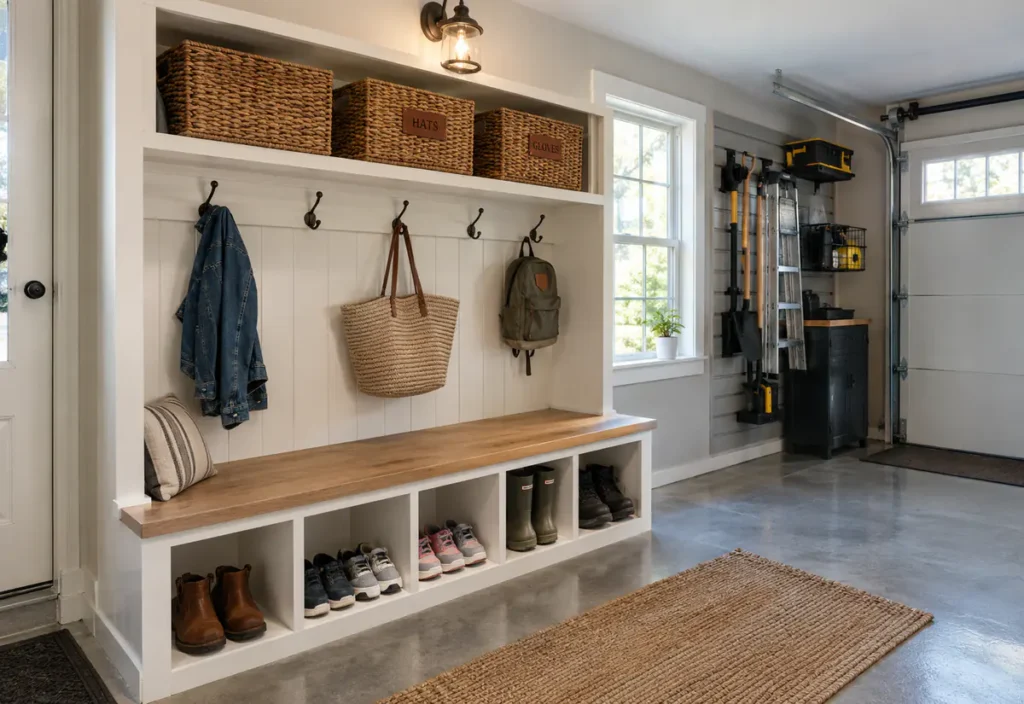
Pro Tip: Measure the available wall space and walking clearance before building your bench. A well-sized design should provide comfortable seating without making the entrance feel cramped.
2. Install Wall Hooks for Coats and Backpacks
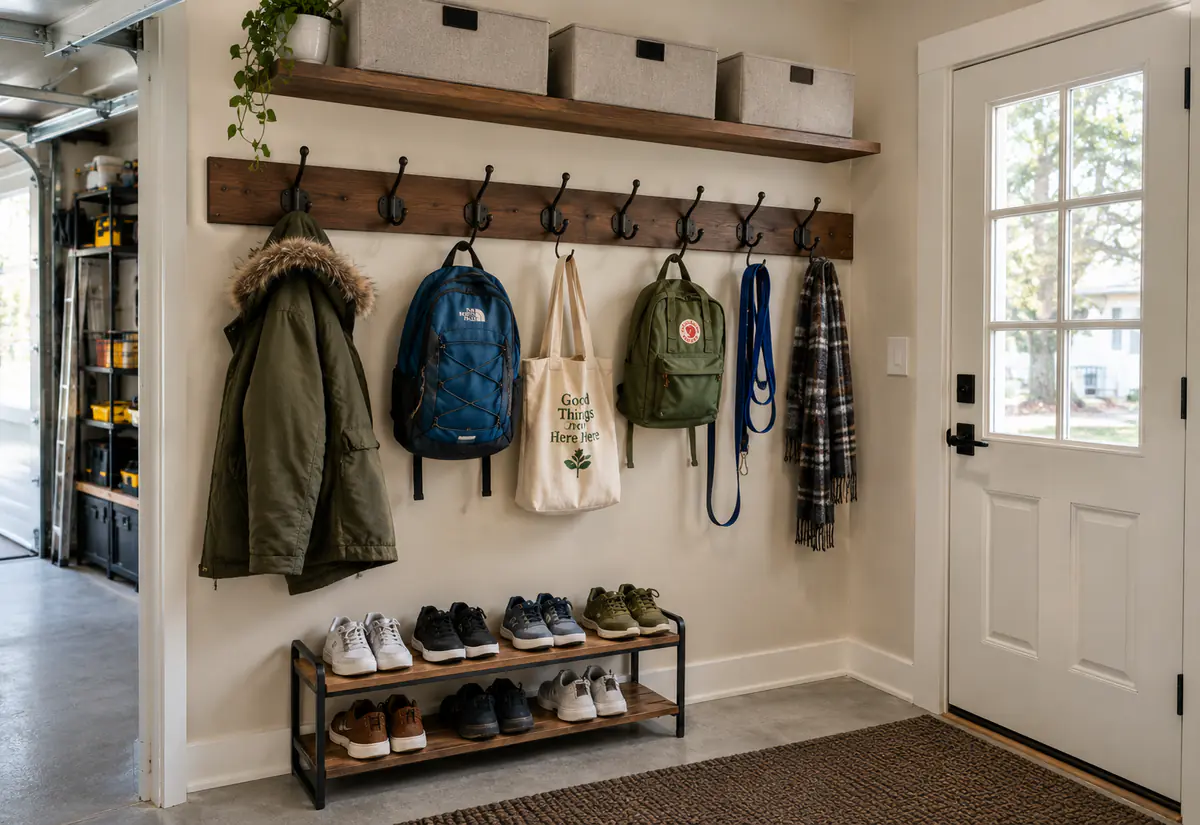
Wall hooks are one of the simplest ways to organize a garage mudroom, especially when floor space is limited. A sturdy row of hooks gives every family member a convenient place to hang coats, backpacks, hats, and everyday bags. You can install them above a bench or along an unused section of wall near the door.
For a more organized appearance, assign each family member a specific hook or section. Using hooks at different heights can also make the setup easier for children to use independently.
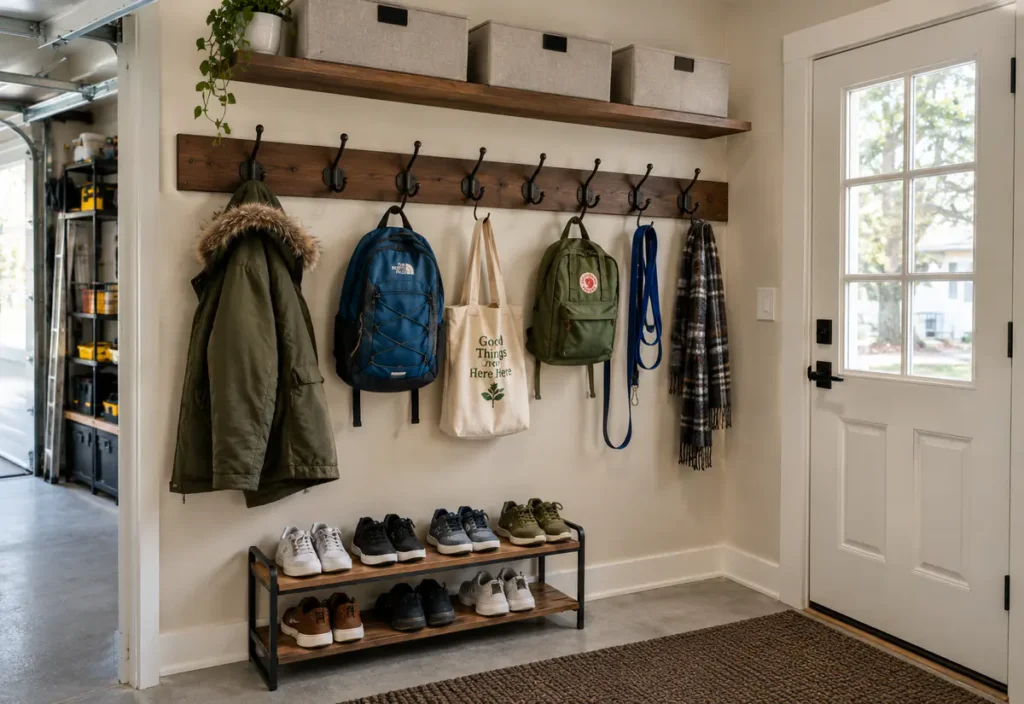
Pro Tip: Choose hooks that can support the weight of loaded backpacks and winter coats. Secure them into wall studs or use suitable anchors for your wall type.
3. Design a Small Garage Mudroom Along One Wall
You don’t need a separate room to create a useful mudroom. A narrow strip of wall near the garage entrance can accommodate a compact bench, a few hooks, and a slim shoe rack. Keeping everything in one area creates a clear drop zone without taking over the garage.
A simple color palette and matching storage containers can make this small setup look intentional. If the wall is especially narrow, skip bulky cabinets and focus on vertical storage.
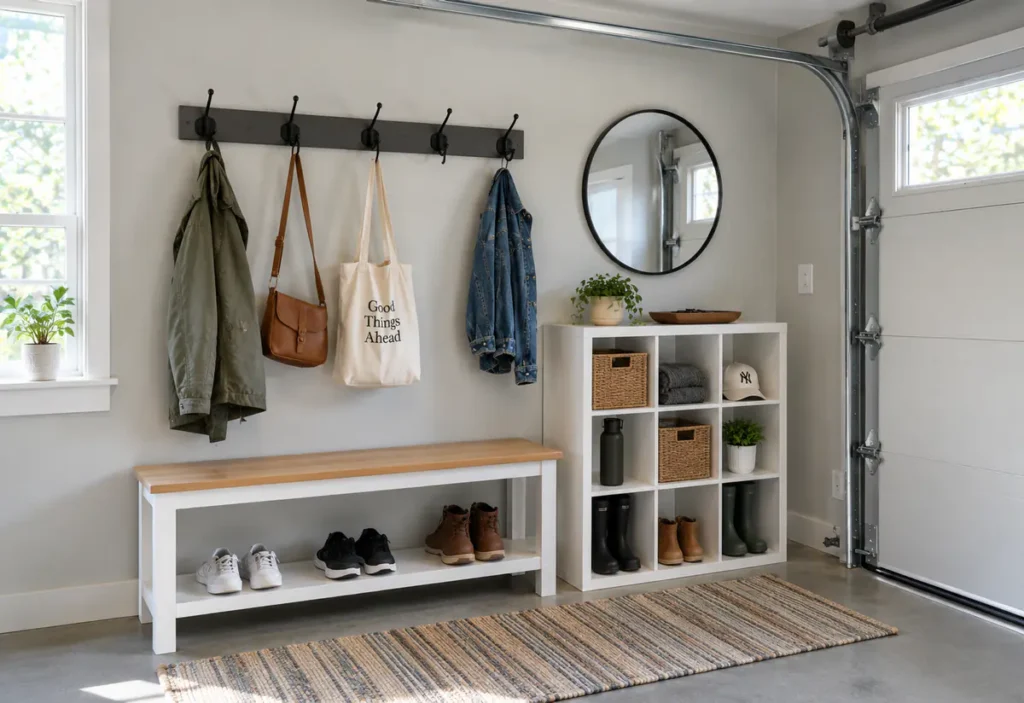
Pro Tip: Before buying furniture, mark the proposed bench and shoe rack dimensions on the floor with painter’s tape. This helps you check whether doors can open and people can pass through comfortably.
4. Add Built-In Shoe Storage Cubbies
Shoe cubbies help prevent footwear from spreading across the garage floor. Individual compartments make it easier to separate everyday sneakers, school shoes, slippers, and outdoor footwear. You can place cubbies beneath a bench or incorporate them into a larger built-in storage unit.
For households with several family members, assigning a specific cubby to each person can make daily routines much easier. Leave a few larger compartments for boots or bulky shoes that don’t fit neatly into standard openings.
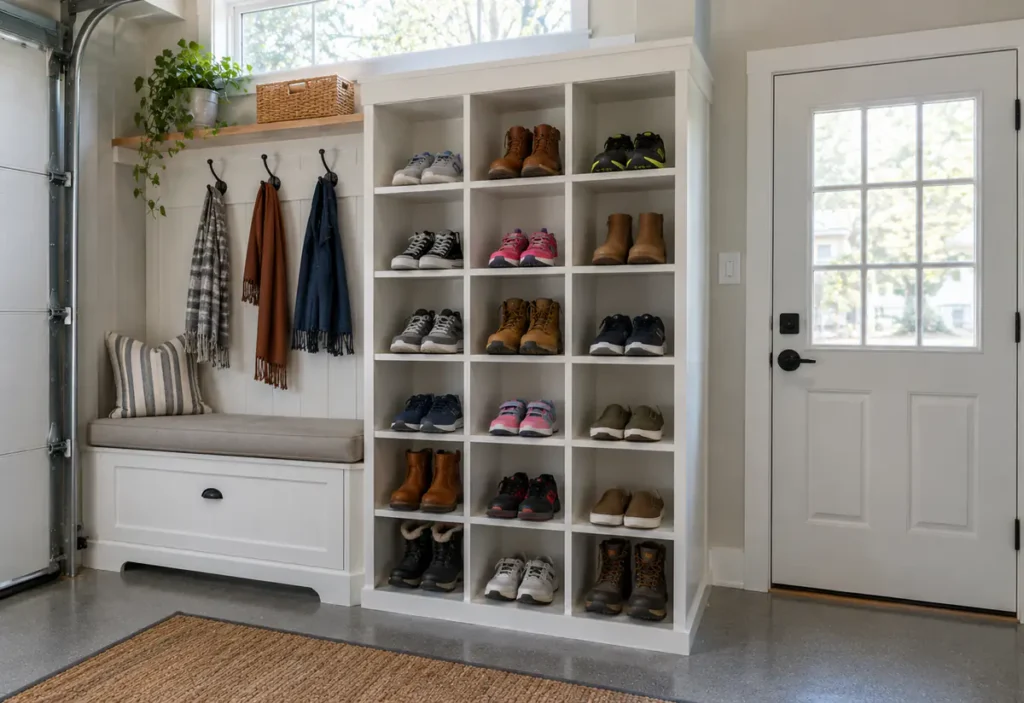
Pro Tip: Allow enough height and width for the footwear your household actually uses. Tall boots and larger shoes may need different compartments from children’s sneakers.
5. Create Individual Family Drop Zones
A family drop zone gives everyone a designated place for the belongings they bring home each day. If you want to organize a similar landing area inside a small apartment, explore these apartment entryway drop zone ideas for practical ways to keep everyday essentials organized. Divide the mudroom into individual sections with hooks, baskets, cubbies, or small shelves. Children can have space for school bags and shoes, while adults can store work bags, coats, and everyday accessories nearby.
This approach works particularly well in busy households where several people use the garage entrance throughout the day. Labels or simple name tags can help everyone remember where their belongings belong.
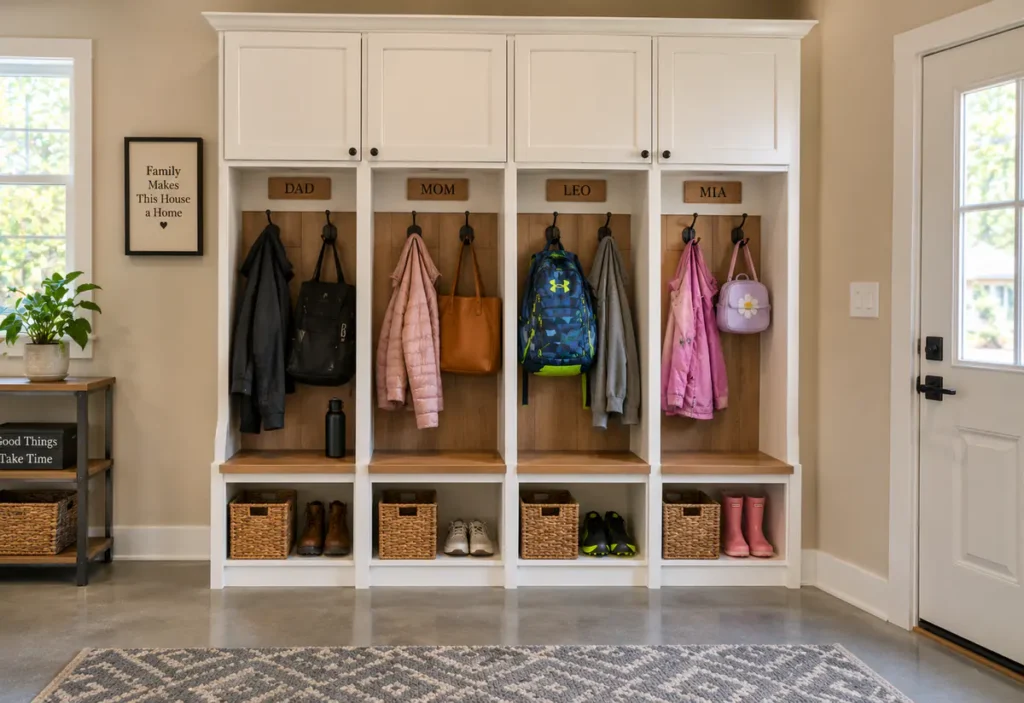
Pro Tip: Keep frequently used items within easy reach and reserve higher shelves for seasonal accessories or belongings that aren’t needed every day.
6. Use Closed Cabinets for Hidden Storage
Open shelves are convenient, but they can look cluttered when filled with mismatched shoes, bags, and everyday essentials. Closed cabinets provide a cleaner appearance by concealing items behind doors. They’re especially useful if your garage mudroom is visible from the kitchen, hallway, or main living area.
Use a combination of tall cabinets for coats and equipment and smaller compartments for shoes, gloves, and accessories. Choose durable finishes that are easy to wipe clean, since garage entrances often collect dust and dirt.

Pro Tip: Include ventilation where needed, especially in cabinets used for damp shoes or outdoor gear. Let wet items dry properly before storing them in enclosed spaces.
7. Combine a Rustic Wooden Bench With Woven Baskets
A wooden bench paired with woven baskets creates a warm, relaxed mudroom that feels both practical and inviting. The bench provides seating, while baskets underneath hold shoes, scarves, dog leashes, reusable bags, and other small essentials. Natural wood tones and textured baskets can soften the utilitarian look of a garage.
For a cohesive design, repeat a similar wood tone in nearby shelves or hooks. Keep the basket colors simple so the storage area feels coordinated rather than visually busy.
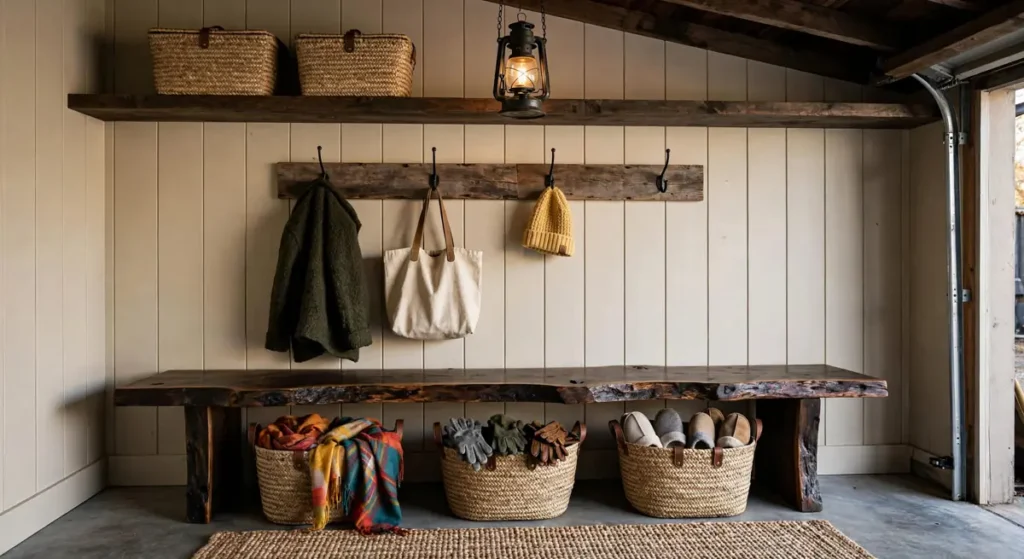
Pro Tip: If the garage gets damp or dusty, choose washable baskets or durable woven-look storage bins that are easier to clean than delicate natural fibers.
8. Turn an Awkward Corner Into a Mudroom
An unused garage corner can become a practical mudroom with a little planning. Place a compact bench against one wall and use the adjacent wall for hooks or narrow shelves. A corner arrangement can create a dedicated drop zone without interfering with parking or access to other garage storage.
Avoid filling the corner with oversized furniture. A shallow bench, a small shoe organizer, and a few well-positioned hooks are often enough to make the space useful.
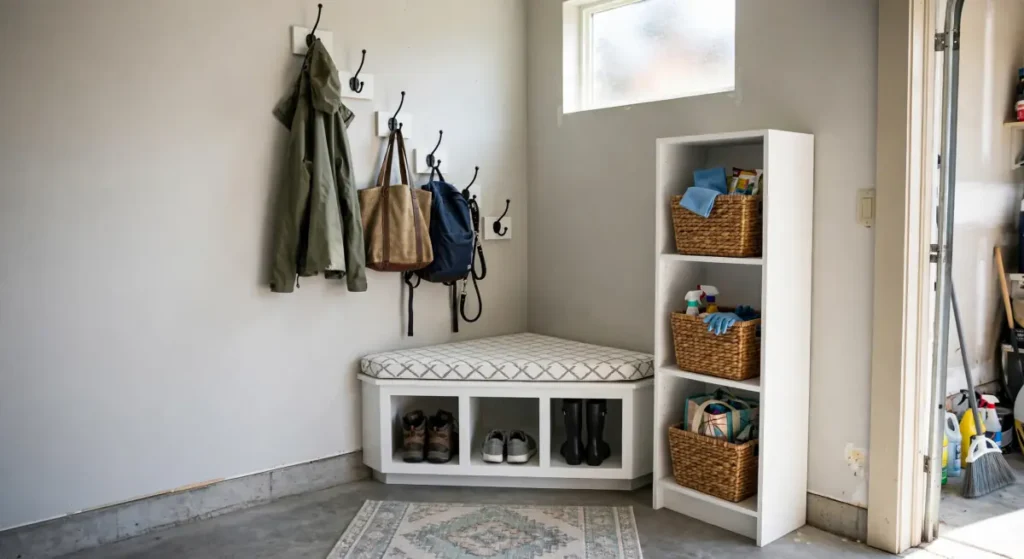
Pro Tip: Check the swing of nearby doors and the path between the car and the house before finalizing the layout. Keep the corner easy to access even when the garage is in regular use.
9. Add a Dedicated Keys and Mail Station
Keys, mail, sunglasses, wallets, and small everyday essentials often end up scattered across kitchen counters or tucked into bags. A dedicated station near the garage entrance gives these items a consistent home. Install a small shelf, a key rail, or a wall organizer with separate compartments for incoming mail and personal accessories.
Keep the design simple so it doesn’t become another place where clutter accumulates. A small tray can hold loose change, while a labeled holder can separate outgoing mail from documents that need attention.
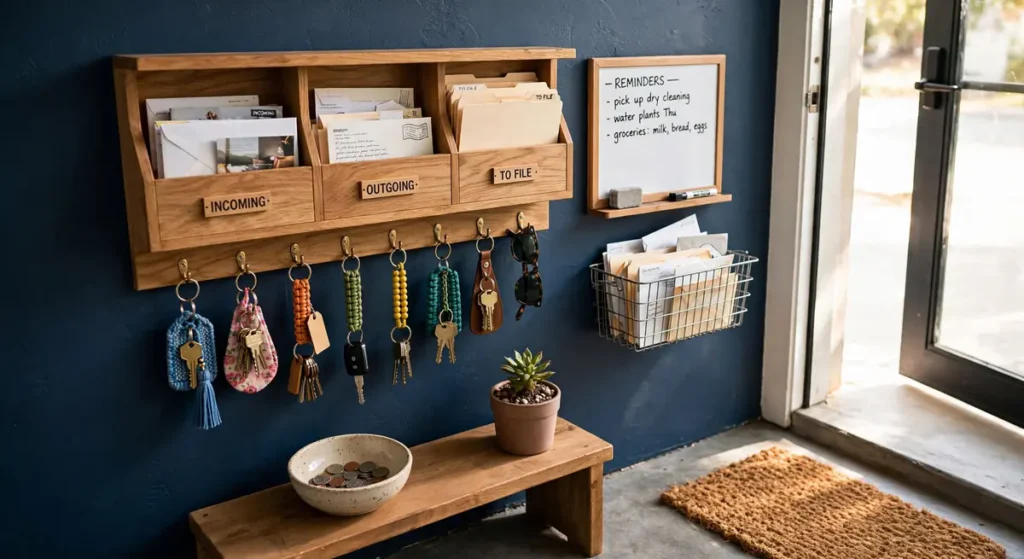
Pro Tip: Keep keys and frequently used essentials at a convenient height, but avoid displaying sensitive documents or valuables in a spot visible through an open garage door.
10. Place Boot Trays Near the Garage Entrance
Boot trays are especially useful for households dealing with rain, snow, muddy yards, or outdoor activities. Position one near the entrance to catch dirt and moisture before they spread across the garage floor. A separate tray for everyday shoes can keep the area organized while protecting nearby flooring.
Choose a tray with a raised edge so water and loose dirt stay contained. For a family, two smaller trays may be easier to manage than one large tray filled with everyone’s footwear.
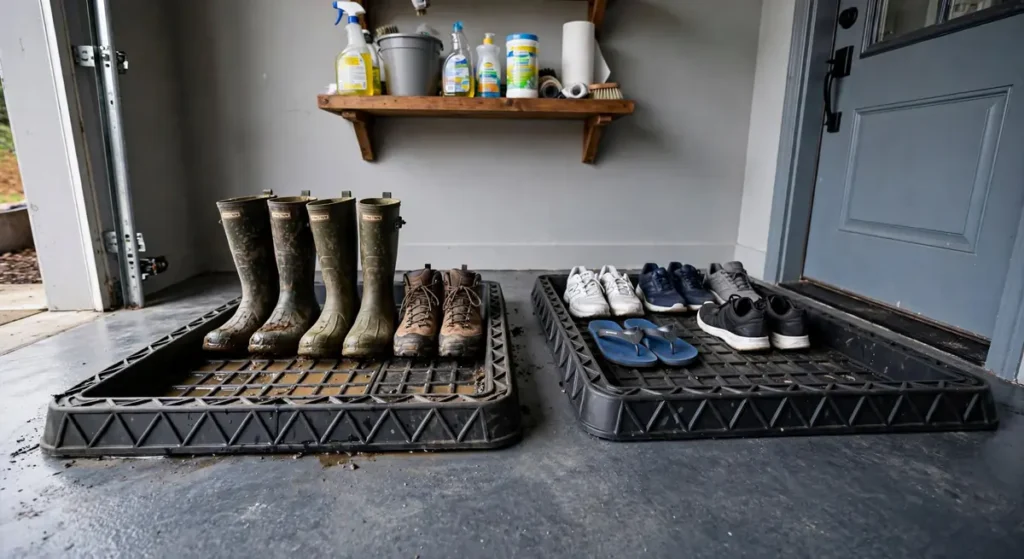
Pro Tip: Empty and clean boot trays regularly, and allow wet footwear to dry before putting it away. This helps prevent lingering odors and moisture buildup.
11. Create a Pet Supplies Station
If your household includes a dog or another pet, reserve a small section of the garage mudroom for leashes, harnesses, towels, waste bags, and outdoor toys. A few hooks and a labeled basket can keep everything together near the door you use for walks. If your pet frequently returns from outside with muddy paws, keep washable towels within easy reach.
The station doesn’t need to be large. A narrow shelf or a small cabinet can provide enough storage without taking up valuable space.
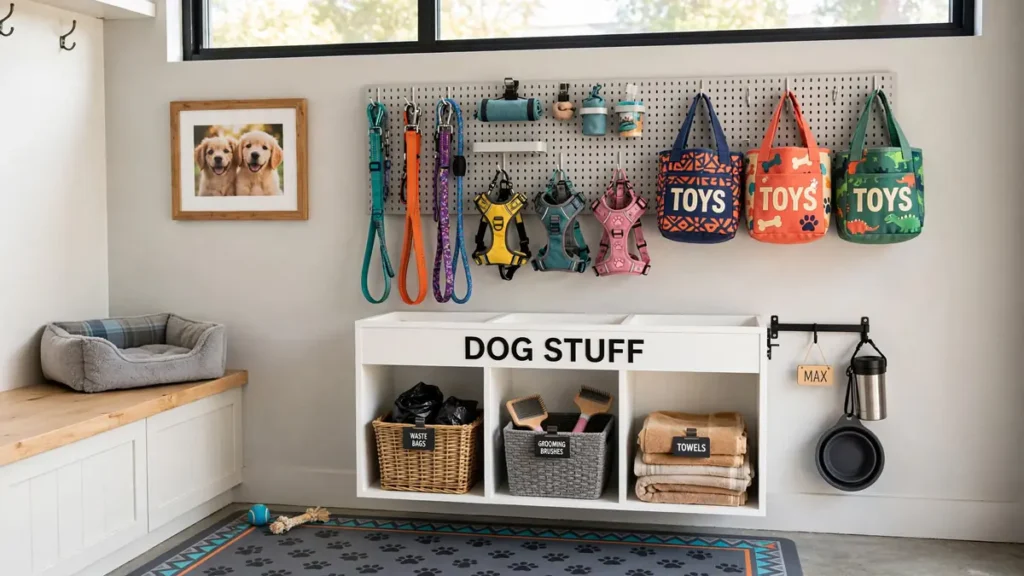
Pro Tip: Store pet food, medications, cleaning chemicals, and other potentially harmful products securely and according to their labels. Keep everyday walking supplies accessible without leaving unsafe items within reach of pets or children.
12. Build a Budget-Friendly DIY Mudroom
A functional garage mudroom can be created with a few basic storage pieces instead of a custom renovation. Start with a sturdy freestanding bench, a wall-mounted hook rail, and a simple shoe rack. Add storage baskets only where they’re genuinely useful, rather than buying accessories before you’ve worked out what needs organizing.
If you already own a bench, shelving unit, or storage bins, consider repurposing them. A fresh coat of paint on suitable furniture and coordinated hooks can help different pieces look more cohesive.
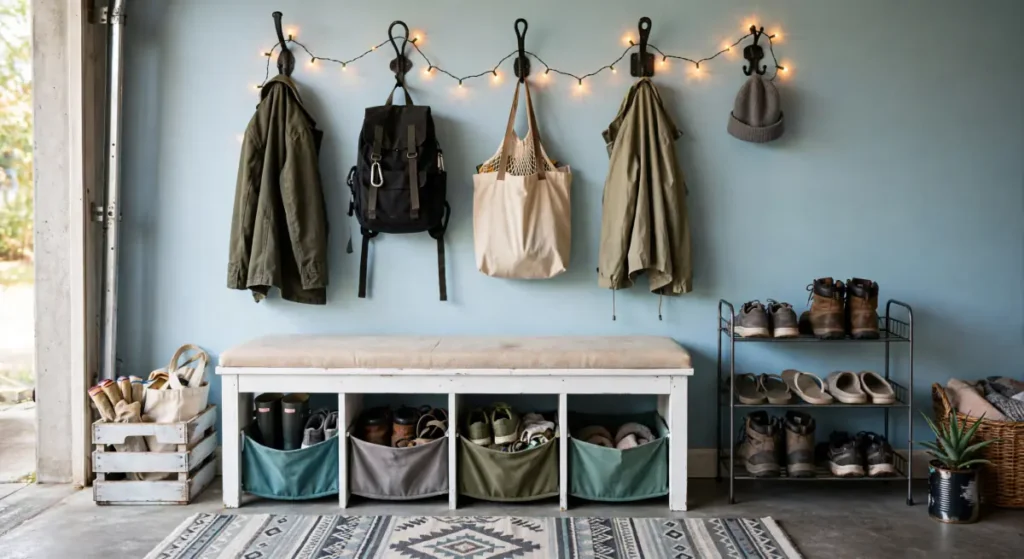
Pro Tip: Solve the biggest clutter problem first. If shoes are always scattered across the floor, begin with footwear storage before adding decorative accessories or extra shelving.
13. Mix Open Shelves With Hidden Storage
Combining open shelves with closed storage offers a balance between convenience and a tidy appearance. Use open shelves for frequently used baskets, shoes, or items you need to grab quickly. Store less attractive or less frequently used belongings behind cabinet doors or inside opaque bins.
This combination works well in both small and large garage mudrooms because it allows you to customize storage according to your household’s needs.
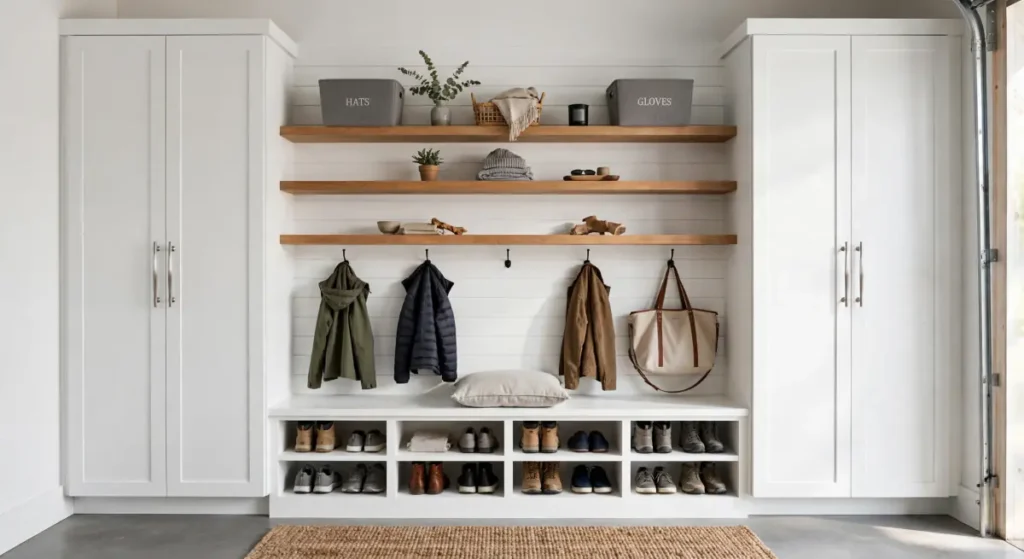
Pro Tip: Reserve open shelves for items that are used often or look neat when displayed. Group smaller belongings in matching bins to prevent the shelves from appearing overcrowded.
14. Organize Seasonal Storage for Changing Weather
A mudroom often needs to accommodate different items throughout the year. Rain boots, umbrellas, and lightweight jackets may be useful in one season, while gloves, scarves, and heavier coats become essential in another. A dedicated seasonal shelf or labeled storage bin helps you switch items without reorganizing the entire space.
Keep current-season essentials within easy reach and move off-season accessories to higher shelves or another suitable storage area. This makes the everyday drop zone easier to maintain.
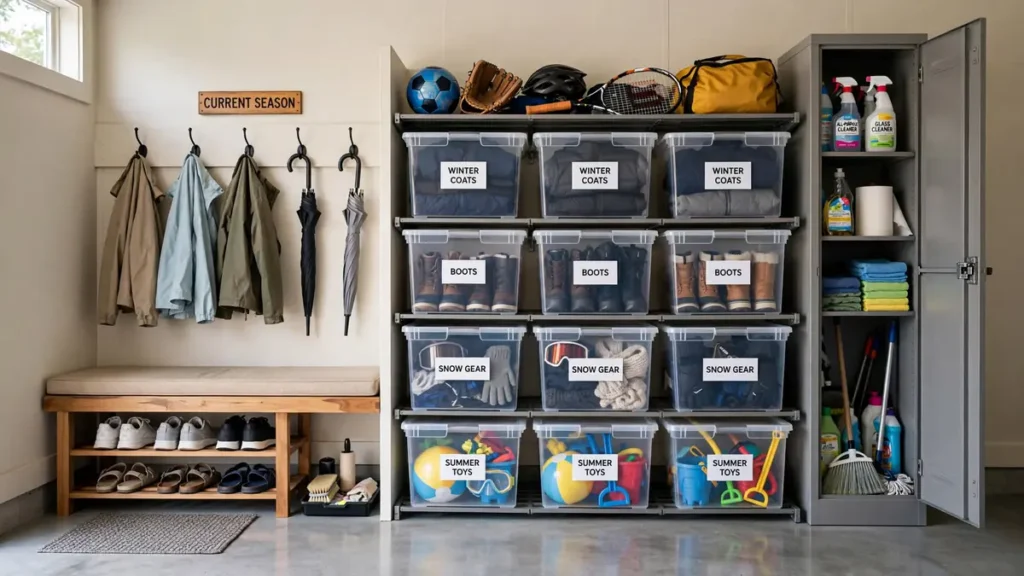
Pro Tip: Label seasonal bins clearly and store only clean, dry items. Review their contents when the weather changes so you don’t keep unnecessary belongings in the main mudroom.
15. Finish the Mudroom With Simple Decor
Practical storage should come first, but a few carefully chosen decorative details can make a garage mudroom feel like a finished part of the home. Consider a framed print, a small wall mirror, a cohesive set of baskets, or a durable runner designed for the conditions in your space. If your garage entrance connects to an interior hallway, these hallway lighting ideas can help you create a more welcoming transition into the home.
Stick to a limited color palette and avoid filling every available surface with decorative objects. A garage entrance needs to remain easy to clean and functional for everyday use.
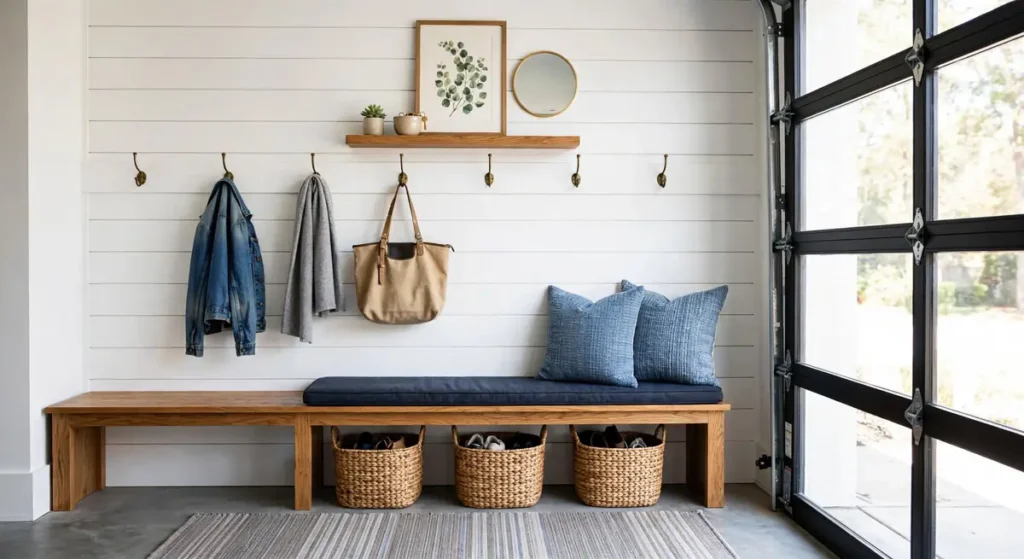
Pro Tip: Repeat two or three colors or finishes across the bench, hooks, baskets, and wall decor. This creates a coordinated look without requiring a complete makeover.
16. Choose a Slim Shoe Cabinet for Narrow Spaces
A slim shoe cabinet can provide concealed footwear storage when there’s little room for a traditional shoe rack. Its compact profile helps preserve walking space, while closed fronts make the mudroom look less cluttered. Place it near the entrance and pair it with a small row of hooks or a narrow wall shelf.
Before choosing a cabinet, check its depth and the way its doors or compartments open. Some designs need additional clearance when in use, even if they look compact when closed.
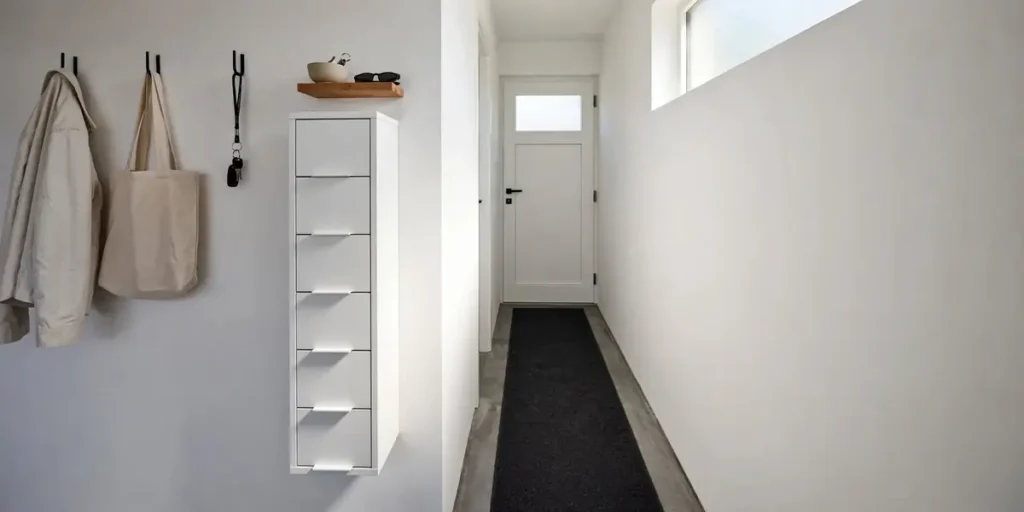
Pro Tip: Check the cabinet’s actual interior dimensions and ventilation before purchasing. Make sure it can accommodate your household’s footwear without forcing shoes into compartments that are too small.
17. Install Wall-Mounted Shelves to Save Floor Space
Wall-mounted shelves make use of vertical space and leave more of the garage floor clear. They’re useful for storing baskets, hats, gloves, small bags, and other lightweight essentials. In a compact mudroom, shelves above a bench can provide extra storage without requiring another piece of furniture.
Use shelves that suit the weight and size of the items you plan to store. Keep heavier belongings lower and avoid placing bulky objects where they could interfere with the door or walking path.
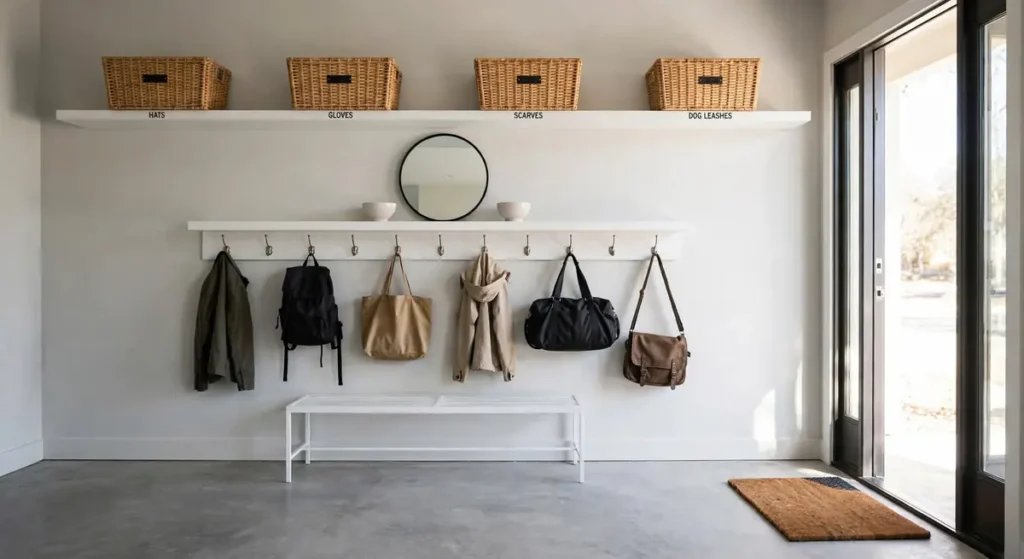
Pro Tip: Secure shelves with hardware suitable for the wall construction and intended load. Don’t assume that drywall alone can safely support a heavily loaded shelf.
18. Create a Mudroom With Locker-Style Storage
Locker-style storage gives each family member a defined space for coats, bags, shoes, and everyday accessories. Each section can include hooks, a shelf, and a lower compartment for footwear. This arrangement works especially well for busy families because everyone knows where their belongings should go.
You can choose a built-in design for a seamless look or use freestanding locker-style units if you prefer a more flexible setup. A consistent finish helps the individual compartments look like one coordinated storage system.
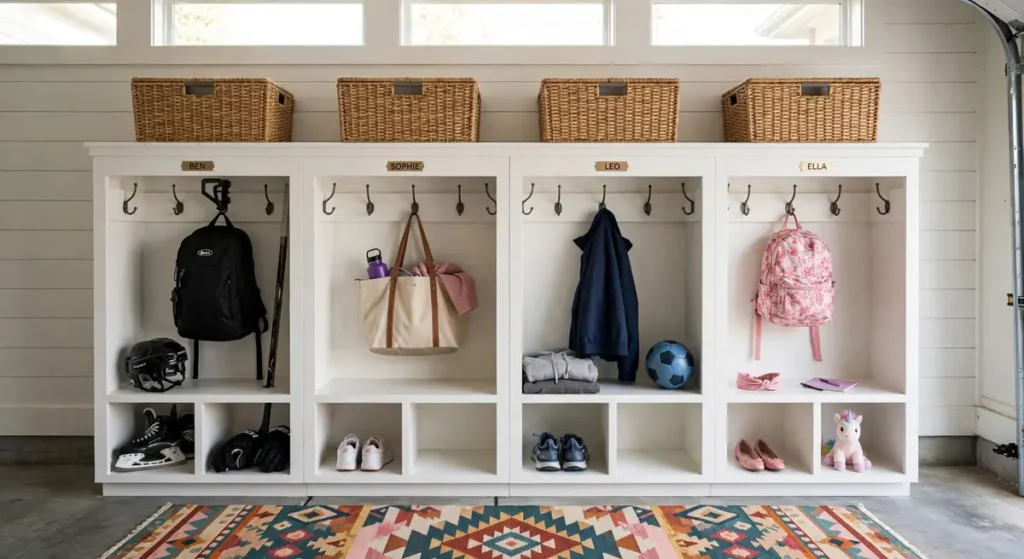
Pro Tip: Plan the width of each locker around the items it needs to hold. Bulky backpacks, winter coats, and sports bags may require more space than you initially expect.
19. Add a Charging Station for Phones and Devices
A small charging station can keep phones, tablets, and other everyday devices from being scattered across different rooms. Use a dedicated shelf or an appropriate organizer near the entrance, provided the location is dry and safely away from vehicles, water, and potential impact.
Keep charging cables organized and avoid turning the station into a general-purpose dumping area. This setup is most useful when household members regularly arrive home with devices that need charging.
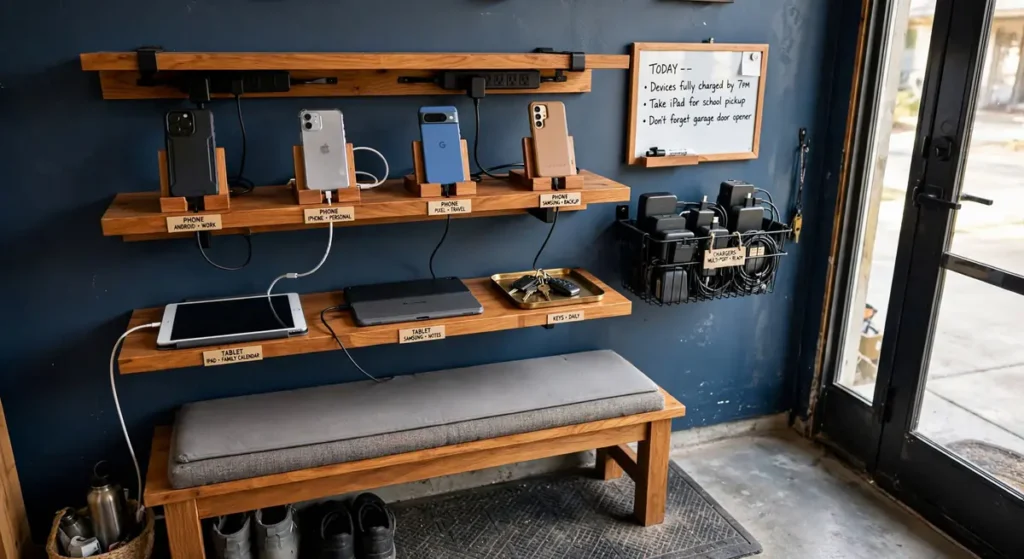
Pro Tip: Use manufacturer-approved chargers and a suitable electrical outlet. Avoid charging devices in damp conditions or placing batteries near excessive heat, fuel, or other garage hazards.
20. Dedicate a Corner to Laundry or Cleaning Supplies
If your garage connects to a laundry area or serves as a utility space, a designated cleaning station can help keep household supplies organized. Store cleaning cloths, brushes, spare rubbish bags, and other everyday items in labeled containers or a compact cabinet. A separate section can hold laundry essentials if the layout makes them easy to access.
Keep these supplies away from the main shoe and coat storage area so dirt and cleaning products don’t mix with everyday belongings.
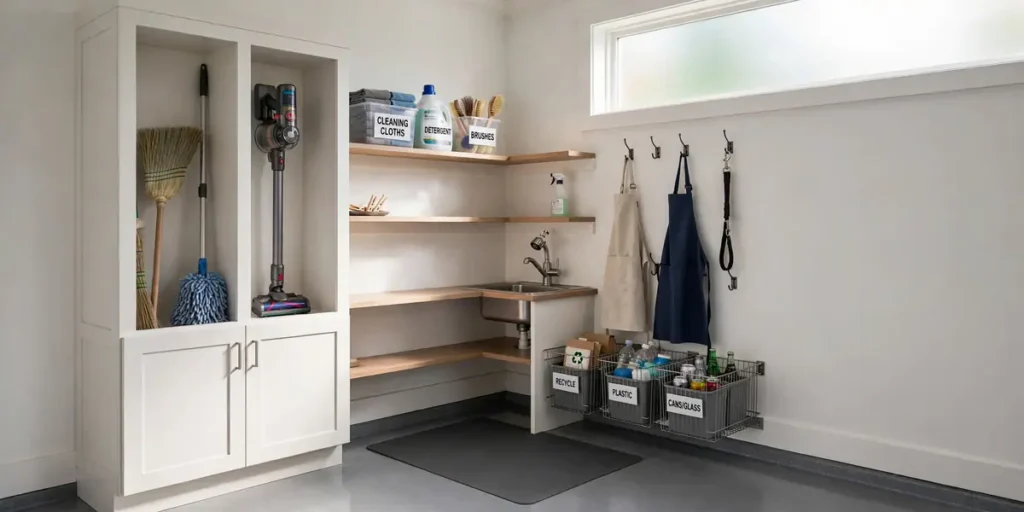
Pro Tip: Store cleaning products in their original containers and follow their safety labels. Keep chemicals secured away from children and pets, and never combine products unless their labels specifically allow it.
21. Choose a Multi-Purpose Bench With Drawers
A bench with built-in drawers offers seating and concealed storage in one piece of furniture. It’s a useful choice when you want to keep gloves, hats, shoe-care supplies, pet accessories, or small everyday items close to the entrance without leaving them on display.
Unlike open cubbies, drawers can create a cleaner appearance when they’re closed. However, they work best when each drawer has a clear purpose and the contents are easy to access.
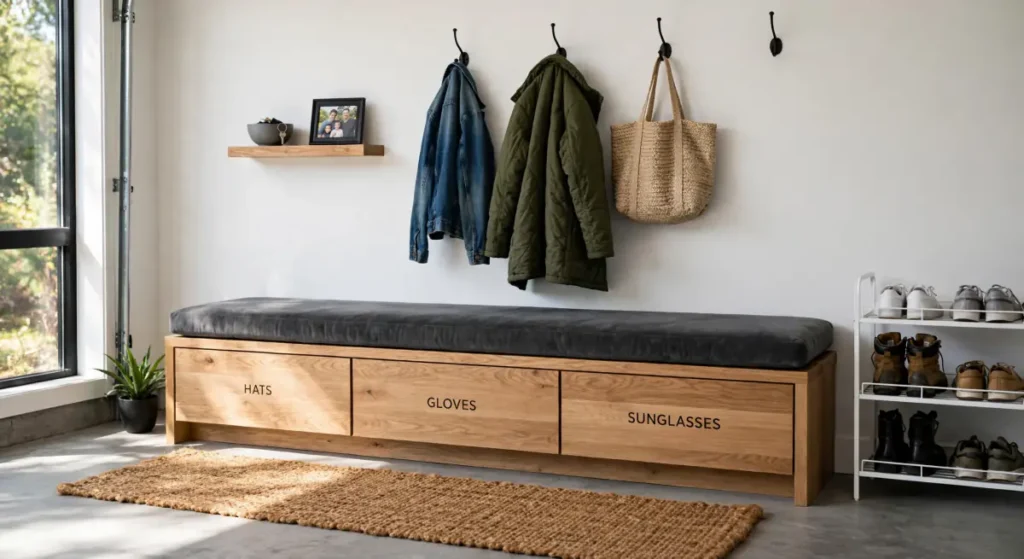
Pro Tip: Assign a category to each drawer and use small organizers inside to prevent items from becoming mixed together. Keep footwear that needs ventilation in a more suitable open or ventilated storage area.
How to Plan a Garage Mudroom That Works
Choosing an attractive idea is only the first step. The best garage mudroom is one that fits your available space, supports your daily routine, and is easy for everyone in the household to maintain.
Measure Your Space Before Choosing Furniture
Measure the available wall width, the depth you can spare, and the clearance needed for doors, vehicles, and walkways. A large bench or deep cabinet may look appealing, but it won’t be practical if it blocks the route between the garage and the house.
For a narrow entrance, prioritize slim furniture and wall-mounted storage. If you have more room, you can combine a bench, shoe cubbies, and closed cabinets in a single organized layout.
Identify What Needs the Most Storage
Think about what usually collects near your garage door. If shoes are the biggest problem, start with cubbies, a shoe rack, or boot trays. If coats and backpacks are always scattered around, prioritize hooks and individual drop zones.
Planning around your actual habits is more effective than adding storage simply because it looks good in a photograph.
Choose Materials That Suit a Garage
Garage entrances often experience more dust, dirt, moisture, and temperature changes than interior hallways. Select durable, easy-to-clean surfaces for benches, shelves, and storage units. If you use baskets or fabric accessories, choose materials that can tolerate the conditions in your space.
For wet footwear and outdoor gear, provide a way for items to dry before storing them in enclosed cabinets.
Keep Everyday Items Easy to Reach
Frequently used belongings should be easy to grab when leaving and easy to put away when returning home. Place everyday shoes near the entrance, hang commonly used coats on accessible hooks, and keep keys in a consistent location.
Less frequently used items can go on higher shelves or in labeled bins elsewhere. This helps prevent the main drop zone from becoming overloaded.
Make the Setup Easy to Maintain
A good mudroom should make tidying up easier, not create another complicated household task. Give every regular item a designated place and avoid adding more baskets, shelves, or organizers than you need.
A quick daily reset can help keep the area manageable. Return shoes to their storage spaces, hang bags on their hooks, and remove items that belong elsewhere.
Frequently Asked Questions
How do you create a mudroom in a garage?
Start by choosing an area near the door that connects the garage to your home. Add a few essential features, such as wall hooks, shoe storage, and a bench if space allows. You can expand the setup with baskets, shelves, cabinets, or family drop zones as your needs become clearer.
What should a garage mudroom include?
A practical garage mudroom often includes hooks for coats and bags, storage for everyday shoes, and a place to sit while putting footwear on or taking it off. Depending on your household, you might also add baskets, boot trays, a key station, or a dedicated area for pet supplies.
How do you create a garage mudroom in a small space?
Use vertical storage and keep furniture compact. A slim shoe cabinet, a short row of hooks, and a narrow bench can create a useful drop zone along one wall. Measure carefully and avoid bulky pieces that obstruct doors or walking paths.
How can I keep a garage mudroom from looking cluttered?
Give everyday belongings designated storage spaces and return them to those places regularly. Use baskets for small items, closed cabinets for belongings you don’t want on display, and a consistent color palette to make the space feel more coordinated. Avoid filling every shelf with decorative accessories.
Is a built-in bench necessary for a garage mudroom?
No. A built-in bench is convenient, but a freestanding bench, a compact stool, or a simple shoe rack can also work. The right choice depends on the available space, your storage needs, and whether you want a permanent or flexible setup.
How do I keep mud and moisture under control in a garage mudroom?
Use boot trays near the entrance, wipe muddy footwear before putting it away, and allow damp items to dry properly. Choose easy-to-clean surfaces and clean the trays regularly. Good ventilation is especially important when storing footwear and outdoor gear.
Can a garage mudroom work for a large family?
Yes. Individual hooks, labeled cubbies, locker-style storage, and separate baskets can give each family member a defined place for everyday belongings. Make sure the layout provides enough room for bulky bags and footwear, and keep frequently used items accessible to the people who need them.
Final Thoughts
A well-organized garage mudroom can make everyday routines easier while helping keep dirt, shoes, bags, and outdoor gear under control. You don’t need a dedicated room to achieve that result. Even a small section of wall can become a useful drop zone with the right combination of hooks, shoe storage, and a comfortable place to sit.
Start with the storage problems you experience most often, then choose the ideas that suit your layout and household. With practical planning, durable materials, and a few consistent storage habits, you can create a garage mudroom that looks inviting and works well every day.