Olive Green Bedroom Ideas: 9 Ideas for a Cozy, Stylish Space
Olive green is a beautiful choice for a bedroom because it brings a natural, earthy feel without making the space look overly bright or colorful. Its muted undertones work well with warm wood, creamy neutrals, soft fabrics, and subtle metallic details, making it suitable for both modern and traditional interiors.
The best part is that you don’t have to repaint the entire room to enjoy this shade. A single accent wall, olive green bedding, or a few carefully chosen accessories can change the look of your bedroom without requiring a complete makeover.
If you’re searching for olive green bedroom ideas that feel stylish but still comfortable, these nine approaches will help you find the right balance. Whether you prefer a light and airy bedroom or a deeper, more dramatic look, there’s a way to make olive green work with your existing space.
9 Olive Green Bedroom Ideas
1. Create an Olive Green Accent Wall Behind the Bed
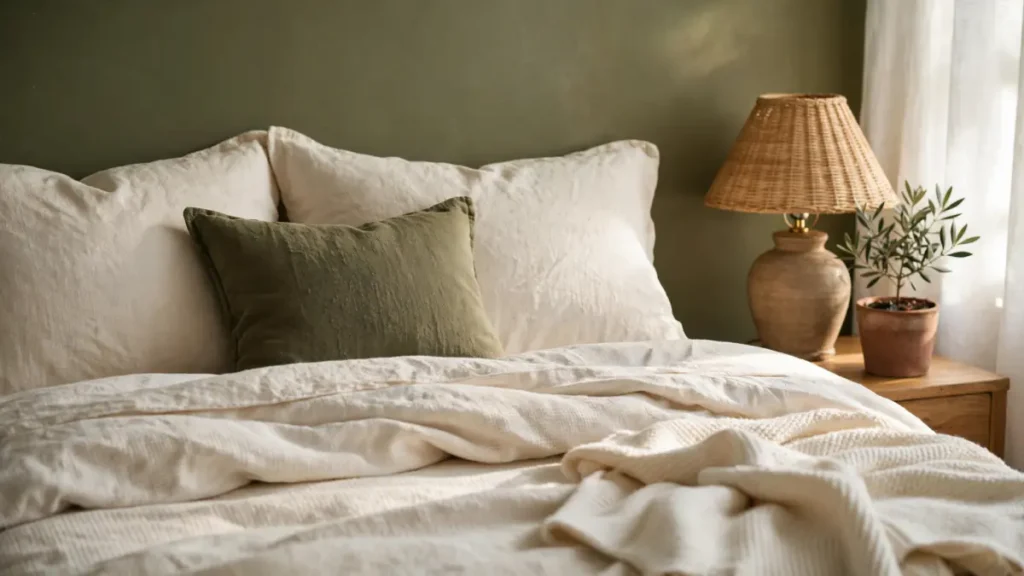
An olive green accent wall is an easy way to make the bed the focal point of your bedroom. Painting the wall behind the headboard creates depth and gives the room a more intentional look without making every wall dark.
Pair the green wall with cream bedding, natural wood nightstands, and simple artwork. These lighter elements help balance the richness of the color while keeping the bedroom comfortable and inviting.
For a softer effect, choose a muted olive with warm undertones instead of a very dark green. This approach works especially well if you’re introducing color into an otherwise neutral bedroom.
Pro Tip: Test a paint sample on the wall and observe it in both daylight and evening lighting before choosing the final shade.
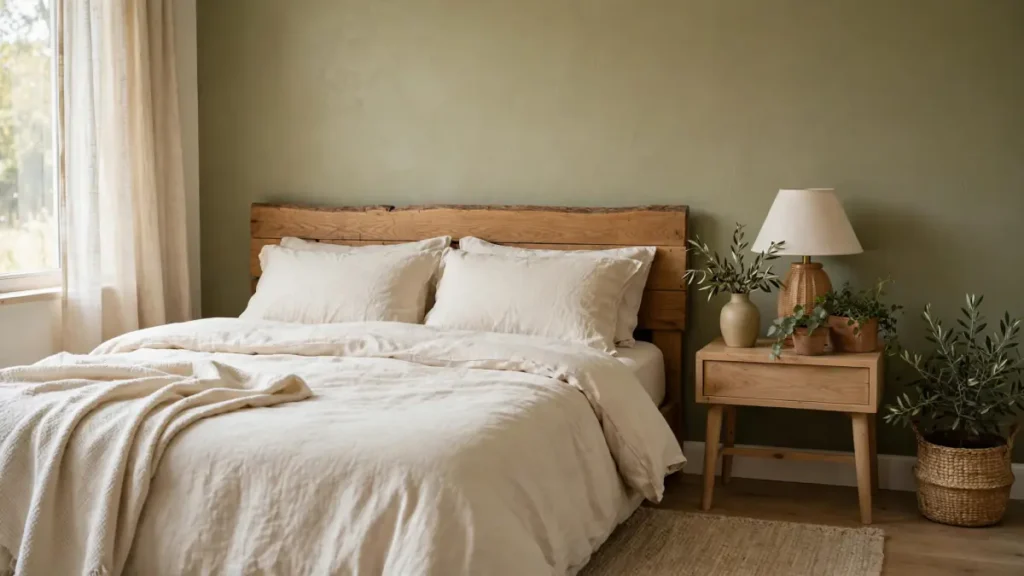
2. Pair Olive Green With Cream and Ivory Bedding
Cream and ivory bedding create a beautiful contrast against olive green walls or furniture. The combination feels soft and relaxed, allowing the green to stand out without making the bedroom look too heavy.
Layer an ivory duvet cover with cream pillowcases and a textured throw at the foot of the bed. You can introduce a small amount of olive through decorative cushions to connect the bedding with the rest of the room.
This color combination is particularly useful when you want a bedroom that feels calm, timeless, and easy to update with seasonal accessories.
Pro Tip: Mix different textures, such as cotton, linen, and a knitted throw, to keep the neutral bedding interesting without adding too many colors.
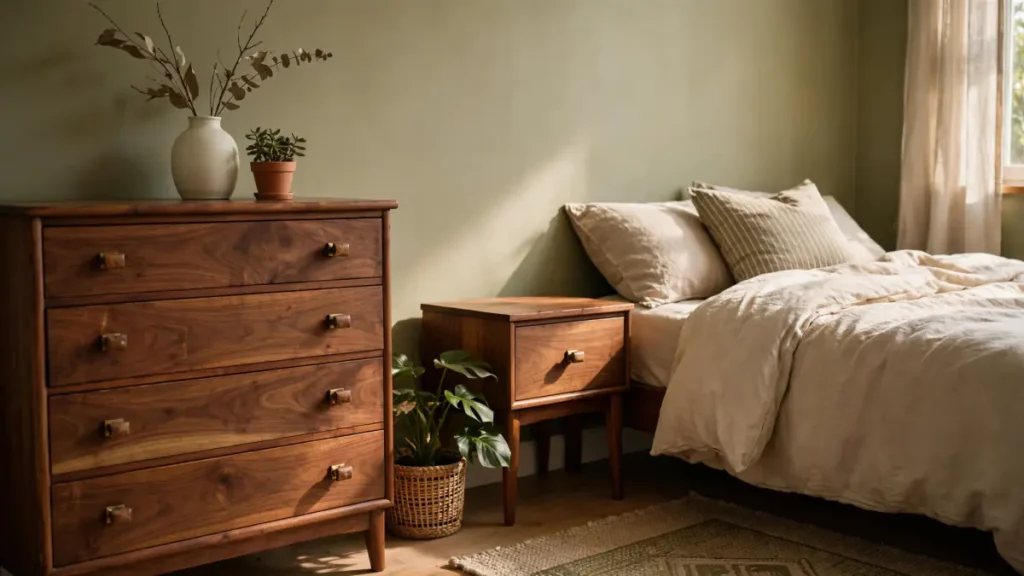
3. Bring Warmth With Natural Wood Furniture
Olive green and natural wood make a harmonious pairing because both have an earthy appearance. A walnut bed frame, oak nightstand, or wooden dresser can add warmth and character to a bedroom with olive walls.
If your walls are already green, choose furniture with visible wood grain rather than several competing finishes. Keep the bedding relatively light so the furniture and wall color can complement each other instead of blending into one dark palette.
You can also introduce wood through smaller details, such as a bedside table, picture frames, or a simple wooden bench.
Pro Tip: Repeat the same wood tone in two or three places, such as the nightstands and picture frames, to create a more cohesive look.
4. Add Brass Lighting for a Subtle Elegant Touch
Brass lighting can make an olive green bedroom feel more refined. The warm metallic finish complements the yellow and brown undertones often found in olive shades, adding contrast without introducing another strong color.
Consider brass bedside lamps, wall sconces, or a pendant light above the bed. If you need lighting options that don’t require permanent changes, explore these renter-friendly lighting ideas for practical ways to update your bedroom lighting. Pair these fixtures with cream bedding and warm wood furniture to create a balanced combination.
You don’t need brass in every corner. A couple of coordinated details are usually enough to make the room feel thoughtfully styled.
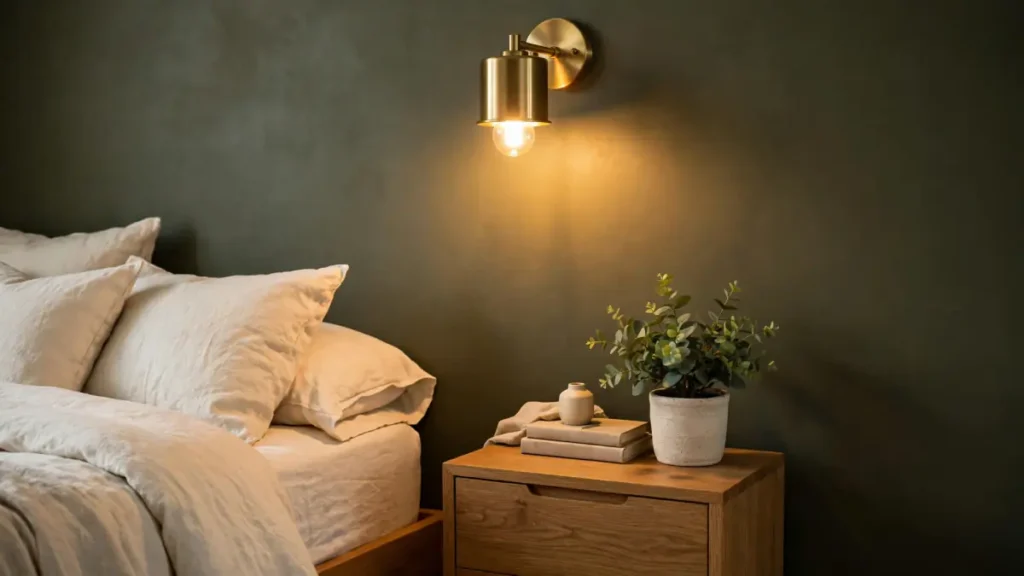
Pro Tip: Choose brushed or aged brass for a softer appearance, and use warm-toned bulbs to help the olive green feel welcoming after sunset.
5. Layer Olive Green Bedding for a Softer Look
If you don’t want to paint your walls, olive green bedding is an easy way to introduce the color. An olive duvet cover or quilt can become the main feature of the bed while leaving the walls and larger furniture neutral.
Build the look with cream sheets, a textured green throw, and a few cushions in complementary shades. You can mix muted olive with softer sage or deeper forest green, provided the colors feel balanced rather than overly coordinated.
This approach is also practical for renters or anyone who likes to refresh their bedroom without making permanent changes.
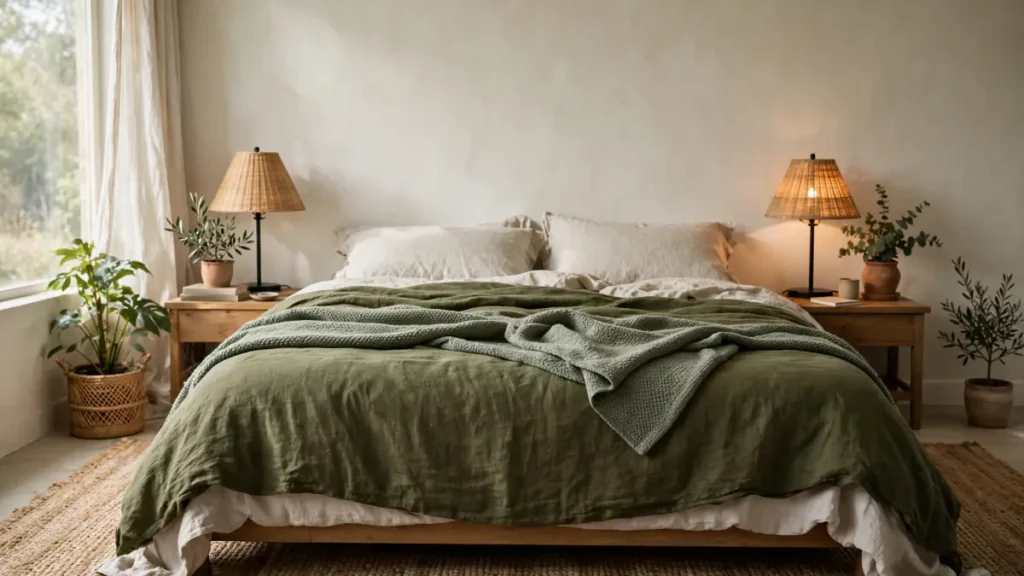
Pro Tip: Let olive green be the main bedding color and use lighter fabrics to break it up. Too many matching green layers can make the bed look flat.
6. Use Olive Green With Beige and Natural Textures
Olive green looks especially inviting when paired with beige, oatmeal, tan, and natural materials. These colors create a warm, organic palette that works well in minimalist, rustic, and modern bedrooms. If you prefer a cooler, more neutral color scheme, these grey bedroom ideas offer inspiration for creating a cozy and coordinated space.
Start with olive green walls or bedding, then add beige curtains, a textured neutral rug, and woven accessories. A linen duvet or natural-fiber basket can introduce subtle texture without making the room feel busy.
The key is to keep the materials simple and allow the different textures to create interest instead of relying on lots of decorative objects.
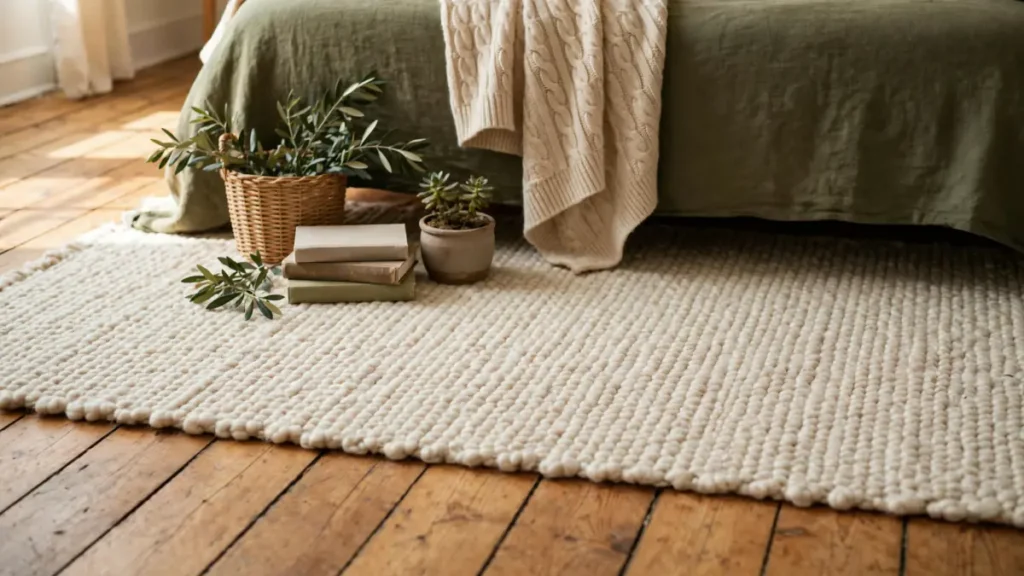
Pro Tip: Choose warm beige rather than a very cool gray-beige if you want the olive green to feel earthy and cozy.
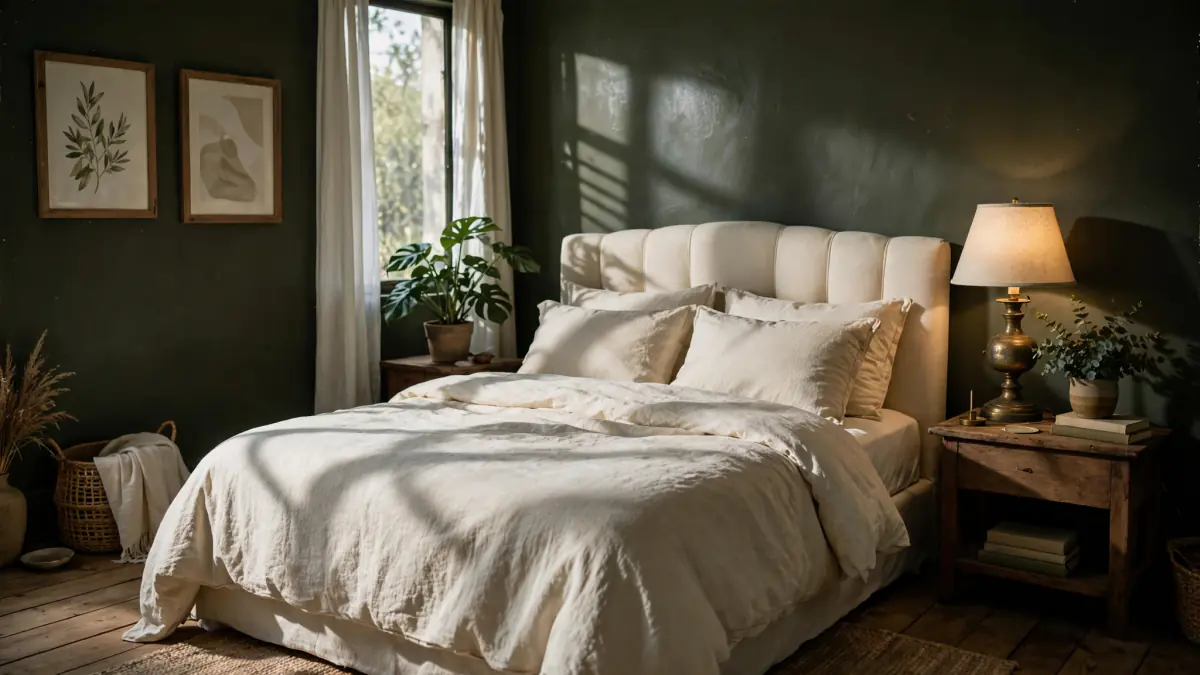
7. Make a Statement With Dark Olive Green Walls
Dark olive green walls can create a dramatic, intimate atmosphere that feels especially appealing in a bedroom. This look works well with warm wood, cream textiles, and understated black or brass details.
To prevent the space from feeling too dark, introduce lighter bedding and leave some areas visually simple. A pale rug, light curtains, or an upholstered headboard can provide enough contrast to balance the deeper wall color.
Dark olive can also work on more than one wall when the room has suitable natural or layered lighting. The right balance depends on the room’s size, layout, and existing finishes.
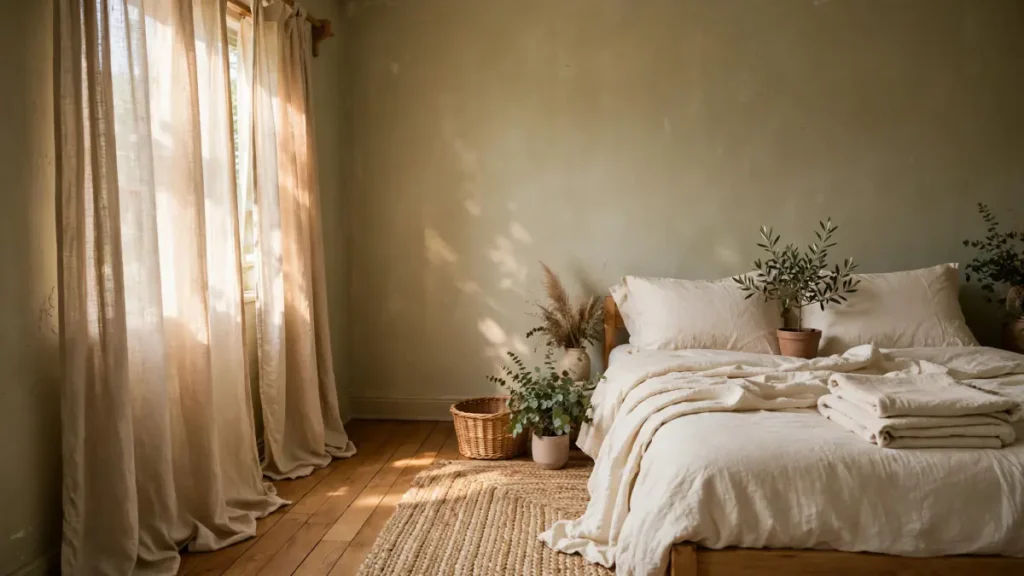
Pro Tip: If you’re unsure about painting all four walls, start with the wall behind the bed and see how the color looks at different times of day.
8. Introduce Botanical Artwork and Natural Accents
Botanical artwork complements the natural character of olive green without requiring more green paint or bedding. Framed leaf illustrations, muted landscape prints, or abstract artwork in earthy tones can bring visual interest to the walls.
Keep the display simple by choosing one larger print or a small, coordinated group. Natural wood frames can connect the artwork to wooden furniture, while cream backgrounds help it stand out against darker walls.
A healthy indoor plant can also introduce a fresh touch, provided the room has suitable light and the plant is safe for your household.
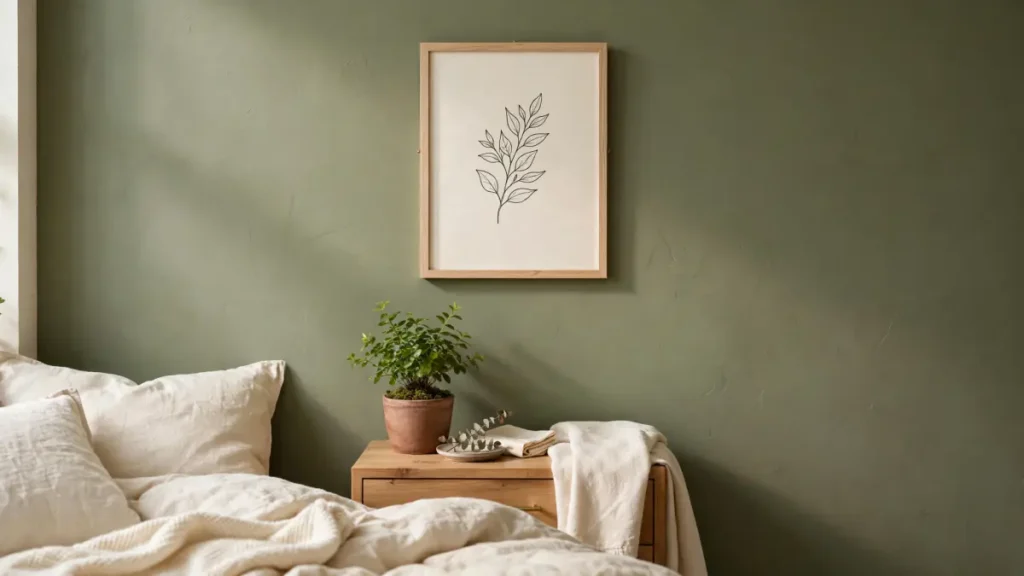
Pro Tip: Pick artwork that includes one or two colors already present in the bedroom, such as beige, rust, or muted green, so the display feels connected to the overall design.
9. Finish the Bedroom With Rugs & Soft Accents
Once the main color and furniture are in place, smaller accessories can help the bedroom feel finished. A patterned rug, textured cushions, a soft throw, and coordinated curtains can add depth without requiring additional furniture or major decorating changes.
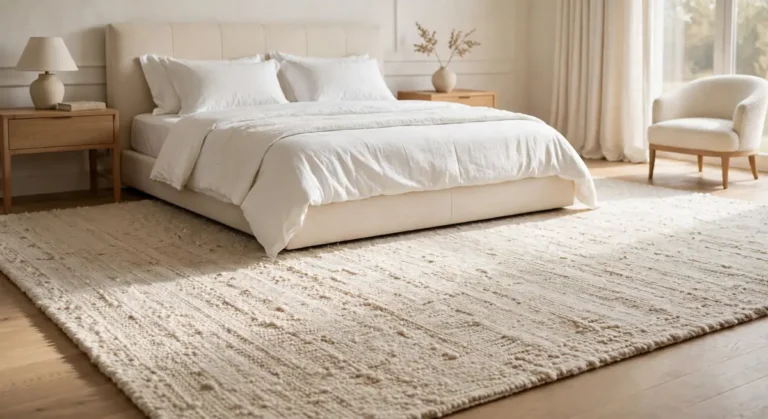
If the walls are olive green, a cream or beige rug can brighten the floor area. In a neutral bedroom, an olive cushion or throw can introduce the color in a more subtle way.
Focus on a few useful accessories instead of filling every surface. A simple arrangement often makes the room feel more relaxing and easier to maintain.
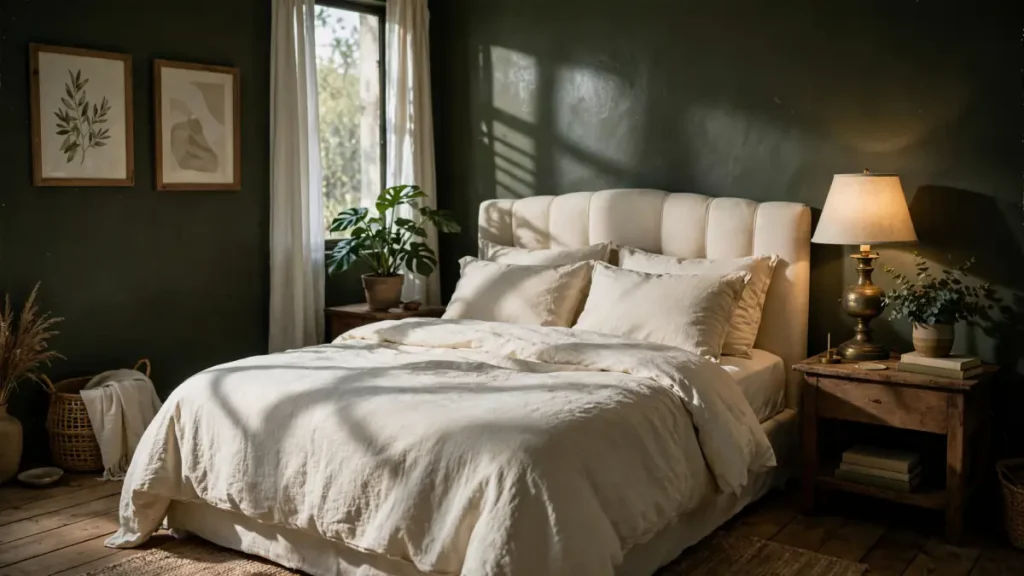
Pro Tip: Repeat your chosen accent color in at least two places, such as a cushion and a piece of artwork, to make the final details feel intentional.
How to Style an Olive Green Bedroom
Choose a Balanced Color Palette
Start by deciding whether you want the room to feel light, earthy, or dramatic. Olive green and ivory create a soft contrast, while olive and walnut bring warmth. Dark olive with cream and brass produces a richer, more sophisticated appearance.
Choose one main combination and repeat it throughout the room rather than introducing too many unrelated colors.
Consider the Room’s Natural Light
Olive green can look different depending on the amount of daylight and the type of artificial lighting in the room. A shade that looks warm in a bright showroom may appear darker or more muted at home.
Test paint samples in the actual room and look at them in the morning, afternoon, and evening. If the bedroom receives limited daylight, consider using olive as an accent and keeping larger textiles and surrounding walls lighter.
Mix Textures Instead of Adding More Decor
Olive green already provides plenty of visual character, so you don’t need dozens of accessories. Linen, cotton, wood, woven materials, and soft rugs can add depth without making the room look cluttered.
Choose a few pieces that serve a purpose and complement the rest of the bedroom. The result will feel more cohesive than a space filled with unrelated decorative items.
Frequently Asked Questions
What colors go best with olive green in a bedroom?
Cream, ivory, beige, warm brown, walnut wood, and muted terracotta can complement olive green beautifully. Brass accents also add warmth. The best combination depends on whether you prefer a light, natural bedroom or a darker, more dramatic look.
Does olive green make a bedroom look smaller?
It can make a room feel more intimate, particularly when used on several walls in a space with limited natural light. To maintain a more open appearance, pair olive green with light bedding, pale curtains, and a lighter rug.
How can I decorate an olive green bedroom without painting?
Use olive green bedding, cushions, curtains, artwork, or a throw blanket. These accents introduce the color without requiring permanent changes and can be replaced easily when you want a different look.
Is olive green a good color for a small bedroom?
Yes. The key is how you use it. An olive accent wall or green bedding can add character while lighter walls, reflective surfaces, and uncluttered furniture help the room feel more open.
What wood tones look good with olive green?
Natural oak, walnut, and other warm wood finishes can complement olive green. Choose a tone that works with your existing furniture and repeat it in a few places to create a consistent design.
Final Thoughts
Olive green can transform a bedroom without requiring a complete redesign. Whether you choose an accent wall, layered green bedding, warm wood furniture, or subtle brass details, the shade offers plenty of ways to create a space that feels personal and inviting.
Start with one main element and build around it using a small, consistent color palette. With balanced lighting, comfortable textures, and a few well-chosen accessories, you can create an olive green bedroom that feels stylish, cozy, and easy to live in.